



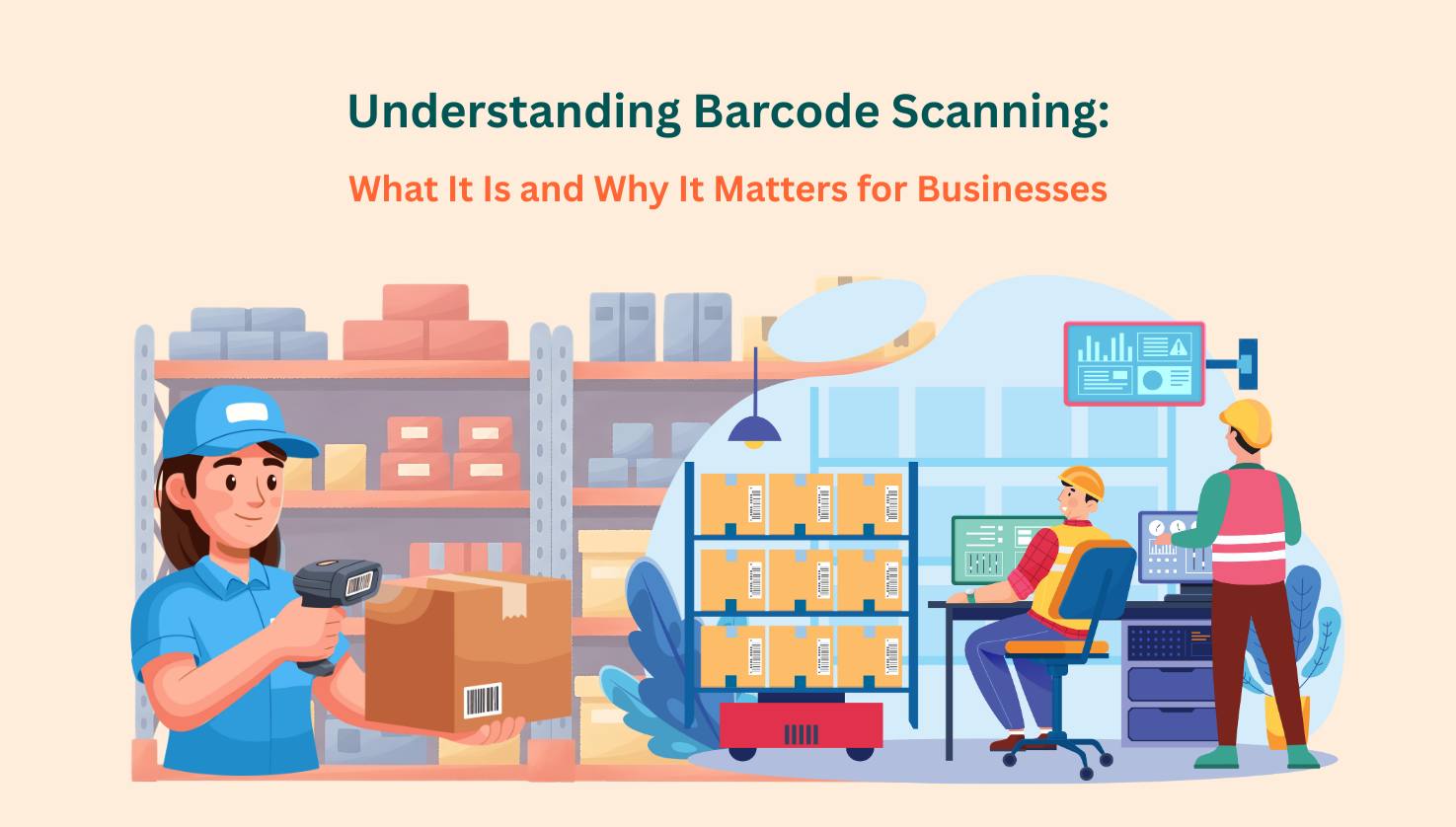
Barcode scanning has quietly become an essential backbone of modern commerce, logistics, and inventory management. Whether you’re buying groceries at a local store, receiving a shipment in a warehouse, or sending a package across cities, there is a good chance a barcode scan made it possible. At its core, this simple technology converts machine-readable graphical patterns into meaningful digital data – and that transformation powers speed, accuracy, and scale across industries.
From a technical standpoint, a barcode is an optical representation of data – typically a series of black stripes (and spaces) or a 2D matrix – that encodes information such as product ID, batch number, or destination details. A barcode scanner (or camera-enabled device) reads this pattern, converts it into digital data, and communicates with backend software to log or process the information. This process replaces manual typing, reduces errors, and enables real-time tracking. In everyday life, barcodes appear on everything from retail products and shipping labels to books, tickets, and even medical samples – nearly everywhere there is a need to identify, track, or authenticate something quickly and reliably.
What Other Barcodes Are Used – Types, Features, and Benefits for Businesses
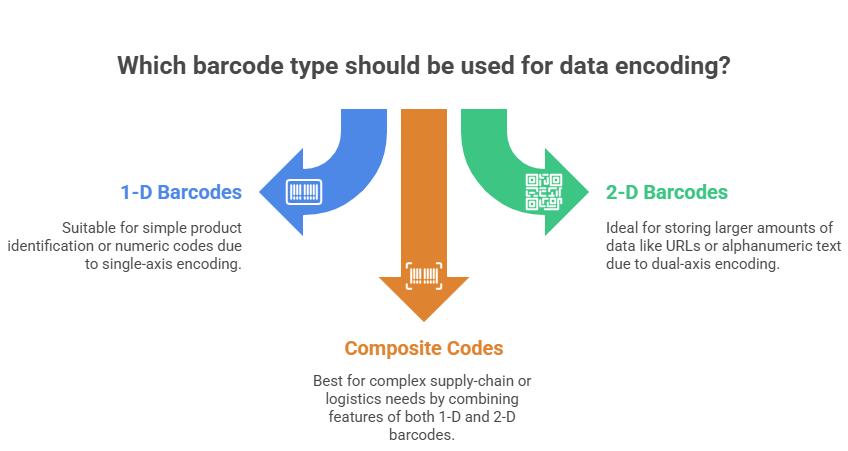
Barcodes come in different types and formats depending on the data they carry, the environment of use, and the scale of the operation. The two broad categories are 1-D (linear) barcodes and 2-D (matrix) barcodes.
- 1-D (Linear) Barcodes: These are the classic vertical stripe barcodes – like UPC-A, EAN-13, Code 39, etc. They encode data along a single axis, typically enough for a product identifier or numeric code.
- 2-D (Matrix) Barcodes: These include formats like QR codes, Data Matrix, PDF417, etc. They encode data across both horizontal and vertical axes, allowing storage of larger amounts of data – from alphanumeric text to URLs, batch info, expiry dates, and more.
- Composite/Hybrid Codes: Some barcodes combine linear and matrix features to exploit advantages of both, especially for complex supply-chain or logistics needs.
What These Barcodes Provide: Core Functions & Features
- Rapid product/item identification: Rather than reading labels and entering codes manually, a scan instantly reveals product identity, price, batch or serial number, etc. This accelerates checkout, dispatch, receiving, and other workflows.
- Real-time inventory tracking: Every scan – whether goods are received, moved or shipped – updates the inventory or warehouse management system immediately. This visibility helps businesses avoid overstocking, stockouts, or misplaced items.
- Data richness and flexibility: With 2-D barcodes, businesses can embed extra data: batch numbers, expiry dates, destination addresses, tracking codes, URLs, and more. This becomes especially useful for traceability, returns, compliance, and serialized inventory.
- Error reduction and accuracy: Barcode scanning drastically reduces human errors associated with manual data entry – typographical mistakes, misreading codes, duplication, etc.
- Cost effectiveness: Generating and printing barcodes is relatively cheap. Compared to alternatives like RFID or manual logging, barcoding offers a highly economical way to manage items or products at scale.
- Scalability and speed: Especially for businesses handling high volumes – be it retail stores, warehouses, or logistics operations – barcode scanning enables fast processing (scans in less than a second) and scalability without proportional increases in workforce.
Benefits for Large and Small Businesses – Who Gains What
For large-scale businesses – warehouses, distribution centers, retail chains, e-commerce logistics – barcode scanning improves supply chain management from end to end. It ensures accurate stock levels, automates operations like receiving, picking, packing and shipping, reduces labor overhead, supports traceability and audit compliance, and enables real-time data analysis for forecasting demand.
For small and medium enterprises (SMEs), the advantages are perhaps even more impactful. A small retailer or warehouse with limited staff can implement barcode scanning to streamline inventory, reduce mistakes, speed up checkout or dispatch, and make better use of limited resources. Since barcode printing is inexpensive, even small operations can gain enterprise-level efficiency without heavy capital investment.
Example: A small e-commerce business tracking tens or hundreds of SKUs may manually record stock each time a sale happens or new stock arrives – a tedious, error-prone task. With barcode scanning, every product gets a unique barcode, and each sale or receipt is automatically recorded. Inventory levels stay accurate, reorder thresholds trigger timely restock, and order packing becomes faster and reliable.
In warehouses of larger businesses, barcode scanning helps workers quickly locate items across racks, pick orders accurately, and update inventory and shipping data in real time – improving speed and reducing costly mistakes.
How eShipz Adds Value: Barcode & Stickering Solutions for Efficient Business
(While our focus is informative, understanding how a platform like eShipz enhances barcode-based logistics helps appreciate the full potential.)
Modern businesses often need more than barcode scanning hardware; they need a holistic system to manage shipping, labeling, and tracking – especially when operating at scale or across multiple locations. A comprehensive solution includes: label generation, barcode printing (stickering), integration with shipment software, real-time tracking, and a unified dashboard for orders.
A stickering solution – such as offered by eShipz – helps businesses generate barcode labels (or shipping labels) automatically, printing and affixing them on products or parcels, thereby ensuring each item is correctly identified and traceable. This reduces manual workload, avoids mislabeling, and ensures smooth transit across logistics networks.
For small retailers or SMEs, such a solution means they can keep pace with large logistics operations without investing heavily in infrastructure: the system handles label generation and printing, tracking, and inventory updates. For larger enterprises, it simplifies batch processing, bulk orders, and integrates tracking across warehouses or dispatch centers. The result is increased accuracy, faster order processing, better inventory visibility, and improved customer satisfaction due to fewer shipping or fulfillment errors.
Additionally, when integrated with backend management systems, the stickering + barcode scanning setup allows businesses to track shipments end-to-end – from when an order is placed, through packing, dispatch, transit, and delivery. Any misplacement or delay becomes visible early, enabling proactive resolution.
To understand how such systems enhance logistics operations, you may explore:
- eShipz B2B logistics automation platform
https://www.eshipz.com/b2b-logistics-automation/ - Real-time shipment tracking & visibility
https://www.eshipz.com/real-time-shipment-tracking/ - Courier partners integration
https://www.eshipz.com/courier-partners/
Overall, by combining barcode scanning with logistic-focused stickering and tracking solutions, eShipz-type systems bring together inventory control, shipping automation, and delivery management – offering a one-stop, scalable solution for businesses big and small.
Final Thoughts: Boost Efficiency with Smarter Labeling and Tracking
Barcode scanning is far more than just a convenience – it is a backbone technology that powers modern retail, warehousing, logistics, and supply-chain systems. By enabling quick and accurate identification and tracking of products, barcodes help businesses reduce errors, cut costs, scale operations, and make informed decisions based on real-time data.
Whether you are a small online retailer managing SKUs or a large distribution center handling thousands of shipments daily, adopting barcode scanning – ideally supported by a robust stickering and shipment-tracking platform – can dramatically improve efficiency and reliability.
If you are looking to streamline inventory and logistics operations, consider implementing a barcode-based system – it might just be the key to better control, speed, and growth.
eShipz empowers businesses to make this transition effortless. With streamlined stickering and shipment tracking capabilities, companies get complete visibility and control – improving productivity and operational success.