





A national survey found that 91% of US consumers actively track their packages, with 39% checking once a day and 19% tracking multiple times per day, highlighting how central visibility is in the post‑purchase journey. Over the past few years, shipment tracking software has quietly become one of the most visible parts of the eCommerce experience in the US. With most online shoppers checking their order status multiple times before delivery, tracking is no longer a background feature, it’s a daily touchpoint between brands and customers.
What started as simple carrier scans has now evolved into modern shipment tracking software, built to provide real-time visibility across orders, parcels, and entire delivery journeys. In a market where millions of packages move daily through networks like USPS, UPS, FedEx, and DHL, even small gaps in visibility can quickly translate into customer uncertainty.
Today, tracking is no longer just about answering “Where is my package?” It’s about offering clarity at every step, confidence during transit, and consistency across domestic and cross-border deliveries. As shipping volumes continue to grow and fulfillment becomes more distributed, tracking has shifted from a basic logistics update to a core part of the post-purchase experience.
That evolution, from simple status checks to experience-driven visibility, sets the context for how shipment tracking works today in the US, and how it’s adapting to a more global, multi-carrier world.
How Shipment & Package Tracking Works in eCommerce
The US operates one of the most advanced shipment and package tracking ecosystems globally, built around large national carriers such as UPS, FedEx, USPS, and DHL. These carriers handle millions of parcels every day and rely on structured scanning networks to deliver consistent parcel shipment visibility.
At the core of US shipment tracking is the parcel tracking number. Each parcel shipment is assigned a unique tracking ID that allows both businesses and customers to track parcels as they move through the delivery network, from pickup to final delivery.
Most shipment and parcel tracking in the US is powered by:
- Barcode scans at key touchpoints such as parcel pickup, sorting hubs, and last-mile delivery.
- Carrier-specific tracking systems, each with its own parcel status definitions.
- Order and parcel tracking links shared with customers after checkout.
From a customer’s perspective, parcel tracking is straightforward. Shoppers either enter a tracking number to track my parcel or click a tracking link provided by the seller to check the latest parcel delivery status. For domestic shipments handled within a single carrier network, this model works reliably. Parcel tracking updates are frequent, delivery milestones are clear, and customers generally trust the information displayed.
However, this approach begins to show limitations when parcels move between multiple carriers, pass through partner networks, or travel beyond standard domestic routes. These handoffs introduce gaps in parcel visibility, setting the stage for the shipment and parcel tracking complexity that many growing eCommerce brands face today.
Why Order Tracking Breaks Down Across Multiple Carriers
As brands scale globally, they rarely depend on a single carrier. To optimize delivery speed, cost, and regional coverage, shipments are distributed across multiple national and regional logistics partners. While this improves fulfillment flexibility, it introduces complexity in orders and shipments tracking.
Each carrier operates with its own tracking logic and status definitions. A shipment marked as “In Transit” by one carrier may appear as “Arrived at Facility” with another, even though the parcel is at the same stage of the journey. For customers trying to track your shipments, these inconsistencies create confusion and reduce confidence.
The issue becomes more noticeable when scans are missed or updates are uploaded late. Even in the US, where logistics infrastructure is advanced, real-time shipment tracking is not always truly real time.
This often results in:
- Gaps in real-time parcel & shipment delivery tracking
- Customers repeatedly checking their order tracking link or entering a package tracking number
- Increased WISMO (“Where Is My Order?”) queries, adding pressure on support teams
Over time, these visibility gaps affect both customer experience and operational efficiency. To reduce this friction, many US businesses are moving toward unified dashboard views for shipment tracking software, where updates from multiple carriers are standardized into a single, consistent delivery journey. The focus is on clarity, not more data, but clearer tracking.
How Universal Shipment Tracking Is Shaping Global Logistics
Shipment tracking often varies across regions, depending on local logistics infrastructure, carrier digitization, and last-mile delivery practices. In many countries, domestic tracking is generally reliable, with parcels moving through organized networks and defined checkpoints. However, once shipments cross borders, visibility can become fragmented due to customs processes, differing postal systems, and multiple international carriers. In some developing regions, tracking may be less consistent. Updates can be delayed, limited, or manually recorded, particularly during final-mile delivery. As a result, real-time visibility is not always guaranteed throughout the entire journey.
Despite these differences, customer expectations remain the same everywhere: shoppers want to clearly track their parcels, understand where their orders are, and know when they will arrive. This shared expectation has accelerated the adoption of universal shipment tracking solutions that consolidate updates from multiple carriers into a single, seamless view. As global commerce continues to grow, shipment tracking is evolving toward unified, end-to-end visibility, ensuring businesses can meet customer expectations no matter where parcels travel.
eShipz Software for Seamless Order and Shipment Tracking
Shipment tracking has evolved from simple status updates into a critical layer of the post-purchase experience. As brands manage growing shipment volumes across multiple carriers, the need for real-time shipment tracking that is accurate, consistent, and easy to understand has become essential. With eShipz, which has recently crossed 100 million shipments, brands can rely on a proven platform to deliver seamless, accurate tracking for every order, building trust and enhancing the customer experience.
Seamless Access to Carrier Tracking Data
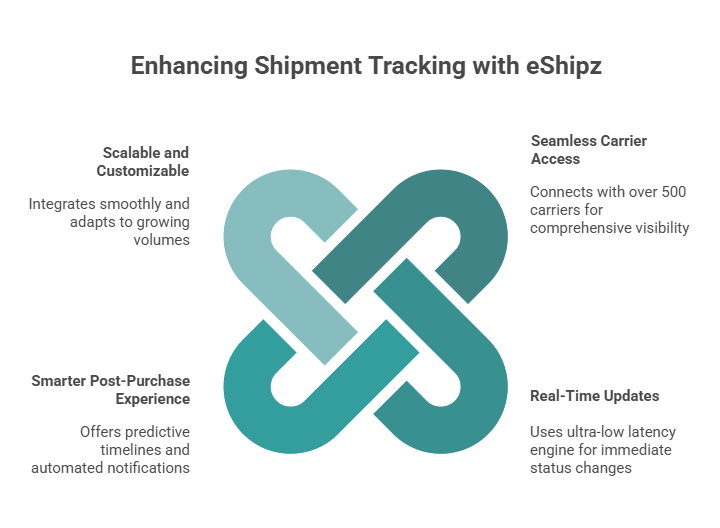
Reliable shipment tracking starts with access to the right data. eShipz connects with over 500 carriers across the US and global markets, enabling continuous visibility across national, regional, and international logistics networks. By pulling tracking events directly from multiple carrier systems, shipment information stays complete and consistent throughout the delivery journey. This reduces blind spots, minimizes missing checkpoints, and ensures tracking data remains dependable at every stage.
High-Speed, Real-Time Tracking Updates
In today’s fast-moving delivery environment, delayed updates can be just as frustrating as delayed shipments. eShipz uses an ultra-low latency tracking engine that captures and processes shipment events as they happen. This means status updates are reflected quickly, reducing visibility gaps and keeping customers informed in near real time. Faster updates also help businesses stay ahead of potential issues, leading to fewer WISMO (“Where Is My Order?”) queries and less pressure on support teams.
Smarter Post-Purchase Tracking Experience
Shipment tracking is no longer just about reporting status changes. With predictive delivery timelines, automated notifications, and early exception alerts, tracking becomes an active communication channel. Instead of waiting for customers to ask for updates, businesses can proactively share meaningful information, helping set expectations and build confidence throughout the delivery process. This shift transforms tracking from a reactive task into a more thoughtful post-purchase experience.
Built to Scale, Easy to Customize
As shipment volumes grow, tracking systems must scale without adding complexity. eShipz is designed to integrate smoothly with existing platforms, offering flexible, platform-agnostic integrations and fully branded tracking pages. Its infrastructure supports high shipment volumes while maintaining strong performance, security, and uptime. This allows businesses to adapt their tracking experience as they grow, without compromising reliability or control.
By combining accurate carrier data, real-time updates, and flexible customization, eShipz enables a shipment tracking experience that feels clear, reliable, and consistent. From dispatch to doorstep, businesses gain better visibility, customers stay informed, and delivery journeys become easier to manage at scale
Technologies Driving Real-Time Tracking in 2025
In 2025, real-time tracking is powered by a combination of advanced technologies that work together to provide full visibility, predictive insights, and operational efficiency. From sensors and AI to cloud platforms and blockchain, these tools are transforming how businesses monitor and manage shipments across industries.
- IoT & Smart Sensors
Internet of Things (IoT) devices and smart sensors have become the backbone of modern tracking. These sensors continuously monitor shipment location, temperature, humidity, and handling conditions, ensuring that goods, whether fresh produce, pharmaceuticals, or chemicals, arrive safely and comply with regulatory standards. Alerts are sent instantly if shipments deviate from expected conditions, enabling proactive intervention and reducing losses or spoilage. - AI & Predictive Analytics
Artificial intelligence takes real-time tracking to the next level by analyzing historical and live data to predict delays, optimize routes, and suggest alternate carriers. For industries handling perishable goods, high-value electronics, or time-sensitive industrial components, AI helps prevent bottlenecks before they occur. Predictive insights allow logistics teams to make smarter, faster decisions, minimizing disruptions and improving overall delivery reliability. - GPS, RFID, & Cloud-Based Dashboards
Global Positioning Systems (GPS) and Radio-Frequency Identification (RFID) tags provide precise location tracking for shipments, whether moving across cities or continents. When combined with cloud-based dashboards, all data is consolidated into a single, real-time view, allowing businesses to track multiple shipments, warehouses, and carriers simultaneously. This unified visibility streamlines operations, reduces errors, and empowers teams to respond quickly to unexpected issues. - Blockchain for Security and Transparency
Blockchain technology adds an extra layer of security, integrity, and transparency to shipment tracking. Especially in industries like pharmaceuticals, luxury goods, and high-value manufacturing, blockchain ensures that shipment records are tamper-proof, auditable, and verifiable. This level of transparency builds trust with partners and customers while simplifying compliance with regulatory standards. - Integration and Interoperability
Modern tracking systems don’t work in isolation, they integrate with enterprise resource planning (ERP), warehouse management systems (WMS), and transportation management systems (TMS). This interoperability ensures that logistics data flows seamlessly across departments, enabling a holistic view of operations and making supply chain management smarter, faster, and more reliable.
Rethinking Real-Time Shipment Visibility
The US set an early benchmark for delivery tracking, but even the most advanced systems are evolving. As shipping networks become more distributed and multi-carrier operations become the norm, businesses are rethinking how they deliver visibility across the entire order journey.
The next phase of shipment tracking is not about collecting more data, it’s about presenting clear, real-time shipment tracking that works consistently across carriers, regions, and borders. Customers don’t want complexity; they want confidence. They want to track parcels, check delivery status, and follow their order journey without confusion or gaps.
This shift toward unified shipment tracking software reflects a broader move in the US market: treating tracking as part of the customer experience, not just a logistics update. Platforms designed with this approach help businesses offer a smoother, more reliable way to track shipments, from checkout to final delivery.
For teams looking to modernize how they handle orders and shipment tracking in the US, exploring a unified tracking approach is a natural next step.
Track all your US orders, parcels, and shipments in real time with advanced shipment tracking software. Use a single order tracking link to track your package and manage parcel & shipment delivery seamlessly from checkout to doorstep.