






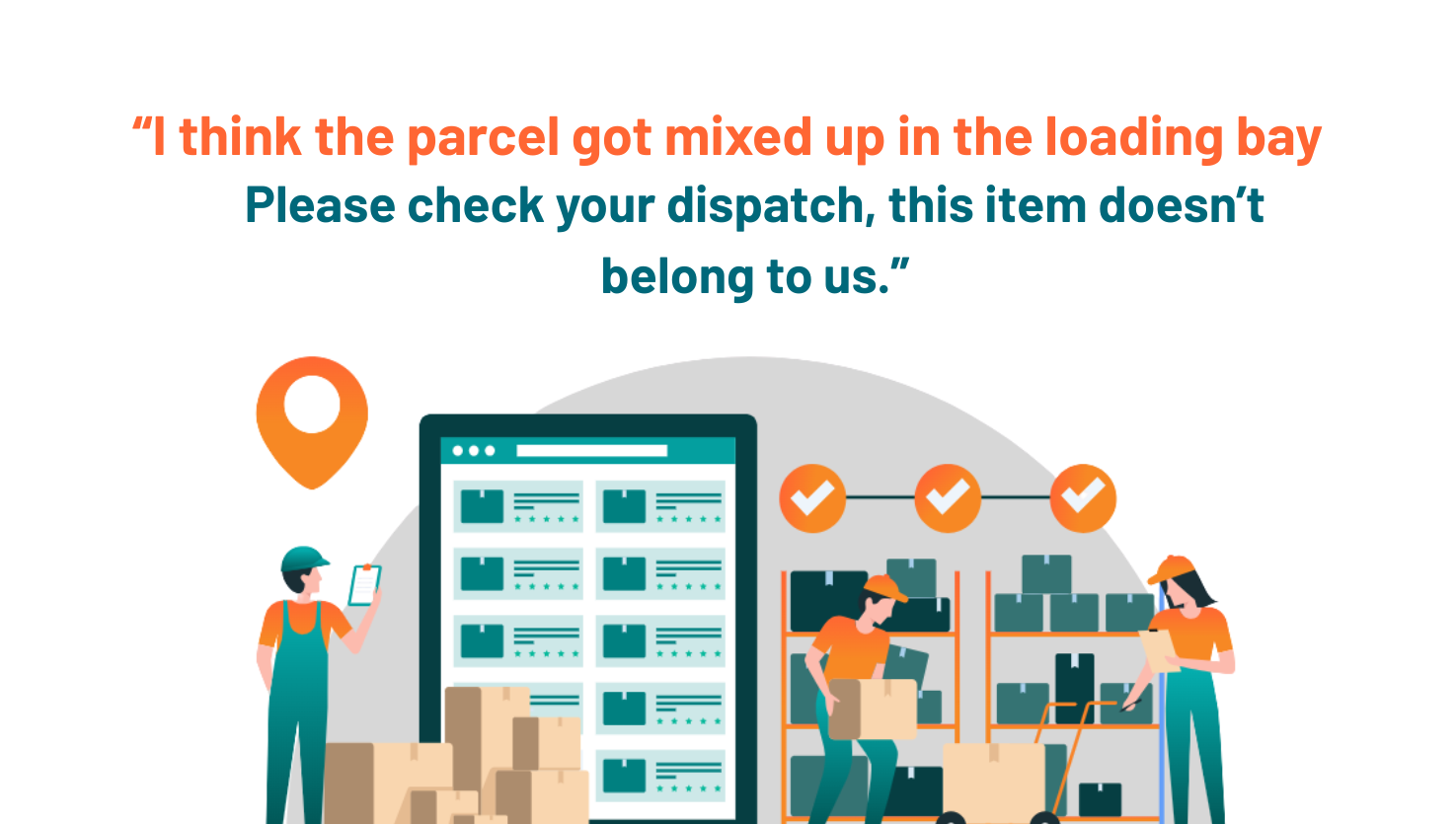
“Hi, we just received the wrong shipment at our warehouse. The cartons are labeled for another branch. This is urgent, our installation team is waiting. Can you please check what happened at your loading bay?”
Loading bay errors are not rare escalations in IT distribution. They are operational consequences of dispatch-level mistakes.
In B2B technology supply chains, one incorrect carton can disrupt an entire chain of commitments. A reseller may be waiting to complete a bulk rollout. A system integrator may have engineers on-site. A retailer may have already committed stock to customers. When a shipment contains the wrong SKU, the issue is no longer logistical, it becomes commercial.
Industry research highlights that fulfillment inaccuracies directly impact supply chain performance in high-value sectors like electronics. In IT warehousing, even a small dispatch error rate can translate into repeat freight costs, urgent re-shipments, delayed payments, and weakened channel trust.
At the same time, India’s enterprise hardware demand continues to expand. With growing SKU ranges, multi-location dealer dispatches, and tighter SLAs, warehouses are operating at higher velocity. Under this pressure, most incorrect deliveries don’t originate during picking, they occur at the loading bay, where visual checks replace structured validation.
This article examines the real operational pain behind loading bay errors in IT warehouses, why dispatch points are the most vulnerable checkpoint, and how shipment-to-carton validation before truck loading prevents incorrect B2B deliveries before they leave the gate.
Incorrect Bay Loading in IT Distribution: The Operational Risk at Dispatch
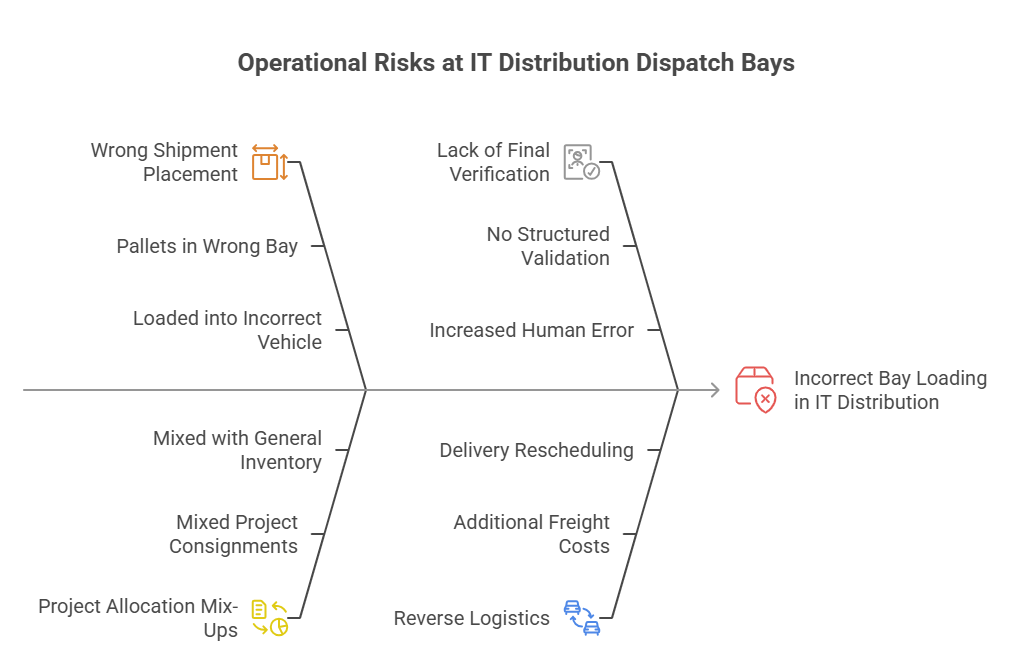
In IT distribution warehouses, dispatch bays are the final control point before shipments leave the facility. This is where consolidated orders are staged, verified, and loaded onto outbound vehicles. If errors occur at the bay level, such as placing the wrong pallet in the wrong vehicle or mixing project allocations, the mistake travels directly to the dealer.
Unlike picking errors caught during packing, bay-level mistakes often go unnoticed until delivery. In high-value IT distribution, where shipments are project-mapped and time-bound, incorrect bay loading can trigger immediate disruption across the supply chain.
Wrong Shipment Placed in the Incorrect Dispatch Bay
Each dispatch bay is typically assigned based on route, dealer cluster, or project allocation. When pallets are staged in the wrong bay, they are loaded into the incorrect vehicle.
This leads to:
- Shipments reaching the wrong dealer location
- Cross-delivery between channel partners
- Immediate rejection upon arrival
Since IT hardware is configuration-sensitive and often pre-assigned to specific projects, even a single pallet misplacement can derail carefully planned distribution schedules.
Project Allocation Mix-Ups at the Bay
In IT distribution, shipments are frequently linked to enterprise deployments or bulk project orders. If staging discipline at the dispatch bay is weak, project-specific consignments can get mixed with general inventory or other dealer allocations.
Such mix-ups cause:
- Partial deliveries
- Missing components for installations
- Deployment delays at enterprise sites
When hardware required for a data center rollout or infrastructure setup is incomplete, the entire installation timeline shifts.
Lack of Final Verification Before Loading
The dispatch bay serves as the last opportunity for verification before goods move out. If there is no structured validation, such as scan-based checks or vehicle-wise confirmation, wrong consignments may be loaded without detection.
Without proper controls at this stage:
- Manual oversight increases
- Human error risk rises
- Escalations occur post-delivery
In high-volume IT warehouses, even small process gaps at the bay level can multiply into recurring fulfillment issues.
Reverse Logistics Triggered by Bay Errors
When incorrect shipments are loaded from the bay and delivered to the wrong location, reverse logistics becomes unavoidable. Vehicles must be redirected or return pickups must be arranged.
This results in:
- Additional freight costs
- Delivery rescheduling
- Inventory reconciliation effort
Bay-level errors are particularly expensive because they occur after all upstream processes, picking, packing, and billing, are already completed.
Incorrect bay loading does not just create logistical inconvenience; it affects revenue flow and partner trust. Dealers may delay acceptance or payment until the correct shipment arrives. Finance teams may need to adjust invoices, and sales teams must manage escalations.
In IT distribution, where margins are controlled and relationships are long-term, repeated dispatch errors weaken channel confidence. Reliability at the dispatch bay directly reflects operational maturity.

Industry Reality & Dispatch Gaps: Why Loading Errors Happen in IT Warehouses
India’s enterprise IT market continues to expand, with sustained growth in technology investments, as highlighted by Statista. As distribution volumes increase, warehouse operations, especially dispatch bays, face mounting pressure to balance speed with precision.
As complexity grows, dispatch becomes the most critical control point, and often the most vulnerable.
- Rising Operational Complexity
- Expanding SKU portfolios with multiple configuration variants
- Frequent product updates and lifecycle changes
- Higher SKU density within warehouse racks
Greater product complexity increases the likelihood of staging and loading errors at the dock.
- Multi-Location & Multi-Carrier Pressure
- Simultaneous dispatch across cities and dealer networks
- Multiple transporters aligned at different bays
- Route-based and project-based shipment segregation
Without strict bay discipline, cross-loading and vehicle misalignment become more probable.
- Faster Dispatch Expectations
- Shorter order-to-dispatch cycles
- Dealer-driven urgency for enterprise deployments
- Limited verification time before vehicle departure
Speed reduces buffer time for manual checks, increasing dock-level risk.
- Dispatch Process Control Gaps
While picking accuracy is often monitored, loading validation at the dock may remain weak. Common gaps include:
- Cartons staged without digital shipment mapping
- Visual SKU confirmation instead of barcode scanning
- Manual invoice cross-verification
- No structured final checkpoint before gate-out
- Time pressure from waiting transporters
When loading is not digitally validated, the process depends heavily on human attention under time constraints.
- Supply Chain & Financial Impact
According to Gartner, fulfillment inaccuracies directly impact supply chain efficiency and working capital in electronics distribution. Dock-level mistakes escalate into reverse logistics costs, delayed revenue realization, and strained channel relationships.
In modern IT distribution, dispatch accuracy is no longer a basic operational step, it is a structural requirement. Precision at the dock protects margins, safeguards enterprise timelines, and preserves long-term dealer trust.
How eShipz Solves Dispatch-Level Loading Errors in IT Warehouses
As IT distribution grows more complex, dispatch accuracy cannot depend on manual supervision alone. Dock-level errors typically occur due to lack of structured validation, shipment mapping gaps, and time pressure during vehicle loading. eShipz addresses these challenges by introducing a digital control layer at the dispatch stage, ensuring that what leaves the warehouse is system-verified, not visually assumed.
Below is how the problem is systematically solved:
- Digital Shipment-to-Carrier Mapping
Instead of staging cartons based only on physical segregation, eShipz maps every shipment to its assigned carrier and route within the system. This ensures that pallets aligned to a specific dealer or project can only be validated for the correct outbound vehicle, reducing cross-loading risks.
- Barcode-Based Dispatch Validation
Manual visual SKU confirmation is replaced with barcode scanning at the dock. Before loading, shipments are digitally verified against order data, carrier allocation, and destination mapping. This minimizes human oversight errors and ensures loading accuracy under time pressure.
- Structured Gate-Out Checkpoints
One major gap in many warehouses is the absence of a final digital checkpoint before vehicle departure. eShipz enables a structured gate-out validation process, confirming that all cartons loaded in a vehicle match the assigned shipment list before dispatch.
- Multi-Carrier Coordination Control
For warehouses handling multiple transport partners simultaneously, eShipz centralizes carrier alignment within a single dashboard. Each vehicle, route, and shipment allocation is system-mapped, reducing manual coordination errors across dispatch bays.
- Reduced Reverse Logistics & Financial Risk
By validating shipments at the dock level, the probability of wrong delivery significantly decreases. Fewer dispatch errors mean lower reverse logistics costs, faster revenue realization, and improved working capital efficiency, an area widely emphasized in electronics distribution research by Gartner.
Dispatch moves from being a manual checkpoint to a digitally controlled process. Instead of reacting to dealer rejections and escalations, warehouses prevent errors before shipments leave the facility.
In modern IT distribution, solving dispatch-level errors requires structured validation, and that is how eShipz strengthens operational accuracy without slowing down speed.
Manual Dock Loading vs. Validated Dispatch Workflow: Traditional vs. Modern Control
In many IT warehouses, dispatch operations still rely on traditional dock practices, visual carton checks, paper-based documentation, and supervisor-led verification. While these methods may work at lower volumes, growing SKU complexity and multi-carrier coordination have made manual dock loading increasingly vulnerable to errors. Modern validated dispatch workflows shift the focus from reactive correction to preventive control. Instead of detecting errors after delivery, structured validation ensures accuracy before the vehicle leaves the warehouse.
Traditional vs. Modern Dispatch Approach
|
Area |
Manual Dock Loading (Traditional Way) |
Validated Dock Control (Modern Way) |
| Carton Check | Visual review by staff | Barcode-based confirmation against system data |
| Error Detection | Identified post-delivery | System-generated shipment mapping |
| Documentation | Paper-based invoices & manual matching | Identified pre-dispatch at the dock |
| Accountability | Supervisor-driven oversight | Digitally logged validation trail |
| Return Risk | Higher due to manual dependency | Reduced through structured checkpoints |
Dispatch Accuracy in IT Distribution: The Defining Control Point
Loading errors in IT warehouses rarely happen by chance. They usually stem from missing validation at the dispatch dock, the final checkpoint before shipments leave the facility. When loading depends on manual checks under time pressure, small oversights quickly turn into dealer rejections, reverse logistics, and delayed revenue.
As volumes scale, forward-looking distributors are embedding digital validation at the dock, using shipment mapping and scan-based confirmation to ensure accuracy before gate-out. Dispatch is no longer just a movement stage; it is a control point.
For teams exploring structured dispatch validation and multi-carrier coordination, platforms like eShipz offer insight into how dock-level precision can be built into daily operations, without slowing speed.