
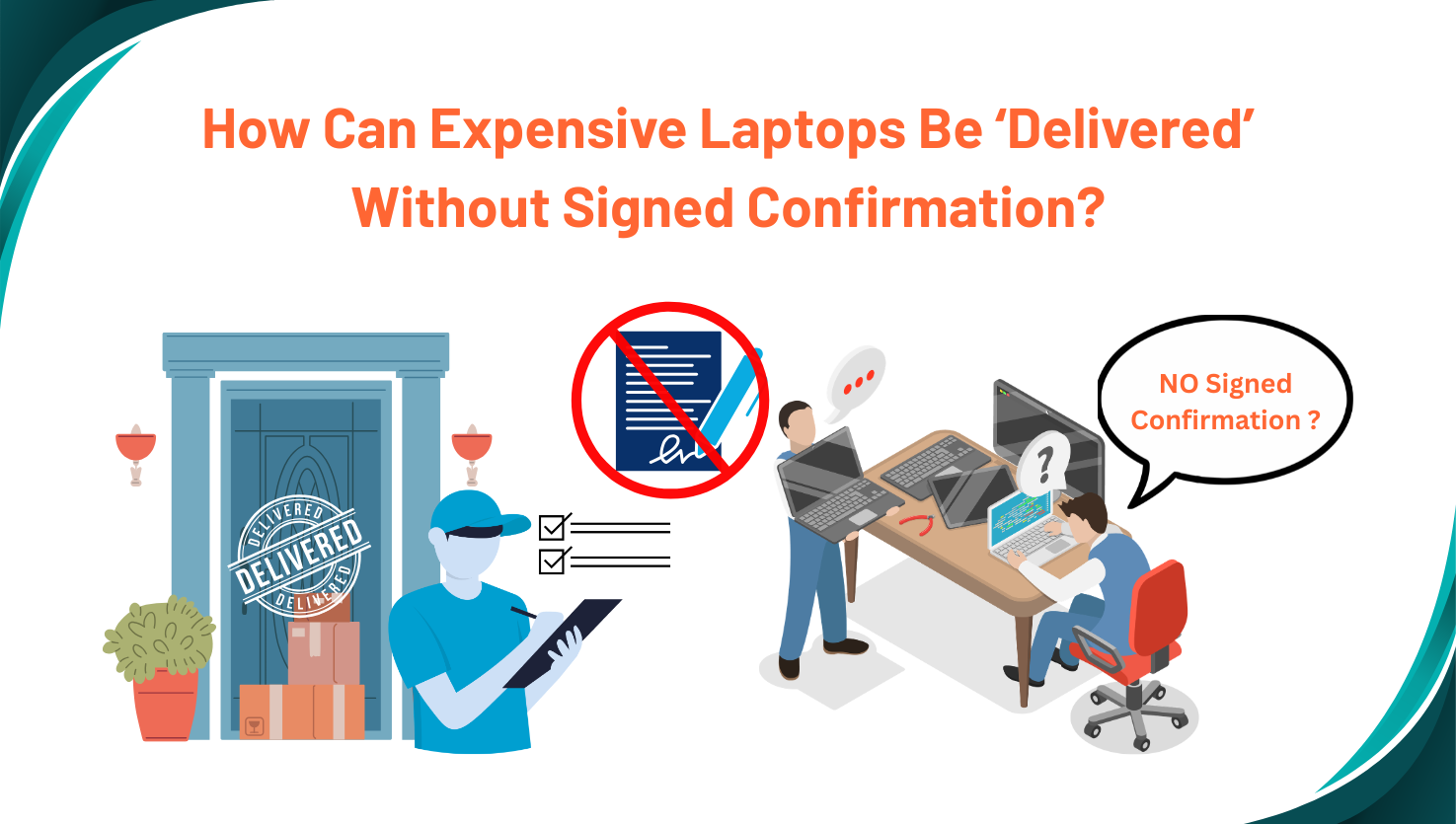
High Value IT Goods are becoming essential as distributors face a serious and growing risk. High-value IT products are being delivered without strong proof of delivery, leaving companies exposed to disputes, revenue loss, and operational breakdowns. Picture a distributor shipping enterprise servers worth several lakhs to a regional office. The courier system marks the shipment as delivered, but there is no photo, no signature, and no verified location. A week later, the customer denies receiving the goods. Sales raises a ticket. Finance blocks the invoice. Logistics contacts the courier partner. What should have been a routine delivery turns into a costly internal conflict.
This risk is not rare. According to Gartner’s supply chain risk research, nearly 89 percent of organizations have faced at least one supply chain disruption in recent years due to weak visibility and control mechanisms.
For distributors of high-value IT goods, proof of delivery is one of the most fragile points in the supply chain. When delivery confirmation is weak or unclear, it directly affects revenue realization, customer trust, and internal efficiency. As shipment volumes rise and networks become more complex, relying on basic delivery status updates is no longer enough.
Why Missing or Unclear POD Is Costing Distributors
Proof of delivery is the bridge between logistics execution and financial closure. Without it, every shipment becomes a potential dispute.
High-value IT goods such as laptops, servers, networking devices, biometric systems, and POS terminals are often delivered across multiple cities through third-party couriers. These products are compact but expensive, making them vulnerable to misplacement, mishandling, and disputes. If the only confirmation available is a courier status that says “delivered,” distributors are left with no reliable evidence when questions arise.
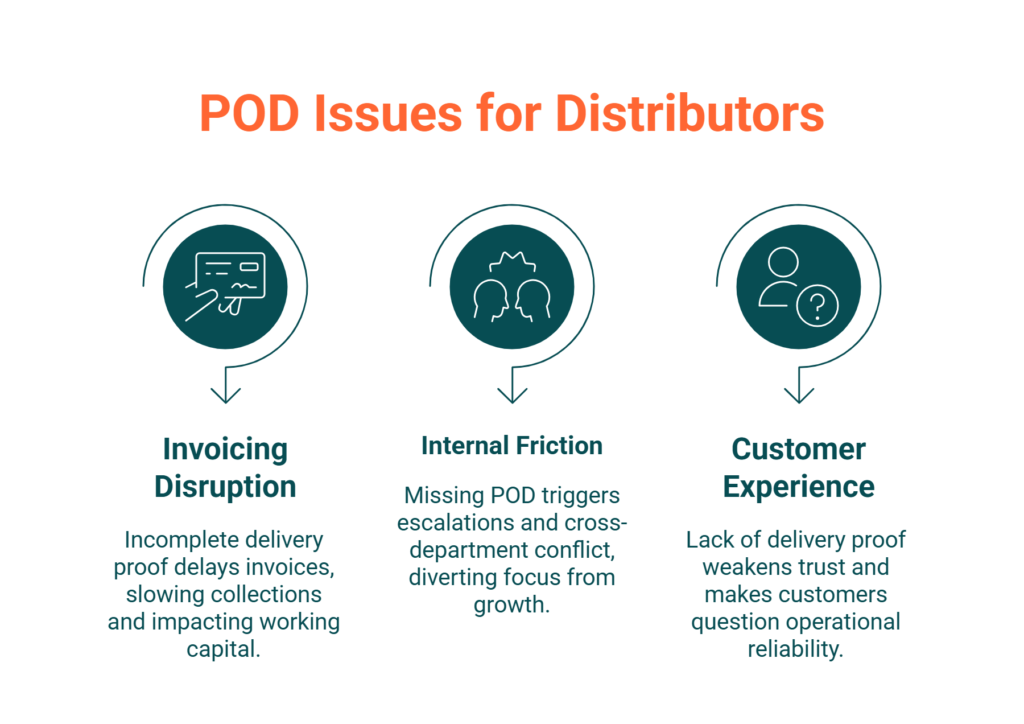
Missing or unclear POD affects distributors in three major ways.
First, it disrupts invoicing and cash flow. Finance teams depend on verified POD to release invoices and recognize revenue. When delivery proof is incomplete, invoices are delayed. Over time, this slows collections and impacts working capital. For distributors operating on tight margins, delayed cash flow can restrict inventory procurement and expansion plans.
Second, it increases internal friction. Sales teams are pressured by customers who claim non-receipt. Logistics teams must contact courier partners for clarification. Finance teams wait for confirmation before billing. Each missing POD triggers internal escalation and cross-department conflict. Instead of focusing on growth and customer engagement, teams spend time resolving disputes that could have been prevented with better delivery proof.
Third, it damages customer experience. Enterprise customers expect accountability, especially when receiving expensive hardware. If a distributor cannot confidently prove when and where a product was delivered, it weakens trust. Over time, repeated POD issues make customers question the distributor’s operational reliability.
Many distributors still rely on paper-based delivery slips or delayed uploads of scanned documents. These records are often illegible, incomplete, or lost. In a high-value IT environment, this level of uncertainty becomes a structural risk rather than an occasional issue.
Business Risks and Operational Bottlenecks
Weak proof of delivery leads to real and measurable business risks.
One major risk is loss of goods or unresolved delivery disputes. For example, a distributor sends 30 networking switches to a partner warehouse. The shipment is marked delivered. The partner later reports receiving only 25 units. Without photographic or signed proof, the distributor has no way to verify what actually happened at the point of delivery. The loss is either absorbed internally or escalated into a long dispute with the courier and the customer.
Another serious risk is delayed payments. Many B2B contracts require confirmed POD before payment is processed. If POD is missing or unclear, invoices remain unpaid for weeks or months. This creates a backlog of receivables and strains cash flow. It also increases dependence on manual follow-ups by finance teams.
Operational bottlenecks also grow. Customer support teams log complaints. Logistics teams track shipment trails. Warehouse teams recheck dispatch records. Each disputed delivery can take hours of investigation. Multiply this by dozens of cases every month, and the cost in employee time becomes substantial.
There is also a hidden reputational risk. IT distributors serve system integrators, retail chains, and enterprise clients who demand transparency. When delivery confirmation is weak, customers begin to doubt the distributor’s control over its logistics network. Over time, this can affect contract renewals and long-term partnerships.
Industry studies on supply chain failures show that process gaps and weak verification systems contribute heavily to financial losses. In IT distribution, POD is a critical control point. When that control fails, the ripple effect touches finance, operations, and customer relationships simultaneously.
The Modern Solution: Geo-Stamped Image Capture and Digital Signature POD
To close this gap, distributors need a modern approach to proof of delivery. Geo-stamped image capture combined with digital signature POD creates a reliable and verifiable delivery record.
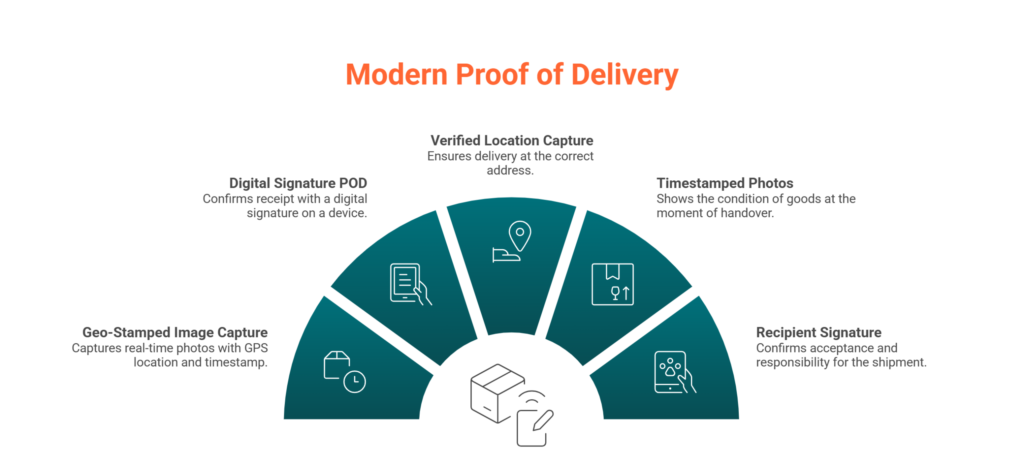
Instead of relying on text-based status updates, this system captures real evidence at the time of delivery. When the delivery agent reaches the destination, they take a photo of the shipment. The system records the exact GPS location and timestamp. The recipient then signs digitally on the device to confirm receipt.
This removes ambiguity in several ways.
Verified location capture ensures the delivery occurred at the correct address and not just nearby.
Timestamped photos show the condition of the goods and packaging at the moment of handover.
Recipient signature confirms acceptance and responsibility for the shipment.
Together, these elements form a complete and auditable proof of delivery record. If a dispute arises, the distributor can demonstrate where, when, and to whom the goods were delivered.
The benefits extend beyond dispute reduction. Billing becomes faster because finance teams receive instant confirmation. Customer complaints decrease because evidence is objective. Internal escalations drop because teams trust the system rather than chasing courier responses.
For high-value IT goods, this approach transforms POD from a weak link into a strong operational control.
Trackmile by eShipz: Smarter, Reliable Proof of Delivery for Distributors
Trackmile by eShipz is designed to solve the challenge of unreliable proof of delivery for high-value shipments.
Trackmile enables geo-stamped image capture and digital signature POD directly at the delivery point. Every delivery record includes the verified location, timestamp, and recipient confirmation. This creates a clear audit trail for each shipment.
For distributors, this translates into faster dispute resolution and quicker billing cycles. Sales teams can respond to customer queries with confidence. Finance teams can release invoices without waiting for manual confirmations. Logistics teams gain insight into courier performance and delivery quality.
Trackmile integrates with courier networks and internal systems, allowing ePOD data to flow into operational dashboards and reports. This reduces dependence on manual documents and scattered communication channels.
By adopting a smarter proof of delivery system, distributors move from reactive problem-solving to proactive risk control. The focus shifts from handling disputes to preventing them.
Strengthening Delivery Accountability for High-Value IT Goods
High-value IT goods delivered without reliable proof present a growing risk for distributors. Missing or unclear POD leads to disputes, delayed payments, and rising internal workload. In an industry where products are expensive and customer expectations are high, this risk can no longer be treated as a minor operational issue.
Modern proof of delivery systems based on geo-stamped images and digital signatures provide a practical solution. They replace assumptions with evidence and manual processes with automation. When each delivery is verified with time, location, and recipient confirmation, distributors gain control over one of the most vulnerable stages of their supply chain.
High Value IT Goods solutions that combine intelligent courier allocation with strong POD verification help create a safer and more accountable delivery ecosystem. As distribution networks expand and shipment values increase, adopting an AI Courier Allocation Platform becomes essential for protecting revenue, improving accountability, and ensuring smoother end-to-end operations.
The path forward is clear. Strong proof of delivery is not just a logistics upgrade. It is a strategic safeguard for distributors handling high-value IT goods.
Contact us today to protect your shipments and elevate your delivery confidence.