
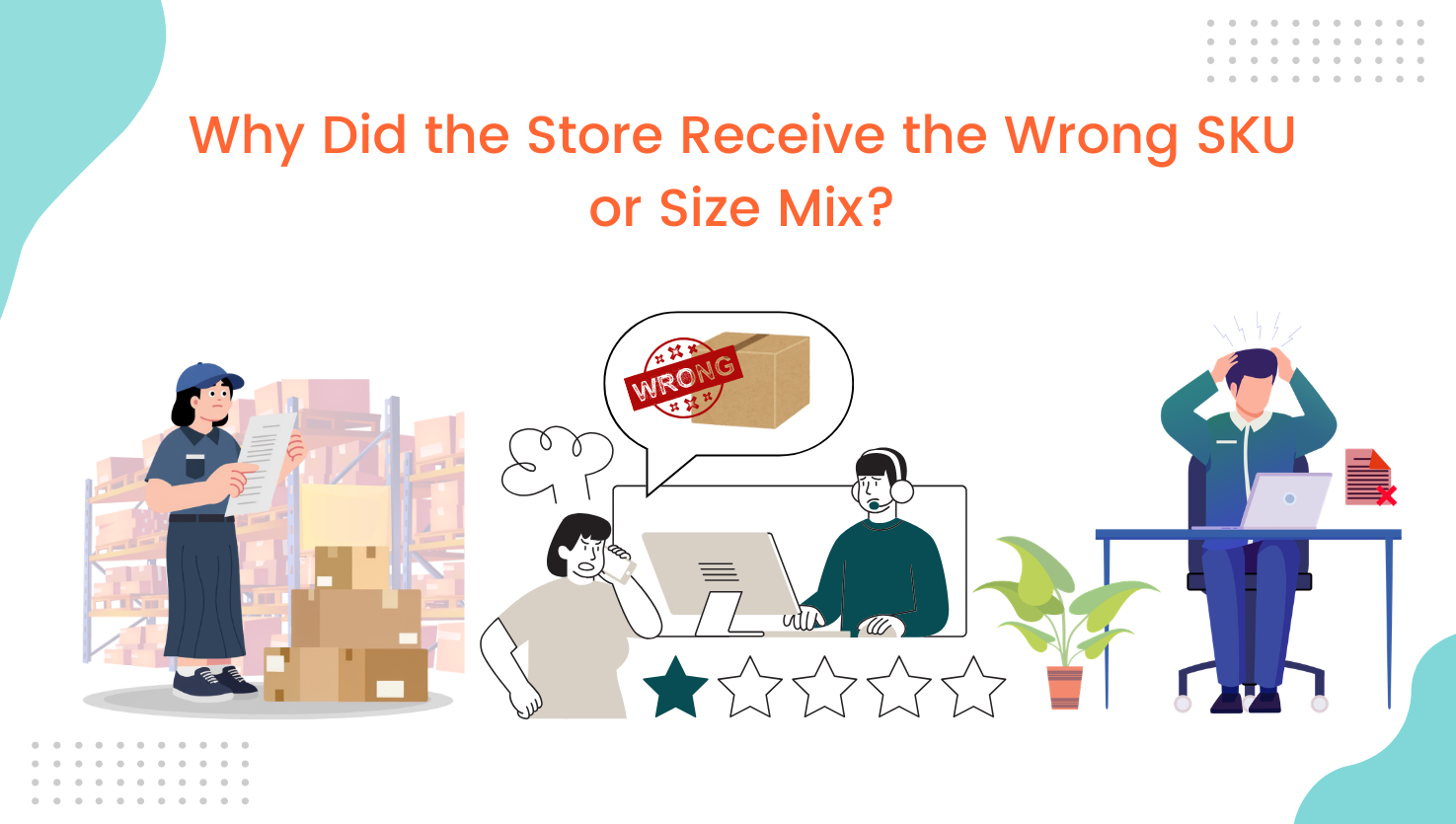
Incorrect Store Deliveries in Apparel Retail is one of the most overlooked causes of lost sales and poor store performance. Apparel brands invest heavily in merchandising, demand planning, and marketing, yet many sales are lost at the final stage of execution: dispatch and loading. Store replenishment in apparel is complex due to high SKU counts, fast-moving trends, and tight selling windows. When errors happen at the dispatch level, the impact is immediate. Shelves remain empty, promotions fail to launch on time, and customers walk away disappointed. According to supply chain research published by Gartner, execution errors and poor visibility at fulfillment stages are key contributors to revenue leakage and rising logistics costs in retail operations.
Apparel retail depends on speed and accuracy. A store may have inventory available in the warehouse, but if the wrong carton is loaded or the wrong size mix is shipped, that inventory might as well not exist. Dispatch-level mistakes convert available stock into lost opportunity. Unlike manufacturing defects, these errors are silent. They only become visible when a store opens cartons and finds the wrong products inside.
In the age of omnichannel retail, where customers expect the right product at the right store at the right time, loading accuracy is no longer a back-office metric. It directly affects revenue, loyalty, and brand perception.
The Real Pain Points: Where Dispatch Goes Wrong
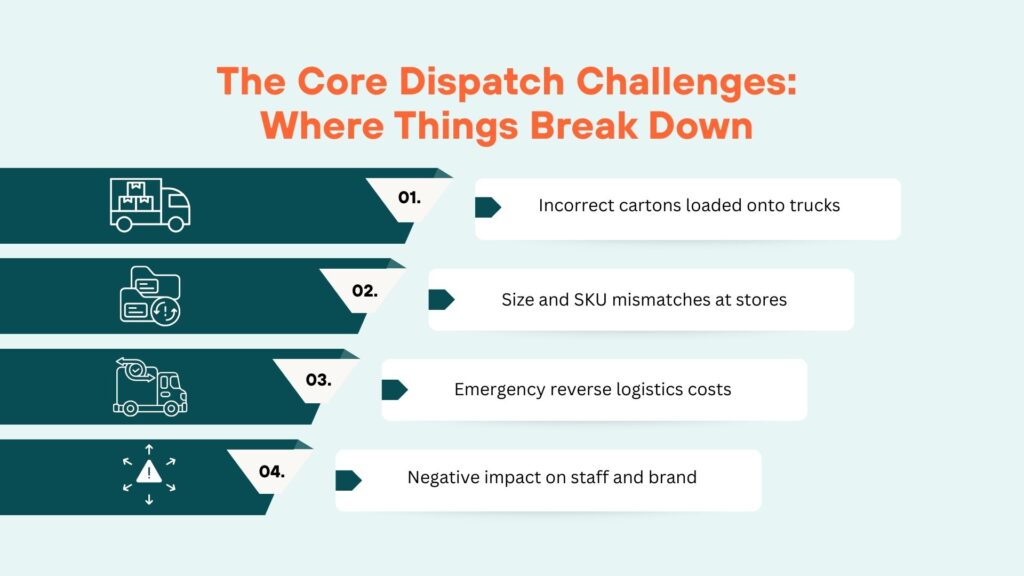
Wrong cartons loaded onto trucks
One of the most common dispatch failures in apparel retail is loading the wrong cartons onto a vehicle. This happens when dock teams rely on printed manifests and manual checks. During peak seasons or sale periods, speed is prioritized over verification. Similar-looking cartons meant for different stores get mixed up, especially when multiple store orders are staged together. A truck leaves the warehouse fully loaded, but half of its cartons belong to another location.
Size and SKU mismatches reaching stores
Even when the right carton reaches the right store, the contents may still be wrong. Apparel has a unique complexity compared to other retail categories. A single style can have multiple sizes and color variants. A small picking or packing error at the warehouse can lead to sending size S instead of size M or the wrong color variant. These mismatches disrupt planograms and create gaps on the rack that cannot be fixed easily.
Urgent reverse logistics increasing operational cost
Once an incorrect delivery is identified, the response is usually reactive. Stores raise a ticket, the logistics team arranges a return pickup, and replacement stock is dispatched. This creates an unplanned reverse logistics cycle. Transport costs double, handling costs increase, and warehouse teams spend time correcting avoidable mistakes. For fast fashion brands operating on thin margins, these extra movements quickly add up.
Impact on store staff, customer experience, and brand reputation
Store teams are the frontline of this problem. Instead of selling, they spend time counting cartons, raising complaints, and reorganizing stockrooms. Customers feel the impact when their size is unavailable or when a promoted item is missing from the rack. Over time, repeated failures damage trust. Shoppers do not differentiate between warehouse errors and brand performance. For them, the brand failed to deliver.
The Hidden Cost of Loading Errors on Sales & Operations
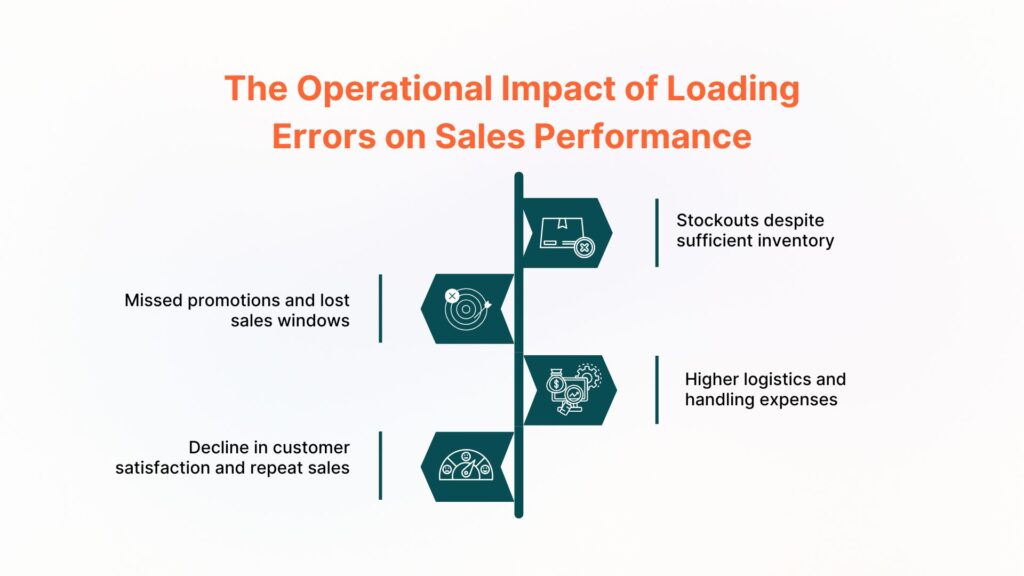
Stockouts despite available inventory
One of the most damaging effects of loading errors is artificial stockouts. Inventory exists in the system, but not at the store where demand occurs. This leads to lost walk-in sales and missed online order fulfillment from store stock. The business assumes demand is lower, while in reality supply was misrouted.
Delayed promotions and lost selling windows
Apparel retail runs on calendars. A collection is designed for a specific season, festival, or campaign. If products reach stores late or incomplete, the selling window shrinks. A summer line that arrives after peak demand must be discounted. The cost of a loading error is not just logistics. It is markdowns, unsold inventory, and damaged campaign ROI.
Increased logistics and handling costs
Every correction involves extra handling. Pickups must be arranged, cartons restaged, and new routes planned. Warehouses face congestion because wrong shipments come back and compete with outbound volume. Transport budgets rise due to unplanned trips. Finance teams see costs increase without any corresponding revenue gain.
Reduced customer satisfaction and repeat purchases
When customers repeatedly fail to find their size or preferred style, they switch brands or channels. Loyalty programs and marketing campaigns cannot compensate for basic availability issues. Over time, poor store fulfillment performance shows up in lower repeat purchases and weaker brand preference.
Incorrect Store Deliveries in Apparel Retail create a chain reaction. What starts as a small scanning or loading mistake grows into a revenue and reputation issue.
The Solution: Scan & Print Validation with Intelligent Courier Allocation
Shipment-to-carton and SKU validation before loading
The most effective way to stop errors is to prevent them at the dock. Scan and print validation ensures that every carton is digitally matched to its intended shipment and store before it is loaded. Each carton carries a unique barcode linked to SKU data and destination. When a loader scans a carton, the system confirms whether it belongs to that specific truck and route. If not, loading is blocked.
This approach shifts error detection from the store to the warehouse. Mistakes are corrected before the vehicle leaves, not after it arrives.
Real-time scan and print dispatch control
Real-time scanning creates a live view of what is being loaded. Supervisors can see which cartons are already on the truck and which are pending. Print labels generated at dispatch ensure that the latest routing and store mapping is used, rather than outdated paperwork. This reduces reliance on memory and visual checks, which are unreliable under pressure.
Reduced manual dependency at warehouse docks
Manual dock operations depend heavily on experience and attention. During peak season, temp staff and overtime shifts increase the risk of errors. Automation through scanning and system-driven validation reduces dependency on individual judgment. Processes become consistent across shifts and locations. This standardization is critical for multi-warehouse and multi-region apparel brands.
How eShipz supports dispatch accuracy
eShipz supports dispatch accuracy by enabling scan and print validation at the carton and shipment level. Its platform integrates with warehouse and order systems to ensure that every scanned unit is verified against the intended store and SKU mix. This helps brands reduce wrong loads, eliminate mismatches, and create traceability at the dispatch stage without slowing operations.
Role of AI Courier Allocation Platform in optimizing courier allocation
Even with perfect loading, choosing the wrong courier can lead to delays and missed store cutoffs. An AI Courier Allocation platform evaluates historical performance, route efficiency, and delivery timelines to assign the best carrier for each store shipment. This ensures that validated shipments also reach stores on time and in the right sequence.
Combining dispatch validation and AI-based courier selection for error-free store deliveries
When scan and print validation is combined with AI-driven courier allocation, apparel brands achieve two levels of control. First, they ensure that the right product goes onto the right truck. Second, they ensure that the truck itself is the right one for that store. This dual approach reduces physical errors and planning errors. Stores receive complete assortments, on schedule, and in the right size mix.
Instead of reacting to store complaints, operations teams gain confidence that dispatch accuracy is being enforced at the source.
Conclusion: Turning Dispatch Accuracy into a Sales Advantage
Apparel retail is becoming more demanding as assortments grow, selling windows shrink, and store networks expand. In this environment, losing control at the dispatch stage is no longer a small operational lapse. It is a direct risk to revenue, customer trust, and brand performance.
Incorrect store deliveries caused by loading errors lead to stockouts even when inventory is available, delayed launches, and unnecessary reverse logistics. These failures increase logistics costs, burden store staff, and weaken the customer experience. What appears to be a warehouse issue quickly becomes a sales and reputation issue at the store level.
Dispatch accuracy must be treated as a control system, not just a warehouse task. Scan and print validation and intelligent courier allocation bring structure and accountability to the loading process. They help ensure the right cartons, SKUs, and size mixes reach the right stores at the right time. This reduces manual dependency, prevents avoidable errors, and improves visibility across operations.
The future of apparel retail will be shaped by how well brands manage precision at the point of dispatch. Those that invest in proactive error prevention will improve store availability, reduce operational waste, and protect their selling windows. By strengthening dispatch accuracy, retailers can move from reactive corrections to reliable, sales-driven fulfillment.
To eliminate loading errors before they leave the warehouse, brands must adopt digital-first dispatch controls that support both operational efficiency and revenue growth. Learn how to prevent loading errors and improve store availability, speak with our team.