

Lightweight shipment cost optimization has become a critical priority for Indian Fashion D2C brands as rising logistics expenses quietly erode profit margins. A recent government-commissioned study by the National Council of Applied Economic Research and the Department for Promotion of Industry and Internal Trade (DPIIT) shows that logistics costs in India account for nearly 7.97 per cent of the country’s GDP, with transportation being the largest component of this spend. This makes smart cost control in parcel delivery essential for brands seeking sustainable growth.
For apparel, footwear, and lifestyle brands selling directly to consumers, lightweight shipments such as t-shirts, small accessories, or bundled fashion items account for the majority of order volumes. On the surface, these low-weight orders appear inexpensive to fulfil. However, if they are allocated to the wrong couriers or inefficient networks, shipping becomes a hidden cost that can substantially reduce contribution margins.
Incorrect Carrier Allocation for Low-Weight SKUs
Lightweight SKUs like fashion essentials or small accessories present unique challenges in courier allocation. One of the root causes of rising shipping costs is incorrect carrier assignment at the time of order fulfilment.
Why Lightweight SKUs Often Get Mapped to Expensive Carriers
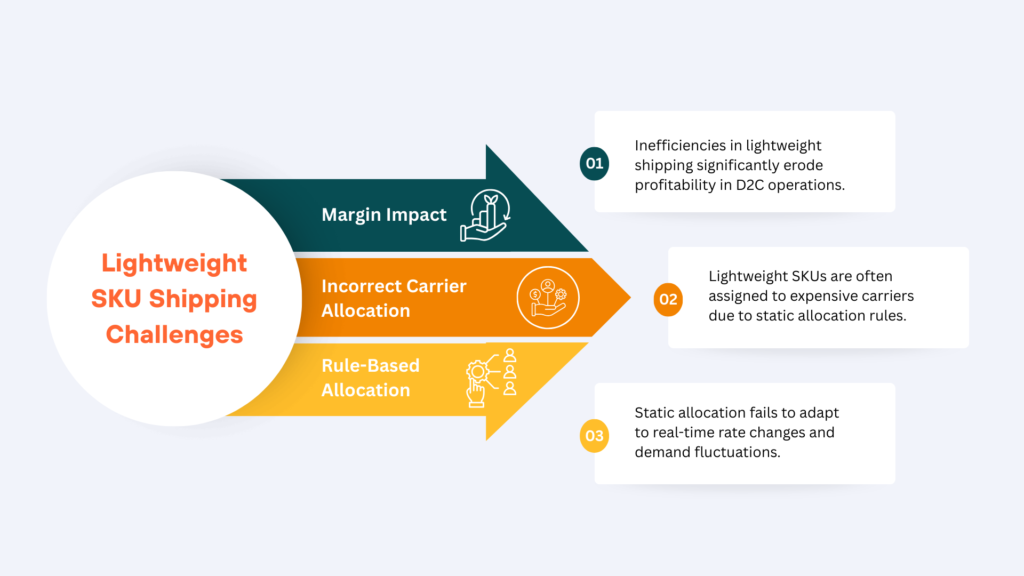
Traditional allocation logic often relies on fixed rules or static pin-code assignments. This means that once a courier is assigned to a specific region, all parcel types: heavy or light, get routed through that courier without considering the actual postage cost structure. For lightweight parcels, this can result in expensive partners being chosen even when a cost-effective alternative is available.
How Rule-Based or Static Allocation Increases Per-Order Shipping Cost
Static allocation does not account for real-time rate changes, fluctuating demand, or varying courier strengths across zones and weight brackets. For example, during peak sale periods, courier rates may change based on capacity constraints. A static system won’t adapt to these shifts, leading to suboptimal courier choice and higher per-order spend.
Over thousands of daily orders, these incremental cost mismatches accumulate into significant financial leakage. Especially for lightweight shipments where margins are already tight, these inefficiencies can substantially erode profits.
The Margin Impact in High-Volume D2C Operations
In a high-volume D2C environment, cost per shipment is rarely a flat number. Lightweight orders, often promised with free or subsidized shipping, place even greater pressure on operational margins. A difference of even ₹15–₹20 per order can translate into lakhs in monthly losses when multiplied by thousands of shipments. Without intelligent routing, brands will continue to lose profitability with each lightweight order processed.
Why Fashion and Lifestyle Brands Lose Margins on Lightweight Orders
The dynamics of the fashion ecommerce ecosystem make lightweight shipment cost optimization especially challenging.
High SKU Diversity
Fashion brands handle a wide range of products with varying weights and dimensions. Lightweight SKUs such as t-shirts or accessories may seem uniform, but packaging, volumetric weight, and cushioning requirements can vary significantly. This makes simplistic allocation rules ineffective at finding the least-cost courier path for each shipment.
Frequent Promotions and Small Cart Sizes
Sales promotions, festive discounts, and marketing campaigns often drive orders with small cart sizes. These small orders are generally low in shipment value, and logistics cost becomes a higher proportion of the overall transaction. Without careful cost allocation, lightweight orders like accessory sales can lose money even before product costs are considered.
Zone-Based Pricing Complexity
Courier companies price differently across zones and weight slabs. A carrier that is cost-effective for Zone A may be expensive for Zone B. Rule-based allocation cannot adjust in real time to these changing zone rates. This lack of optimisation disproportionately impacts lightweight parcels, where small cost differences matter more.
COD vs Prepaid Allocation Differences
Cash on Delivery (COD) orders usually entail higher courier charges due to risk and handling associated with returns. If lightweight COD shipments are assigned the same couriers as prepaid or heavier shipments, brands miss opportunities to lower costs by using COD-focused partners for light parcels.
All these factors together increase the likelihood that brands lose margin on lightweight orders and not because they are inherently unprofitable, but because courier allocation is not optimized for real-time rate and SLA efficiencies.
The Solution: Smart Carrier Allocation Engine
To address these issues, brands need an intelligent system that goes beyond static rules and evaluates each order for optimal courier allocation.
AI-Driven Carrier Selection Based on Multiple Variables
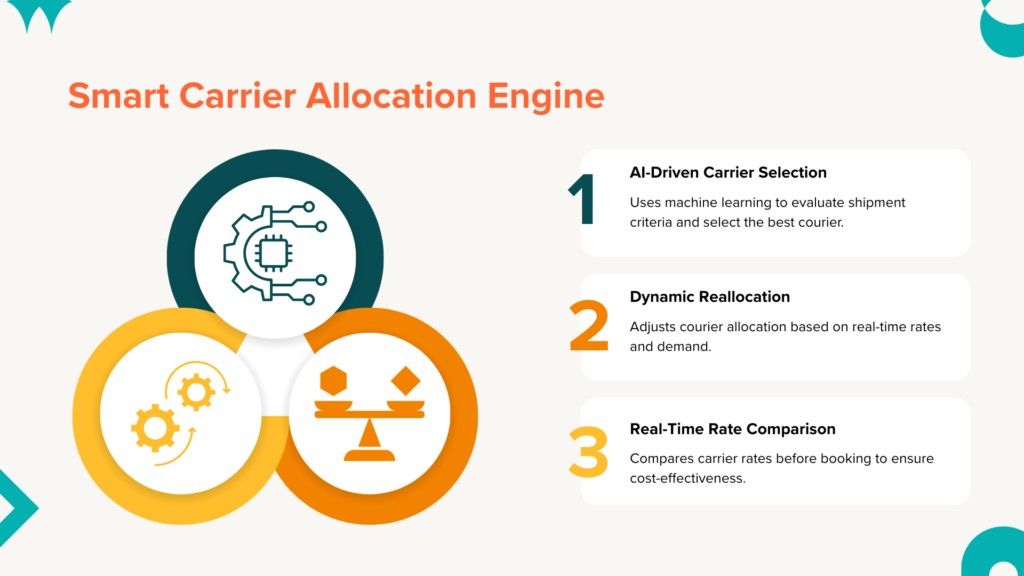
A smart allocation engine uses machine learning and real-time data to evaluate key shipment criteria: weight slabs, delivery zones, service level agreements (SLAs), and courier rates. It selects the best partner by comparing costs and performance across available options for each specific order.
This ensures lightweight parcels are matched with carriers that provide the lowest cost within acceptable delivery timelines and not just the default or historical preference.
Dynamic Reallocation Instead of Static Pin-Code Mapping
Dynamic models adjust allocation based on current rates, courier performance history, and fluctuating demand patterns. For example, if a regional courier offers better rates for low-weight orders in certain zones, the system automatically shifts traffic toward that partner without manual intervention.
Real-Time Rate Comparison Before Shipment Booking
Before booking a shipment label, the system compares rates from all eligible carriers. This eliminates situations where a lightweight parcel may be erroneously assigned to a premium service with higher minimum charges.
By taking real-time data into account, brands can reduce the cost of lightweight shipments significantly and eliminate inefficiencies hidden in static allocation methods.
eShipz AI Courier Allocation Platform Optimizes Lightweight Shipments
While avoiding direct promotion, it is useful to explain how modern tools operationalize intelligent shipment allocation.
Intelligent Courier Allocation Engine
Platforms like the eShipz AI Courier Allocation Platform automate the decision process by evaluating each order’s specific attributes like weight slab, zone, SLA preference, and real-time rate, and selecting the most cost-efficient courier partner accordingly.
Automated Decision-Making for Cost Efficiency
The system continuously learns from past delivery outcomes and adjusts carrier scoring based on real-time performance metrics such as delivery success rate, fulfillment time, and return rates. This ensures the algorithm improves decision quality over time.
Performance-Based Carrier Selection
Instead of relying on fixed priorities, the platform scores carriers based on performance and cost efficiency. For lightweight orders, this means cheaper and reliable couriers often get selected over premium ones, saving money without compromising on delivery quality.
Reduced Shipping Cost Per Order
Brands using intelligent allocation can often see a measurable reduction in logistics cost per order. For lightweight shipments, savings are particularly visible as the system avoids unnecessary premium allocations and leverages cost-effective options tuned for small parcels.
Overall, such a platform helps brands convert lightweight shipments from a cost burden into a manageable and optimised operational function.
Conclusion
Improving lightweight shipment cost optimization is essential for Fashion D2C brands that rely on high-volume, low-weight orders. Incorrect carrier allocation increases shipping costs and erodes margins – a problem exacerbated by promo-driven orders, complex zone pricing, and static allocation logic.
The solution lies in smart, dynamic, AI-driven carrier allocation that evaluates each parcel’s individual profile and chooses the best courier option. This not only decreases logistics cost per order but also improves profitability and scalability.
Adopting intelligent allocation strategies allows brands to protect margins, operate more sustainably, and reduce cost pressures that could otherwise hold back growth in India’s competitive ecommerce market.
Evaluate your courier allocation process today and explore intelligent shipment routing solutions to unlock efficiency, reduce hidden cost burdens, and scale with confidence. Talk to our experts.