
The US fashion market is one of the largest and most competitive apparel ecosystems in the world. According to industry research, the United States apparel market generates hundreds of billions of dollars annually and continues to grow alongside eCommerce expansion. As online sales accelerate, brands entering or scaling in this market quickly realize that logistics challenges for apparel brands in the US can become a major operational barrier if not managed effectively.
Today’s shoppers expect more than just stylish products. They demand fast shipping, real time tracking, flexible delivery options, and easy returns. A recent supply chain analysis by Gartner highlights how customer expectations for speed and transparency are reshaping retail logistics and forcing companies to rethink supply chain operations.
For apparel brands, logistics is not only about moving products from warehouses to customers. It directly impacts customer experience, operational efficiency, and profit margins. As brands expand across eCommerce platforms, marketplaces, and retail stores, supply chains become increasingly complex.
This complexity introduces several operational obstacles. From rising shipping costs to managing thousands of SKUs, apparel brands face a unique set of logistics challenges when selling in the United States.
Why Logistics is Critical for Apparel Brands in the US
Efficient logistics plays a central role in the success of apparel brands operating in the US market. With consumers expecting quick deliveries and seamless returns, logistics has become a key differentiator for fashion retailers.
A well managed supply chain ensures that products move efficiently from manufacturers to warehouses and finally to customers. When logistics processes are optimized, brands can reduce operational costs, avoid inventory shortages, and maintain consistent delivery timelines.
Customer satisfaction is heavily influenced by shipping speed and reliability. Delayed deliveries, incorrect shipments, or poor tracking visibility can negatively impact brand reputation. In an industry where customer loyalty is often driven by convenience and experience, logistics performance becomes a strategic priority.
Another factor driving the importance of logistics is the rapid growth of eCommerce and omnichannel retail. Many apparel brands sell simultaneously through their own websites, online marketplaces, and physical stores. Managing inventory, orders, and fulfillment across multiple channels requires advanced coordination and visibility.
As the apparel logistics ecosystem grows more complex, brands must address several operational hurdles that affect efficiency and profitability.
Top 10 Logistics Challenges for Apparel Brands Selling in the US
1. High Shipping Costs
Shipping expenses remain one of the biggest logistics challenges for apparel brands operating in the United States.
Domestic shipping rates have increased due to rising fuel prices, carrier surcharges, and operational costs. Apparel brands that rely on parcel shipping often experience fluctuations in carrier pricing, especially during peak shopping seasons.
These rising costs directly impact profit margins, particularly for brands selling lightweight but low margin items such as t-shirts, accessories, or fashion basics.
Without careful carrier selection and cost optimization strategies, shipping can quickly become one of the largest operational expenses.
2. Managing Inventory Across Multiple Channels
Modern apparel brands rarely sell through a single channel. Most operate across multiple platforms including their own eCommerce websites, online marketplaces, and physical retail locations.
This multi channel approach improves market reach but also introduces inventory complexity.
Brands must ensure that stock levels remain accurate across all platforms. Poor synchronization can lead to stockouts, overselling, or excess inventory sitting idle in warehouses.
Effective inventory visibility is critical to maintaining product availability and ensuring a smooth customer experience.
3. Complex Returns and Reverse Logistics
Apparel products have one of the highest return rates in the eCommerce industry. Customers frequently return items due to sizing issues, style preferences, or product expectations.
Managing returns requires additional logistics processes including return shipping, inspection, restocking, or product refurbishment.
Reverse logistics operations add both cost and operational workload. If returns are not handled efficiently, they can significantly impact profitability.
At the same time, customers expect simple and hassle free return experiences, which adds further pressure on apparel brands.
4. Demand Forecasting Difficulties
Fashion demand is heavily influenced by trends, seasons, and consumer behavior. Predicting which products will sell well can be difficult, especially for fast moving fashion categories.
Inaccurate demand forecasting often leads to either excess inventory or product shortages.
Overstocking increases storage costs and may force brands to discount unsold items. On the other hand, stockouts result in missed sales opportunities and dissatisfied customers.
Balancing inventory levels while responding to changing fashion trends remains a significant logistics challenge.
5. Meeting Fast Delivery Expectations
Consumers in the United States have grown accustomed to fast delivery options. Same day, next day, and two day shipping have become standard expectations in many regions.
Large retailers have invested heavily in distribution infrastructure to support rapid fulfillment.
Smaller or growing apparel brands often struggle to match these delivery speeds without increasing shipping costs. Achieving fast fulfillment requires strategically located warehouses, efficient order processing, and strong carrier partnerships.
Brands that fail to meet delivery expectations risk losing customers to competitors that offer faster service.
6. Warehouse and Fulfillment Challenges
Apparel warehouses handle a wide variety of products, including garments with different sizes, colors, and styles.
This diversity creates operational complexity in storage and fulfillment.
Warehouses must organize products efficiently to support quick order picking and packing. Poor warehouse layouts or inefficient processes can lead to slower fulfillment times and higher labor costs.
Additionally, apparel items often require careful packaging to prevent damage or wrinkles during transit.
Optimizing warehouse operations is therefore essential for maintaining efficient logistics performance.
7. Managing Cross Border Shipping and Compliance
Many apparel brands source products from international manufacturers before selling them in the US market.
Cross border shipping introduces regulatory and compliance requirements that must be carefully managed.
Import duties, customs documentation, and regulatory approvals can complicate the shipping process. Delays at customs checkpoints may disrupt supply chains and impact inventory availability.
Brands must stay informed about trade regulations and ensure that shipments comply with all import requirements to avoid penalties or delays.
8. Handling Size and SKU Variability
Apparel products typically exist in multiple sizes, colors, and styles. A single clothing item may have dozens of variations.
This creates a large number of stock keeping units or SKUs that must be tracked and managed.
Managing thousands of SKUs increases complexity in inventory tracking, warehouse storage, and order fulfillment.
Accurate SKU management is essential to ensure that customers receive the correct size and style. Even small errors can lead to returns and customer dissatisfaction.
9. Supply Chain Disruptions
Global supply chains remain vulnerable to disruptions caused by transportation delays, manufacturing issues, or geopolitical events.
Apparel brands often rely on international suppliers, which makes them particularly sensitive to such disruptions.
Unexpected delays in manufacturing or shipping can create inventory shortages and affect product availability during critical sales periods.
To reduce risk, brands must build resilient supply chains and maintain strong communication with suppliers and logistics partners.
10. Last Mile Delivery Challenges
The final stage of delivery, known as last mile logistics, is one of the most complex and costly parts of the supply chain.
Urban congestion, delivery density, and traffic conditions can affect delivery efficiency in major US cities.
At the same time, customers expect quick and reliable deliveries with accurate tracking updates.
Balancing delivery speed with cost efficiency is a constant challenge for apparel brands operating at scale.
Strategies to Overcome Logistics Challenges
Although the logistics challenges for apparel brands in the US are significant, several strategies can help brands build more efficient and scalable supply chains.
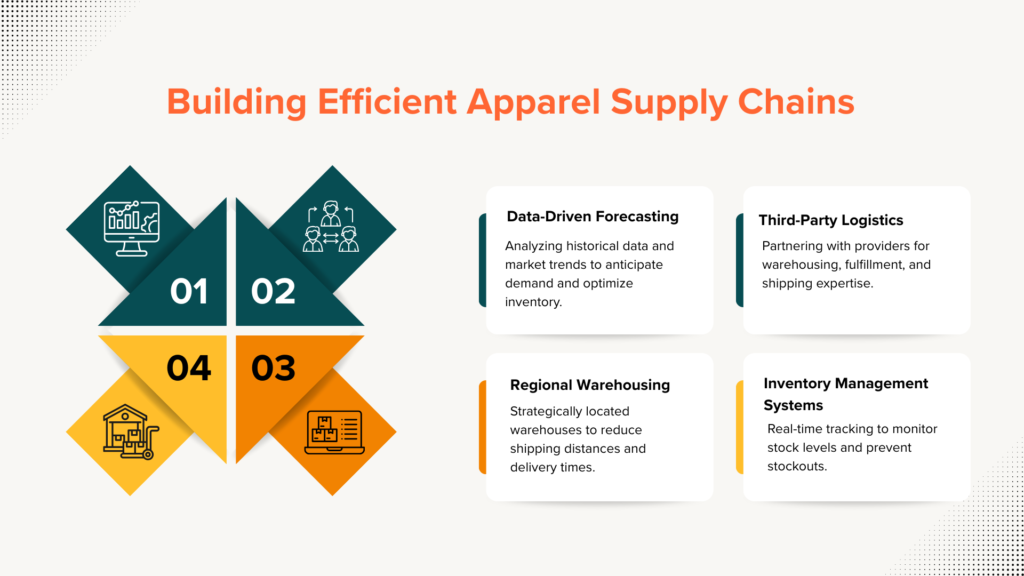
One effective approach is partnering with third party logistics providers. These providers offer warehousing, fulfillment, and shipping expertise that helps brands streamline operations without investing heavily in infrastructure.
Inventory management systems also play an important role in improving visibility and accuracy. Real time inventory tracking allows brands to monitor stock levels across multiple channels and reduce the risk of stockouts.
Another useful strategy is using regional warehouses located closer to key customer markets. This reduces shipping distances and enables faster delivery times.
Data driven demand forecasting can also improve planning. By analyzing historical sales data and market trends, brands can better anticipate demand and optimize inventory levels.
Technology Transforming Apparel Logistics
Technology is playing an increasingly important role in modern fashion supply chains.
Warehouse management systems help organize inventory, improve picking accuracy, and optimize warehouse layouts. These systems enable faster order processing and reduce operational errors.
Artificial intelligence is also transforming demand forecasting. AI driven analytics can analyze large volumes of sales and consumer behavior data to generate more accurate predictions.
Real time shipment tracking has become another essential capability. Customers now expect visibility into their orders from the moment they are shipped until they arrive at their doorstep.
Advanced logistics platforms provide centralized control over shipping operations, helping brands monitor deliveries, identify delays, and improve customer communication.
Key Takeaways for Apparel Brands
Apparel brands selling in the US market face a wide range of logistics challenges. High shipping costs, inventory complexity, and reverse logistics management remain some of the most significant operational hurdles.
In addition, growing customer expectations for fast delivery and transparent tracking have increased the importance of efficient logistics systems.
Brands that invest in scalable supply chain strategies are better positioned to manage these challenges and maintain consistent service quality.
Technology adoption, improved inventory visibility, and optimized fulfillment networks can help apparel companies operate more efficiently in a competitive retail environment.
Building Resilient Logistics for Apparel Growth
The logistics challenges for apparel brands in the US highlight how supply chain performance directly influences business success in the fashion industry.
From managing large SKU volumes to handling returns and meeting fast delivery expectations, apparel logistics requires careful planning and coordination. Brands that fail to address these challenges often face higher operational costs and lower customer satisfaction.
Another important aspect of modern logistics is shipment visibility. Customers and operations teams both expect real time updates on order movement and delivery status. Without proper tracking systems, brands may struggle to manage delivery issues, customer inquiries, or delays.
To improve visibility across shipments, many brands use centralized tracking platforms that consolidate updates from multiple carriers. Tools such as eShipz Global Package Tracking allow businesses to monitor shipments across carriers from a single interface.
A unified tracking solution helps brands track domestic and international shipments in real time, identify delays early, and provide accurate delivery updates to customers. This level of visibility not only improves operational efficiency but also enhances the overall post purchase experience.
Ultimately, solving logistics challenges does more than streamline operations. It creates a better customer experience, improves profitability, and supports sustainable growth in the highly competitive US apparel market.