
Managing Returns in Beauty Retail has become a defining challenge for online marketplaces in India. As digital beauty sales grow rapidly, return volumes continue to rise due to product sensitivity, subjective preferences, and marketplace-led buying behavior. According to a McKinsey study on reverse logistics, returns can cost retailers up to three times more than outbound deliveries and directly impact profitability and customer loyalty. The report also highlights how automation and data-driven processes are critical to controlling return-related losses.
In the Indian beauty marketplace ecosystem, this challenge is amplified by the lack of direct seller-customer interaction, wide regional diversity in product expectations, and liberal return policies. From mismatched foundation shades to ingredient sensitivity concerns, beauty products are especially vulnerable to post-purchase dissatisfaction. This makes managing returns not just an operational task, but a strategic priority for both sellers and platforms.
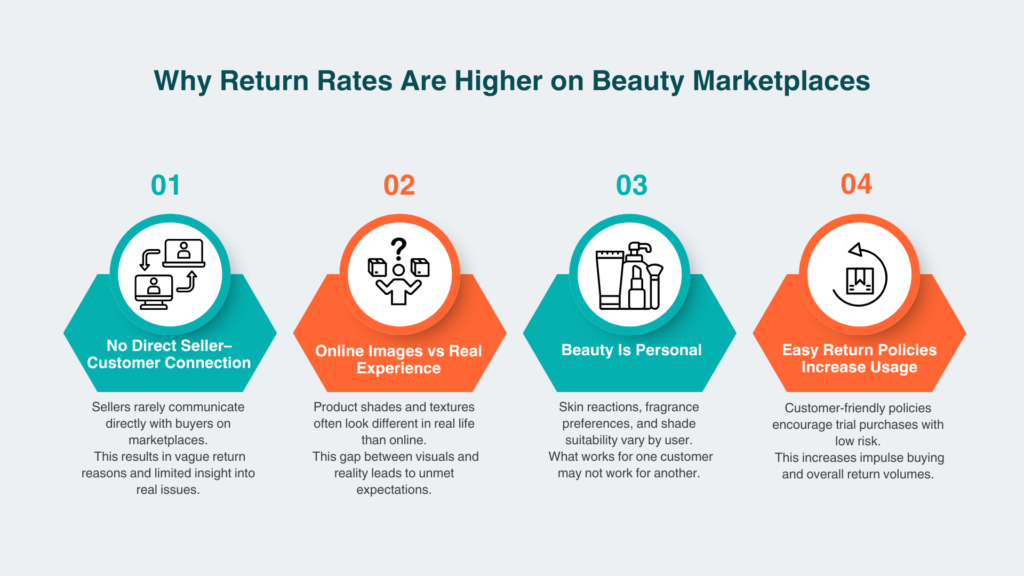
Why Return Rates Are Higher on Marketplaces
Beauty marketplaces face a unique mix of operational and customer experience challenges that naturally push return rates upward.
Lack of direct communication with customers
On marketplaces, sellers rarely have a direct relationship with buyers. Customer queries, complaints, and feedback flow through multiple layers of support. When something goes wrong, the seller often receives only a generic return reason such as “not satisfied” or “product mismatch.” This limited visibility prevents brands from addressing the root cause, whether it is packaging, description, or delivery quality.
Misaligned expectations between product look and reality
Beauty is a visual and sensory category. Customers rely on images, filters, and influencer reviews to make decisions. In reality, shades vary across screens, textures feel different, and packaging sizes can be misleading. A foundation shade that looked perfect online may appear too dark or too light when applied. These expectation gaps are a major driver of returns.
Size, shade, and ingredient concerns unique to beauty products
Unlike apparel, beauty returns are often linked to personal suitability. A cream may cause irritation, a fragrance may feel overpowering, or a serum may not match the user’s skin type. Ingredient sensitivity, shelf life, and authenticity concerns are also more pronounced in beauty. Customers feel safer returning products rather than risking continued use.
Marketplace return policies adding to higher returns
Many marketplaces follow customer-first return policies to boost trust and conversion rates. While this helps acquire customers, it also encourages impulse buying and trial behavior. Easy returns reduce hesitation at checkout but increase operational pressure later.
At the core of these issues lies one major problem: limited touchpoints between seller and buyer. When communication is indirect and data is fragmented, returns rise not just because products fail but because expectations are not managed and feedback loops are weak.
The Cost of High Return Rates in Beauty Retail
High return rates in beauty retail create a ripple effect across financial performance, operations, and brand perception.
Impact on margins, inventory, and customer satisfaction
Every return eats into margins. Logistics costs, handling fees, and restocking expenses often exceed the product’s profit value. In beauty, many returned items cannot be resold due to hygiene and safety regulations. This leads to write-offs and wastage. At the same time, repeated return experiences frustrate customers who expected a smoother process.
Operational burden of reverse logistics
Reverse logistics in beauty is complex. Products need inspection for tampering, leakage, and expiry. Warehouse teams must segregate resalable and non-resalable stock. This process consumes time, space, and manpower. For high-volume sellers, managing returns can disrupt forward order fulfillment.
Lost revenue and wastage
When returned products cannot be resold, they directly impact revenue. Add to this the cost of marketing to reacquire the same customer, and the financial burden multiplies. For marketplaces, high return rates also distort demand forecasting and inventory planning.
All these factors reinforce one reality: solving the return problem is critical for beauty sellers and platforms. It is not just about reducing refunds. It is about building a system that prevents avoidable returns and handles genuine ones efficiently.
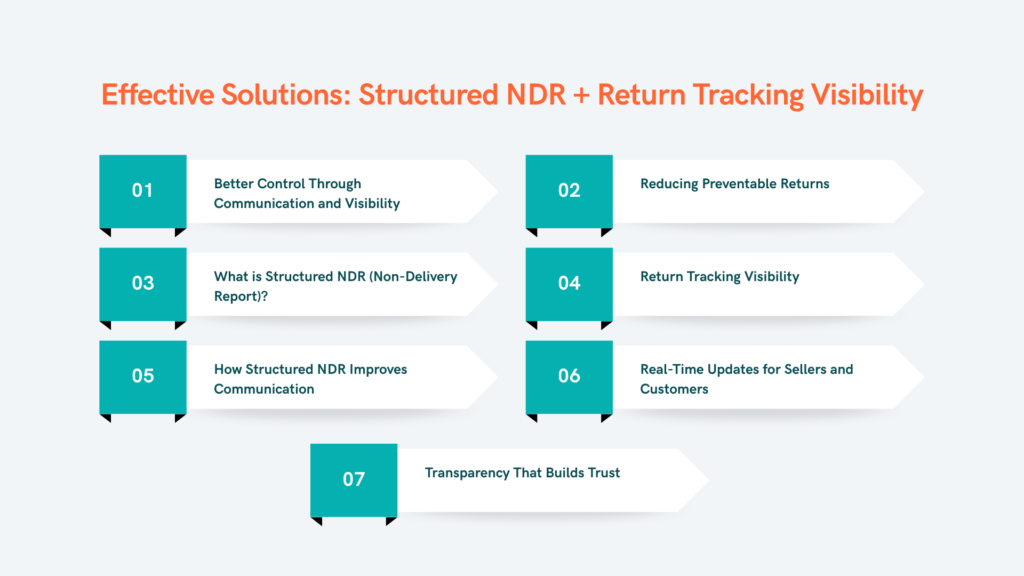
Effective Solutions: Structured NDR + Return Tracking Visibility
To reduce return rates meaningfully, beauty sellers need better control over two areas: communication and visibility.
What is Structured NDR (Non-Delivery Report)?
Structured NDR refers to a standardized way of capturing and categorizing delivery issues. Instead of vague reasons like “customer unavailable” or “address problem,” structured NDR records precise causes such as incorrect pin code, refused delivery, or product damage. This clarity helps sellers understand whether a return was avoidable.
How Structured NDR improves communication
With structured data, sellers can respond faster and more accurately. If a delivery fails due to the wrong address, the seller can contact the customer with a correction. If the reason is product mismatch, it highlights a listing or description issue. This structured feedback loop reduces guesswork and strengthens customer communication.
Reducing preventable returns
Many returns happen before the product even reaches the customer. Failed deliveries, refusals, and incomplete addresses lead to unnecessary return-to-origin shipments. Structured NDR allows sellers to intervene in time and reattempt delivery with the right information, reducing wasteful logistics cycles.
Return Tracking Visibility
Return tracking visibility means giving both sellers and customers real-time updates on the status of returned orders. Instead of waiting blindly for warehouse confirmation, stakeholders can see where the product is and what stage it is in.
Real-time updates for sellers and customers
When sellers know exactly when a product is picked up, in transit, or received, they can plan inventory better. Customers feel reassured when they can track their refund or replacement without repeated support calls.
Transparency that builds trust
Visibility creates accountability. It reduces disputes between marketplaces, sellers, and customers because everyone sees the same data. Over time, this transparency improves trust and lowers friction across the return journey.
Together, Structured NDR and return tracking visibility form a strong foundation to reduce unnecessary returns and operational cost.
AI-Driven Return and Re-Delivery Automation by eShipz
Modern beauty marketplaces require more than manual processes and spreadsheets. This is where AI-driven automation plays a critical role.
The AI Return and Re-Delivery Automation from eShipz is designed to handle high-volume return scenarios with minimal manual intervention. It focuses on automating decisions, improving visibility, and closing communication gaps between sellers and buyers.
Automated return routing
Returned shipments are automatically routed to the right warehouse or fulfillment center based on product type, condition, and business rules. This reduces handling delays and avoids sending non-resalable items back into active inventory.
Real-time tracking dashboards
Sellers get a single view of all return and re-delivery activity. Dashboards show which orders are in transit, which are pending inspection, and which are eligible for reattempt. This helps operations teams prioritize actions instead of reacting blindly.
Structured customer feedback capture
Instead of free-text reasons, the system captures standardized return and delivery failure reasons. Over time, this creates a data set that highlights trends such as frequent shade mismatch or address issues in specific regions.
How it directly addresses key marketplace challenges
It solves lack of visibility by offering end-to-end tracking.
It reduces communication gaps by structuring NDR and return reasons.
It helps reduce return rates by enabling timely re-delivery attempts and data-driven listing improvements.
For businesses looking to explore this approach, more details are available here: AI Redelivery Management Automation
Turning Returns from a Cost Center to a Growth Opportunity
Managing returns in beauty retail is no longer just an operational necessity. It is a strategic lever. High return rates on marketplaces stem from misaligned expectations, limited seller-customer communication, and policy-driven behaviors. These challenges increase costs, strain logistics, and weaken customer trust.
By adopting Structured NDR and return tracking visibility, beauty sellers can move from reactive problem-solving to proactive prevention. Adding AI-driven automation further strengthens this shift by enabling faster decisions, clearer insights, and better customer experiences.
Returns do not have to remain a cost center. When managed with the right systems and data, they become a source of learning and improvement. For beauty brands and marketplaces in India, the path forward lies in smarter communication, better visibility, and intelligent automation. The sooner these elements come together, the sooner returns can transform from a burden into a growth opportunity.
Start managing returns smarter with structured data and real-time visibility. Turn every return into an opportunity to improve customer experience and reduce cost. Reach out to us.