
Retail is changing faster than ever. Customer expectations have shifted from simple order updates to real-time clarity, instant issue resolution, and a delivery experience that feels personal. As supply chains grow more complex and consumer patience drops, retailers are realizing that traditional tracking is no longer enough. They need a system that predicts delays before they happen, offers visibility across the entire distribution network, and builds trust when the customer needs it most.
At its core, predictive tracking uses data analytics, automation, and machine learning to monitor real-world logistics conditions and forecast what is likely to happen next. Instead of waiting for an order to be delayed, it alerts the retailer ahead of time. Instead of reacting to customer complaints, retailers can proactively communicate. Instead of manually coordinating shipments, distribution teams operate with streamlined accuracy.
Predictive capabilities now sit at the center of modern retail operations. Many retailers integrate such systems through advanced retail logistics platforms like eShipz, which offer automation, visibility, and multi-carrier connectivity that support predictive insights across supply chains. Predictive tracking is no longer an optional tool. For retailers facing competitive pressure, high return rates, and complex distribution challenges, it has become essential for sustainable growth.
Types, Functions, Features, and Benefits of Predictive Tracking in Retail
Predictive tracking sits at the intersection of data analytics and logistics automation. It transforms static supply chains into intelligent, responsive systems. Below are the key elements that define its value.
Types of Predictive Tracking Systems
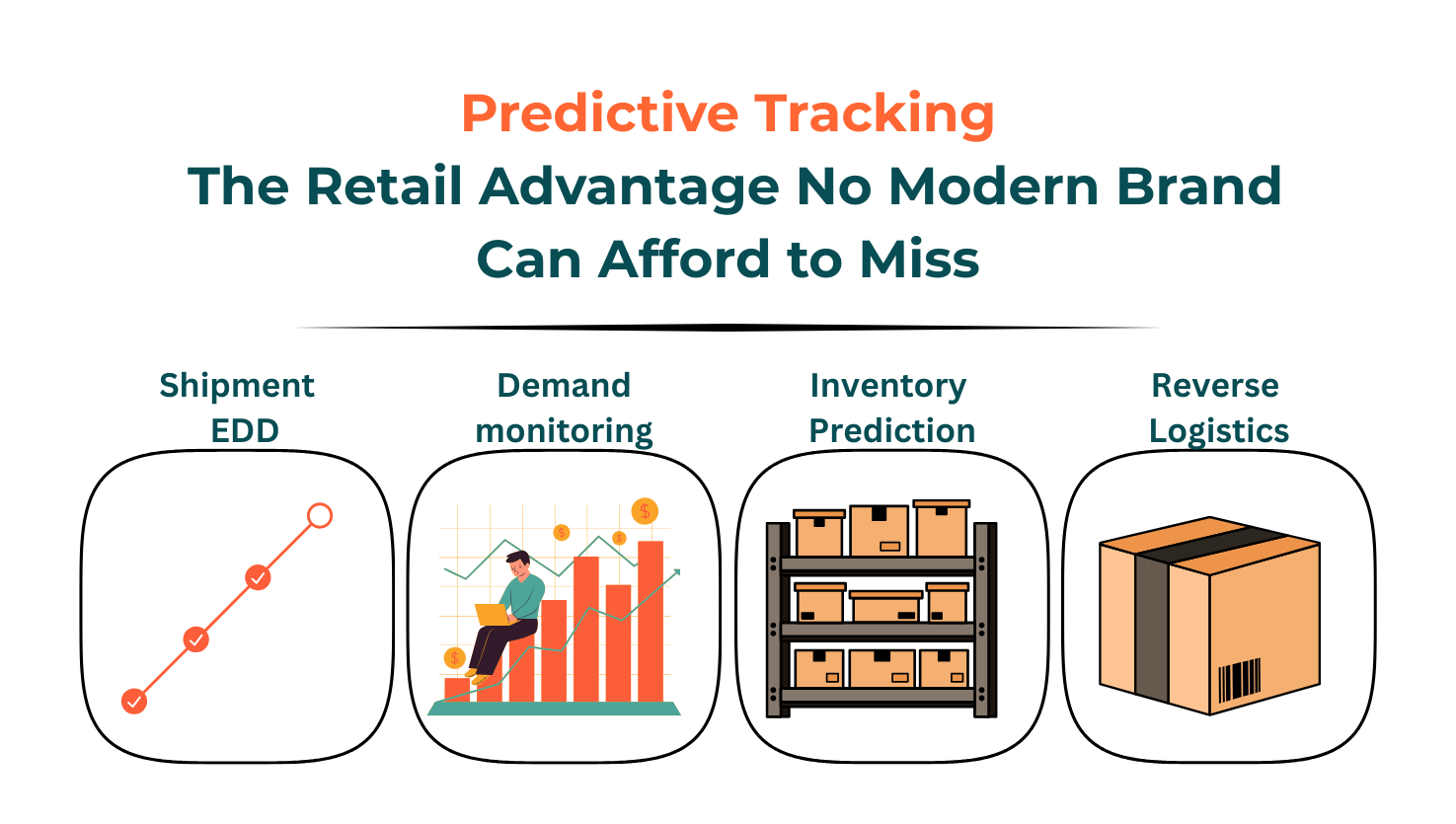
- Predictive Shipment EDD
This system pulls data from carriers, traffic sources, and historical delivery trends to estimate delivery times accurately. If a shipment is likely to miss a promised window, the system flags it instantly.
- Inventory and Stock-Level Prediction
Retailers can forecast which items might go out of stock and plan replenishment before shortages occur. This is especially useful for fashion, FMCG, and lifestyle brands that deal with fast-moving SKUs.
- Predictive Demand Monitoring
By analyzing buying patterns, seasonality, and sales velocity, retailers can predict customer demand and prepare for peak order periods.
- Predictive Reverse Logistics Tracking
Returns are a major cost center. Predictive systems help estimate when returned items will arrive back at the warehouse for faster sorting and restocking.
What Predictive Tracking Provides
Predictive tracking creates an ecosystem where retailers no longer guess what is happening across their supply chain. Instead, they get:
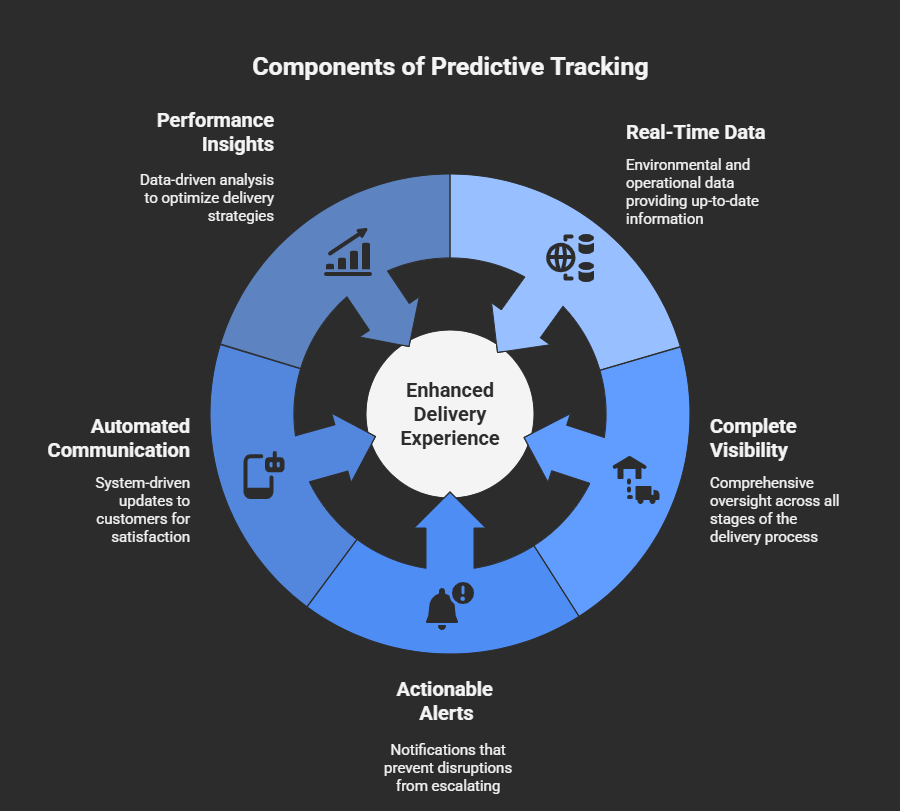
For retailers using platforms like eShipz’s logistics automation tools, these capabilities create a smoother end-to-end delivery experience by bridging gaps between carriers, warehouses, and customer communication.
Key Functions of Predictive Shipment Tracking
- Delay Prediction and Risk Scoring
Predictive shipment tracking systems analyze factors such as traffic patterns, carrier performance history, and regional logistics challenges to detect potential delays early. Each shipment receives a risk score, helping retailers identify which orders need immediate action. This proactive insight reduces delivery failures and ensures smoother customer experiences.
- Carrier Data Consolidation
Instead of accessing multiple carrier portals, predictive tracking brings all shipment data onto a single, unified dashboard. Retailers can view, compare, and manage orders across carriers without manual switching. This centralized visibility improves accuracy, speeds up decision-making, and reduces operational effort.
- Exception Management
Delivery issues like failed attempts, misrouted packages, or regional disruptions can slow down operations. Predictive systems automate exception handling by flagging these issues early and guiding teams through predefined workflows. This reduces manual intervention and helps retailers resolve delivery problems quickly and efficiently.
- Customer Engagement Automation
With predictive tools, customer communication becomes timely and transparent. The system sends automated updates through email, SMS, or WhatsApp to keep customers informed about expected delivery times, upcoming delays, or completed deliveries. This reduces WISMO (Where is My Order) queries and builds trust throughout the post-purchase journey.
- Cost Optimization
Predictive analysis helps retailers make smarter financial decisions related to shipping and operations. The system highlights cost-saving opportunities by evaluating carrier performance, identifying inefficient routes, and suggesting better packaging or fulfillment strategies. Over time, these insights lead to reduced logistics costs and improved operational efficiency.
Features and Benefits for Retailers
The shift toward predictive capabilities brings both operational and customer-facing advantages:
Key Features and Benefits of Predictive Tracking for Retail
| Features | Benefits |
| Reduced WISMO (Where is My Order) queries | Customers receive automatic updates, lowering support team workload. |
| Higher delivery accuracy | Forecast-based planning minimizes missed SLAs and improves brand reliability. |
| Lower return rates | Better delivery communication leads to fewer canceled orders and fewer failed attempts. |
| Improved customer loyalty | A transparent post-purchase journey builds reassurance and reduces anxiety. |
| Smarter inventory movement | Retailers can preposition stock closer to demand sources, cutting down delivery times. |
Who Benefits the Most? Real-World Examples
- Predictive tracking is not industry-specific. Brands with complex logistics, frequent SKU changes, or high order volumes benefit the most. Examples include:
- Fashion and apparel brands managing seasonal surges
- D2C brands that rely heavily on fast post-purchase experiences
- FMCG retailers who require precise inventory and demand predictions
- Electronics and gadgets companies where customer expectations for accuracy are high
- Marketplace sellers who compete on delivery promises and ratings
Retailers who adopt predictive tracking early often experience reduced operational costs and better customer retention compared to those relying on traditional systems.
How Predictive Tracking Improves Retail Distribution Standards
Retail distribution is continuously evolving. Accurate forecasting and real-time visibility play a major role in shaping modern supply chains, especially for brands with wide networks of sellers, warehouses, and carriers.
- Unified Multi-Carrier Visibility
Predictive tracking consolidates all carrier updates into one interface. Platforms such as eShipz’s multi-carrier management system help operations teams stay informed without switching between separate portals
- Improved SLA Compliance
When a shipment is likely to miss delivery commitments, predictive tools notify retailers in advance. Teams can escalate, reroute, or notify customers early, which protects brand credibility.
- Automated Workflows for Exception Management
Predictive tools support automated workflows that reduce delays caused by misrouted parcels, failed attempts, or regional disruptions.
- Better Contribution to Distribution Planning
Predictive tracking supports:
- performance-based carrier selection
- optimized routing
- warehouse assignment decisions
- processing time improvements
This helps retailers deliver faster and meet customer expectations more reliably.
- Real Case Studies Demonstrating Results
Platforms like eShipz have worked with several brands across industries to modernize retail distribution. Many examples highlight improvements in delivery accuracy, return rate reduction, and operational efficiency.
You can explore more real success stories here: eShipz Case Studies.
A few examples inspired by these transformations:
- A fashion retailer reduced RTO rates through better customer communication and predictive delay alerts.
- A wellness brand improved order tracking visibility during festive seasons with predictive notifications.
- A lifestyle brand increased warehouse efficiency by forecasting arrival patterns for high-volume shipments.
These results demonstrate how predictive tracking strengthens distribution standards, supporting both customer satisfaction and operational performance.
Conclusion: The Future of Retail Belongs to Predictive Tracking
Retailers today compete on experience. Once an order is placed, the next question every customer has is when it will arrive. Predictive tracking ensures retailers stay in control of the delivery journey by anticipating problems and making proactive adjustments.
Modern retailers do not need to rebuild their logistics networks from scratch. They can adopt scalable systems backed by automation, multi-carrier connectivity, and predictive insights. Platforms like eShipz offer accessible pathways to build smarter retail distribution without complicating operations.
Predictive tracking helps retailers shift from uncertainty to confidence and from reactive decision-making to proactive delivery planning. With these capabilities, brands can create stronger customer relationships and stand out in a competitive retail environment.