
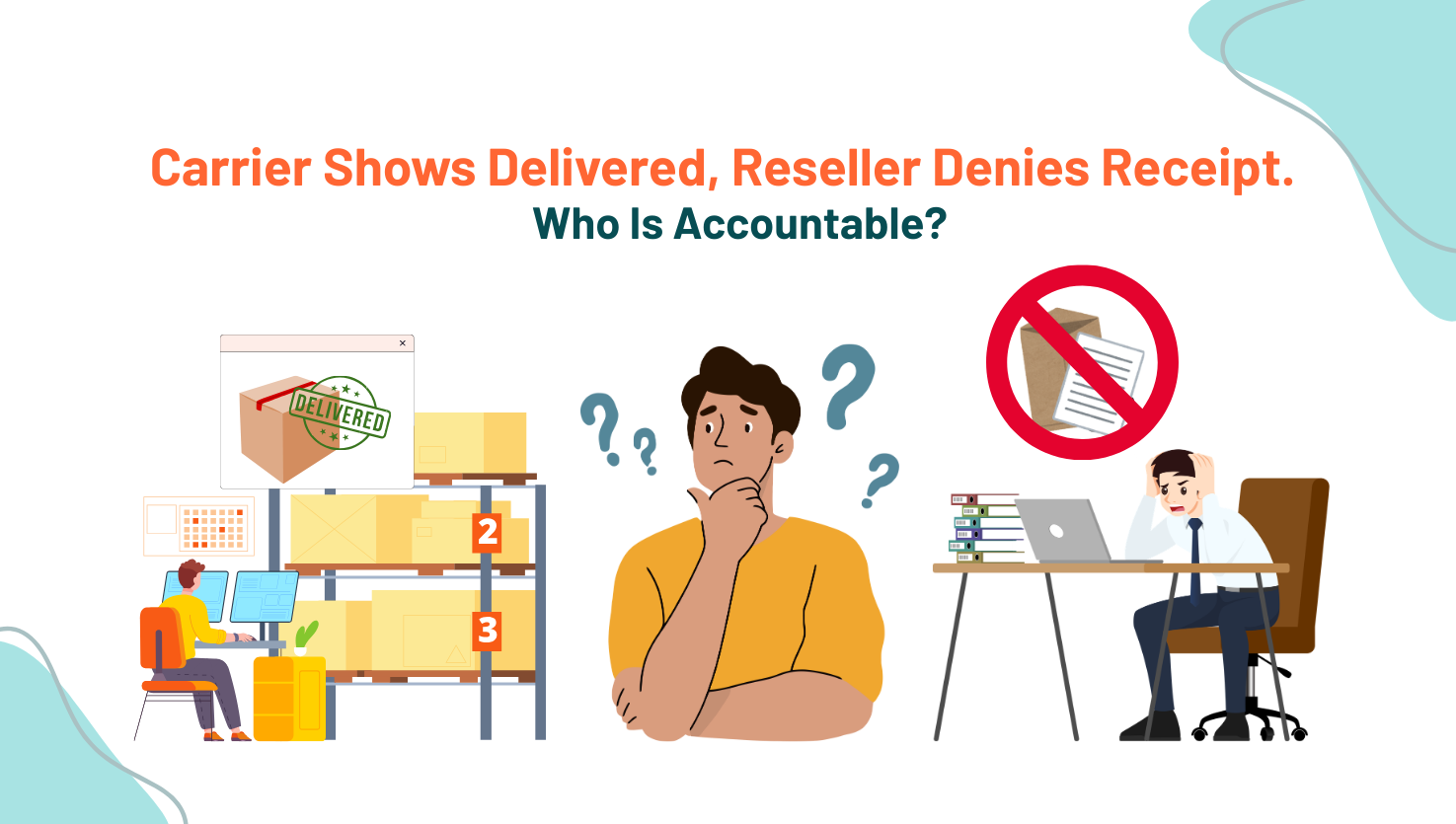
A regional IT distributor ships high-value routers and switches to a system integrator in Bengaluru. The courier portal shows “delivered” by evening. Two days later, the customer reports that only part of the shipment arrived. The finance team refuses to release the invoice because there is no verified proof of delivery. The distributor has stock value tied up, the customer disputes the cost of goods, and operations scramble to find evidence that does not exist. This scenario is becoming common across India’s IT distribution network and it explains why Proof of Delivery for IT Distributors has moved from a routine task to a business critical function.
India’s supply chains already struggle with visibility and efficiency. The World Bank highlights that logistics performance and process transparency remain key challenges for Indian businesses.
When this lack of visibility meets high-value IT products and multi-layered distribution networks, the impact is immediate and financial.
Why Proof of Delivery Is Critical in Modern IT Distribution
IT distribution is not the same as moving low-value consumer goods. It involves servers, networking devices, storage systems, and licensed hardware that often cost thousands or even lakhs per unit. A single delivery error can wipe out the margin on several successful orders.
Proof of delivery is the final confirmation that a commercial transaction has actually been completed. It validates that the right product reached the right person at the right time and in the right condition. Without this confirmation, the shipment might be marked delivered operationally, but it remains unverified financially.
One of the main roles of proof of delivery is revenue protection. In B2B IT supply chains, invoices are often released only after delivery is confirmed. If the confirmation is weak or missing, finance teams put payments on hold. This delays cash inflow and increases dependence on working capital.
Proof of delivery also protects relationships with channel partners. System integrators and resellers rely on distributors to meet project timelines. When there is confusion over whether goods were delivered or not, trust erodes. Even if the courier is at fault, the distributor becomes the face of the problem.
Another critical function is compliance and documentation. Many IT distributors work with global brands, enterprise customers, and government bodies. These customers require proper records for audits, taxation, and internal controls. A missing or unclear delivery proof can become a compliance risk.
Finally, proof of delivery supports operational decision making. Data from delivery confirmations helps distributors measure transit times, identify problem routes, and evaluate courier performance. Without reliable POD data, decisions are based on assumptions instead of facts.
Major Proof of Delivery Challenges Indian IT Distributors Face
Despite its importance, proof of delivery remains one of the weakest points in IT distribution operations in India. Several structural and operational issues contribute to this problem.
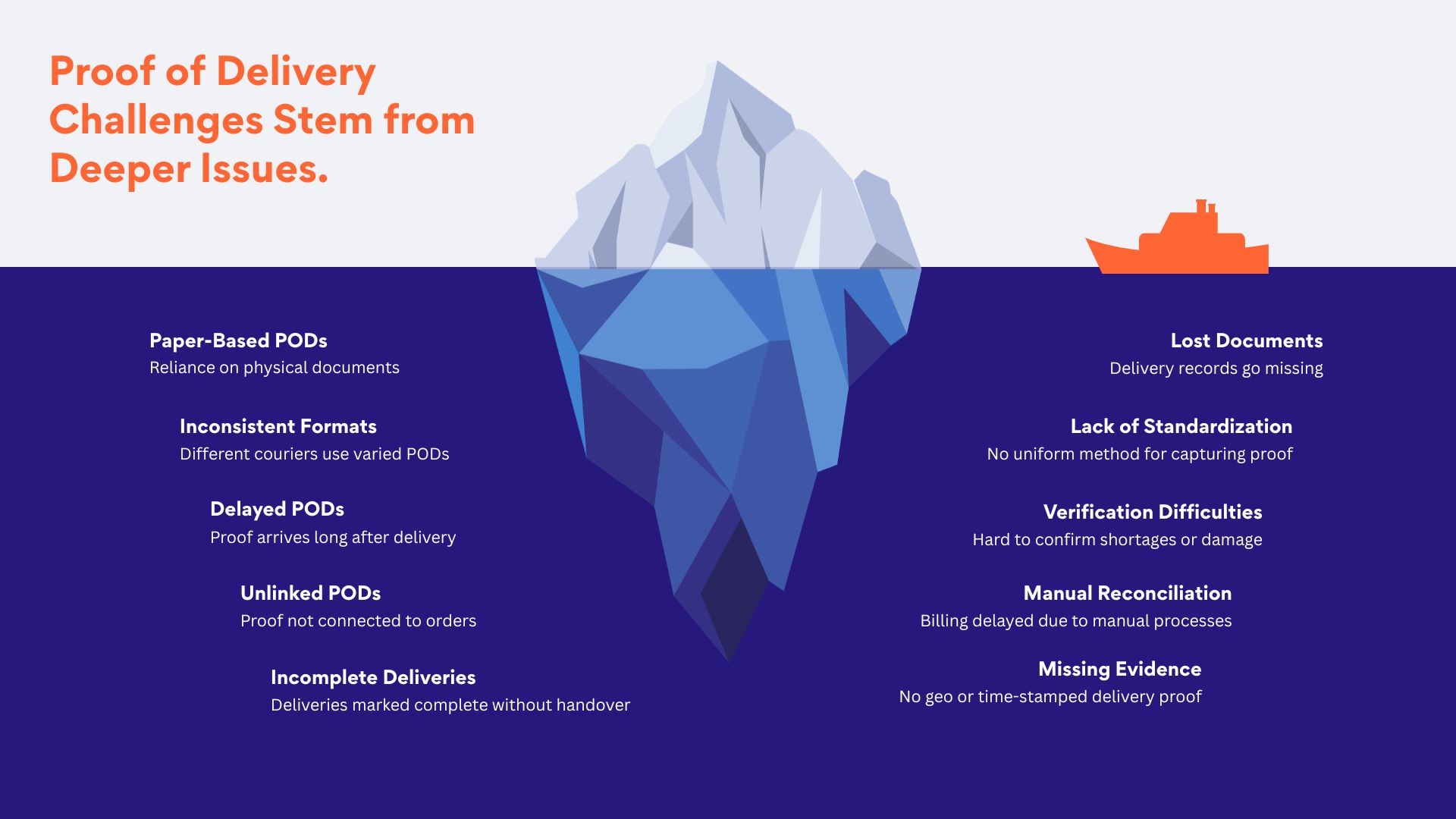
A major challenge is the continued use of paper-based processes. Many distributors still depend on physical delivery challans and handwritten signatures. These documents are often scanned days later or filed in offices. If a dispute arises, locating the correct paper becomes a manual search. Paper can be lost, damaged, or altered, which makes it unreliable for high-value transactions.
Fragmented courier networks create another layer of complexity. Distributors usually work with multiple logistics partners across regions. Each partner follows a different method for delivery confirmation. Some provide only a delivery status update. Others capture signatures but do not record images or location data. There is no standard format or process that ensures consistent proof across shipments.
Delayed confirmation is another serious issue. In many cases, proof of delivery reaches the distributor days after the actual handover. By then, if a customer claims shortage or damage, it becomes difficult to verify what happened at the delivery point. The delay weakens the distributor’s ability to challenge incorrect claims.
System disconnection makes matters worse. Proof of delivery is often stored separately from order management and invoicing systems. Operations teams must manually match POD documents with invoices and customer records. This increases errors and slows down billing cycles.
Fraud and misreporting are also real risks. There are cases where deliveries are marked complete without proper handover. Signatures may be collected from unauthorized staff or not collected at all. Without geo-tagged and time-stamped evidence, it is difficult to prove whether the shipment truly reached the intended recipient.
These challenges create an environment where high-value goods can be marked as delivered without verified proof. This is where control begins to slip.
The Hidden Cost of Poor POD: Where Distributors Are Losing Control
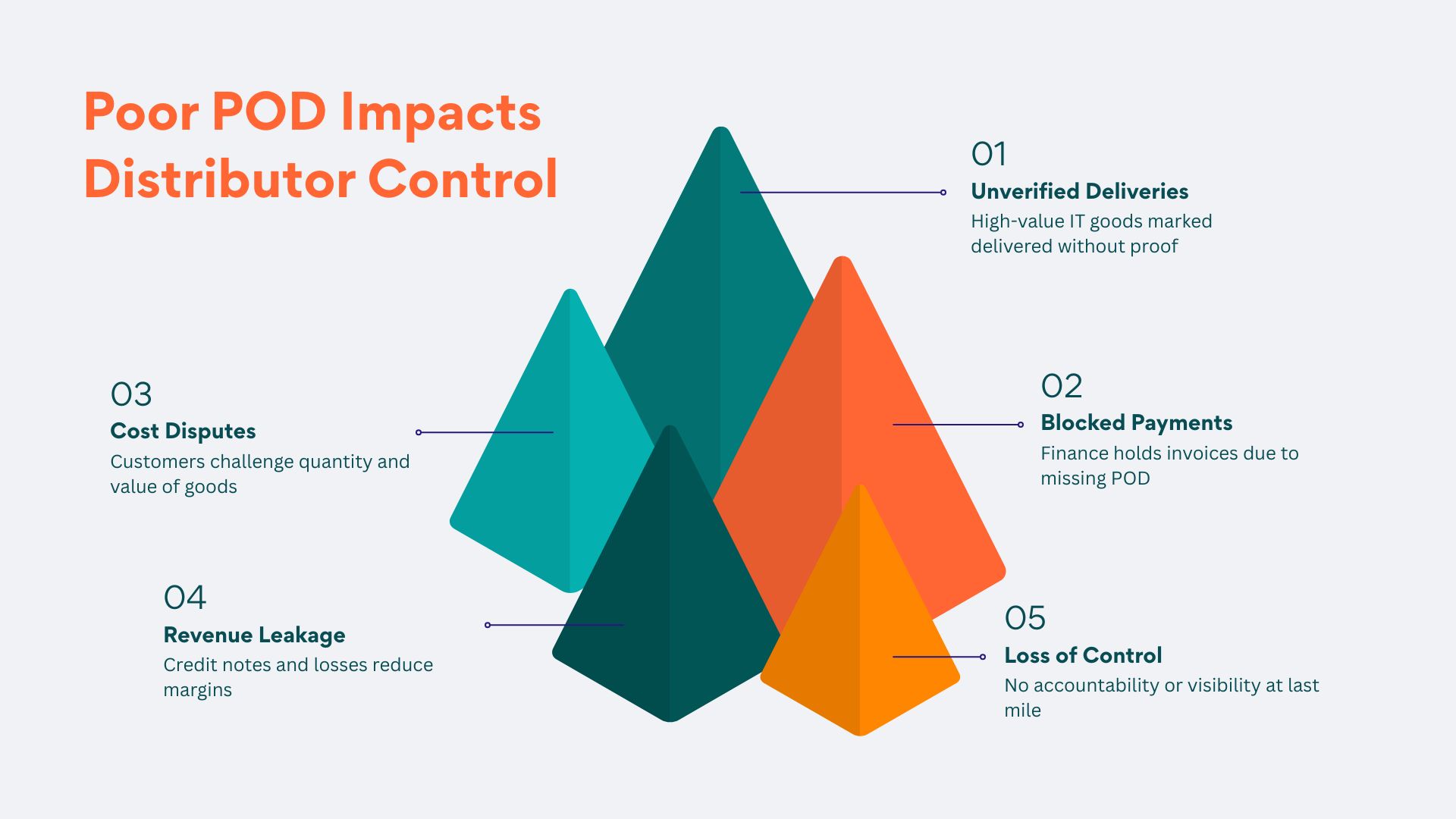
The most damaging impact of weak proof of delivery systems appears when high-value IT goods are shown as delivered without verified confirmation. A courier status update might close the shipment operationally, but from a financial perspective, the transaction remains incomplete.
In such cases, finance teams have no option but to hold invoices. Without a receiver signature, image proof, or time-stamped record, they cannot justify releasing payment. This directly affects cash flow. Revenue that should be realized within days remains locked in verification and reconciliation cycles.
Disputes on the cost of goods become common under these conditions. Customers question quantities, report missing cartons, or claim partial delivery. When there is no reliable proof of what was handed over, distributors are left with weak evidence. To avoid prolonged conflict, they may issue credit notes, accept partial payments, or absorb losses.
This creates revenue leakage. Small losses across multiple shipments add up over time. Margins shrink, and financial planning becomes difficult because actual collections do not match expected sales.
Operational control also suffers. When there is no clear record of who accepted the shipment and in what condition, accountability disappears. Responsibility moves between distributor, courier, and customer without resolution. Staff spend time chasing documents and making calls instead of focusing on growth and service quality.
Customer experience is another casualty. Resellers and integrators operate on project schedules. When disputes are not resolved quickly due to missing proof, they face delays in installation and deployment. Even if the distributor is not at fault, they are seen as unreliable.
Perhaps the biggest long-term cost is loss of visibility. Delivery data contains insights about route performance, failure points, and service levels. When proof of delivery is unstructured or missing, this data cannot be analyzed. Decisions are made based on guesswork rather than evidence.
What starts as a documentation gap turns into a financial, operational, and strategic risk. For Indian IT distributors dealing with high-value inventory, weak proof of delivery means losing control at the most critical point in the supply chain.
Introducing Inteliproof – ePOD by eShipz: Restoring Visibility and Accountability
Digital proof of delivery systems are emerging as a practical response to these challenges. Inteliproof, the ePOD solution by eShipz powered by AI, focuses on standardizing and strengthening how delivery confirmation is captured.
Instead of relying on paper, delivery personnel use mobile devices to record digital signatures, images of delivered goods, and time-stamped confirmation. This creates a verifiable record that is harder to manipulate and easier to retrieve.
One of the key benefits is immediate visibility. Distributors can view delivery confirmation as soon as the handover happens. If a shipment is refused or partially accepted, this is recorded instantly. Problems are identified in real time rather than days later.
Another advantage is centralized data storage. All delivery proofs are stored in a single system rather than scattered across emails, files, and courier portals. This simplifies dispute handling, audits, and internal reviews.
Integration with order and invoicing systems is equally important. When proof of delivery is linked directly to orders, billing can be triggered automatically. This reduces the gap between delivery and payment and improves cash flow discipline.
Such systems also create accountability across the network. Delivery agents know that handovers are recorded with time and location details. Customers know that deliveries are verified. This shared transparency reduces false claims and strengthens trust.
Importantly, ePOD does not require distributors to replace their existing logistics partners. It works alongside current courier networks and standardizes how proof is captured across them.
Conclusion: Moving Toward Smarter, Digital First Distribution Operations
IT distribution in India is becoming more complex as demand for hardware grows and delivery networks expand. In this environment, losing control at the point of delivery is no longer a minor operational issue. It is a financial and strategic risk.
High-value goods marked as delivered without verified proof lead to blocked invoices, disputed costs, and delayed cash flow. Weak proof of delivery systems allow revenue leakage, damage customer trust, and increase operational burden.
Proof of delivery must be treated as a control system, not just a document. It protects revenue, supports compliance, and improves decision making. By moving toward digital and standardized POD processes, distributors can close the visibility gap at the last mile.
The future of IT distribution will be shaped by how well companies manage accountability and data at the delivery stage. Those who invest in structured proof of delivery will be better positioned to scale operations, protect margins, and build long-term trust with partners. To learn more about smarter, digital-first delivery operations, reach out to us.