
The Skincare eCommerce Trends in the US highlight how rapidly the beauty industry is evolving as consumers increasingly shift toward online shopping. The United States remains one of the largest beauty and personal care markets globally, with skincare representing a significant share of online beauty sales. From anti-aging serums to dermatologist-recommended treatments, consumers are purchasing skincare products through brand websites, online marketplaces, and social commerce platforms at an unprecedented rate.
According to research by Grand View Research, the US beauty and personal care market surpassed $100 billion and continues to grow steadily, driven by rising interest in self-care, ingredient transparency, and direct-to-consumer brands.
At the same time, the rapid expansion of online skincare sales is reshaping operational strategies for brands entering or scaling in the US market. Unlike many other consumer goods, skincare products require careful storage, protective packaging, and reliable shipping to maintain product quality and customer trust. Fast fulfillment, accurate inventory distribution, and transparent delivery tracking are becoming essential components of the customer experience.
For skincare brands, success in the US market is no longer driven only by product innovation or marketing. Efficient logistics infrastructure, seamless delivery networks, and strong post-purchase experiences are increasingly influencing customer satisfaction and brand loyalty. As a result, many of the emerging Skincare eCommerce Trends in the US are closely connected to advancements in supply chain management, fulfillment strategies, and digital commerce technologies.
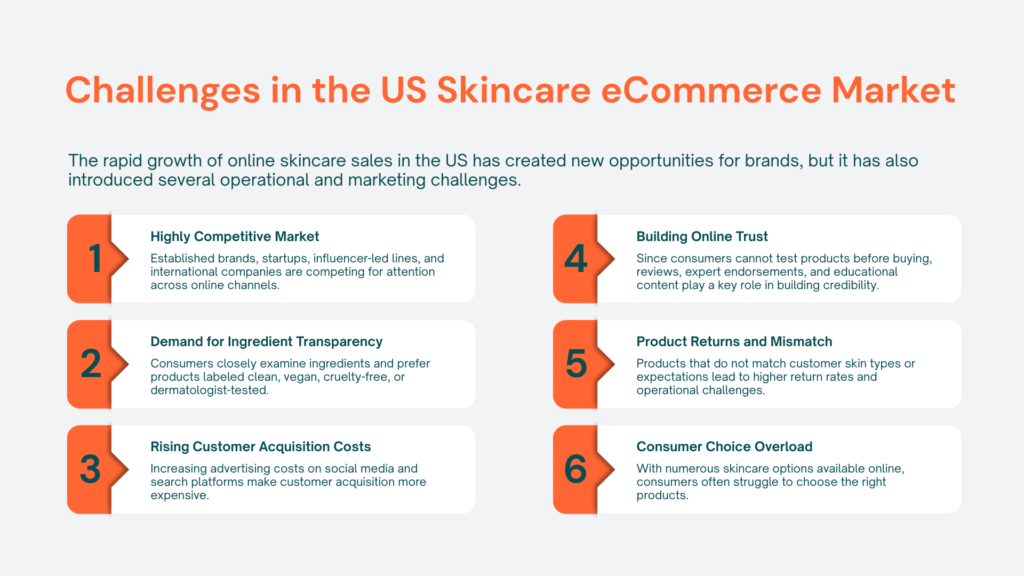
The Growing Challenges in the US Skincare eCommerce Market
The expansion of online skincare sales has created significant opportunities for brands. However, it has also introduced several operational and marketing challenges that companies must address.
Highly competitive skincare market
The US skincare industry is extremely competitive, with both established brands and emerging startups competing for consumer attention. Direct-to-consumer brands, influencer-led product lines, and international skincare companies are entering the market, increasing competition across online channels.
Consumer demand for clean and transparent ingredients
Modern skincare consumers pay close attention to ingredient transparency. Products labeled as clean, cruelty-free, vegan, or dermatologist-tested often attract higher engagement. Brands must clearly communicate ingredient sourcing, formulation processes, and product benefits.
Rising customer acquisition costs
Digital advertising costs across social media and search platforms have increased steadily. Skincare brands often rely on influencer marketing, paid advertising, and content marketing to attract customers, making acquisition more expensive.
Difficulty building brand trust online
Consumers cannot physically test skincare products before purchasing them online. This creates hesitation, especially when trying new brands. Reviews, dermatologist endorsements, and educational content help build credibility.
Increasing returns and product mismatch issues
Returns are becoming a growing operational challenge in skincare eCommerce. Customers may purchase products that do not match their skin type or expectations. Managing returns efficiently requires well-structured reverse logistics systems.
Consumer confusion due to too many product options
With hundreds of skincare products available online, consumers often feel overwhelmed when choosing the right products. Simplified product discovery and personalized recommendations are becoming important for improving purchase decisions.
These challenges are shaping the innovation behind many Skincare eCommerce Trends in the US, particularly those focused on personalization, customer education, and operational efficiency.
Top 15 Skincare eCommerce Trends Transforming the US Market
Several major trends are redefining how skincare brands operate in the US digital marketplace.
Personalized skincare powered by AI
Artificial intelligence tools analyze skin concerns, climate conditions, and customer preferences to recommend customized skincare routines. Personalization improves product relevance and reduces trial-and-error purchases.
Ingredient transparency
Consumers increasingly expect detailed ingredient lists and scientific explanations of product benefits. Brands that clearly communicate formulation details often gain higher trust.
Digital skin analysis tools
Online skin diagnostics allow customers to upload images or complete questionnaires to identify their skin type. These tools help brands recommend suitable products more accurately.
Augmented reality consultations
Some brands are experimenting with AR-powered skincare consultations that simulate product usage and results, improving consumer confidence before purchasing.
Subscription skincare models
Subscription services provide personalized skincare products delivered on a regular schedule. This model helps brands maintain consistent demand while improving customer retention.
Social commerce growth
Platforms such as TikTok and Instagram are major drivers of skincare product discovery. Viral product demonstrations and tutorials can quickly influence buying behavior.
Influencer-led product discovery
Beauty influencers and skincare experts often introduce new products to audiences through tutorials and product reviews. Authentic recommendations significantly impact purchasing decisions.
Sustainable packaging innovations
Many skincare brands are adopting refillable packaging, biodegradable materials, and reduced plastic usage to meet sustainability expectations.
Dermatologist-backed skincare products
Products developed with dermatologists or supported by clinical research are gaining strong credibility among consumers seeking effective treatments.
Mobile-first shopping experiences
A significant percentage of skincare purchases now occur through smartphones. Brands are optimizing mobile browsing, product discovery, and checkout experiences.
Skin microbiome-focused formulations
Skincare products designed to support the skin microbiome are gaining attention. These products focus on maintaining the natural balance of beneficial skin bacteria.
Data-driven personalization
Brands are using customer data to tailor product suggestions, email marketing campaigns, and promotional offers.
Faster fulfillment expectations
Consumers increasingly expect quick delivery timelines when ordering skincare products online. Reliable shipping networks and distributed fulfillment centers help brands meet these expectations.
Growth of direct-to-consumer skincare brands
Many brands are choosing the direct-to-consumer model to maintain stronger control over brand messaging and customer relationships.
Community-driven product development
Brands are involving customers in product development through feedback communities, social media discussions, and beta testing programs.
These trends not only shape marketing strategies but also influence logistics operations, including inventory distribution, packaging design, and fulfillment speed.
How Brands Are Solving Key Skincare eCommerce Challenges
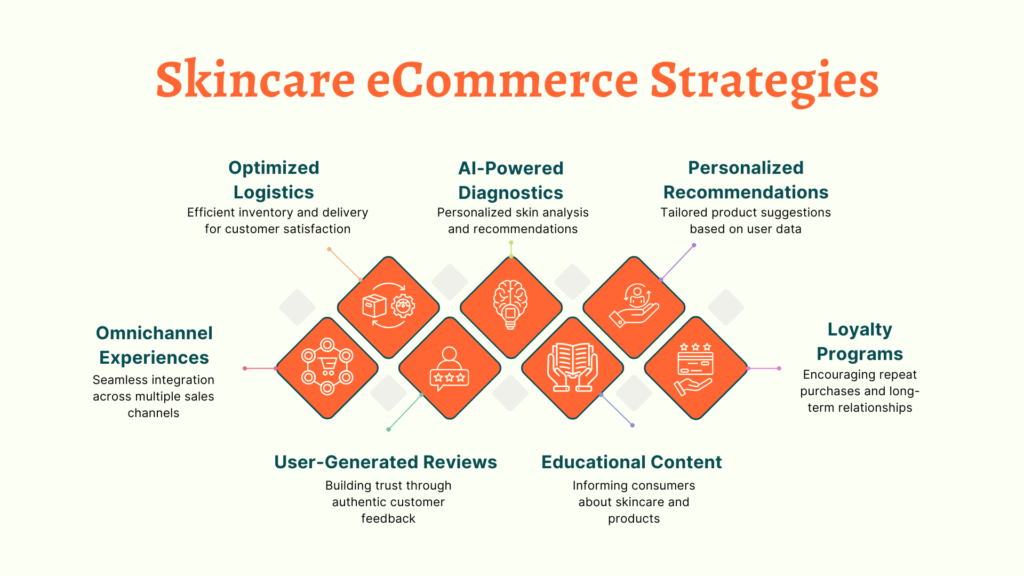
To remain competitive, skincare companies are implementing several strategies that combine technology, customer engagement, and operational improvements.
AI-powered skin diagnostics
Advanced diagnostic tools help consumers understand their skin needs and receive personalized recommendations. This reduces product mismatch and returns.
Personalized product recommendations
Recommendation engines analyze browsing history and past purchases to suggest suitable products.
Loyalty programs and subscription models
Subscription-based skincare routines and loyalty programs encourage repeat purchases and long-term customer relationships.
Educational content and ingredient guides
Brands are publishing blogs, tutorials, and ingredient guides to educate consumers about skincare routines and product benefits.
User-generated reviews and before-after results
Authentic customer reviews and visual results build trust and reduce uncertainty when purchasing skincare online.
Omnichannel experiences
Successful skincare brands combine multiple sales channels including brand websites, marketplaces, and social media storefronts.
Optimized logistics and fulfillment networks
To support nationwide demand, brands are improving inventory distribution across multiple fulfillment locations. Faster shipping, reliable delivery tracking, and secure packaging help maintain product quality while improving the overall customer experience.
Popular Skincare Product Categories Driving Online Sales
Several product categories are particularly influential in shaping online skincare demand.
Anti-aging serums
Serums designed to reduce wrinkles and improve skin elasticity remain among the most popular skincare products.
Sunscreens and SPF skincare
Consumers increasingly incorporate sunscreen into their daily skincare routines, driving strong online demand.
Clean beauty products
Products formulated without harsh chemicals are becoming increasingly popular among health-conscious consumers.
Dermatologist-recommended skincare
Clinically tested skincare solutions attract consumers seeking effective treatments for specific skin concerns.
Korean skincare products
Korean beauty innovations continue to influence global skincare routines with multi-step regimens and unique ingredients.
Organic and vegan skincare
Plant-based skincare products appeal to environmentally conscious consumers.
Sensitive skin formulations
Products designed for sensitive skin often focus on gentle ingredients and minimal irritation.
Acne treatment solutions
Acne prevention and treatment products remain one of the most searched skincare categories online.
Many of these products require careful packaging and storage during shipping to preserve product stability, further highlighting the importance of efficient logistics operations.
The Future of Skincare eCommerce in the US
The future of the US skincare market will be shaped by deeper personalization, advanced technology, and stronger digital commerce experiences. Hyper-personalized skincare routines powered by AI are expected to become more common, allowing consumers to receive customized recommendations based on skin type, environment, and lifestyle.
Dermatology-driven skincare brands will also continue to grow as consumers increasingly look for science-backed products that deliver visible results. At the same time, sustainability will influence product formulation, packaging innovations, and supply chain practices. Refillable packaging, eco-friendly materials, and responsible sourcing will become increasingly important to modern skincare consumers.
Another key factor shaping the future of skincare eCommerce is logistics transparency. Customers now expect real-time updates on their orders, clear delivery timelines, and seamless post-purchase experiences. Shipment visibility has become an essential part of customer satisfaction, especially for skincare products that consumers often purchase repeatedly as part of their daily routines.
To support these expectations, many eCommerce businesses are investing in solutions such as global shipment tracking platforms that allow customers and brands to monitor deliveries across multiple carriers in one place. For example, tools like the eShipz Global Package Tracking platform enable businesses to track shipments in real time across multiple logistics partners, providing centralized visibility from dispatch to final delivery. This kind of unified tracking helps reduce customer queries about order status and improves overall delivery transparency.
As the industry continues to evolve, brands that combine product innovation with strong logistics infrastructure, fast fulfillment, and transparent delivery tracking will be better positioned to compete in the rapidly expanding US skincare eCommerce market.