In today’s ecommerce-driven economy, shipment tracking software is no longer a “nice-to-have”, it’s a business necessity.
According to Statista, over 90% of online shoppers want real-time tracking updates and nearly 70% are less likely to shop again with brands that fail to provide delivery visibility. With the ecommerce market in India alone expected to reach USD 325 billion by 2030, having the right tracking solution can make or break customer loyalty.
From startups to enterprise giants, every business needs reliable shipment tracking. This blog uncovers the 15 best tools of 2026, comparing features, ratings, and highlights so you can find the one that matches your goals.
Shipment Tracking Software
Shipment tracking software is designed to help businesses keep a close eye on their orders as they move from the warehouse to the customer’s doorstep. More than just tracking, these tools improve overall operational control and ensure a smoother logistics journey for both companies and their customers.
What is a Shipment Tracking System?
Modern shipment tracking platforms are powered by smart technology. They use APIs, predictive analytics, and even machine learning to provide real-time updates throughout the delivery journey. This level of visibility not only gives businesses more control but also helps them improve accuracy and reduce delays, ensuring customers always know where their package is and when to expect it.
Another big advantage of these systems is automation. Instead of depending on manual follow-ups or constant customer support calls, shipment tracking software takes care of updates automatically. From sending notifications to flagging delays and managing exceptions, everything happens in the background. This saves time, reduces human error, and allows businesses to focus more on enhancing the customer experience.
Why Shipment Tracking Software Matters in 2026
The logistics industry has undergone a massive transformation in the past five years. Same-day and next-day delivery expectations, proactive notifications, and sustainability-driven operations are shaping buyer behavior. Businesses that fail to invest in reliable tracking solutions often struggle with:
- Missed deliveries and costly redelivery attempts
- High volume of customer queries on order status
- Poor post-purchase experience leading to churn
- Inefficient carrier management
- Limited supply chain visibility
- High return rates (RTOs)
- Manual tracking and exception handling
- Difficulty meeting fast delivery expectations
According to a recent McKinsey report, real-time tracking has become one of the top three differentiators for ecommerce brands globally. Investing in the right platform not only improves visibility but also builds trust with both B2B and B2C customers.
Shipment Tracking Use Cases: B2B vs D2C
Different businesses face different tracking challenges. A D2C brand selling directly to end customers has very different needs from a B2B enterprise managing bulk orders and SLAs. To make it easier, here’s a simple matrix of shipment tracking use cases:
Whether you’re a fast-scaling D2C brand or a large B2B enterprise, the right shipment tracking solution should go beyond basic delivery updates. It needs to address your specific use cases, reducing customer queries, improving SLA compliance, or giving you end-to-end control over logistics performance. By mapping your needs against tools built for customer experience and control tower visibility, you can choose a platform that not only strengthens delivery reliability but also turns logistics into a true growth driver.
Key Features to Look for in a Shipment Tracking Tool
Not all tracking platforms are built the same. Some focus only on basic visibility, while others offer end-to-end features that directly impact customer experience and operational efficiency. To make the right choice, businesses need to look beyond surface-level tracking and evaluate the capabilities that truly add value. Here are the must-have features you should consider before selecting a shipment tracking platform:
- Multi-carrier integration – Seamless connectivity with local and international carriers.
- Real-time tracking updates – Accurate delivery status with proactive alerts.
- Customizable branded tracking pages – Reinforce your brand identity while updating customers.
- AI-powered delivery predictions – Smarter ETAs that account for traffic, weather, and logistics delays.
- Exception management – Automatic handling of delivery issues like NDRs (Non-Delivery Reports).
- Analytics & reporting – Insights into delivery performance, delays, and customer satisfaction.
- Customer communication tools – Automated SMS, WhatsApp, or email notifications.
By prioritizing these features, businesses can reduce operational costs, minimize failed deliveries, and ensure a seamless customer journey.
Comparing the Best Shipment Tracking Software of 2026
With dozens of tools available, we’ve curated the 15 best shipment tracking solutions based on ease of use, features, customer ratings, and scalability. Ratings are compiled from trusted review platforms like G2 and Capterra.
| Tool | Key Features | Highlights | Rating (G2/Capterra Avg.) |
| eShipz | Multi-carrier tracking, AI-powered ETAs, branded tracking pages | Strong in post-purchase visibility, built for D2C and enterprise | 4.7/5 |
| ClickPost | NDR management, customizable notifications | Strong analytics layer | 4.6/5 |
| AfterShip | Global carrier support, branded tracking | Widely used by ecommerce brands | 4.6/5 |
| Narvar | Customer engagement, proactive delivery comms | Trusted by large retailers | 4.6/5 |
| ShipStation | Multi-channel order sync, branded tracking. | Popular with SMBs. | 4.5/5 |
| Convey (by project44) | Predictive analytics, exception management | Strong enterprise features | 4.4/5 |
| Shippo | Easy integrations, flexible pricing | Good for growing brands | 4.5/5 |
| ParcelPerform | Advanced data visibility, AI-driven insights | Best for global shippers | 4.6/5 |
| EasyPost | Developer-friendly APIs | Ideal for tech-driven brands | 4.3/5 |
| MetaPack | International carrier management | Enterprise-grade | 4.4/5 |
| ShipERP | SAP-integrated shipping & tracking | Best for large enterprises | 4.5/5 |
| 17TRACK | Multi-carrier global tracking | Good for cross-border sellers | 4.2/5 |
| ParcelLab | Post-purchase engagement, sustainability insights | Focused on CX | 4.6/5 |
| Sorted | Delivery management, returns tracking | Built for omnichannel retailers | 4.3/5 |
| Tradlinx | Freight forwarding, visibility tools | Ideal for logistics providers | 4.2/5 |
This comparative breakdown allows businesses to quickly identify which platforms align with their scale, customer base, and technical needs.
eShipz
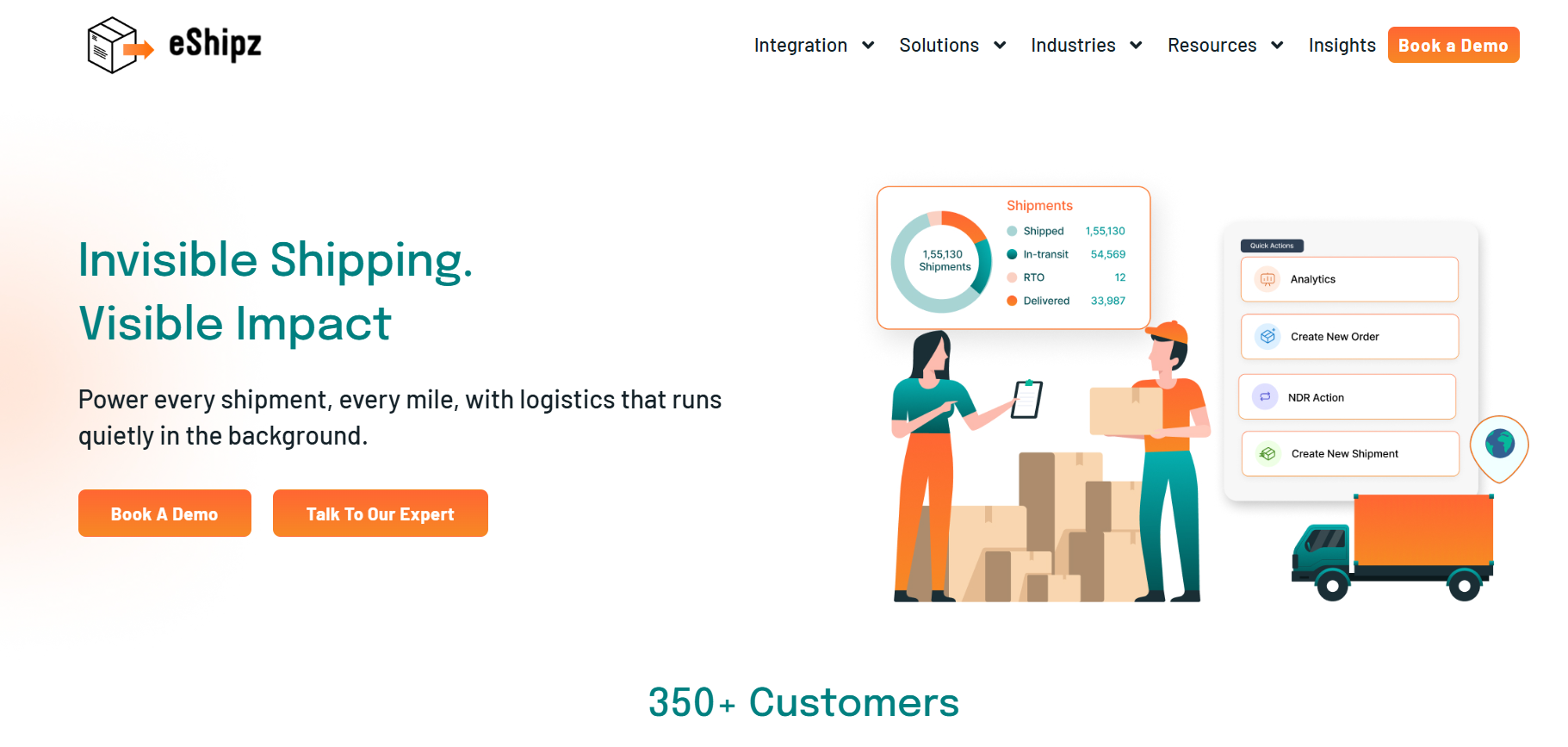
eShipz is a next-generation logistics automation and shipment tracking platform built for both D2C brands and enterprises. By integrating with 400+ carriers and offering AI-powered automation, eShipz simplifies everything from carrier allocation to post-purchase customer engagement. Its robust control tower ensures brands maintain full visibility across shipments, while features like branded tracking pages and predictive ETAs help deliver a seamless customer experience.
Highlights
- Strong in post-purchase visibility with branded experiences.
- Flexible for fast-growing D2C brands and scalable for large enterprises.
- Analytics-driven insights into courier performance and SLAs.
Rating (G2/Capterra Avg.)
⭐ 4.7/5
ClickPost
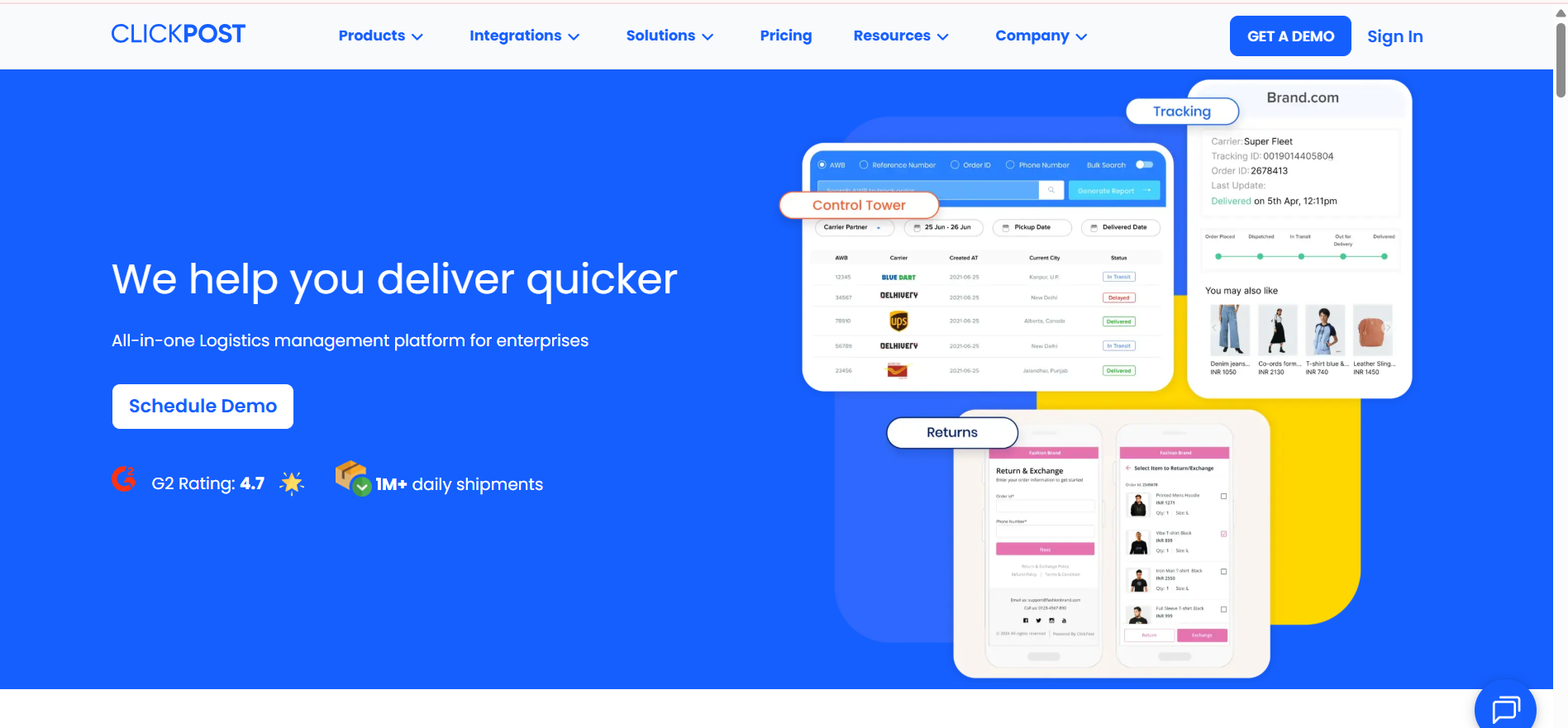
ClickPost is a leading logistics visibility and post-purchase experience platform designed for enterprises and eCommerce businesses. It stands out with its advanced NDR management and customizable communication features, helping brands reduce delivery failures and RTOs while keeping customers updated through branded notification.
Highlights
- Strong analytics layer for monitoring courier performance.
- Focused on enterprise-level delivery optimization.
- Helps reduce RTOs through proactive NDR workflows.
Rating (G2/Capterra Avg.)
⭐ 4.6/5
AfterShip
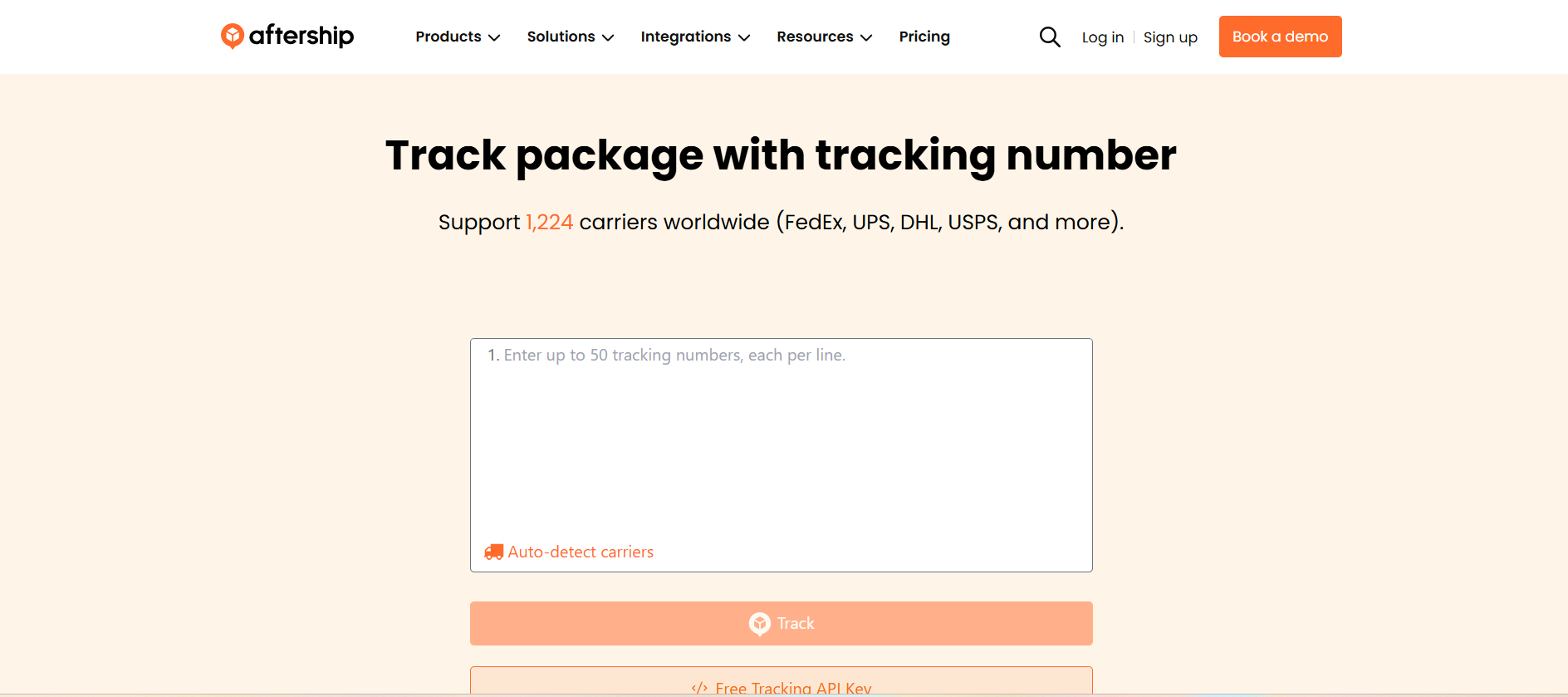
AfterShip is one of the most widely adopted shipment tracking platforms, trusted by thousands of eCommerce and retail businesses worldwide. Its strength lies in its global carrier coverage, with support for over 1,222 international and regional couriers, making it an excellent fit for businesses shipping across multiple geographies. Alongside carrier integration, AfterShip enhances the post-purchase experience with branded tracking and proactive customer communication.
Highlights
- Widely trusted by eCommerce brands for international scalability.
- Strong in branded post-purchase communication.
- Helps reduce customer inquiries with proactive updates.
Rating (G2/Capterra Avg.)
⭐ 4.6/5
Narvar
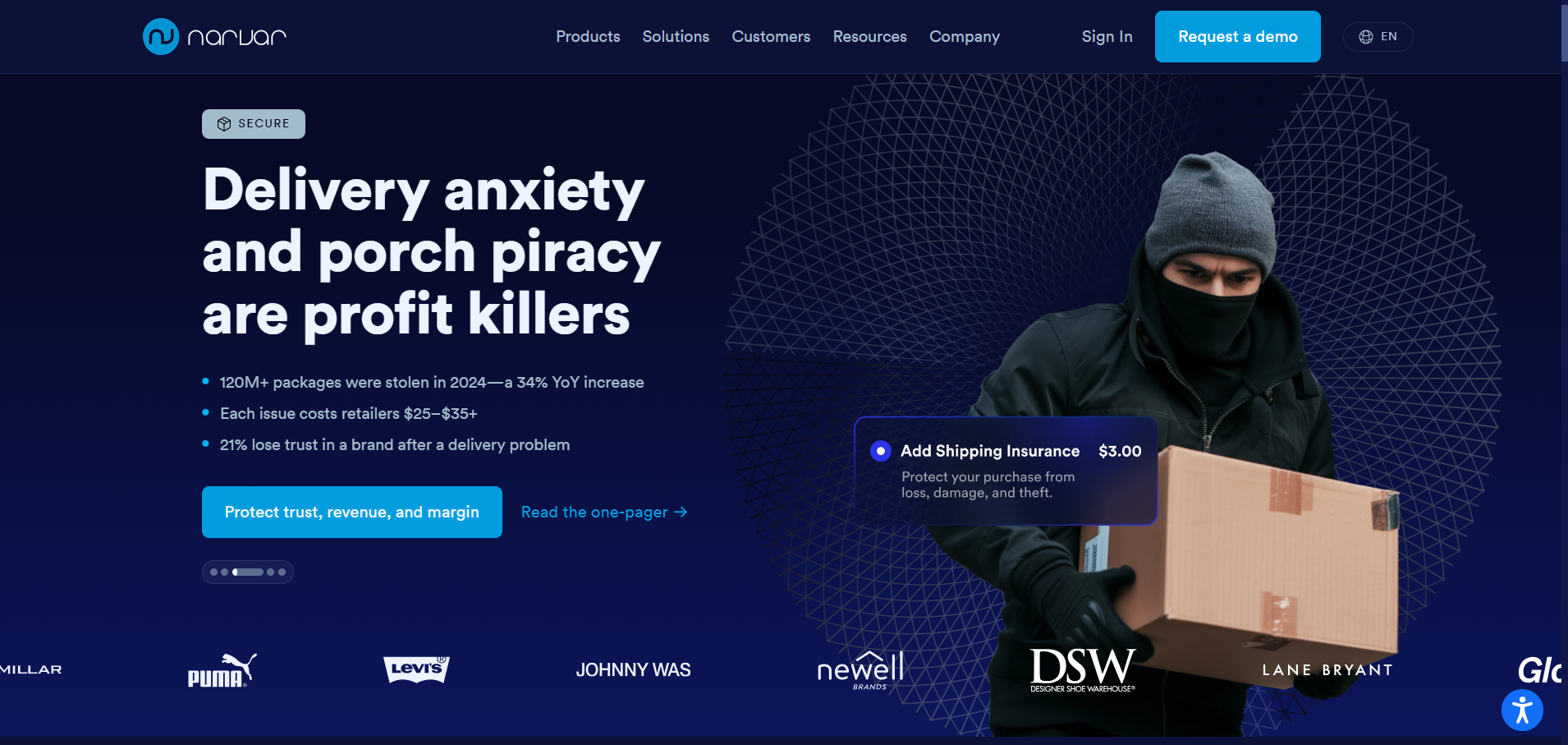
Narvar is a post-purchase experience platform built for large retailers and enterprises. Its strength lies in customer engagement, with tools that provide proactive delivery communication and branded touchpoints. By keeping customers informed at every stage of the journey, Narvar helps retailers reduce anxiety around deliveries and increase loyalty.
Highlights
- Trusted by large enterprise retailers.
- Focus on strengthening customer trust with proactive updates.
- Enhances loyalty through seamless returns and branded touchpoints.
Rating (G2/Capterra Avg.)
⭐ 4.6/5
ShipStation
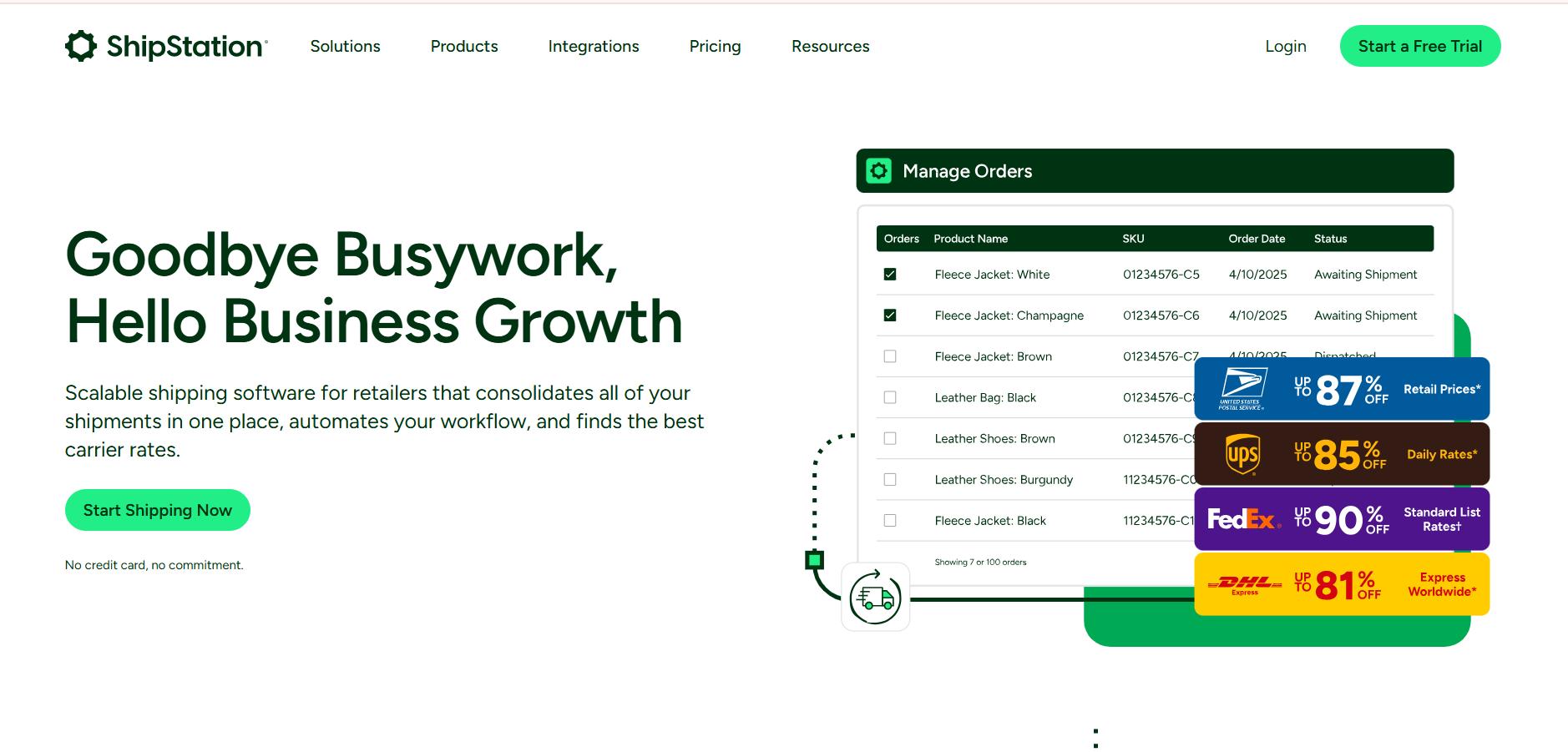
ShipStation is a cloud-based shipping solution designed for SMBs and growing online sellers. Known for its multi-channel order sync and branded post-purchase tracking, ShipStation helps businesses save time by automating repetitive shipping tasks.
Highlights
- Popular with small and medium businesses.
- Great fit for sellers across multiple eCommerce platforms.
- Time-saving automation for fast fulfillment.
Rating (G2/Capterra Avg.)
⭐ 4.5/5
Convey (by project44)
Convey, now part of project44, specializes in predictive analytics and exception management for enterprise shippers. It focuses on creating visibility into shipments before issues occur, helping retailers and 3PLs act on delivery risks in real time.
Highlights
- Strong enterprise-level features.
- Great for high-volume retailers managing complex logistics.
- Helps reduce costs through proactive exception handling.
Rating (G2/Capterra Avg.)
⭐ 4.4/5
Shippo
Shippo is a flexible, integration-friendly shipping platform ideal for businesses of all sizes, particularly growing D2C brands. It offers simple pricing models and easy integrations to get started quickly.
Highlights
- Good for growing businesses and SMBs.
- Affordable and easy to implement.
- Helps simplify logistics without heavy IT lift.
Rating (G2/Capterra Avg.)
⭐ 4.5/5
ParcelPerform
ParcelPerform is a global shipment tracking platform that excels in advanced data visibility and AI-driven insights. Designed for international shippers, it helps businesses optimize carrier performance and customer experience across borders.
Highlights
- Best suited for global shippers.
- Strong in analytics and predictive delivery insights.
- Enhances international post-purchase engagement.
Rating (G2/Capterra Avg.)
⭐ 4.6/5
EasyPost
EasyPost is a developer-friendly shipping API platform designed for tech-driven businesses. It allows developers to integrate shipping, tracking, and address validation seamlessly into existing workflows.
Highlights
- Ideal for tech-first brands and developers.
- Provides flexibility with a build-your-own approach.
- Scales with business growth across regions.
Rating (G2/Capterra Avg.)
⭐ 4.3/5
MetaPack
MetaPack is an enterprise-grade delivery management platform trusted by global retailers and carriers. Its strength lies in international carrier management, offering wide connectivity for businesses scaling cross-border.
Highlights
- Strong enterprise-grade capabilities.
- Ideal for global retailers and marketplaces.
- Proven solution for managing large shipping volumes.
Rating (G2/Capterra Avg.)
⭐ 4.4/5
ShipERP
ShipERP is a logistics solution integrated with SAP, making it ideal for large enterprises that run on SAP systems. It offers end-to-end control of shipping and tracking directly within enterprise workflows.
Highlights
- Best for large enterprises already using SAP.
- Eliminates the need for separate shipping systems.
- Strong enterprise compliance and control.
Rating (G2/Capterra Avg.)
⭐ 4.5/5
17TRACK
17TRACK is a global multi-carrier tracking platform, widely used by cross-border sellers and marketplaces. It consolidates international shipments, making it easier for sellers to keep buyers updated.
Highlights
- Good for cross-border sellers.
- Widely adopted by international marketplaces.
- Affordable and easy-to-use solution.
Rating (G2/Capterra Avg.)
⭐ 4.2/5
ParcelLab
ParcelLab specializes in post-purchase engagement and sustainability insights, making it popular with retailers focused on customer experience. It helps brands retain customer attention and communicate value after checkout.
Highlights
-
- Focused on enhancing customer experience.
- Sustainability features stand out from competitors.
- Strong in branded communication after checkout.
Rating (G2/Capterra Avg.)
⭐ 4.6/5
Sorted
Sorted offers delivery management and returns tracking solutions for omnichannel retailers. It enables businesses to unify shipping across physical stores, warehouses, and online platforms.
Highlights
- Built for omnichannel retailers.
- Strong focus on unifying store + online delivery operations.
- Simplifies customer returns.
Rating (G2/Capterra Avg.)
⭐ 4.3/5
Tradlinx
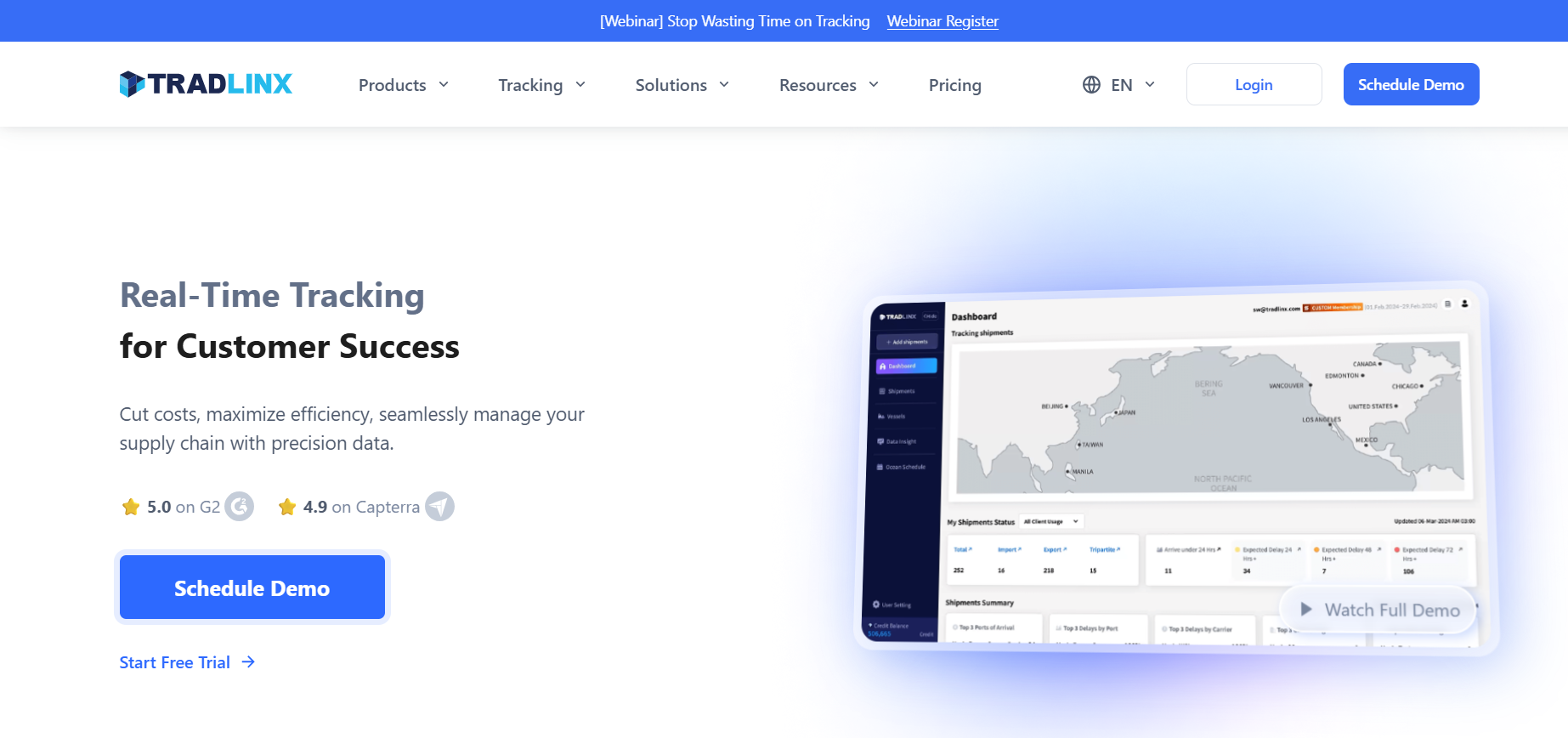
Tradlinx is a logistics platform focused on freight forwarding and visibility tools. It is designed for logistics providers and enterprises managing international freight operations.
Highlights
- Ideal for logistics providers and freight forwarders.
- Strong in visibility for international supply chains.
- Simplifies freight monitoring across modes.
Rating (G2/Capterra Avg.)
⭐ 4.2/5
Choosing the Right Tool for 2026
Shipment tracking isn’t just about knowing where a package is anymore. Today, it’s about giving customers clear updates, reducing the stress of waiting, and helping businesses stay in control. A good tracking tool cuts down on endless “status” questions and keeps deliveries running smoothly. In the end, it builds trust and makes the whole shipping experience a lot better for everyone.
The right tracking solution isn’t just a tool; it becomes the backbone of a smoother, smarter delivery process. Businesses that adopt intelligent platforms with automation, visibility, and customer-first features will be the ones turning logistics from a challenge into a competitive edge.
The Hidden Driver of Customer Trust
After analyzing the challenges businesses face and comparing the strengths of different shipment tracking tools, one thing becomes clear: tracking is no longer a nice-to-have; it’s the backbone of customer trust. The right solution reduces support tickets, prevents costly delivery mishaps, and creates a post-purchase journey that feels effortless for customers. It’s not just about features on a checklist, but about how well a platform can adapt, automate, and grow with your business.
That’s why intelligent platforms like eShipz don’t just manage shipments, they reimagine them. By blending automation, real-time visibility, and seamless integrations, they turn logistics from a routine operation into a trust-building experience that customers remember.
Don’t just track shipments, transform them into trust-building moments
With eShipz shipment tracking, build it today with eShipz