
For over a century, Citizen has been a symbol of craftsmanship, innovation, and precision, known globally for creating timepieces that combine elegant design with advanced technology. From its origins in Japan to its strong presence in India, Citizen has continuously set benchmarks for quality, trust, and reliability.
As the brand expanded its footprint in the Indian retail and manufacturing landscape, its operations grew increasingly complex. With a vast network of dealers, distributors, and direct consumers, the logistics arm of the business became a vital pillar, ensuring that every order, whether from a retail store or an e-commerce customer, reached its destination on time.
However, in a fast-evolving market where customer expectations for speed and transparency are higher than ever, even the most established brands need to evolve. For Citizen, this meant rethinking the way shipments were managed, tracked, and communicated, not as an afterthought, but as a core part of the brand experience.
This partnership has not only helped streamline shipment dispatches but also enhanced visibility and communication for both internal teams and customers. This case study explores how Citizen leveraged eShipz to modernize its shipping operations, from automating dispatches to creating a transparent, data-driven logistics ecosystem. It also offers practical insights for other retail and consumer brands looking to improve efficiency and customer experience through smart logistics automation.
Challenges Before Implementing eShipz
As Citizen’s retail presence and order volume expanded, the logistics team began facing operational hurdles that slowed down visibility, communication, and planning. These challenges highlighted the need for a more unified, intelligent shipping workflow.
1. Lack of Transparency in Operations
There was limited visibility across the shipping workflow, making it difficult to track order statuses, shipment progress, and expected arrival dates. Customers increasingly expected real-time updates, but the existing process could not provide information quickly or consistently.
2. Manual, Time-Consuming Coordination
Multiple teams had to coordinate across different systems to share shipment information. This slowed down communication and made it difficult to maintain accuracy during periods of high volume.
3. Delayed Customer Communication
Providing timely updates to customers was challenging. Information regarding shipment status or delivery timelines often reached customers late, leading to higher dependency on customer support.
4. Limited Access to Actionable Analytics
There was no consolidated view of operational data, such as which regions were receiving the most orders or where bottlenecks were occurring. Without these insights, identifying issues and improving processes became difficult.
5. Difficulty in Identifying Bottlenecks and Challenges
The team had no unified system that highlighted delays, regional issues, or problem areas across the logistics cycle. This made operational planning and service improvement slower and less accurate.
6. No Continuous Improvement Loop
Because data and insights were scattered, it was difficult to evaluate performance over time or make informed adjustments to enhance service quality.
These challenges collectively signaled the need for a centralized, automated platform, one capable of bringing clarity, speed, and data-driven decision-making to Citizen’s logistics operations.
Transforming Logistics: Citizen’s Journey to Automation
Citizen’s logistics operations were growing fast, and manual coordination could no longer keep up with rising shipment volumes. The brand needed a system that could bring every team, process, and partner onto one connected workflow.
The Brand & Its Growing Needs
Citizen, a well-known watch brand in India, was expanding its presence and increasing shipment volumes across multiple regions. With this growth came a rising need for faster dispatches, accurate tracking, and consistent delivery communication.
The Operational Reality Before Automation
Behind every shipment, several teams were involved, store teams raising requests, warehouse teams preparing dispatches, customer support answering delivery queries, and logistics partners executing movement.
The process worked, but it depended heavily on manual coordination. As volumes increased, visibility gaps, slower communication, and inconsistent updates started affecting overall efficiency.
The Turning Point
Customer expectations shifted toward real-time updates. Internal teams needed clearer, faster access to shipment status. Leadership required reliable data to plan better. It became evident that the existing setup wouldn’t scale without technology support. Citizen needed a unified logistics system that could connect every part of the workflow.
Choosing eShipz as the Automation Partner
Citizen partnered with eShipz to bring structure, clarity, and automation into its logistics processes. What started as a need for a simple tool quickly evolved into a complete transformation in how shipments were planned, monitored, and delivered.
How eShipz Transformed the Workflow
- Automated shipment creation and dispatch
- Offered real-time visibility across all regions
- Shared clear, timely delivery updates with customers
- Provided analytics to identify trends and bottlenecks
- Connected all internal teams on a single dashboard
- Replaced manual follow-ups with streamlined data-driven workflows
Citizen’s journey shows that when the right technology meets the right operations, logistics doesn’t just function better, it becomes a true driver of growth.
The Impact: Efficiency, Transparency & Growth
The collaboration between Citizen and eShipz transformed a previously manual, time-heavy process into a faster and more transparent logistics system.
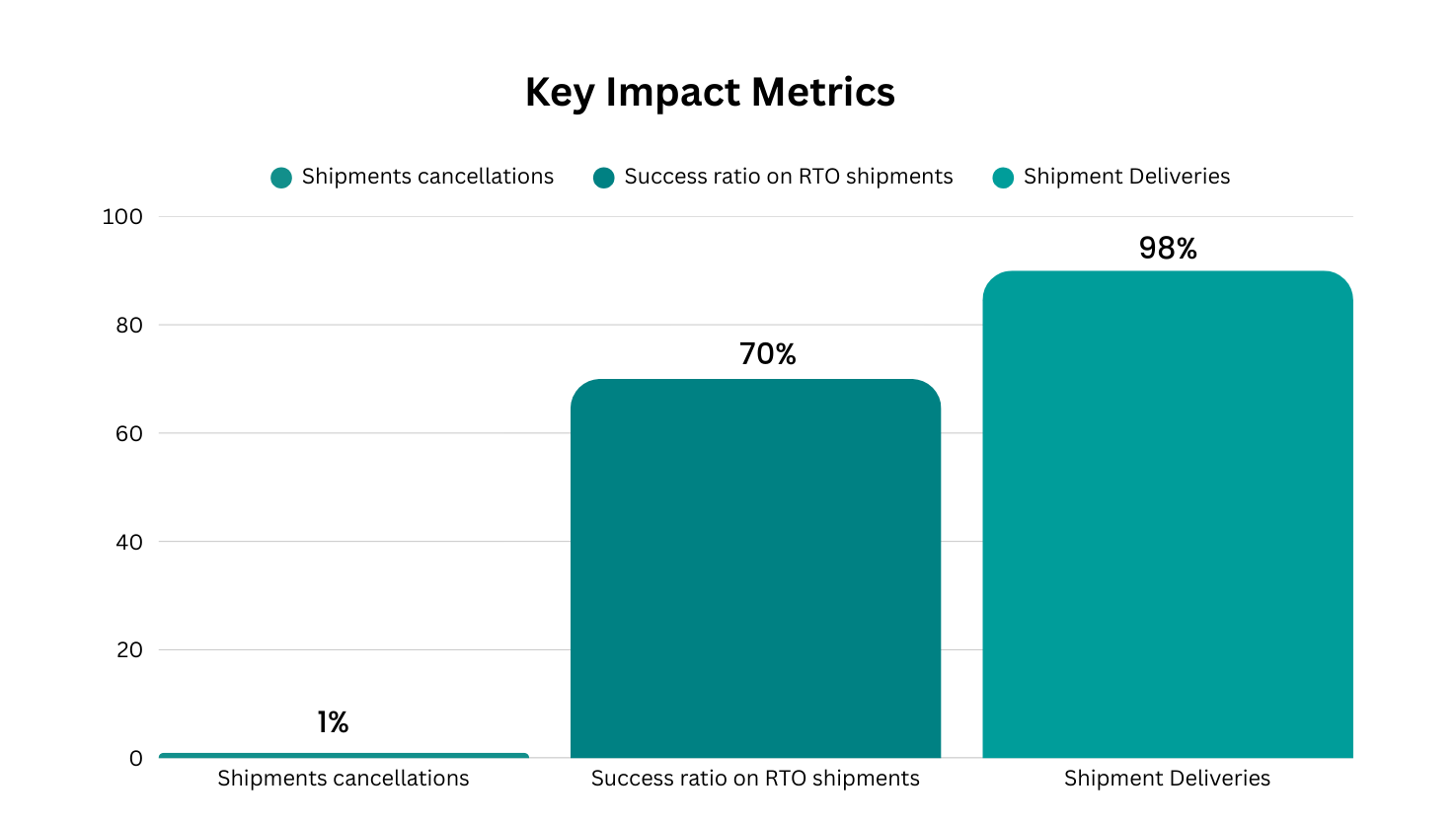
Automation streamlined dispatch workflows, reduced manual effort, and helped Citizen maintain strong delivery SLAs. This improvement also contributed to an almost 98% successful delivery rate.
Real-time tracking and AI-driven delivery predictions gave both teams and customers complete visibility across every shipment. With SMS notifications sent from dispatch to delivery, communication became smoother and customer uncertainty dropped.
Citizen also began making more informed decisions through integrated analytics, tracking courier performance, spotting cost patterns, and identifying bottlenecks early. This data-led approach helped the team achieve a 70% success ratio on RTO shipments and keep cancellations under 1%.
Finally, the intuitive interface and responsive support made adoption easy. Teams adapted quickly, and issues were resolved with care, often with involvement from senior staff.
Overall, the partnership brought Citizen better control, higher consistency, and a more scalable logistics operation.
A Seamless Partnership Driving Smarter Logistics
The collaboration between Citizen and eShipz stands as a strong example of how technology and teamwork can redefine logistics performance. By automating dispatch workflows, enhancing visibility, and simplifying communication, Citizen was able to achieve faster, smarter, and more transparent shipping operations.
This partnership highlights how modern logistics automation can transform everyday shipping into a strategic advantage, improving efficiency, boosting customer satisfaction, and enabling data-driven decision-making.
For brands aiming to scale with confidence and deliver exceptional post-purchase experiences, eShipz remains a trusted partner for end-to-end logistics automation, empowering businesses to deliver not just parcels, but promises.
Citizen transformed its logistics with automation, and the results speak for themselves.
Don’t let outdated processes hold your business back, evolve with eShipz.