
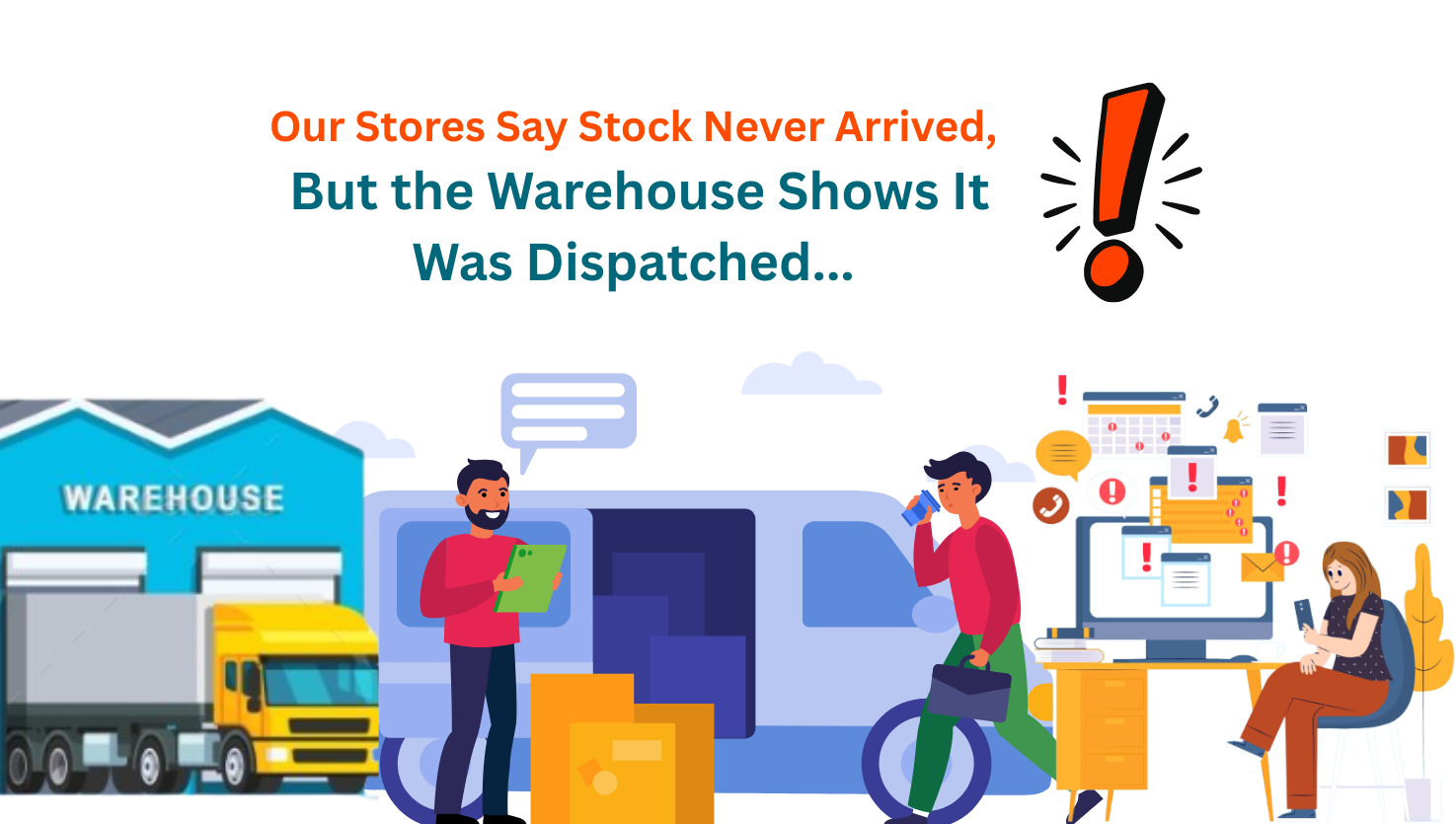
“The warehouse says the stock was dispatched.
Our store team says it never arrived.”
It’s a daily reality for large apparel, footwear, and lifestyle brands operating across India.
In today’s fast-moving retail environment, delivery speed and in-store availability directly influence buying decisions. Nearly 70% of Indian consumers prefer same-day or next-day delivery, and 88% say faster delivery increases their likelihood of completing a purchase. But speed alone is not the problem.
The real challenge lies behind the scenes.
Most omnichannel retailers still run disconnected systems, separate warehouses, independent store networks, multiple transporters, and fragmented order flows. Orders move, but visibility doesn’t. Inventory travels, but accountability doesn’t. And when something goes wrong, no one has a single source of truth.
This blog follows the real operational journey of an apparel brand, from store-level complaints to backend breakdowns, and how modern retailers are fixing these issues by rethinking delivery, replenishment, and omnichannel fulfillment as one connected flow.
Why Store Replenishment Struggles in Omnichannel Retail
Store replenishment may appear routine, but behind every delivery is a fragile chain of people, processes, and timing. Unlike D2C shipments, store deliveries operate in a B2B environment where one shipment supports dozens of SKUs, multiple departments, and daily sales targets. Any break in confirmation, counting, or communication quickly turns into inventory mismatches, store complaints, and operational blind spots.
Below are the key reasons why store deliveries consistently become a challenge at scale.
Mixed Cartons Increase Verification Errors
Store cartons rarely contain a single product type. One box may include different styles, colours, and sizes meant for various racks or sections. While this improves warehouse efficiency, it makes store verification time-consuming and error-prone. During busy hours, staff often confirm receipt at the carton level instead of checking each SKU, leading to undetected shortages or misplacements that surface much later.
Frequent Replenishment Creates Operational Fatigue
Replenishment cycles are driven by sell-through, promotions, and seasonal demand. This results in frequent deliveries rather than predictable bulk movements. For store teams, this means repeated receiving tasks with limited time, increasing the chances of rushed confirmations, missed entries, and delayed updates across systems.
Manual Backroom Handoffs Break Visibility
Store deliveries are typically handed over in backrooms without structured scanning or digital proof of receipt. Paper challans, verbal acknowledgements, or WhatsApp photos replace system-based confirmation. When store staff are pulled in multiple directions, these manual steps often get postponed or forgotten, breaking real-time visibility for head office teams.
Store Staff Are Overloaded, Not Dedicated
Unlike warehouses, stores don’t have dedicated receiving teams. The same staff managing customers, billing, and merchandising are expected to count cartons, verify SKUs, and complete paperwork. As a result, confirmations are delayed, partial, or inconsistent, especially during peak footfall hours.
Even when shipments leave the warehouse correctly, store-level confirmation is often delayed by days or completed only at a high level. This creates uncertainty around actual stock availability. Operations teams are left chasing updates, reconciling discrepancies, and responding to store escalations, long after the delivery is complete.
Store deliveries are not just a logistics task, they are a critical link between supply chain execution and in-store customer experience. Solving this challenge requires moving beyond manual processes toward structured, system-driven confirmation that works at retail scale.
Omni-Channel Fulfillment Challenges in B2B Supply Chains
B2B fulfillment is built on precision, predictability, and partner trust. Unlike consumer shipments, B2B orders move in bulk, span multiple SKUs, and support downstream sales across distributors, franchise stores, and regional depots. As order volumes grow and networks expand, even small gaps in coordination, between inventory, dispatch, and receipt confirmation, quickly turn into delays, disputes, and inventory mismatches.
|
Area |
B2B Reality | Impact |
| Channels | Distributors, franchise stores, regional depots | Fragmented fulfillment |
| Order Types | Bulk, mixed-SKU shipments | Verification errors |
| Delivery SLAs | Partner-specific timelines | SLA breaches, disputes |
| Packaging & Docs | ASNs, invoices, compliance labels | Manual effort, delays |
| Receipt Confirmation | Manual counting at destination | Partial or late confirmation |
| Inventory Visibility | Stock split across locations | Imbalance, stockouts |
|
Returns & Shortages |
Claims raised post-delivery | Long reconciliation cycles |
| Scale Expansion | Rapid Tier 2/3 growth |
Manual processes break |
At scale, B2B fulfillment cannot rely on fragmented systems and manual follow-ups. Without unified visibility and consistent confirmation across channels, operations lose control and partners lose confidence. To sustain growth, B2B brands must move toward an integrated fulfillment approach that delivers accuracy, accountability, and real-time operational clarity across the entire supply chain.
Key Capabilities Retail Brands Must Evaluate
The real strength of an omnichannel setup isn’t defined by the number of features it offers, but by how reliably it performs when volumes surge, channels multiply, and exceptions become the norm. At scale, retail operations demand clarity, speed, and coordination across every fulfillment touchpoint. This is where the right capabilities make a measurable difference.
1. Unified Order Visibility
Retail teams need a single, consolidated view of orders coming from every channel—D2C websites, marketplaces, offline stores, and B2B partners. When order data lives in silos, decision-making slows down and issues surface too late. Unified visibility allows operations teams to spot delays early, rebalance priorities, and resolve exceptions before they impact customers or stores.
2. Real-Time Inventory Synchronization
Inventory accuracy is the foundation of omnichannel success. Stock levels must update continuously across warehouses, stores, and distribution points. Without real-time synchronization, brands risk overselling, missed replenishment opportunities, and uneven stock distribution. Accurate inventory visibility improves store availability and ensures demand is fulfilled from the right location at the right time.
3. Intelligent Carrier Allocation
Choosing the right carrier cannot be a static decision. Performance, cost, serviceability, and delivery timelines vary by location and season. Intelligent carrier allocation enables brands to dynamically assign shipments based on real-time conditions, especially during high-volume sales periods, ensuring deliveries stay on track without inflating logistics costs.
4. Automated Shipping Workflows
Manual shipping processes do not scale. Automated label generation, manifest creation, and dispatch updates reduce human error and speed up daily operations. By removing repetitive tasks from fulfillment teams, brands can process higher volumes with consistency while maintaining accuracy during peak demand.
5. Centralized Tracking and Communication
Customers expect timely and consistent updates, regardless of where they place an order. Centralized tracking ensures shipment status, delays, and delivery updates are communicated uniformly across all channels. This reduces inbound support queries and builds confidence by keeping customers informed at every stage of delivery.
6. Seamless Returns and Reverse Logistics
Returns are no longer an afterthought, especially in categories like apparel and footwear. A structured returns process, with faster pickups, quicker refunds, and efficient inventory recovery, directly impacts customer loyalty and operational efficiency. When reverse logistics are streamlined, returned stock can be recovered and reused instead of becoming a cost burden.
This is where platforms like eShipz function as a logistics orchestration layer, bringing together sales channels, inventory locations, and carrier networks into a unified workflow. Instead of forcing brands to overhaul their existing systems, such platforms connect and streamline operations, enabling scale without added complexity.
From Fragmented Fulfillment to Unified Omni-Channel Operations
Before adopting an omni-channel approach, most retail brands operated fulfillment in silos. Each channel, stores, distributors, marketplaces, or D2C, was managed separately, often using different tools, processes, and teams. While this setup worked at low volumes, it began to break down as scale, speed, and customer expectations increased.
With platforms like eShipz acting as a logistics orchestration layer, brands move from manual coordination to system-driven execution, without replacing their existing ERP, OMS, or inventory systems.
|
Aspect |
Traditional Fulfillment (Earlier) |
Omni-Channel Fulfillment with eShipz |
| Inventory Visibility | Stock tracked separately by warehouse, store, or channel | Unified visibility across all locations and channels |
| Delivery Speed | Inconsistent timelines, fixed routing | Faster fulfillment using location-based dispatch |
| Operational Cost | Higher due to duplicate processes and manual work | Optimized through intelligent routing and carrier selection |
| Order Processing | Manual handoffs between teams and systems | Automated workflows from order to dispatch |
| Customer / Partner Experience | Varies by channel and location | Consistent experience across all touchpoints |
| Tracking & Updates | Carrier-dependent and fragmented | Centralized tracking with proactive updates |
| Returns Handling | Manual, slow, and hard to reconcile | Automated, policy-driven reverse logistics |
The shift to omni-channel fulfillment is not just about efficiency, it changes how the business operates day to day. Teams no longer spend time reconciling data across systems or chasing delivery confirmations. Inventory decisions become proactive instead of reactive. Customers and partners receive consistent updates, regardless of where the order originates.
Preparing for What Customers Already Expect
Today’s customers don’t think in terms of channels. They simply expect their orders to move fast, updates to be clear, and deliveries to happen without friction, no matter where the order is placed.
Brands that still manage fulfillment in silos feel the pressure first. Costs creep up, teams spend time firefighting instead of planning, and customers notice the gaps. Delays, inconsistent tracking, and stock confusion slowly erode trust.
On the other hand, brands that adopt an omni-channel approach gain clarity and control. When orders are unified, shipping is automated, and delivery visibility is end-to-end, fulfillment stops being a bottleneck and starts supporting growth.
Omni-channel fulfillment isn’t a future goal anymore, it’s the new baseline for running retail at scale.
If you’re looking to simplify shipping and regain control across channels, platforms like eShipz help bring everything together, so you can scale faster, operate smarter, and stay fully visible at every step.