






Shipment Visibility in IT Hardware Distribution has become a critical capability as IT hardware supply chains grow more complex and customer expectations rise. Laptops, servers, networking equipment, and accessories are high-value, time-sensitive products that often move through multiple carriers before reaching resellers or enterprise buyers. According to research by Accenture, organizations with strong supply chain visibility are better equipped to sustain revenue and profitability during disruptions because they can respond faster and make data-driven decisions. This challenge becomes even more serious when IT distributors rely on non-API carriers that cannot share real-time tracking data. What starts as a simple delivery process quickly turns into a blind spot where shipments move without digital traceability.
In IT distribution, visibility is not just about knowing where a parcel is. It is about confirming custody, tracking milestones, preventing disputes, and ensuring accurate billing. When systems cannot pull tracking events automatically, operations teams lose their ability to respond quickly. The result is missed delivery windows, unanswered customer queries, and financial leakage that compounds over time.
Pain Point: How Non-API Carriers Create Blind Spots
Non-API carriers are logistics partners that do not provide system-based integrations for tracking and shipment events. Instead of sending structured data through APIs, they rely on manual status updates, phone calls, or static spreadsheets. While these carriers may be cost-effective or necessary in certain regions, they create a major visibility gap for IT distributors.
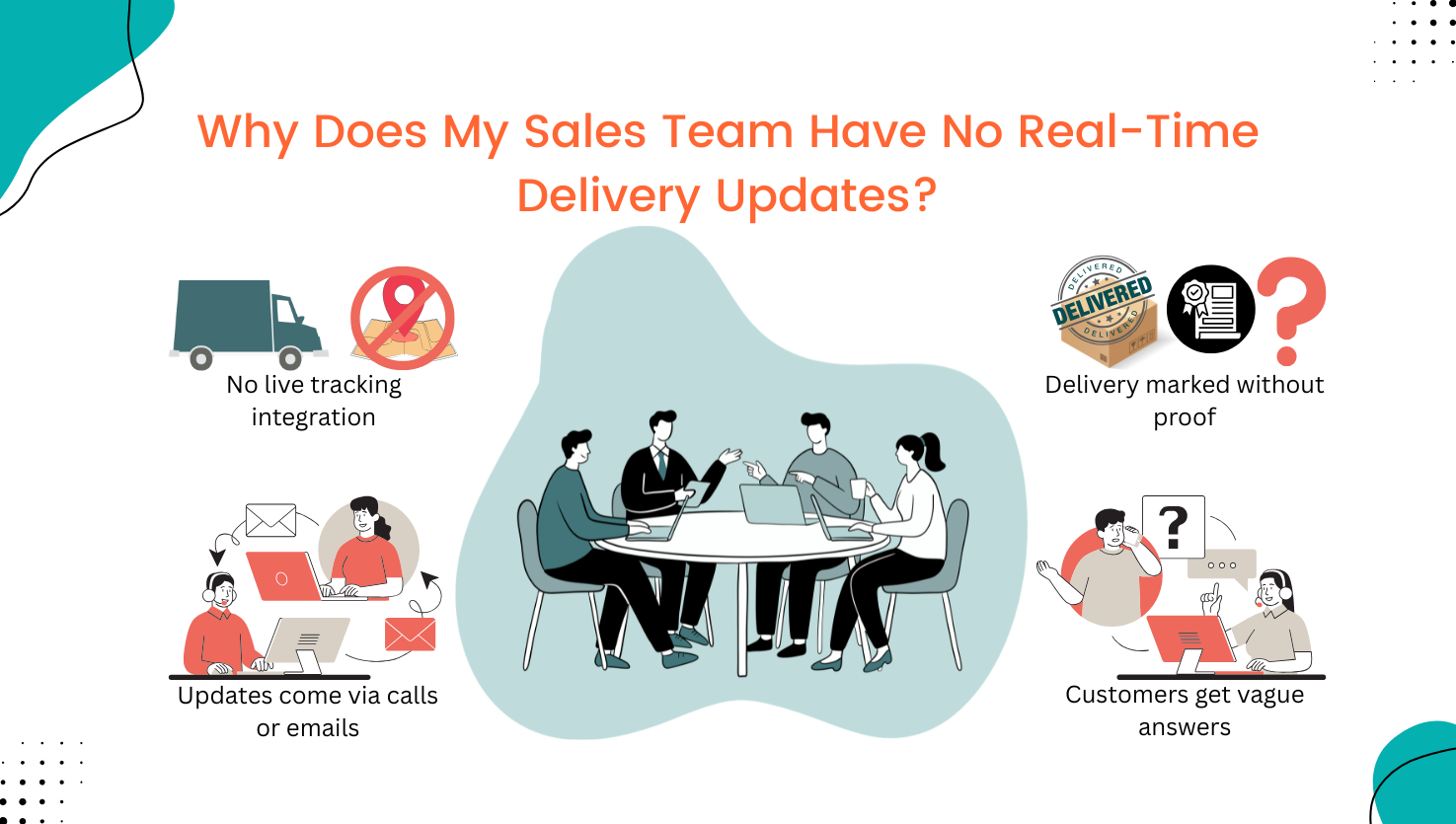
The first problem is the absence of real-time updates. Without API connectivity, shipment statuses such as picked up, in transit, delayed, or delivered are not automatically pushed into the distributor’s system. Operations teams must wait for periodic updates or manually check portals. This delay makes it impossible to proactively inform customers about changes in delivery timelines.
The second issue is inconsistency. Manual updates are prone to human error. A shipment may be marked as delivered without proof of delivery. Another may show as in transit even after it has reached the destination hub. These mismatches lead to confusion between distributors, resellers, and end customers.
Customer complaints often follow. Resellers want to know where their high-value equipment is and when it will arrive. Enterprise customers expect accurate estimated delivery dates and delivery confirmation. When distributors cannot provide these details confidently, trust erodes. Over time, this lack of transparency affects long-term relationships and repeat business.
Finally, blind spots make it difficult to identify exceptions. Delays due to weather, route changes, or misrouting go unnoticed until the customer raises an issue. By then, it is already too late to recover service quality.
The Cost of Zero Tracking Visibility for IT Distributors
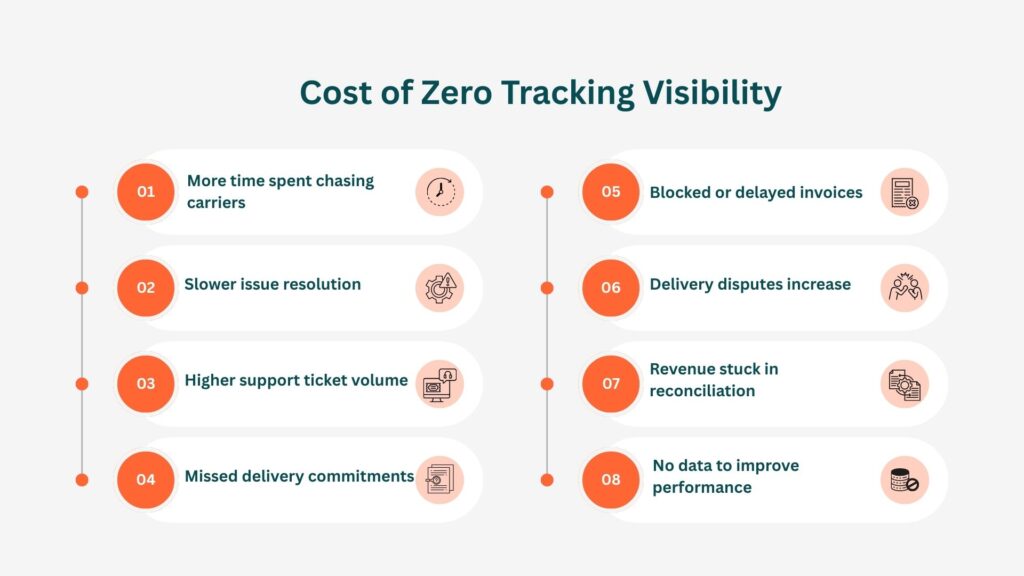
The operational impact of poor shipment visibility is often underestimated. When there is no unified view of shipment movement, multiple areas of the business are affected.
First, operational delays increase. Teams spend hours chasing carriers for updates instead of focusing on strategic tasks. Manual follow-ups become the norm. This slows down order resolution and increases the time taken to close delivery-related cases.
Second, customer dissatisfaction grows. IT distributors serve B2B customers who rely on predictable delivery timelines to plan installations and deployments. A delayed router or server can stall an entire project. When distributors cannot provide accurate tracking information, customers lose confidence and escalate issues more frequently.
Third, support tickets rise. Customer service teams face higher volumes of “Where is my order?” queries. Each ticket requires investigation across emails, phone calls, and spreadsheets. This inflates support costs and increases response time.
Fourth, disputes and financial risk increase. Without verified delivery events, invoices may be held back by finance teams. Proof of delivery becomes difficult to validate, leading to disputes over whether goods were actually received. In IT distribution, where shipment values are high, even a few disputed deliveries can block significant revenue.
There is also a hidden cost in analytics. Without reliable shipment data, distributors cannot measure carrier performance, transit times, or delivery success rates accurately. This makes it harder to negotiate contracts or improve logistics strategy.
Solution Overview: Unified Tracking with the Trackmile Visibility Layer
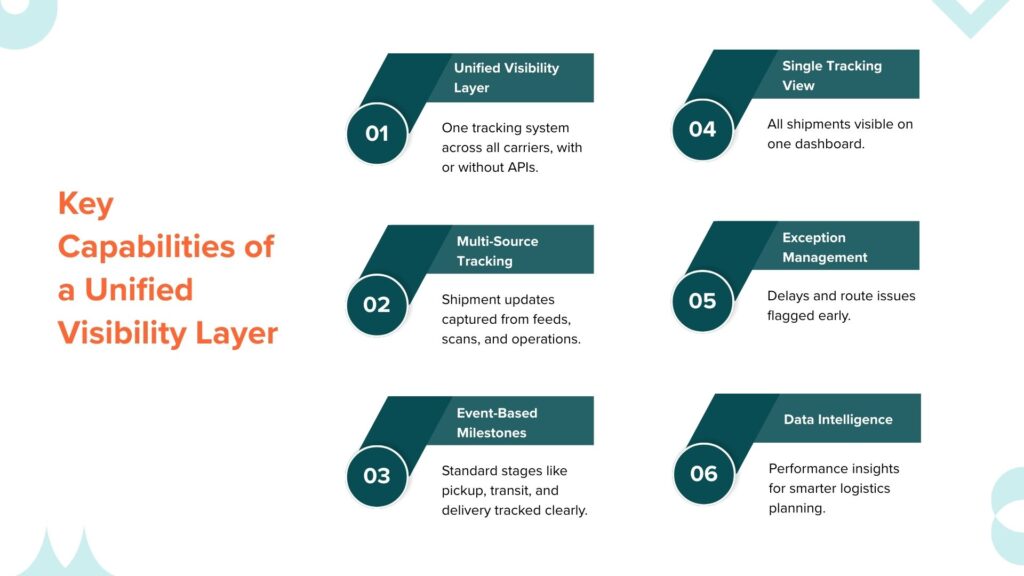
A practical way to overcome these blind spots is to use a unified visibility layer that sits above both API and non-API carriers. The Trackmile visibility layer addresses this challenge by standardizing tracking events and converting fragmented updates into structured milestones.
Instead of depending solely on carrier APIs, this approach aggregates shipment data from multiple sources. These may include carrier feeds, scan events, and operational checkpoints. Each shipment is mapped to key milestones such as picked up, in transit, out for delivery, and delivered.
The strength of this model lies in event-based tracking. Even when a carrier does not support APIs, the visibility layer can still capture and normalize updates from alternative inputs. This ensures that shipments are not invisible simply because the carrier lacks technical integration.
For IT distributors, this means a single tracking view across all carrier types. Operations teams can monitor shipment progress from dispatch to delivery without switching between systems. Customer service teams can provide accurate updates with confidence. Finance teams can rely on verified delivery events for invoicing and reconciliation.
Another advantage is exception management. When a shipment deviates from the expected route or timeline, alerts can be generated based on milestone delays. This allows teams to intervene early rather than reacting after a complaint is raised.
Over time, the visibility layer also creates a valuable data repository. Distributors can analyze delivery performance by region, carrier, or product category. These insights help improve planning and reduce risk in future shipments.
Reverse Logistics for IT Hardware Returns and Warranty Replacements
In IT distribution, shipment visibility must extend beyond delivery to include returns and warranty replacements. When reverse movements are not tracked properly, return approvals slow down and replacement cycles get delayed.
Common issues include missing pickup confirmation, limited transit updates, and uncertainty around when hardware reaches the service center. These gaps increase support workload and frustrate resellers and enterprise buyers who expect clear status updates throughout the return process.
A unified visibility layer combined with effective Return Management helps IT distributors track reverse shipments through key milestones such as return pickup, in transit, and received at service center. This reduces manual follow-ups, shortens return processing time, and improves customer trust in warranty and replacement workflows.
Conclusion: Turning Blind Spots into Business Insight
Lack of shipment visibility is no longer a minor inconvenience in IT distribution. It is a structural weakness that affects operations, customer relationships, and financial control. Non-API carriers amplify this problem by creating tracking gaps that traditional systems cannot fill.
As supply chains become more distributed and customer expectations continue to rise, IT distributors need a smarter way to monitor shipments. A unified visibility layer such as Trackmile transforms fragmented updates into meaningful milestones. It bridges the gap between API and non-API carriers and restores transparency across the delivery lifecycle.
The shift from reactive tracking to proactive visibility enables distributors to reduce delays, improve customer communication, and protect revenue. In an industry where products are valuable and delivery timelines are critical, closing these blind spots is not just a technical upgrade. It is a competitive necessity.
By strengthening their tracking capabilities today, IT distributors can shift from reactive uncertainty to proactive control, turning shipment blind spots into actionable business intelligence. Connect with our experts to transform your tracking experience.