




Cash-on-Delivery (COD) remains one of the most widely used payment options in eCommerce, especially in emerging markets where customer trust in digital payments is still developing. While COD helps brands reach a larger customer base, it creates major operational challenges across the logistics chain. High cancellation rates, return-to-origin (RTO) shipments, and delayed payments increase fulfillment costs and slow down business growth.
According to the Worldpay Global Payments Report by FIS, digital payments are rapidly becoming the dominant method for online transactions worldwide, with digital wallets and online payments accounting for a large share of global eCommerce payment value. As digital payment adoption grows, many online retailers are actively looking for ways to convert COD orders to prepaid to improve cash flow and reduce operational risks.
For logistics teams and fulfillment managers, the shift from COD to prepaid orders is not just a payment preference. It directly impacts shipping efficiency, inventory planning, and last mile delivery success. When prepaid orders increase, the logistics workflow becomes more predictable, reducing failed deliveries and lowering operational costs.
Why COD Still Dominates in eCommerce
Despite the rapid growth of digital payments, COD continues to be widely used across many eCommerce markets.
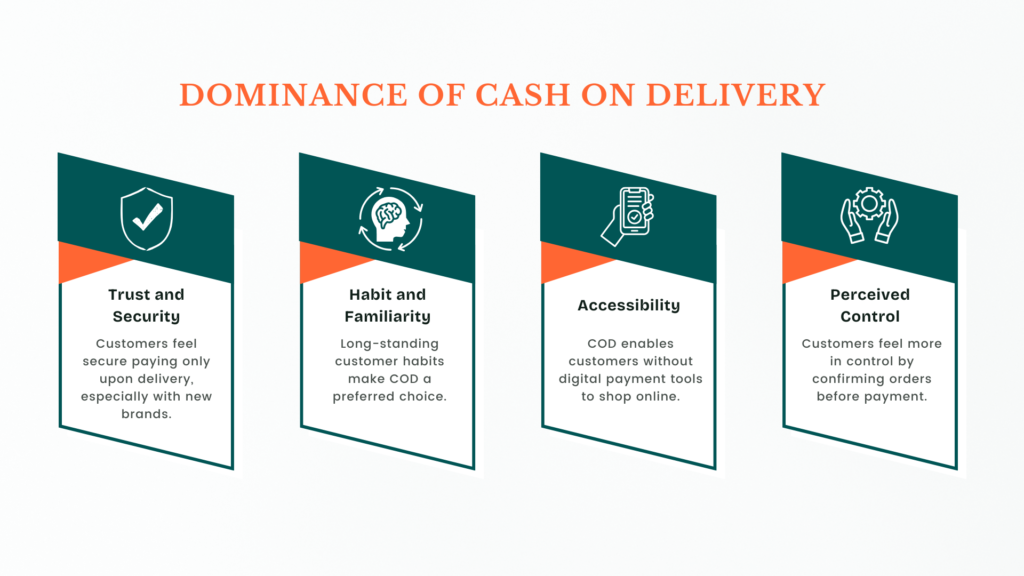
Trust and payment security concerns
Many customers hesitate to pay online due to concerns about fraud or poor product quality. COD provides reassurance because payment is made only when the order arrives.
This is especially common when customers purchase from a new brand or unfamiliar online store.
Habit and familiarity
In many regions, COD was the first payment method offered when eCommerce started expanding. Over time, customers became accustomed to choosing COD even when digital payment options were available.
Changing this behavior requires businesses to introduce incentives and build trust in online payment systems.
Accessibility limitations
Not all customers have access to credit cards, digital wallets, or banking services. COD allows these customers to participate in online shopping without needing digital payment tools.
Perceived control over delivery
Many shoppers feel that COD gives them more control over the purchase. They believe they can confirm the order before paying, which makes them more comfortable placing an order online.
Challenges Businesses Face with COD Orders
While COD can increase order volumes, it also creates significant logistics and operational challenges for eCommerce businesses.
High Return-to-Origin (RTO) rates
One of the biggest problems associated with COD orders is the high rate of RTO shipments. Customers may cancel the order at the last moment or refuse delivery when the courier arrives.
Every RTO shipment doubles the logistics effort because the package must travel to the customer and then back to the warehouse.
Increased logistics costs
COD deliveries involve additional operational steps such as cash collection, payment reconciliation, and extra handling by delivery personnel. These processes add complexity to last mile delivery and increase overall shipping costs.
Delayed revenue realization
With prepaid orders, businesses receive payment at the time of purchase. COD orders delay revenue until the delivery is completed and the collected payment is processed.
For fast growing eCommerce brands, this delay can impact working capital and inventory planning.
Fraud and fake orders
Some customers place COD orders without intending to accept delivery. These fake orders increase RTO rates and waste logistics resources.
During peak sales events, the number of such orders often increases.
Key Strategies to Encourage Customers to Choose Prepaid
Encouraging customers to shift away from COD requires a combination of incentives, trust building, and checkout optimization.
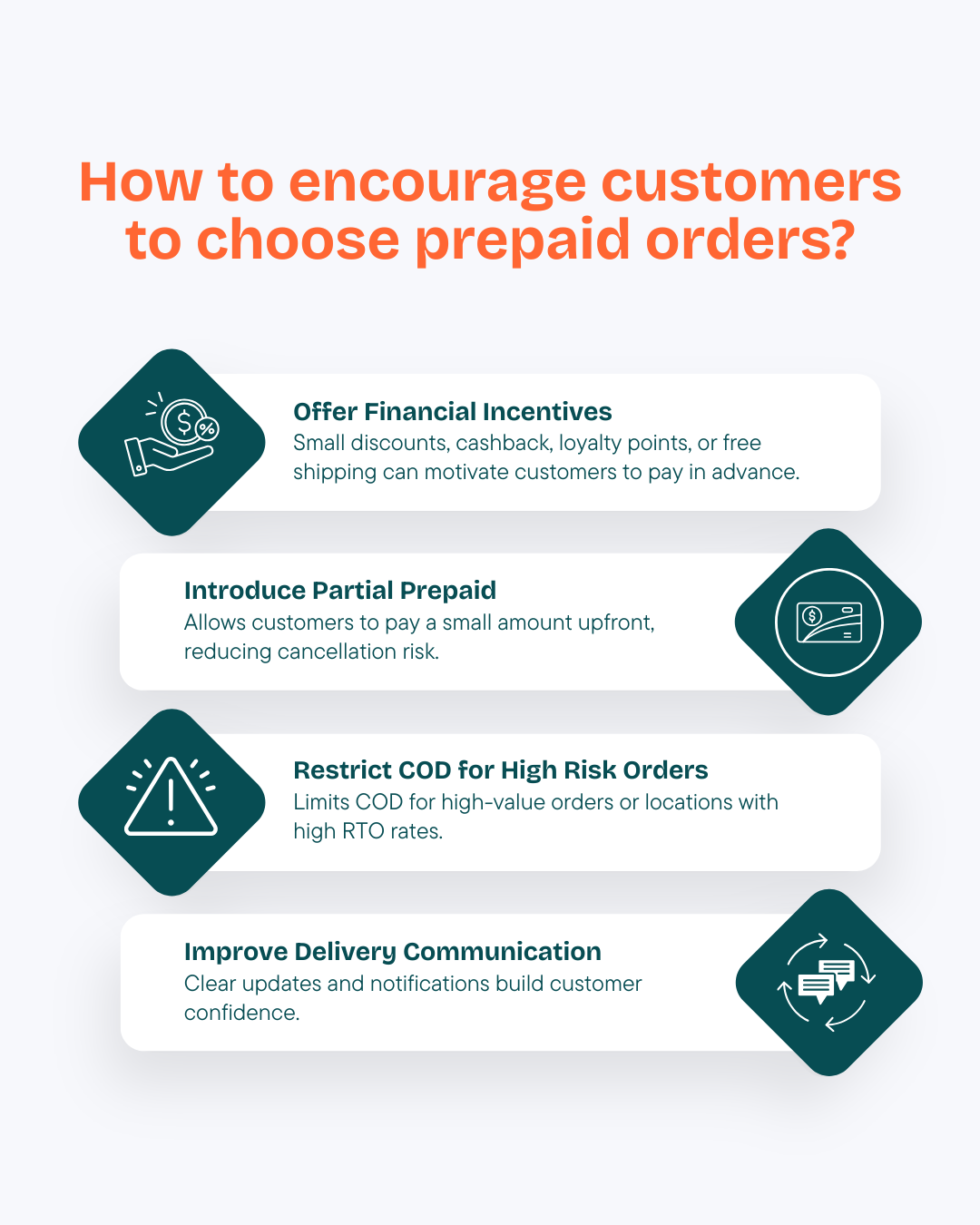
Offer financial incentives
Small incentives can influence payment decisions. Businesses often provide benefits such as:
- Discounts for prepaid orders
- Cashback through digital wallets
- Loyalty points for prepaid purchases
- Free shipping for prepaid payments
Even a small price advantage can motivate customers to choose prepaid options.
Introduce partial prepaid options
Some businesses allow customers to pay a small amount upfront while the remaining balance is paid during delivery. This reduces cancellation risk while still giving customers flexibility.
Restrict COD for high risk orders
Companies can limit COD for certain cases such as high value orders or locations with historically high RTO rates. This helps reduce logistics losses without removing COD completely.
Improve delivery communication
Clear delivery updates and proactive notifications increase customer confidence in the fulfillment process. When customers trust the delivery experience, they are more willing to pay in advance.
Improving Checkout Experience to Promote Prepaid Payments
A smooth checkout experience is one of the most important factors that influence payment choice.
Offer multiple digital payment options
Customers should be able to choose from several payment methods such as UPI, credit cards, debit cards, digital wallets, and net banking. Payment flexibility improves the likelihood of prepaid transactions.
Simplify the checkout process
Long checkout flows often lead customers to select COD because it appears faster. Businesses should focus on faster authentication, fewer form fields, and mobile friendly payment experiences.
Enable faster repeat purchases
Returning customers should be able to complete purchases quickly using saved payment details or one click payment options.
Provide shipment visibility
Customers are more comfortable paying in advance when they know they can track their order throughout the delivery journey. Real time shipment updates and delivery transparency reduce uncertainty around prepaid purchases.
Businesses can improve customer confidence by offering global shipment tracking tools that allow shoppers to monitor delivery progress across multiple courier partners.
Conclusion: How Payment Solutions Help Reduce COD Dependency
Reducing dependence on COD is not just about encouraging online payments. It is about improving the efficiency of the entire eCommerce logistics ecosystem.
When businesses successfully convert COD orders to prepaid, several operational benefits follow. Delivery success rates increase, RTO shipments decrease, and logistics networks operate more efficiently. Revenue is realized faster, and businesses gain better control over inventory planning.
Modern payment systems, order verification tools, and logistics platforms help businesses manage this transition more effectively. When combined with multi carrier shipping platforms like eShipz, companies can optimize courier allocation, improve delivery success rates, and reduce the operational burden associated with COD shipments.
As digital payments continue to grow, the future of eCommerce fulfillment will depend on stronger integration between payment systems and logistics platforms. Businesses that gradually reduce COD dependency will be better positioned to scale operations, control shipping costs, and deliver a more reliable customer experience.
To learn how advanced shipping platforms can help improve delivery performance and reduce COD related risks, connect with the experts at eShipz.