



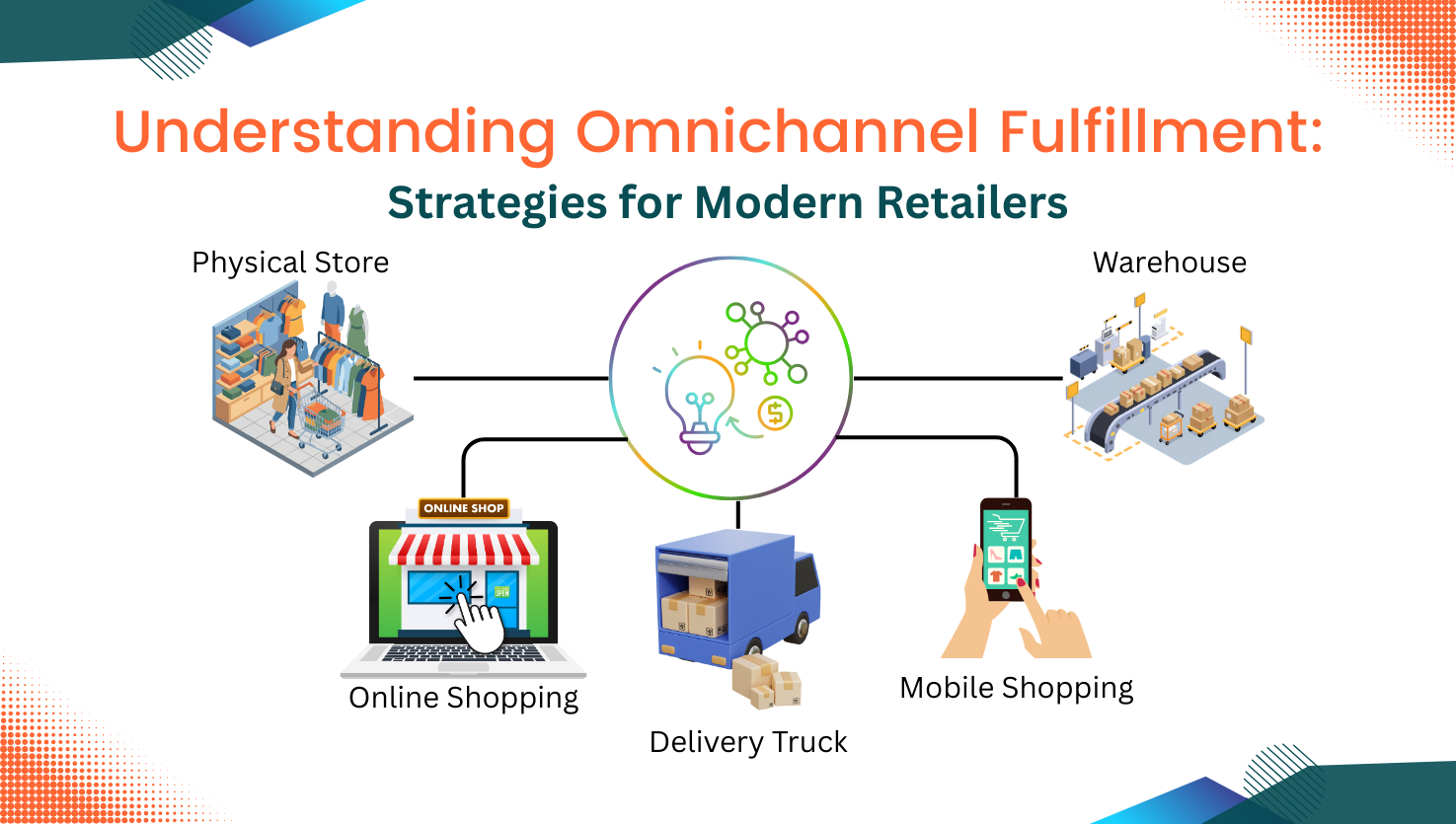
Retail today is no longer limited to a single sales channel. Customers discover products on social media, browse them on a website, compare prices on marketplaces, and may finally complete the purchase in a physical store or through a mobile app. This evolving consumer journey has made Omnichannel Fulfillment a critical strategy for modern retailers looking to meet rising expectations for speed, convenience, and flexibility.
According to research by Aberdeen Group, companies with strong omnichannel engagement strategies retain nearly 89% of their customers, compared to only 33% for companies with weak omnichannel strategies. This highlights the growing importance of integrated retail experiences where customers can move seamlessly between digital and physical shopping environments.
The shift toward omnichannel retail has accelerated in recent years. E-commerce growth, mobile shopping, and the expansion of digital marketplaces have changed how people interact with brands. Today’s customers expect consistent experiences whether they shop in-store, online, or through an app.
For retailers, this transformation brings both opportunity and complexity. Customers now expect fast delivery, real-time product availability, and flexible options such as in-store pickup or home delivery. Meeting these expectations requires a robust fulfillment strategy that connects inventory, order management, and logistics across all sales channels.
Fulfillment plays a key role in this new retail environment. A retailer might sell through a website, physical store, marketplace, or social media platform. Without an integrated fulfillment system, managing inventory and orders across these channels becomes inefficient. This is why many modern retailers are turning to omnichannel fulfillment strategies that unify operations and improve customer satisfaction.
What Is Omnichannel Fulfillment?
Definition and Core Concept
Omnichannel fulfillment refers to a logistics and order management strategy that integrates multiple sales channels into a single, connected fulfillment network. Instead of managing separate inventory and fulfillment processes for each channel, retailers use a centralized system that coordinates orders, inventory, and delivery across all touchpoints.
In an omnichannel environment, customers can browse products online, purchase through an app, pick them up in-store, or have them delivered from a nearby warehouse. The key idea is that all channels work together as part of one unified retail ecosystem.
This model relies on real-time data, connected technology systems, and efficient logistics operations. Retailers gain the ability to fulfill orders from different locations, including warehouses, distribution centers, or retail stores, depending on which option is fastest or most efficient.
For customers, this means greater flexibility and convenience. For retailers, it creates opportunities to optimize inventory utilization and improve delivery speed.
Omnichannel vs. Multichannel Fulfillment
Although the terms are sometimes used interchangeably, omnichannel fulfillment is different from multichannel fulfillment.
Multichannel fulfillment simply means selling products through multiple platforms such as websites, marketplaces, and physical stores. However, these channels often operate independently. Inventory, order management, and fulfillment processes may be separate for each channel.
Omnichannel fulfillment takes integration a step further. Instead of isolated channels, all platforms share data and operational systems. Inventory is visible across locations, orders are processed centrally, and fulfillment decisions are made dynamically based on availability and proximity.
This integration enables retailers to offer seamless shopping experiences. A customer could order online and pick up in-store, return products purchased online at a physical store, or receive faster delivery through a nearby fulfillment point.
How Omnichannel Fulfillment Works
Integrating Online and Offline Sales Channels
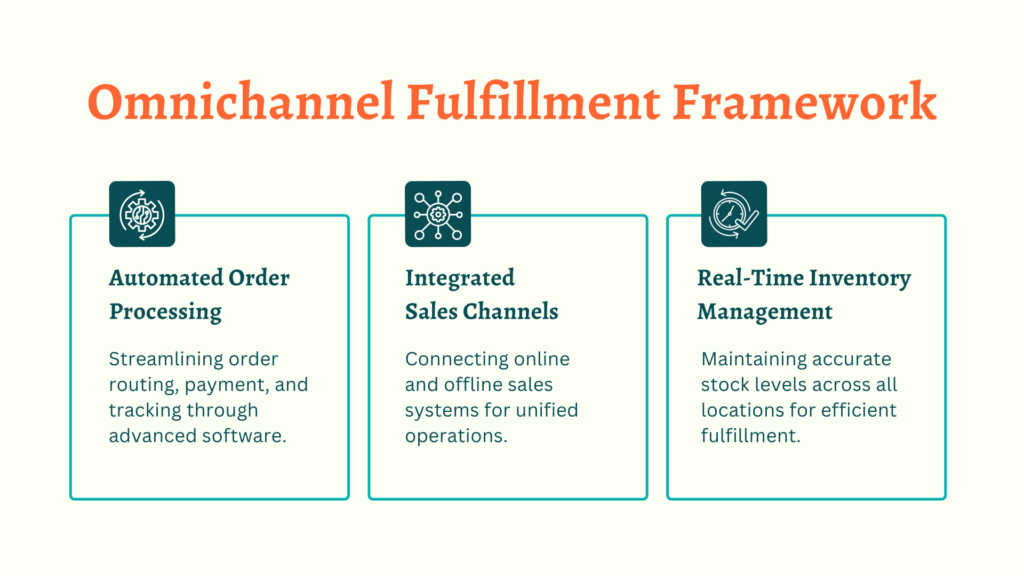
At the core of omnichannel fulfillment is the integration of online and offline sales channels. Retailers connect their e-commerce platforms, point-of-sale systems, warehouse management tools, and inventory databases into a unified infrastructure.
When a customer places an order, the system automatically identifies the best fulfillment location. This could be a warehouse, distribution center, or even a nearby retail store. The decision is based on factors such as inventory availability, shipping distance, delivery timelines, and operational costs.
Many retailers today rely on omnichannel fulfillment software to connect these systems and automate the process of order routing, inventory tracking, and shipping coordination across different sales channels.
For example, if a customer orders a product online, the system might route the order to a nearby store instead of a distant warehouse. This reduces delivery time and shipping costs while improving the customer experience.
Real-Time Inventory and Order Management
Real-time visibility is one of the most important components of omnichannel fulfillment. Retailers must track inventory levels across warehouses, stores, and distribution centers to ensure accurate order fulfillment.
Inventory management systems update stock levels automatically whenever a product is sold or restocked. This prevents overselling and helps retailers maintain accurate product availability across channels.
Order management systems also play a central role. These systems coordinate order routing, payment processing, and shipment tracking. By connecting different operational systems, retailers gain better control over the entire fulfillment process.
With accurate data and automated workflows, businesses can reduce delays, minimize errors, and improve delivery reliability.
Key Omnichannel Fulfillment Methods
Retailers use several fulfillment strategies to support omnichannel operations. These methods allow customers to choose the most convenient way to receive their orders.
Buy Online, Pick Up In Store (BOPIS)
Buy Online, Pick Up In Store, commonly known as BOPIS, has become one of the most popular omnichannel fulfillment options. In this model, customers place orders online and collect them from a nearby store location.
This approach offers several advantages. Customers save time by avoiding shipping delays, and retailers reduce last-mile delivery costs. Stores also benefit from increased foot traffic, which can lead to additional purchases when customers visit to collect their orders.
BOPIS became especially popular during the rapid growth of digital commerce, and many retailers continue to offer this option because of the convenience it provides.
Ship-from-Store and Home Delivery
Ship-from-store is another key fulfillment strategy used by omnichannel retailers. Instead of shipping orders exclusively from warehouses, retailers fulfill online orders directly from their retail stores.
This approach helps businesses utilize store inventory more efficiently while expanding their delivery reach. If a warehouse runs out of stock, a nearby store can fulfill the order instead.
Ship-from-store also reduces shipping distances and enables faster delivery times. Many retailers use this method to support same-day or next-day delivery services.
Home delivery remains the most widely used fulfillment option in omnichannel retail. Customers who prefer convenience can receive products directly at their doorstep while retailers optimize shipping routes and fulfillment locations to improve efficiency.
Curbside Pickup
Curbside pickup offers another flexible option for customers who want fast and convenient order collection. In this model, customers place orders online and collect them from a designated pickup area outside the store.
Store staff prepare the order in advance and bring it directly to the customer’s vehicle when they arrive. This approach combines the speed of local pickup with minimal in-store interaction.
For retailers, it provides an efficient way to fulfill online orders while leveraging existing store infrastructure.
Benefits and Challenges of Omnichannel Fulfillment
Benefits for Retailers and Customers
Omnichannel fulfillment offers several advantages for both retailers and shoppers.
One of the most significant benefits is improved customer experience. By offering multiple fulfillment options such as home delivery, in-store pickup, or curbside collection, retailers give customers greater control over how they receive their orders.
Another advantage is better inventory utilization. Instead of maintaining separate inventory pools for different channels, retailers can allocate stock dynamically across warehouses and stores.
Businesses also benefit from improved operational efficiency. Integrated systems allow retailers to automate order routing, reduce manual processes, and gain greater visibility across their supply chains.
Platforms like eShipz support these operations by enabling businesses to connect with multiple carriers and manage shipping workflows across different sales channels from a single platform.
Common Implementation Challenges
Despite its advantages, implementing omnichannel fulfillment can be complex.
One major challenge is technology integration. Many retailers operate with legacy systems that were not designed to connect online and offline channels. Integrating these systems requires careful planning and investment in modern platforms.
Inventory accuracy is another challenge. Without reliable real-time data, retailers risk overselling products or creating fulfillment delays. Maintaining accurate inventory across multiple locations requires advanced tracking and automated updates.
Operational coordination can also be difficult. Stores, warehouses, and logistics teams must work together to process orders efficiently.
Finally, managing logistics costs can be challenging. Offering multiple delivery options increases complexity in transportation and order routing, so retailers must balance customer expectations with operational efficiency.
Building a Strong Omnichannel Fulfillment Strategy
Retailers that successfully implement omnichannel fulfillment typically follow several best practices to ensure smooth operations and consistent customer experiences.
Invest in Integrated Technology Systems
A strong technology foundation is essential for omnichannel operations. Retailers need systems that connect inventory management, order processing, warehouse operations, and shipping workflows.
Integrated platforms enable real-time data sharing across departments and sales channels. This ensures that orders are processed efficiently and customers receive accurate information about product availability and delivery timelines.
Ensure Accurate Inventory Visibility
Inventory visibility is critical to the success of omnichannel fulfillment. Retailers must maintain accurate stock levels across all locations, including warehouses and stores.
Advanced inventory management tools can track product movement in real time and update availability across sales channels. This reduces the risk of overselling and improves order accuracy.
Optimize Logistics and Store Operations
Logistics optimization plays a major role in fulfilling omnichannel orders efficiently. Retailers need to determine the most effective fulfillment location for each order based on inventory availability, shipping distance, and delivery timelines.
Stores may also need operational adjustments to support online order fulfillment. This could include dedicated pickup areas, streamlined packing processes, or specialized staff for managing digital orders.
As retailers continue to adapt to changing customer expectations, adopting integrated fulfillment strategies becomes increasingly important. Businesses exploring ways to streamline their shipping and logistics workflows can talk to our experts to better understand how modern fulfillment technology supports omnichannel retail operations.