




Returns management solution has become essential as online shopping transforms retail and returns continue to grow as a major operational challenge. Nearly 30% of online orders are returned, compared with less than 9% in physical stores, driven by sizing issues, buyer uncertainty, and digital shopping habits. In fashion and apparel, returns often hit 30–40%, while electronics see frequent returns due to technical or compatibility concerns. These volumes create operational delays, rising costs, and customer frustration, with retailers spending $15–$20 (₹1,200–₹1,600) per return on shipping and processing.
A Return Management System (RMS) solves this by automating the entire return workflow, from customer requests and labels to warehouse inspection and refunds, turning a complex, manual process into a smooth, efficient operation.
In this article, we explore why returns matter today, how businesses can leverage RMS and smart strategies to reduce returns, and what to look for in modern Returns Management Solutions to streamline operations and enhance customer experience.
Why Ecommerce Returns Matter More Than Ever
Returns are no longer just a minor operational inconvenience, they directly impact customer experience, brand reputation, and business profitability.
Several industry trends have intensified this challenge:
- Rising customer expectations – Shoppers now expect fast, hassle-free returns as a standard part of online shopping.
- Try-before-you-keep behavior – Especially in fashion, customers often order multiple sizes or styles to find the right fit.
- Cross-border sales growth – International returns add complexity, cost, and longer processing times.
- Competitive pressures – Flexible return policies can influence purchase decisions and loyalty.
Research shows that 92% of shoppers are more likely to buy again if the returns process is simple and transparent. Without proper Returns Management Solutions, brands risk lost revenue, operational bottlenecks, and frustrated customers.
By implementing a structured approach with technology-driven solutions, businesses can streamline reverse logistics, reduce operational costs, and maintain trust, turning returns from a challenge into a strategic advantage.

What Is the Process of Return Management?
Return management is a structured workflow designed to handle product returns efficiently, ensuring that returns don’t disrupt operations while keeping customers satisfied. A well-managed process not only reduces costs but also strengthens customer trust, which is crucial in today’s competitive ecommerce landscape.
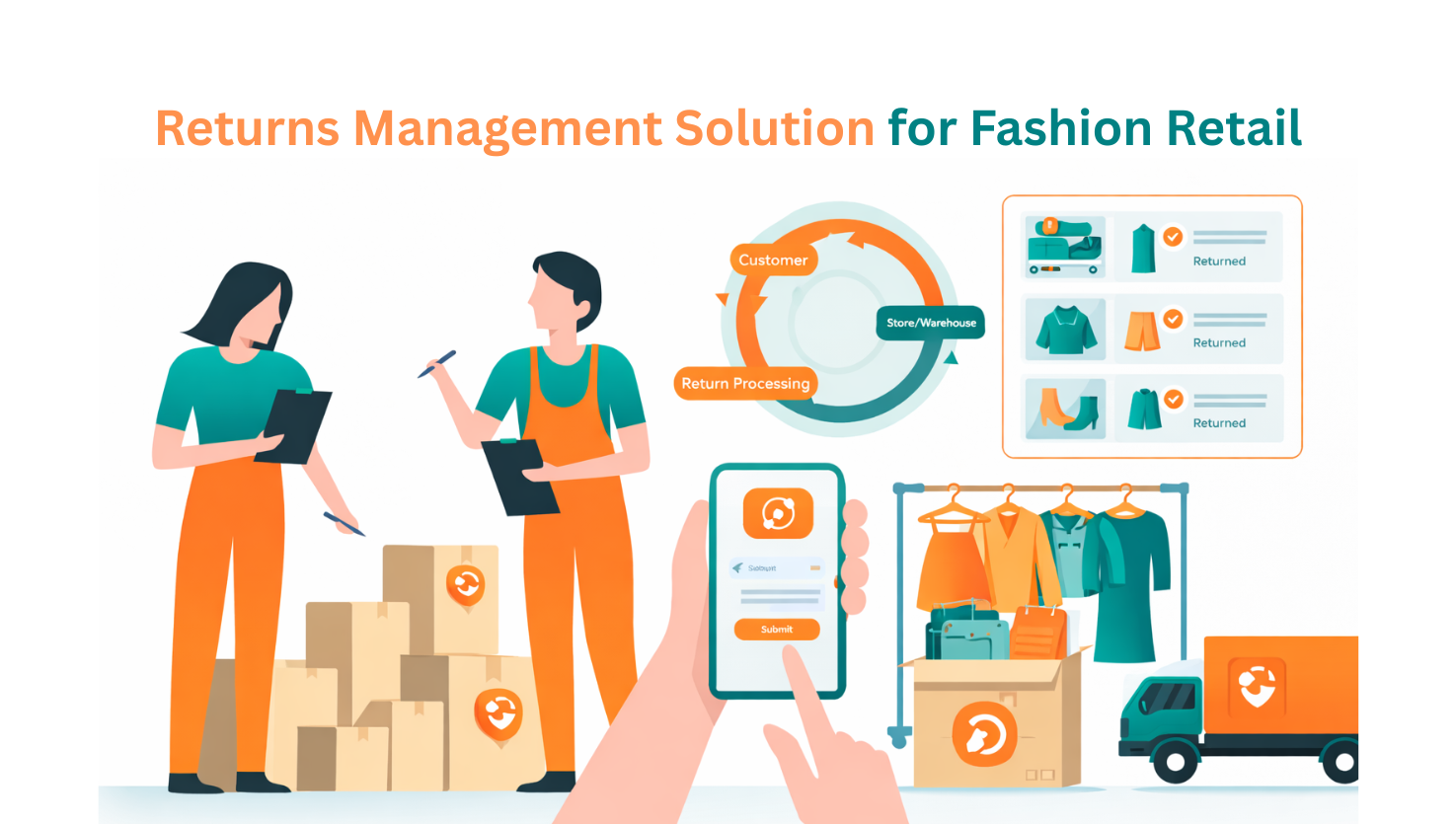
A typical return process includes the following steps:
- Return request initiation – Customers submit return requests through a self-service portal or customer support. Providing multiple channels for initiating returns makes the process convenient and reduces friction, encouraging customer loyalty.
- Return authorization – The RMS automatically verifies whether the return meets eligibility criteria, such as return window, product category, or condition requirements. Automation ensures consistency and accuracy, eliminating delays caused by manual approval.
- Label creation & logistics coordination – The system generates shipping labels or schedules pickup/drop-off options for the customer. This step ensures smooth reverse logistics, reduces errors, and keeps both the customer and warehouse informed.
- Product transportation – Returned items are transported back through the most cost-effective reverse logistics carriers. Efficient routing minimizes shipping costs and transit time, ensuring items reach the warehouse promptly.
- Inspection & quality check – Once the item arrives, warehouse teams examine it for condition, usability, and compliance with return policy. Proper inspection prevents inventory errors and helps determine whether items can be restocked, refurbished, or disposed of.
- Refund, exchange, or store credit – Based on policy and inspection results, customers receive compensation, exchanges, or store credit. This step is critical for maintaining customer satisfaction and trust.
- Inventory reintegration – Returned products are restocked, repaired, or liquidated. Accurate reintegration ensures inventory accuracy, helping brands plan stock effectively and reduce operational losses.
By centralizing these steps through a Return Management System (RMS), brands can automate manual tasks, improve operational efficiency, and maintain transparency for both customers and internal teams. With RMS-driven return workflows, businesses not only cut costs but also turn returns into an opportunity to enhance the post-purchase experience and drive customer loyalty.
Key Features to Evaluate in Modern Returns Platforms Like eShipz
When selecting a Returns Management Solution, businesses look for features that not only streamline operations but also enhance the customer experience. The most important capabilities include:
Self-Service Return Portals – Allow customers to initiate returns directly through an online portal, reducing the need for support intervention and improving transparency. A simple portal makes the process faster, more convenient, and user-friendly.
Automated Return Authorization – The system automatically validates whether a return meets eligibility criteria based on product type, return window, or condition. Automation ensures consistency, reduces errors, and speeds up processing.
Multi-Carrier Reverse Logistics – Provides flexibility to choose the most efficient carrier for each return, helping businesses optimize shipping costs and delivery times. Many modern logistics platforms also integrate with multiple carrier networks to simplify reverse shipping coordination.
Exchange & Store Credit Options – Offering alternatives to refunds, such as product exchanges or store credits, helps retain revenue while improving customer satisfaction.
Real-Time Return Tracking – Gives both customers and operations teams full visibility into return shipments, ensuring transparency and timely updates throughout the reverse logistics process.
Return Analytics & Insights – Tracks return reasons and patterns, such as sizing issues, quality concerns, or product mismatches. These insights help businesses identify recurring problems and make data-driven product improvements.
Platforms that combine automation, analytics, and logistics orchestration are becoming increasingly important for growing ecommerce brands. Solutions such as eShipz, for example, help unify shipping, tracking, and reverse logistics workflows, enabling businesses to manage returns more efficiently while maintaining a consistent post-purchase experience.
By evaluating these capabilities carefully, brands can choose a solution that not only simplifies return operations but also strengthens customer trust and loyalty, turning returns into a strategic advantage rather than a cost burden.
Trends Shaping Returns in Fashion Ecommerce
Fashion ecommerce continues to see some of the highest return rates in online retail, with studies showing return percentages significantly above the overall ecommerce average. Common drivers include size and fit mismatches, where customers struggle to choose the right fit without trying items on; differences between product imagery and reality, which lead to unmet expectations; ordering multiple sizes or colors to compare before deciding; and evolving style preferences that shift after products arrive. According to industry data, nearly 35 – 40% of fashion purchases are returned, highlighting how critical this category is for return management performance.
To address these challenges, brands are increasingly adopting technology and analytics as part of their Returns Management Solutions strategy. AI‑powered size recommendation engines analyze customer measurements and past purchase behavior to suggest the best fit, helping reduce return rates by 15–25%. High‑quality visual content, including 360‑degree images and videos combined with detailed sizing charts, helps bridge expectation gaps before purchase.
Smarter, transparent return policies with clear timelines and automated refund workflows build customer trust without inviting misuse. Finally, data‑driven product insights, tracking why items are returned and identifying recurring issues, enable teams to make proactive product improvements. Research from trusted sources such as Statista and SciTePress further confirms that using analytics and automation within a structured return process is key to reducing costs and improving operational efficiency.
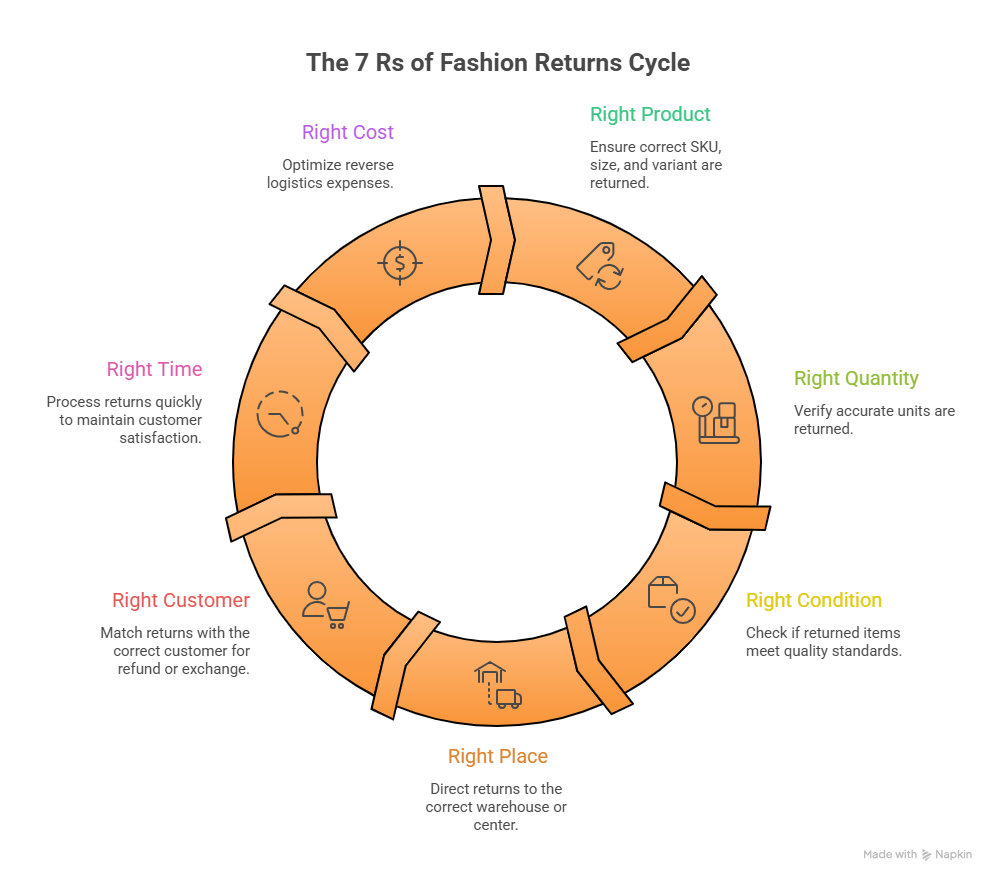
The 7 Rs framework helps brands manage returns efficiently by ensuring the right product, quantity, condition, place, customer, time, and cost. Applying these principles alongside an RMS streamlines operations, reduces errors, and turns returns into a strategic advantage.
Simplifying Returns for Better Growth
Returns are no longer a minor inconvenience, they are a critical part of ecommerce strategy. Modern Returns Management Solutions and Return Management Systems transform reverse logistics from a cost burden into a competitive advantage, helping brands stay efficient while delighting customers.
Investing in automation, analytics, and customer-friendly workflows allows businesses to control costs, speed up processing, and build long-term trust. Ultimately, it’s not about if returns will happen, but how effectively your business manages them.
The time to rethink return logistics is now, implementing the right solutions today can turn returns into an opportunity for operational excellence and stronger customer relationships