




The global footwear market continues to expand rapidly, driven by eCommerce growth and changing consumer preferences. However, with this growth comes a major challenge: rising return rates. Returns continue to be a major challenge for footwear brands, with industry estimates from the National Retail Federation showing that returns account for 10–15% of total retail revenue, driven largely by sizing and fit issues.
This is where return reduction strategies are becoming critical for footwear brands. Beyond customer experience, brands are now focusing on operational improvements such as streamlining return pickups, partnering with third-party logistics providers, and reducing turnaround time. Efficient reverse logistics not only lowers operational costs but also discourages unnecessary returns by making the process more structured and transparent.
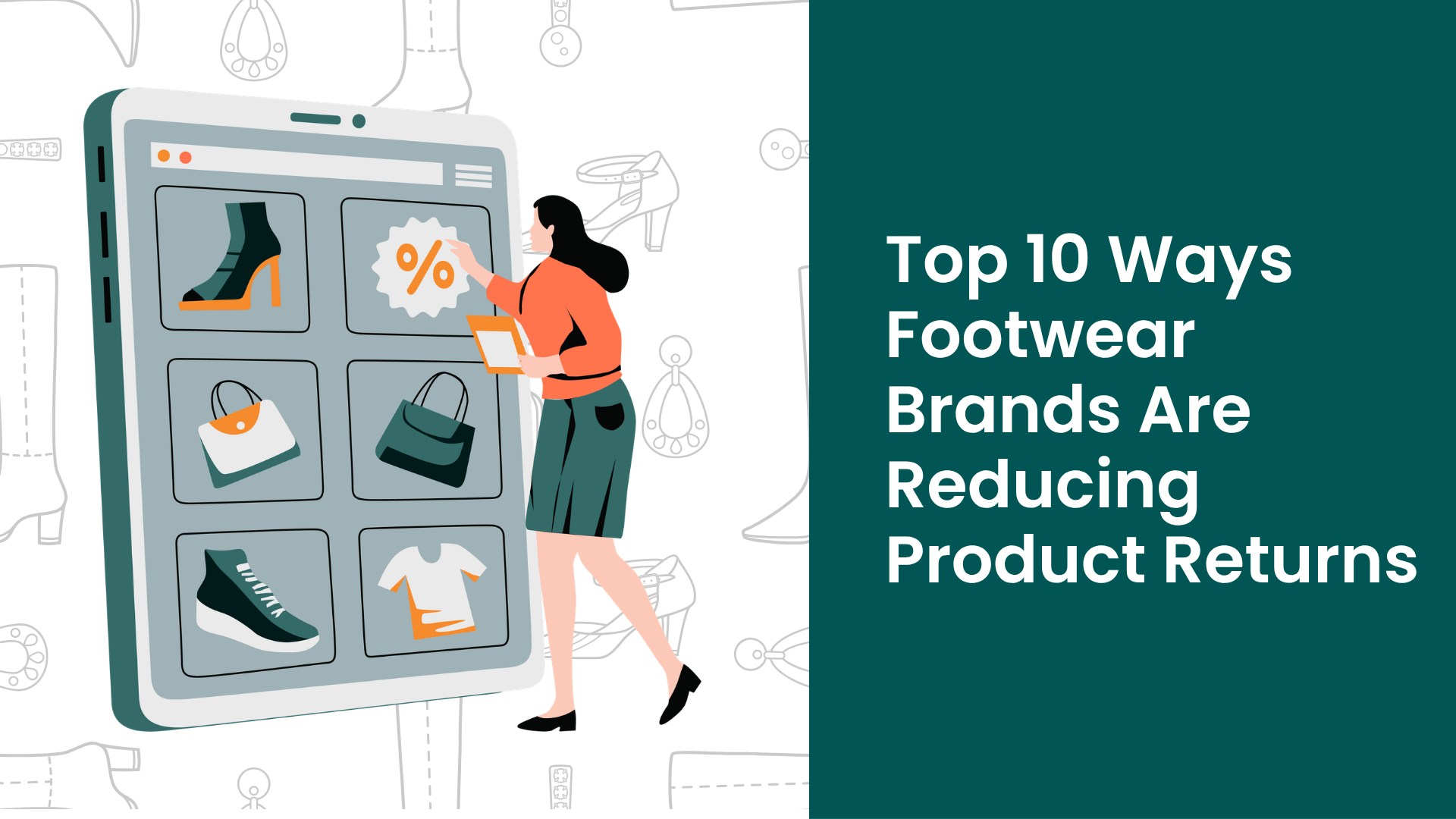
Below are the top 10 ways footwear brands are reducing product returns while improving both customer satisfaction and profitability.
Key Trends Driving Return Reduction in Footwear (2026)
Product returns continue to be one of the biggest challenges for footwear brands, with U.S. retail returns reaching nearly $850 billion in 2025. As a result, the industry is shifting its focus from managing returns to preventing them altogether.
Leading brands are investing heavily in AI-powered sizing tools, augmented reality try-ons, and enhanced product data to reduce uncertainty during purchase. Since fit and expectation mismatches remain the primary cause of returns, technologies that improve pre-purchase confidence are becoming critical.
At the same time, changing consumer behaviors—such as ordering multiple sizes—are pushing brands to rethink return policies and prioritize exchanges over refunds. In 2026, the most successful footwear brands are those that combine technology, data, and customer experience to minimize returns before they happen.
1. Regional Warehousing & Smart Inventory Allocation
One of the most effective ways to reduce returns is by placing inventory closer to the customer. Regional warehousing helps brands shorten delivery timelines and align customer expectations with actual delivery performance.
When customers receive products faster, the likelihood of dissatisfaction decreases. Smart inventory allocation, supported by demand forecasting, ensures that the right sizes and styles are stocked in the right regions. This minimizes errors such as incorrect sizing availability or delayed shipments, both of which often lead to returns.
Localized stock also enables quicker exchanges, which reduces the need for full returns and improves overall customer retention.
2. Data-Driven Return Analysis for Supply Chain Improvement
Footwear brands are increasingly relying on data to understand why products are returned. Common reasons include size mismatch, product defects, and delayed delivery.
By analyzing return data, brands can identify patterns and take corrective action. For example, if a specific shoe model has a high return rate due to sizing issues, brands can update size charts or improve product descriptions. If damage during transit is a frequent issue, logistics and packaging strategies can be refined.
These insights help improve supplier coordination, reduce defects, and optimize logistics planning. Over time, this leads to fewer returns and a more efficient supply chain.
3. Packaging Innovations to Prevent Damage in Transit
Packaging plays a crucial role in reducing returns caused by product damage. Footwear is particularly vulnerable to deformation, scuffing, and moisture damage during transit.
Brands are now investing in durable, right-sized packaging that protects the product without adding unnecessary bulk. Reinforced shoe boxes, moisture-resistant materials, and secure inner supports help maintain product quality throughout the shipping process.
Better packaging design not only reduces return rates but also enhances the unboxing experience, which contributes to higher customer satisfaction.
4. Flexible Delivery & Exchange Logistics
Flexible delivery options are becoming a key differentiator in reducing returns. Customers appreciate the ability to choose delivery slots, opt for doorstep trials, or request instant exchanges.
Efficient exchange logistics allow customers to replace products quickly without initiating a full return. This reduces reverse logistics costs and improves customer retention.
For footwear brands, enabling faster exchanges often leads to higher conversion rates and fewer lost sales, as customers are more likely to keep the product after a smooth exchange experience.
5. Accurate Size Guides and Fit Technology
Sizing issues are one of the leading causes of footwear returns. To address this, brands are investing in advanced size guides and fit recommendation tools.
Technologies such as AI-based fit prediction and virtual try-ons help customers choose the right size based on previous purchases and preferences. Detailed size charts, customer reviews, and fit notes further improve accuracy.
When customers are confident about sizing, the chances of returns decrease significantly.
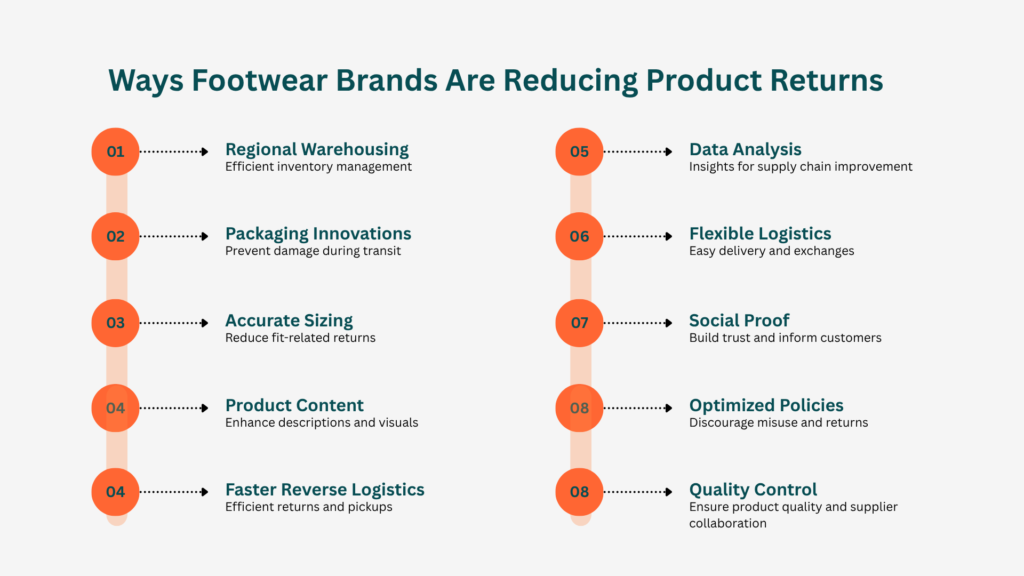
6. Leveraging Social Proof and Customer Reviews
Customer reviews and user-generated content play a major role in influencing purchase decisions. Footwear brands are using social proof to provide real-world insights into fit, comfort, and quality.
Reviews that mention sizing accuracy or comfort level help new customers make informed decisions. Photos and videos shared by other buyers add credibility and reduce uncertainty.
This transparency builds trust and reduces the likelihood of returns caused by unmet expectations.
7. Improved Product Descriptions and Visual Content
Clear and detailed product descriptions are essential for setting accurate expectations. Footwear brands are enhancing product pages with high-quality images, 360-degree views, and videos.
Descriptions now include details about material, fit, cushioning, and usage scenarios. This helps customers understand exactly what they are buying.
When expectations match reality, return rates naturally decline.
8. Optimized Return Policies to Discourage Misuse
While easy returns are important, overly lenient policies can lead to misuse. Some customers engage in practices like ordering multiple sizes with the intention of returning most of them.
To address this, brands are introducing balanced return policies. These may include shorter return windows, nominal return fees, or incentives for exchanges instead of refunds.
Such policies encourage responsible shopping behavior without compromising customer satisfaction.
9. Faster Reverse Logistics and Pickup Optimization
Streamlining return pickups is another key area of focus. Efficient reverse logistics ensures that returned products are collected quickly and processed without delays.
By partnering with third-party logistics providers, brands can optimize pickup routes, reduce transit time, and improve inventory recovery.
Faster turnaround times also enable quicker restocking, which reduces losses and improves overall operational efficiency.
10. Quality Control and Supplier Collaboration
Many returns occur due to product defects or inconsistencies in quality. Footwear brands are strengthening quality control processes and working closely with suppliers to maintain standards.
Regular audits, better material sourcing, and improved manufacturing processes help reduce defects. Collaboration with suppliers ensures that issues are addressed at the source rather than after the product reaches the customer.
Consistent product quality leads to fewer returns and stronger brand loyalty.
Conclusion
Reducing returns is no longer just about managing costs. It is about creating a seamless and satisfying customer experience while optimizing operations. Footwear brands are adopting a wide range of return reduction strategies, from smarter inventory placement to data-driven insights and improved logistics.
By focusing on accurate fulfillment, better packaging, flexible delivery options, and efficient reverse logistics, brands can significantly lower return rates. These strategies not only improve profitability but also build long-term customer trust.
To support these efforts, many brands are now adopting automated returns management solutions such as the ReturnEase Portal by eShipz, which enables self-serve returns, faster exchanges, and real-time tracking. Such solutions help streamline the entire return lifecycle while providing actionable insights into return patterns.
As the footwear market continues to grow, brands that invest in smarter return management and technology-driven workflows will be better positioned to scale sustainably and stay competitive.