





E-commerce Returns Management plays a critical role in shaping the overall customer experience in online retail. As more consumers shift to digital shopping, returns have become a normal part of the buying journey rather than an exception. According to research by the National Retail Federation, return rates for e-commerce purchases can reach up to 20 to 30 percent, significantly higher than in-store purchases. This makes it essential for businesses to have a structured and efficient returns process. A well-managed returns system not only improves customer satisfaction but also builds trust, encourages repeat purchases, and protects business margins.
Key Trends Shaping E-commerce Returns Management in 2026
E-commerce returns are reaching unprecedented levels, with nearly a third of online purchases being sent back and total return values approaching $900 billion in the U.S. alone. As a result, returns management is no longer a backend process—it has become a strategic priority for retailers.
Rising logistics costs and return fraud are forcing companies to rethink traditional policies, with many moving away from free returns and introducing stricter controls. At the same time, advancements in AI are enabling businesses to shift from reactive returns handling to proactive return prevention through better sizing, recommendations, and decision-making.
In 2026, successful e-commerce brands are those that treat returns not as a cost center, but as an opportunity to optimize operations, improve customer experience, and protect margins.
Why Returns Happen in E-commerce
Returns are an unavoidable aspect of online retail. Unlike physical stores, customers cannot touch, try, or fully evaluate products before purchasing. This gap often leads to mismatched expectations and, eventually, returns.
One of the most common reasons for returns is incorrect sizing, especially in categories like apparel and footwear. Without the ability to try items on, customers rely on size charts, which may not always be accurate. Another frequent issue is receiving damaged or defective products. This can happen due to poor packaging, handling during transit, or manufacturing defects.
Customers also return products when they receive the wrong item. This usually stems from picking or packing errors within warehouses. In addition, unmet expectations play a major role. Product images, descriptions, or marketing claims may not always align with what the customer receives. Even slight differences in color, material, or functionality can lead to dissatisfaction.
It is also important to note that return rates are generally higher in e-commerce compared to traditional retail. The convenience of online shopping, combined with easy return policies, encourages customers to order multiple options with the intention of returning some of them. This behavior, often called bracketing, is especially common in fashion and lifestyle categories.
Understanding these reasons helps businesses identify gaps in their operations and take preventive measures to reduce return volumes.
Key Components of the Returns Process
An effective returns process is built on a series of structured steps that ensure clarity, speed, and convenience for both the customer and the business. Each stage plays a vital role in maintaining efficiency.
Return Policy
The return policy is the foundation of the entire process. It sets clear expectations for customers regarding eligibility, timelines, conditions, and refund methods. A well-defined policy should be easy to understand and accessible on the website. Transparency here reduces confusion and builds trust.
Return Request and Approval
Once a customer decides to return a product, they initiate a return request. This step should be simple and user-friendly, often handled through a self-service portal. The system then verifies whether the request meets the return policy criteria. In some cases, approvals are automated, while in others, manual checks may be required.
Reverse Logistics
Reverse logistics involves moving the product from the customer back to the warehouse or seller. This step includes pickup scheduling, transportation, and tracking. Efficient reverse logistics ensures that returned items are collected quickly and reach the correct destination without delays.
Inspection and Processing
After the product is received, it undergoes inspection to determine its condition. Based on the findings, the item may be restocked, repaired, refurbished, or discarded. This step is crucial for inventory accuracy and cost control.
Refund or Replacement
The final step is issuing a refund or sending a replacement product. Speed is critical here. Faster refunds improve customer satisfaction and increase the likelihood of repeat purchases. Clear communication throughout the process keeps customers informed and reduces support queries.
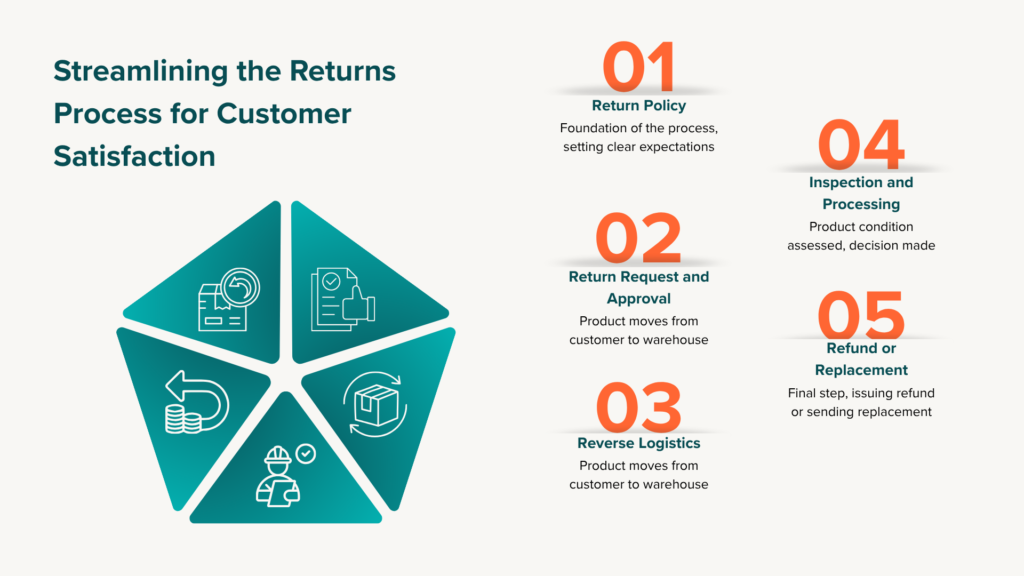
When these components work together seamlessly, businesses can turn returns into a smooth and manageable process rather than a costly disruption.
Challenges and Best Practices
Managing returns effectively comes with its own set of challenges. However, with the right strategies, these challenges can be minimized and even turned into opportunities.
Common Challenges
One of the biggest challenges in E-commerce Returns Management is the high cost associated with reverse logistics. Shipping, handling, and processing returned items can quickly add up, impacting overall profitability.
Fraud and misuse of return policies are also growing concerns. Some customers may exploit lenient policies by returning used or damaged products, or by repeatedly ordering and returning items.
Inventory management becomes more complex with returns. Delays in processing returned items can lead to inaccurate stock levels, affecting order fulfillment and sales.
Another challenge is maintaining a consistent customer experience. Poor communication, slow refunds, or complicated return procedures can lead to dissatisfaction and negative reviews.
Best Practices
To overcome these challenges, businesses should focus on implementing practical and customer-centric solutions.
Start with a clear and balanced return policy. It should be flexible enough to meet customer expectations but structured enough to prevent misuse. Clearly outline conditions, timelines, and exceptions.
Simplify the return process. A hassle-free experience encourages customer trust. Self-service portals, easy tracking, and automated updates can significantly improve user experience.
Leverage automation wherever possible. Automating return approvals, tracking, and notifications reduces manual effort and speeds up the process.
Improve product descriptions and quality control. Accurate images, detailed descriptions, and strict quality checks can reduce the likelihood of returns caused by unmet expectations or defects.
Track and analyze return data. Understanding why products are being returned helps identify patterns and areas for improvement. This data can guide decisions related to product design, packaging, and logistics.
Maintain clear communication with customers. Regular updates about return status, refunds, and timelines help build transparency and reduce uncertainty.
By combining these best practices, businesses can manage returns more efficiently while maintaining a positive customer experience.
Role of Technology and Business Impact
Technology plays a crucial role in transforming how businesses handle returns. As e-commerce operations scale, manual processes become inefficient and prone to errors. This is where digital solutions step in.
Modern returns management systems integrate multiple functions into a single platform. They streamline return requests, automate approvals, and provide real-time tracking. This reduces processing time and minimizes human intervention.
Advanced analytics tools help businesses understand return patterns and customer behavior. For example, identifying frequently returned products can highlight issues with quality, sizing, or descriptions. Businesses can then take corrective actions to reduce future returns.
Automation also improves reverse logistics. Smart routing systems can assign the most efficient courier for return pickups, reducing transit time and costs. Inventory systems can be updated in real time, ensuring accurate stock levels.
From a business perspective, efficient returns management has a direct impact on profitability and customer retention. Faster processing reduces operational costs and prevents revenue leakage. At the same time, a smooth return experience increases customer satisfaction and builds long-term loyalty.
Customers are more likely to shop again from brands that offer easy and reliable returns. In a competitive market, this can be a key differentiator. Businesses that invest in improving their returns process often see higher repeat purchase rates and stronger brand trust.
Conclusion
E-commerce returns are no longer just an operational challenge. They are a critical part of the customer journey. A well-structured approach to E-commerce Returns Management helps businesses balance cost control with customer satisfaction.
By understanding why returns happen, optimizing each step of the process, and leveraging technology, businesses can turn returns into an opportunity rather than a setback. The goal is not just to manage returns efficiently but to use them as a tool for improving products, processes, and overall customer experience.
Modern solutions like eShipz demonstrate how Returns Management can be simplified through automation and intelligent workflows. With capabilities such as self-serve return portals, automated approvals, real-time tracking, and analytics-driven insights, businesses can streamline reverse logistics while maintaining transparency across the entire return lifecycle. These systems also enable faster refunds, better policy control, and improved visibility, which ultimately reduce operational inefficiencies and enhance customer trust.
As e-commerce continues to grow, businesses that prioritize a seamless and tech-enabled return experience will be better positioned to build trust, retain customers, and achieve sustainable growth.