





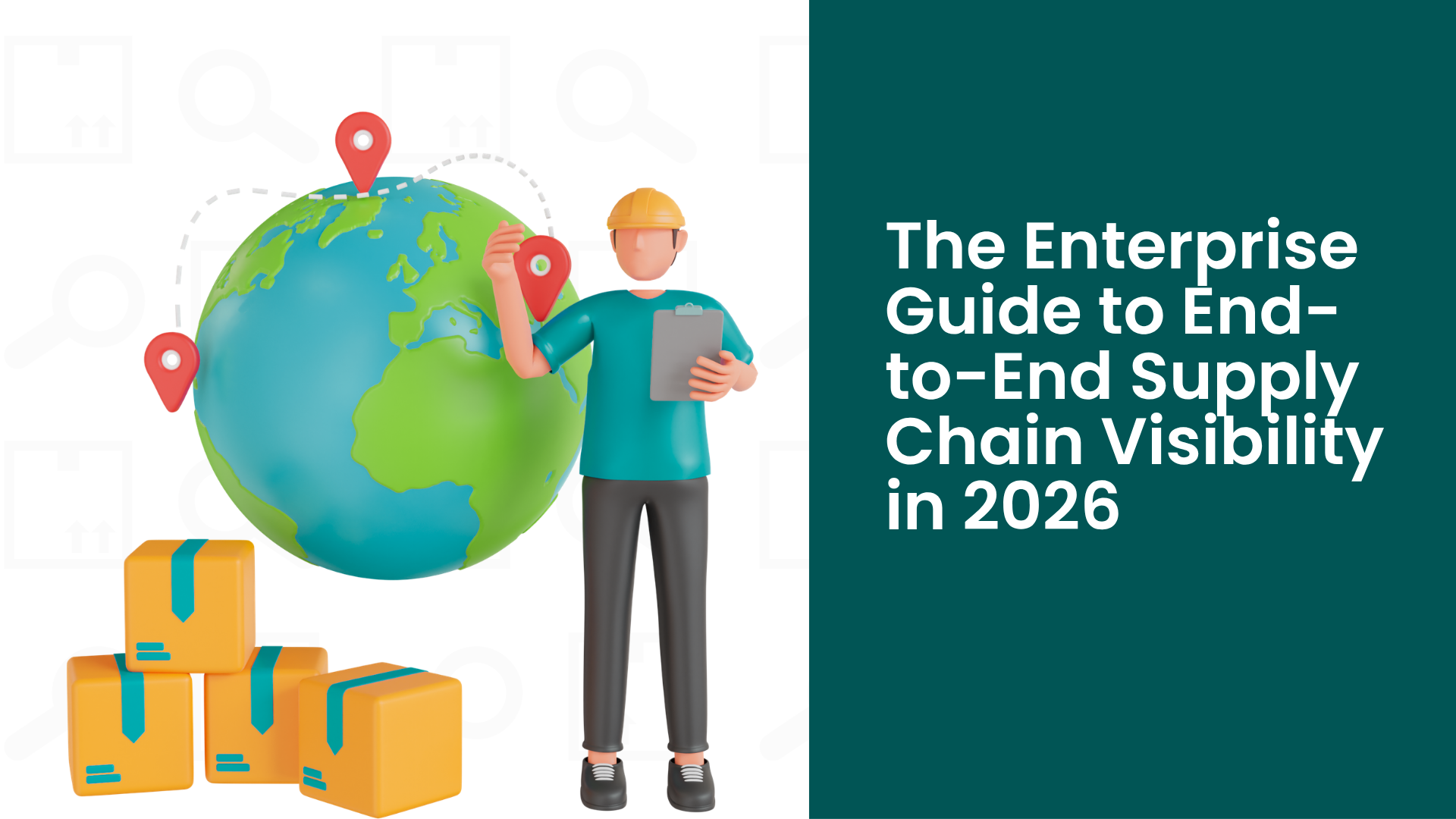
End-to-End Supply Chain Visibility has become a defining factor for enterprise success in 2026. It refers to the ability to track, monitor, and analyze every stage of the supply chain in real time, from raw material sourcing to final delivery. What was once limited to basic shipment tracking has now evolved into a connected, data-driven ecosystem where businesses gain actionable insights across suppliers, manufacturing units, logistics networks, distribution centers, and customers.
According to a recent report by Gartner, organizations that prioritize advanced data visibility are better equipped to respond quickly to disruptions and make informed decisions in uncertain environments. The research highlights how visibility is no longer optional but a critical capability for resilience and competitive advantage.
This shift highlights a major transformation. Visibility is no longer just a competitive advantage. It has become a strategic necessity. Enterprises today operate in an environment shaped by global disruptions, fluctuating demand, and rising customer expectations. Without a unified view of operations, decision-making becomes reactive rather than proactive.
Modern supply chains demand continuous flow of accurate information. Businesses need to know where inventory is, how shipments are moving, and where risks may arise. End-to-End Supply Chain Visibility enables this by connecting every touchpoint and turning raw data into meaningful insights.
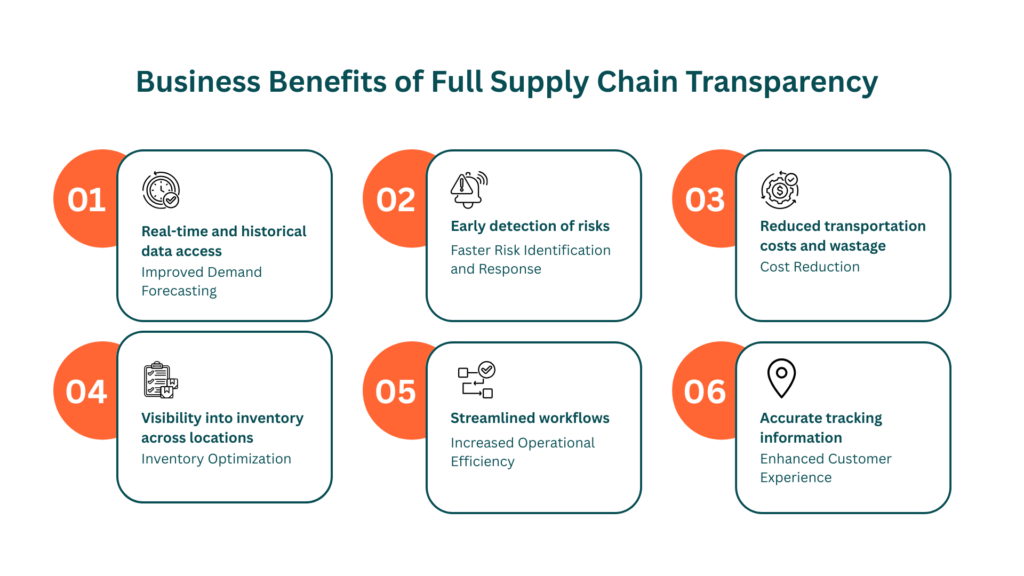
Business Benefits of Full Supply Chain Transparency
Achieving visibility across the supply chain delivers tangible business benefits. It not only improves operational performance but also strengthens resilience and enhances customer satisfaction in a highly competitive environment.
Improved Demand Forecasting
Access to real-time and historical data enables businesses to better understand demand patterns. This leads to more accurate forecasting and helps align production and inventory with market needs.
Inventory Optimization
Visibility into inventory across locations helps prevent overstocking and stockouts. Businesses can maintain optimal stock levels, reduce holding costs, and improve working capital management.
Faster Risk Identification and Response
Supply chains are exposed to various disruptions. With better visibility, businesses can detect risks early and take corrective actions quickly. This minimizes delays and ensures continuity of operations.
Increased Operational Efficiency
By reducing manual processes and eliminating data silos, organizations can streamline workflows. This results in faster order processing, fewer errors, and better utilization of resources.
Cost Reduction
Improved planning and execution help reduce transportation costs, avoid delays, and minimize wastage. Over time, these efficiencies lead to significant cost savings.
Enhanced Customer Experience
Customers expect accurate delivery timelines and real-time updates. Visibility allows businesses to provide precise tracking information and proactive communication, improving overall customer satisfaction.
Challenges Enterprises Face in Achieving Visibility
While the benefits are clear, implementing visibility across the supply chain comes with several challenges. Enterprises must address these barriers to fully realize the potential of a connected and transparent supply chain.
Data Silos and System Fragmentation
Many organizations operate with disconnected systems that do not share data effectively. These silos create gaps in visibility and limit the ability to make informed decisions.
Supplier Collaboration Limitations
Supply chains involve multiple external partners, and not all of them are equipped or willing to share real-time data. This lack of collaboration creates blind spots in the overall network.
Legacy Systems and Infrastructure
Outdated systems are often not compatible with modern technologies. Upgrading them requires time, investment, and careful planning, making it a significant challenge for enterprises.
High Implementation Costs
Building a visibility framework involves investments in technology, integration, and training. For large and complex supply chains, these costs can be substantial in the initial stages.
Data Accuracy and Governance Issues
Poor data quality can lead to incorrect insights and decisions. Businesses must establish strong data governance practices to ensure consistency, accuracy, and reliability.
Cybersecurity Risks
As supply chains become more digital and interconnected, they also become more vulnerable to cyber threats. Protecting sensitive data is essential to maintaining trust and operational stability.
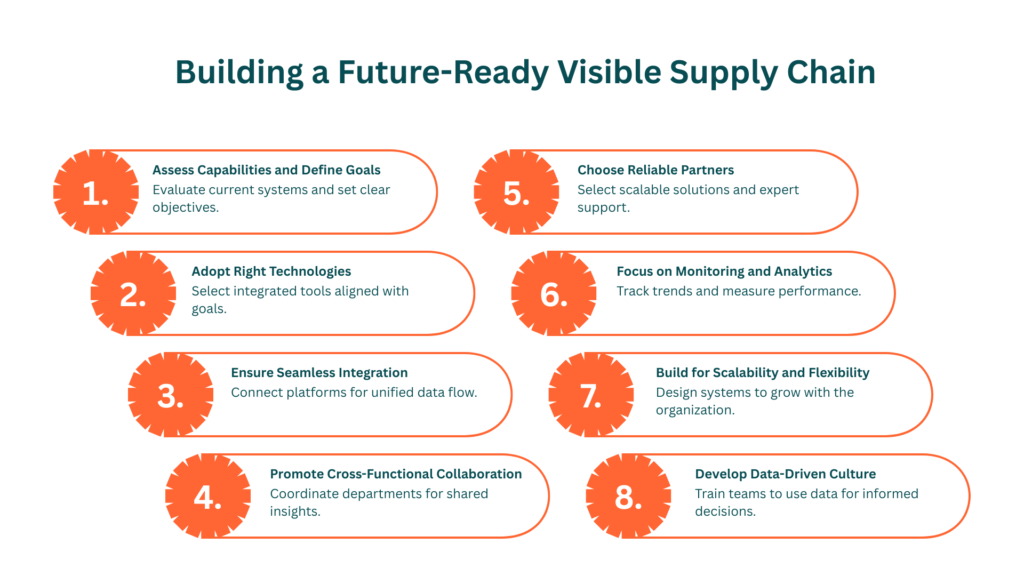
Best Practices for Building a Future-Ready Visible Supply Chain
To successfully implement supply chain visibility, enterprises need a clear strategy and a structured approach. Following best practices can help organizations build a resilient and scalable system that adapts to changing business needs.
Assess Current Capabilities and Define Goals
The first step is to evaluate existing systems and identify visibility gaps. Businesses should define clear objectives and align them with overall supply chain strategy.
Adopt the Right Technologies
Instead of adopting multiple tools without direction, enterprises should focus on technologies that align with their goals and integrate well with existing systems.
Ensure Seamless System Integration
Connecting ERP, WMS, TMS, and other platforms is essential for creating a unified data flow. Integration eliminates silos and provides a complete view of operations.
Promote Cross-Functional Collaboration
Visibility requires coordination across departments such as procurement, logistics, and customer service. Encouraging collaboration ensures that all teams work with the same data and insights.
Choose Reliable Technology Partners
Selecting the right partners can simplify implementation and improve outcomes. Businesses should look for scalable solutions, strong support, and industry expertise.
Focus on Continuous Monitoring and Analytics
Supply chains are dynamic, and conditions change frequently. Continuous monitoring helps businesses identify trends, measure performance, and make necessary adjustments.
Build for Scalability and Flexibility
As organizations grow, their supply chains become more complex. Systems should be designed to scale without affecting performance or efficiency.
Develop a Data-Driven Culture
Technology alone is not enough. Teams must be trained to use data effectively and make informed decisions. A data-driven mindset ensures long-term success.
Conclusion
End-to-End Supply Chain Visibility is no longer a future goal but a present-day necessity for enterprises operating in complex and fast-moving markets. In 2026, businesses that invest in visibility are better positioned to manage disruptions, improve efficiency, and deliver consistent customer experiences. From real-time tracking to predictive insights, visibility enables organizations to move from reactive operations to proactive decision-making.
However, achieving true visibility requires more than just technology. It demands the right strategy, seamless integration, strong data governance, and collaboration across the entire supply chain ecosystem. Enterprises that take a structured and scalable approach will be able to unlock long-term value and build resilient operations.
As supply chains continue to evolve, having the right expertise and tools becomes critical. If you are looking to strengthen your visibility strategy and explore how technology can simplify complex logistics operations, consider connecting with the experts at eShipz. Their team can help you understand practical approaches and solutions tailored to your business needs.