




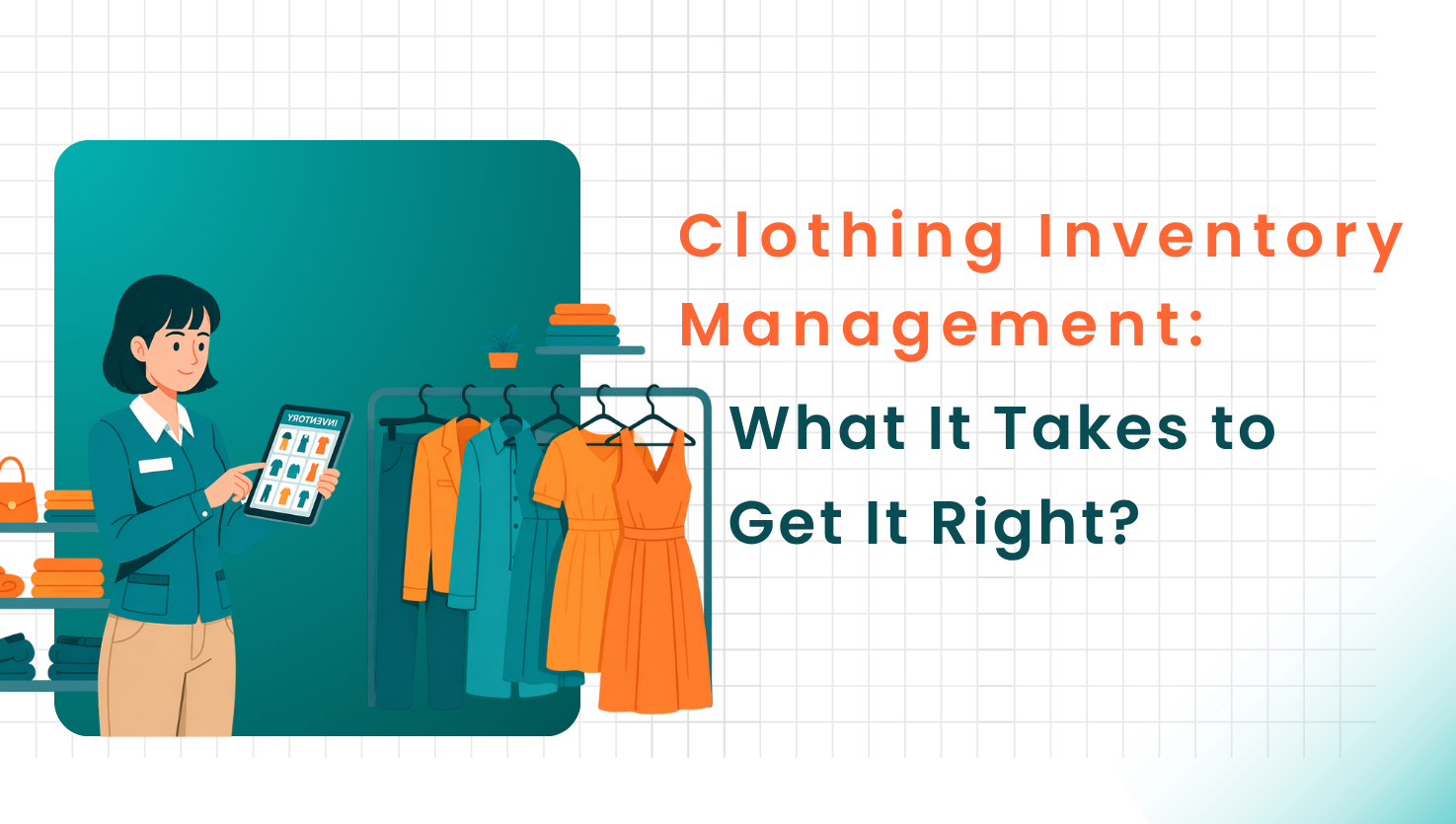
Clothing inventory management is the process of tracking, organizing, and optimizing clothing stock across warehouses and sales channels to ensure the right products are available at the right time, without overstocking or stockouts.
In today’s fast-moving retail environment, this has become increasingly critical. Industry estimates suggest that retailers lose nearly 8–10% of revenue due to stockouts and overstocking combined. In apparel, where trends shift quickly and margins are tight, even small inventory miscalculations can directly impact sales and customer experience.
You launch a new collection. Demand spikes.Within days, bestsellers go out of stock, while slow-moving SKUs sit untouched in warehouses. This is the reality many apparel brands face today. Managing inventory is no longer just about tracking stock levels. It requires close coordination between demand planning, inventory visibility, and fulfillment execution to ensure products move efficiently across the supply chain.
In this blog, we’ll explore why Clothing Inventory Management challenges are increasing, what capabilities brands need today, how modern systems improve outcomes, and the key trends shaping the industry.
Why Inventory Complexity Is Rising in Apparel
Fashion doesn’t move in seasons anymore, it moves in real time. What’s trending today can lose demand within days, and brands are expected to keep up without missing a beat.
Behind the scenes, managing inventory has become significantly more complex. Most apparel brands today are handling:
- Hundreds of SKUs across sizes, colors, and styles
- Multiple sales channels including D2C, marketplaces, and offline stores
- Inventory spread across multiple warehouses and locations
This growing complexity leads to a few critical challenges:
- Demand unpredictability
A product that sells out today may slow down tomorrow, making planning difficult - Fragmented visibility
Stock is distributed across locations without a unified, real-time view - Fulfillment gaps
Orders are often shipped from the wrong warehouse, increasing delivery time and cost
As these challenges grow,Clothing Inventory Management is no longer a standalone function. It’s closely tied to how efficiently orders are fulfilled, making logistics performance just as important as stock accuracy.
Key Capabilities to Build a Smarter Clothing Inventory Management
Clothing Inventory Management in apparel today is no longer just about knowing what’s in stock, it’s about understanding how inventory moves, where it should be positioned, and how quickly it can reach the customer.
As brands scale across channels and geographies, inventory decisions begin to directly impact delivery timelines, shipping costs, and even conversion rates. This is where systems that connect inventory with execution, like eShipz, become important, not as a standalone tool, but as part of a more connected operational flow.
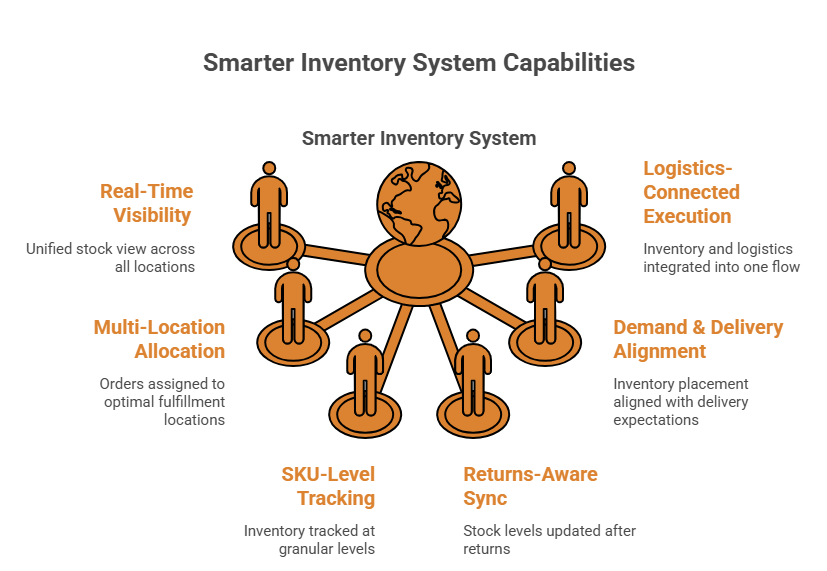
Here’s what a smarter, more adaptive inventory setup looks like:
Real-Time Inventory Visibility
- Unified stock view across warehouses, stores, and sales channels
- Continuous updates to prevent mismatches between actual and available stock
In many setups, visibility exists but isn’t actionable. When this layer is connected to order routing and courier selection (as seen with platforms like eShipz), it ensures that inventory data translates into real fulfillment decisions, reducing cancellations and missed opportunities.
Multi-Location Order Allocation
- Automatically assigns orders to the most optimal fulfillment location
- Considers proximity, stock availability, and operational efficiency
This becomes significantly more effective when paired with logistics intelligence. Instead of just choosing the nearest warehouse, systems can factor in courier performance, serviceability, and delivery timelines, helping brands consistently meet customer expectations.
SKU-Level Tracking & Insights
- Tracks inventory at a granular level (size, color, design variants)
- Identifies high-performing SKUs and slow-moving stock in real time
These insights are most valuable when they influence downstream decisions. For example, high-demand SKUs can be prioritized for faster delivery routes, while slower-moving inventory can be strategically repositioned or fulfilled through cost-effective options.
Returns-Aware Inventory Sync
- Automatically updates stock levels after returns, exchanges, or failed deliveries
- Reduces discrepancies between physical and system inventory
In apparel, where return rates are high, this becomes critical. When returns (including NDR and RTO scenarios) are tightly integrated into the system, inventory can be quickly redirected, restocked, or reallocated, minimizing revenue leakage and delays.
Demand & Delivery Alignment
- Aligns inventory placement with actual delivery expectations
- Helps ensure products are stocked closer to demand zones
With delivery intelligence, such as Estimated Delivery Date (EDD) insights, brands can move beyond static planning. Inventory decisions can be guided by real shipping timelines, improving both delivery speed and customer confidence at checkout.
Logistics-Connected Inventory Execution
- Bridges the gap between inventory systems and shipping operations
- Connects order routing, courier selection, and tracking into one flow
This is where the biggest shift happens. Instead of inventory and logistics operating in silos, they function as a single, connected system. Platforms like eShipz enable this flow, ensuring that once an order is placed, every step from allocation to delivery is optimized.
As apparel businesses grow, the challenge is no longer just managing inventory, it’s ensuring that inventory decisions translate into seamless customer experiences.
The real advantage comes from connecting the dots, where inventory visibility, order allocation, and logistics execution work together. Brands that build this alignment are better equipped to reduce inefficiencies, improve delivery performance, and stay responsive in an increasingly fast-moving market.
The Shift from Basic Tracking to Intelligent Inventory Systems
As apparel operations become more complex, the gap between traditional inventory systems and modern, connected approaches is becoming increasingly visible. What once worked for smaller, linear operations often struggles to keep up with today’s multi-channel, fast-moving environment.
Here’s how the two approaches differ:As apparel operations become more complex, the gap between traditional inventory systems and modern, connected approaches is becoming increasingly visible. What once worked for smaller, linear operations often struggles to keep up with today’s multi-channel, fast-moving environment.
Here’s how the two approaches differ:
|
Factor |
Traditional Systems |
Modern Approach |
|
Inventory Visibility |
Delayed, siloed | Real-time, unified |
|
Order Allocation |
Manual, rule-based |
Automated & intelligent |
| Demand Planning | Reactive |
Predictive |
| Returns Handling | Disconnected |
Integrated |
|
Logistics Integration |
Minimal |
Fully connected (with execution layers like eShipz) |
The difference is not just technological, it’s operational. Traditional systems focus on recording inventory, while modern approaches focus on moving it efficiently.
As customer expectations around speed and reliability continue to rise, brands need systems that don’t just track stock, but actively support better decisions across fulfillment. The shift toward connected, intelligent operations is no longer optional, it’s becoming the foundation for scalable growth.

Key Trends & Data Shaping Fashion Inventory Management
Clothing Inventory Management is going through a rapid transformation, driven by ecommerce growth and rising customer expectations around speed, availability, and convenience. What used to be a backend operational function is now directly influencing customer experience and brand loyalty.
To understand how the landscape is shifting, it helps to look at the data behind it:
- 67% of consumers expect faster delivery timelines. Speed is no longer a differentiator, it’s a baseline expectation.
- Fashion ecommerce return rates range from 20% to 40%. High return volumes make inventory accuracy and redistribution critical
- Omnichannel brands see 15–30% higher inventory turnover. Better coordination across channels leads to more efficient stock movement
- Poor inventory planning contributes to ~12% revenue loss globally. Stockouts and overstocking continue to impact profitability at scale
These numbers highlight a clear shift, inventory is no longer just about managing stock, but about enabling faster, smarter, and more responsive operations.
As expectations continue to rise, brands that rely on static systems will struggle to keep up. The focus is moving toward real-time decision-making, better coordination across channels, and tighter alignment between inventory and fulfillment, turning inventory management into a key driver of growth rather than just a cost center.
Inventory as a Growth Lever
Inventory is no longer just an operational function, it directly impacts revenue, delivery experience, and customer retention.
The shift is clear: from static stock tracking to dynamic, connected systems where inventory decisions influence how quickly and efficiently orders are fulfilled.
The brands that win today aren’t the ones with the most inventory, but the ones that manage and move it smarter.
As inventory and logistics become more closely linked, solutions like eShipz help bridge the gap, ensuring that stock decisions translate into better delivery outcomes.
If inventory is where decisions begin, execution is where they succeed, and that’s where a connected platform like eShipz makes the difference.