



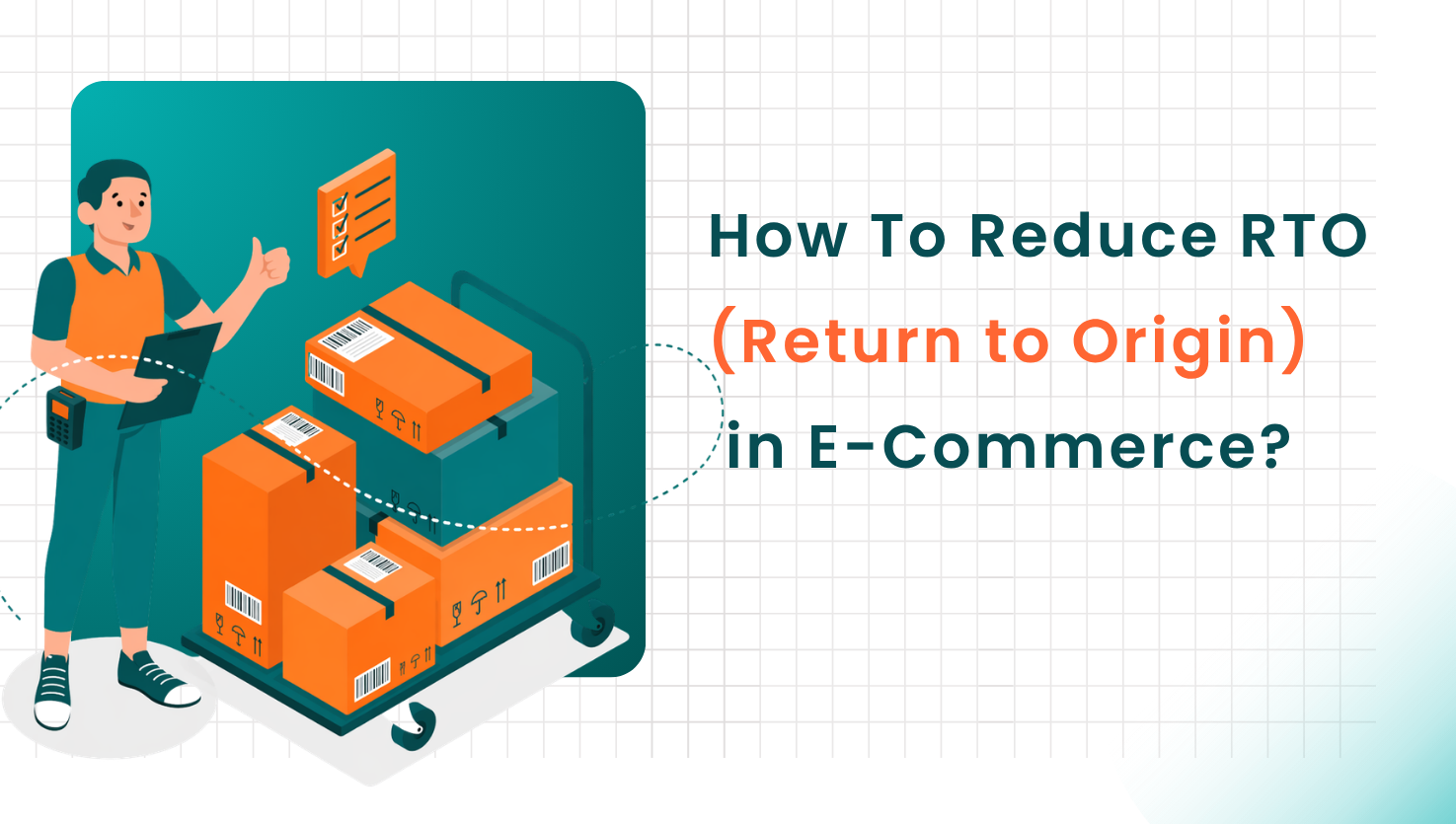
Return to Origin (RTO) in ecommerce is when an order fails to be delivered and is sent back to the seller’s warehouse. This usually happens due to customer refusal, unavailability, or incorrect or incomplete address details.
For many ecommerce brands, RTO is not occasional, it’s a recurring challenge. In India, failed deliveries can impact 20–30% of orders for growing businesses, especially those relying heavily on cash-on-delivery (COD).
It often starts like a normal order: the product is packed, shipped, and moves through the delivery network. But at the last mile, things break, delivery fails, and the shipment is returned, turning expected revenue into added cost.
RTO is more than an operational issue. It impacts margins, blocks inventory, and increases pressure on logistics teams. This is why brands are now focusing on understanding why it happens, what it costs, and how to reduce it effectively.
Why Ecommerce Returns and Failed Deliveries Are Rising in India
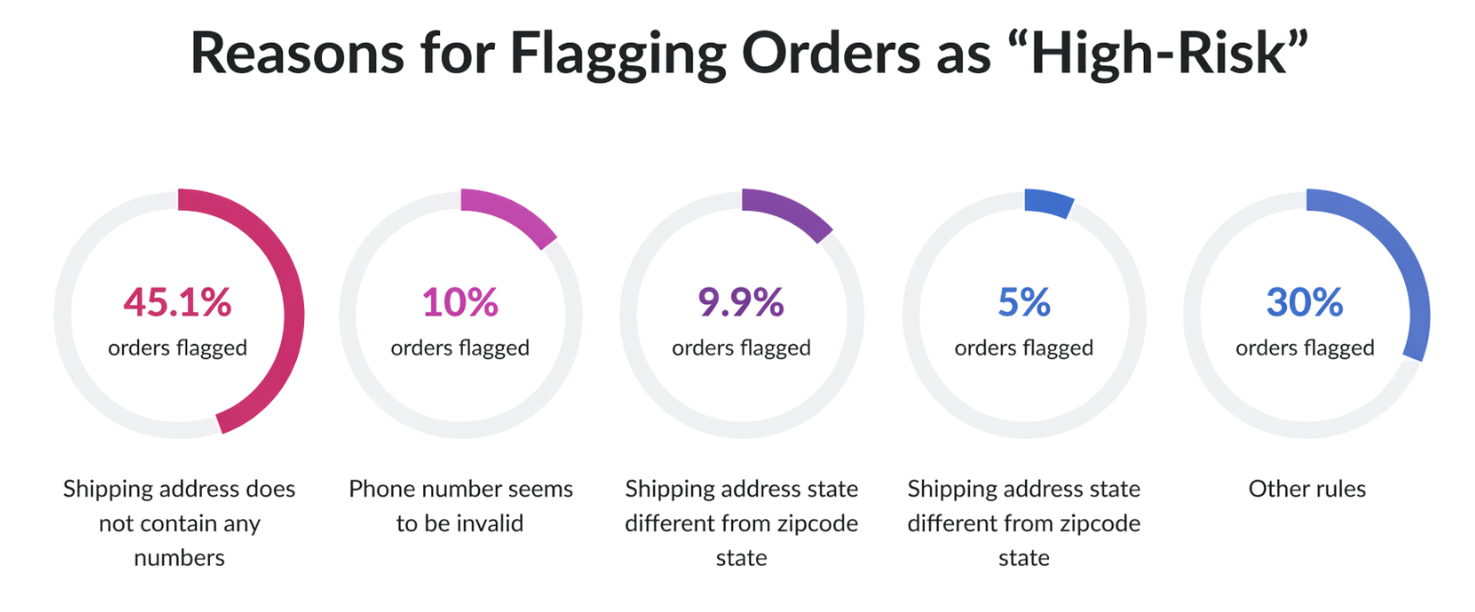
Ecommerce in India has grown rapidly, but delivery success still struggles to keep pace. While more customers are shopping online than ever before, a growing number of orders fail to reach their destination. These failures are not random, they are driven by clear patterns across customer behavior, address accuracy, delivery speed, and order quality. Together, they are leading to a steady rise in returns and failed deliveries across the industry.
Results from: Razorpay.com
- Cash-on-Delivery (COD) and Changing Customer Intent
- High dependence on COD across categories
- Many purchases are impulsive
- Customers may refuse, cancel, or be unavailable at delivery
This makes COD one of the biggest contributors to failed deliveries, as the final decision often happens at the doorstep.
- Poor Address Quality at Checkout
- Missing or incomplete address details
- Incorrect PIN codes
- Vague, landmark-based locations
These issues make it harder for delivery partners to locate customers, leading to multiple attempts and eventual failure.
- Delivery Delays That Reduce Urgency
- Customers expect faster deliveries than ever
- Even slight delays can impact buying decisions
- Orders may lose relevance by the time they arrive
Delivery speed now plays a direct role in whether an order gets accepted or returned.
- Fake Orders and Fraudulent Bookings
- Invalid phone numbers or fake details
- Non-serious or prank orders
- Bulk fake bookings, especially in COD
These orders appear genuine in the system but often fail at the doorstep, adding unnecessary cost.
- The Real Cost Behind Failed Deliveries
What looks like a simple return carries multiple layers of impact:
- Direct costs: forward shipping, reverse logistics, packaging
- Operational impact: blocked inventory, warehouse delays
- Business impact: lower margins, reduced efficiency, poor customer experience
In many cases, a failed delivery ends up costing more than a successful one.
Reducing failed deliveries isn’t about fixing a single step, it’s about improving decisions across the entire journey, from checkout to doorstep. Brands that focus on better order quality, faster execution, and smarter delivery planning are the ones that reduce returns and scale more efficiently.
Industry Use Cases: How Different Ecommerce Segments Handle Returns
Return patterns in ecommerce are not uniform, they change based on the industry, product type, and customer behavior. A fashion order doesn’t fail for the same reason as an electronics shipment, and grocery deliveries operate on an entirely different level of urgency. Understanding these differences helps explain why returns happen and how brands across categories approach them differently.
| Industry | Common Return / RTO Drivers | Key Challenges | How Brands Reduce Returns |
| Fashion & Apparel | Size mismatch, COD refusals, impulse buying | High return rates due to fit uncertainty | Size guides, prepaid offers, better product visuals |
| Electronics & Gadgets | High-value COD refusals, damage, delivery delays | Higher financial risk per return | Secure packaging, order verification, prepaid-first flow |
| Beauty & Personal Care | First-time purchase hesitation, address issues | Trust and repeat purchase gaps | Faster delivery, prepaid incentives, subscriptions |
| Grocery & Essentials | Delivery delays, customer unavailability | Trust and repeat purchase gaps | Hyperlocal fulfillment, same-day delivery |
| D2C / Emerging Brands | COD dependency, low-intent orders, fake bookings | Limited logistics visibility and control | AI risk scoring, courier optimization, automation |
Across all industries, the reasons may differ, but the outcome is the same: returns are shaped by a mix of customer intent, product nature, and delivery execution. Brands that understand these patterns can build smarter logistics strategies instead of reacting to failures after they happen. Because in ecommerce, reducing returns isn’t industry-specific, it’s decision-specific.
How Modern Shipping Platforms Minimize Returns and Delivery Issues
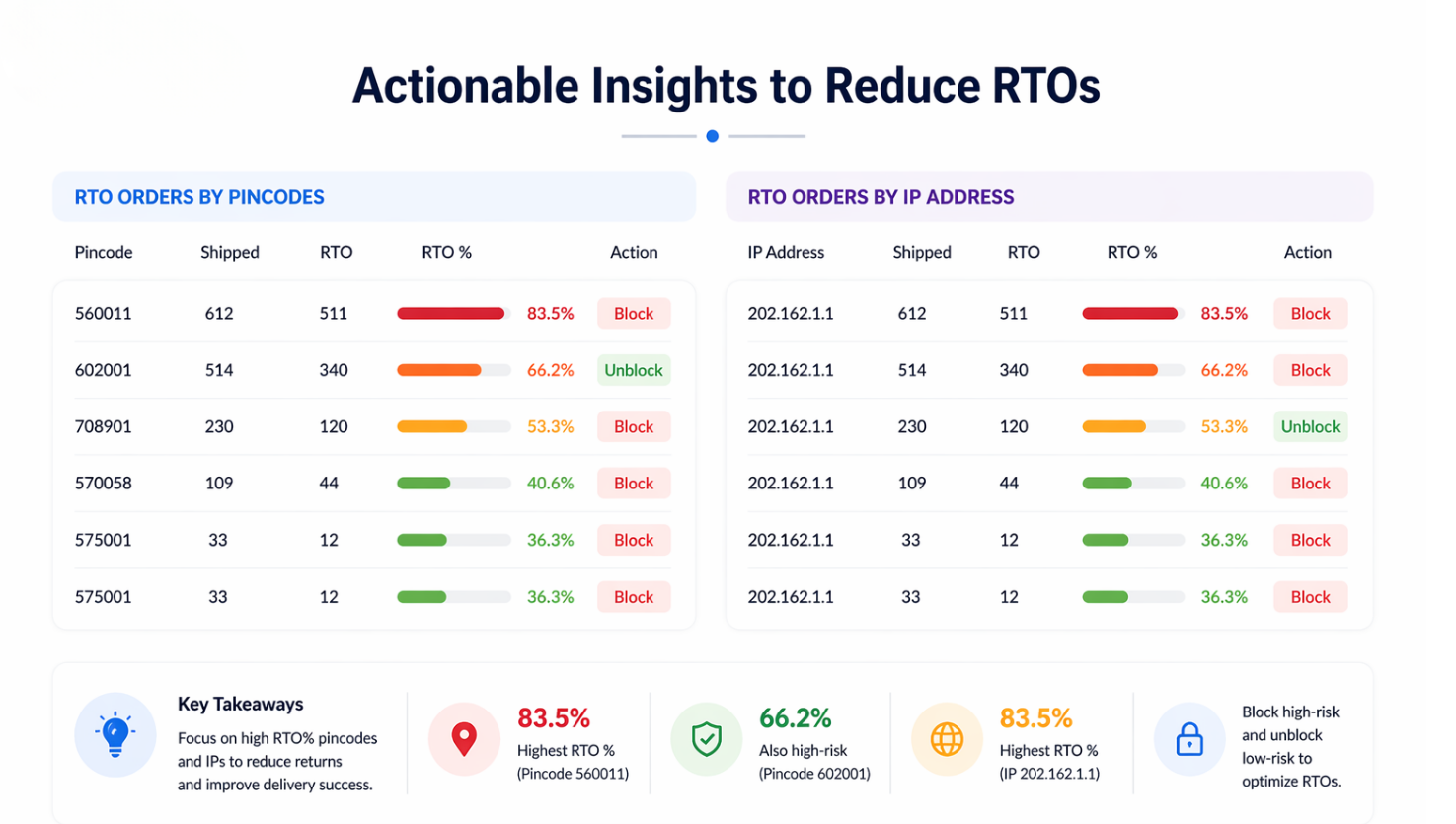
Reducing failed deliveries today isn’t about fixing problems after they happen, it’s about preventing them at the right moments. Modern logistics platforms bring structure, visibility, and smarter decision-making into the shipping journey, helping brands avoid unnecessary returns.
Results from: Razorpay.com
Here’s how solutions like eShipz approach this, in a more practical and connected way:
- AI-Based Order Risk Detection
Not every order carries the same level of intent. Some are highly likely to be delivered, while others are almost certain to fail.
With AI-led risk detection, orders are evaluated before shipping based on factors like customer history, location reliability, and order patterns. This helps businesses take early action, whether that means verifying the order, limiting COD, or holding it for review.
Instead of shipping blindly, brands gain control over which orders are worth fulfilling.
- Intelligent Courier Allocation
Delivery success often depends on choosing the right courier, not just the fastest one.
Rather than assigning shipments to a fixed partner, intelligent allocation systems evaluate past performance across regions and automatically select the most reliable courier for each order. This ensures that shipments are handled by partners with the highest success rates in that specific location.
Over time, this significantly improves first-attempt delivery success.
- Real-Time Tracking & Customer Communication
Many delivery failures happen simply because customers aren’t informed or prepared.
With real-time tracking and automated communication, customers receive timely updates about their order status, expected delivery time, and any changes along the way. Notifications through SMS, WhatsApp, or email help reduce missed deliveries and improve coordination.
When customers know what to expect, they’re far more likely to be available when it matters.
- Automated NDR (Non-Delivery Report) Management
A failed delivery attempt doesn’t have to lead to a return, if it’s handled quickly.
Automated NDR workflows allow businesses to act immediately when a delivery fails. Whether it’s rescheduling the delivery, correcting address details, or reconnecting with the customer, these actions can be triggered without delays.
This fast response often turns a failed attempt into a successful delivery, reducing unnecessary returns.
- Multi-Carrier Routing Flexibility
No single courier performs equally well across all regions.
With multi-carrier routing, businesses aren’t dependent on just one delivery partner. If a courier struggles in a particular area, the system can automatically switch to a better-performing option.
This flexibility helps avoid repeated failures and ensures more consistent delivery outcomes across regions.
At its core, reducing returns is about making better decisions across the entire delivery journey. When businesses have the right visibility and act at the right time, fewer orders fail, and more reach the customer successfully.
Ecommerce Return Trends: Data Behind Rising RTO Rates in India
If you look at delivery data across Indian ecommerce, a few clear patterns explain why returns continue to rise as brands scale.
- COD vs prepaid gap
Cash-on-delivery orders see 2–3x higher failure rates, as the final decision happens at delivery, not checkout. - Higher cost of failed deliveries
Reverse logistics can cost up to 50% more than a successful delivery, impacting margins significantly. - Address quality issues
Incomplete or unclear addresses still lead to a large number of failed delivery attempts. - Impact of delivery speed
Faster deliveries reduce return rates, while delays increase the chances of order rejection.
As ecommerce grows, delivery success is no longer just about shipping, it’s about ensuring the order reaches the customer the first time. That’s where the real difference in cost and efficiency lies.
The Real Fix Lies Before the Last Mile
What looks like a delivery issue is rarely just about logistics. Most returns are the result of small decisions made across the journey, when the order is placed, how it’s validated, and how it’s fulfilled.
Reducing returns isn’t about fixing one stage in isolation. It comes down to improving a few critical areas consistently:
- Better order quality at checkout
- Stronger customer intent before shipping
- More reliable delivery execution
Brands that look at this holistically, not just as an operational metric, but as a strategic lever, are the ones that scale without losing margins.
Because in ecommerce, growth isn’t just about generating more orders.
It’s about making sure more of them actually reach the customer.
If you’re starting to rethink how your delivery operations handle returns, this is the right place to begin.
Exploring smarter, more connected logistics solutions like eShipz can help bring more control, visibility, and predictability into your shipping journey, so fewer orders come back, and more reach where they’re meant to.