





Ask ten different business owners to explain what supply chain management is, and you will get ten different answers.
Some will discuss logistics, and others will talk about suppliers and purchasing.
However, none would be entirely correct, because supply chain management is a wide-reaching term that covers many aspects of the business.
The key point of this article is to explain what supply chain management is, go over the main supply chain management process steps, and identify why companies that think of it as an enabler of growth are outperforming their competitors.
What Is Supply Chain Management?
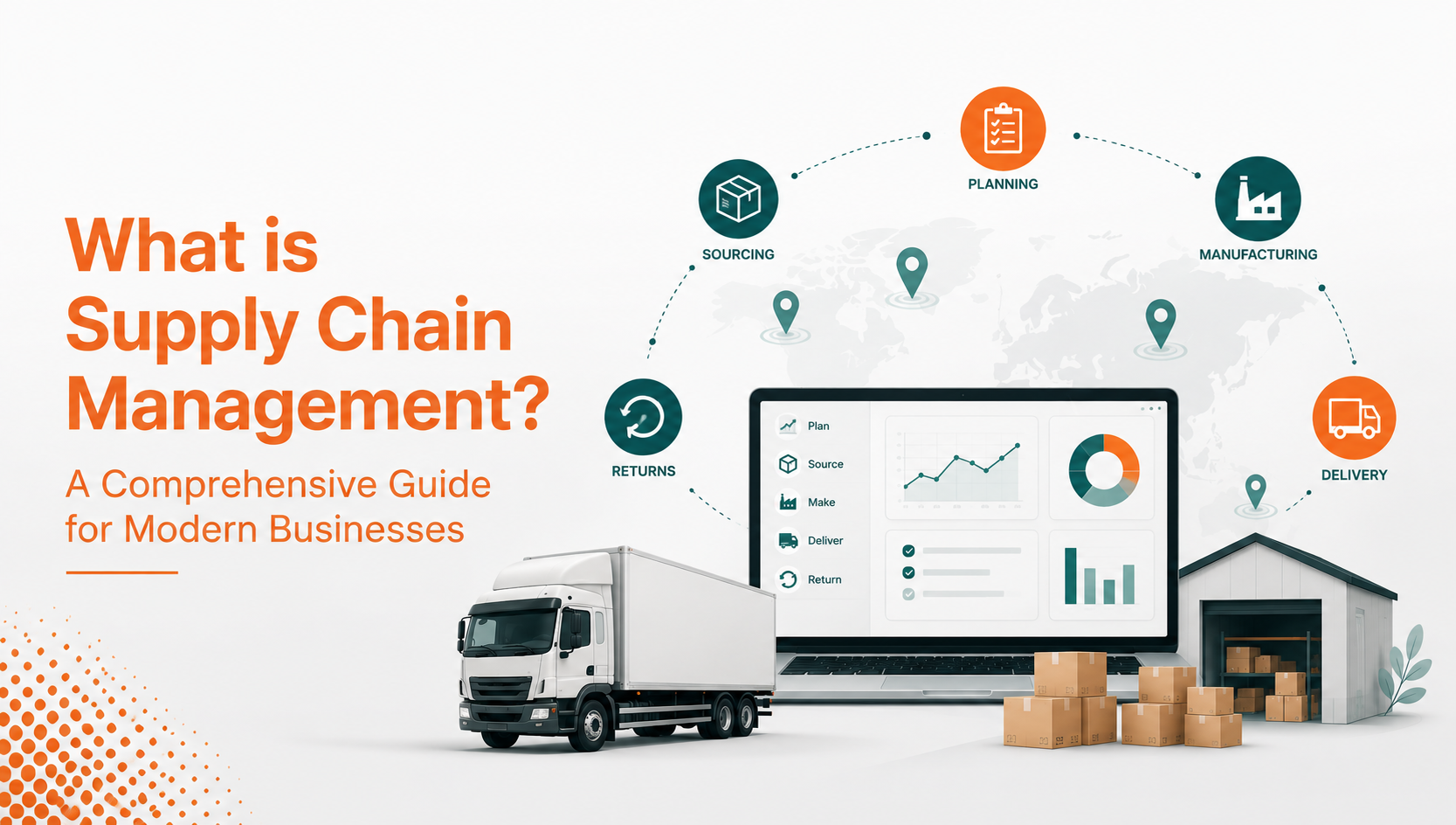
Simply put, supply chain management is the process of overseeing the flow of goods and services from suppliers and producers to the end-consumer.
This definition is broad and generally encompasses the following key points:
- Sourcing
- Production
- Inventory
- Warehousing
- Transportation
- Delivery
- Logistics
Returns and reverse logistics
While this is a general overview, most of the time supply chain management is much more involved than just day-to-day logistics.
An analogy that explains supply chain management best compares it to the circulatory system. It forms the basis for all other activities, and when there are issues, they affect the entire company.
The supply chain management process can be broken down into a few crucial steps, some of which have several components. Let’s begin with the first one.
Planning and Demand Forecasting
The planning and forecasting stage is the starting point for most supply chain management activities.
The goal is to estimate aggregate demand levels and identify the necessary supply.
Poorly-estimated numbers lead to the so-called ‘bullwhip effect,’ which creates excesses at the producer level in response to minor demand fluctuations at the consumer level. In short, demand planning and forecasting are vital,
and when done correctly with specialized supply chain management software, can help significantly reduce costs.
Sourcing and Procurement
The second step deals with sourcing and procurement. Most companies have strategic partners that provide them with materials or services.
Sourcing involves identifying these partners, negotiating contracts, and ensuring there is no dependency on a single supplier, while procurement is the actual act of buying goods and services.
Both activities impact nearly all other supply chain management processes, which makes them strategically located in the supply chain management process.
Production
When combined with distribution, production is the process of turning raw materials into final goods and services. It can either be done internally or outsourced to a third party.
Again, this step requires close collaboration with both suppliers and distributors to ensure a steady flow of materials and goods.
Warehousing and Inventory
This step deals with the storage of goods and is often the backbone of any supply chain management process.
A large portion of a company’s working capital is tied to inventory, which makes it essential to have proper inventory management practices in place.
Having too much inventory increases holding costs and ties up capital, while too little leads to lost revenues and dissatisfied customers.
One way to address the challenge is to adopt a multi warehouse approach, where inventory is stored in several regional centers rather than one larg warehouse.
Transportation and Distribution
This is one of the most visible supply chain management process steps that companies engage in.
It involves selecting transportation modes, managing relationships with carriers, and determining the most cost effective methods of transporting goods.
For most businesses, the distribution process is the logistics operation, and while it may seem like a small aspect of the supply chain management process, shippers often have limited oversight and control.
Last-Mile Delivery
The delivery leg is frequently the most expensive one and often involves customers. It is also the part that shippers often handle on a day-to-day basis.
For many e-commerce companies, the last-mile delivery determines the customer’s perception of the company and is responsible for half of all shipping expenditures. In addition, it is worth noting that this part of the supply chain management process is where the majority of problems occur, ranging from delivery delays to incorrect delivery addresses.
Returns and Reverse Logistics
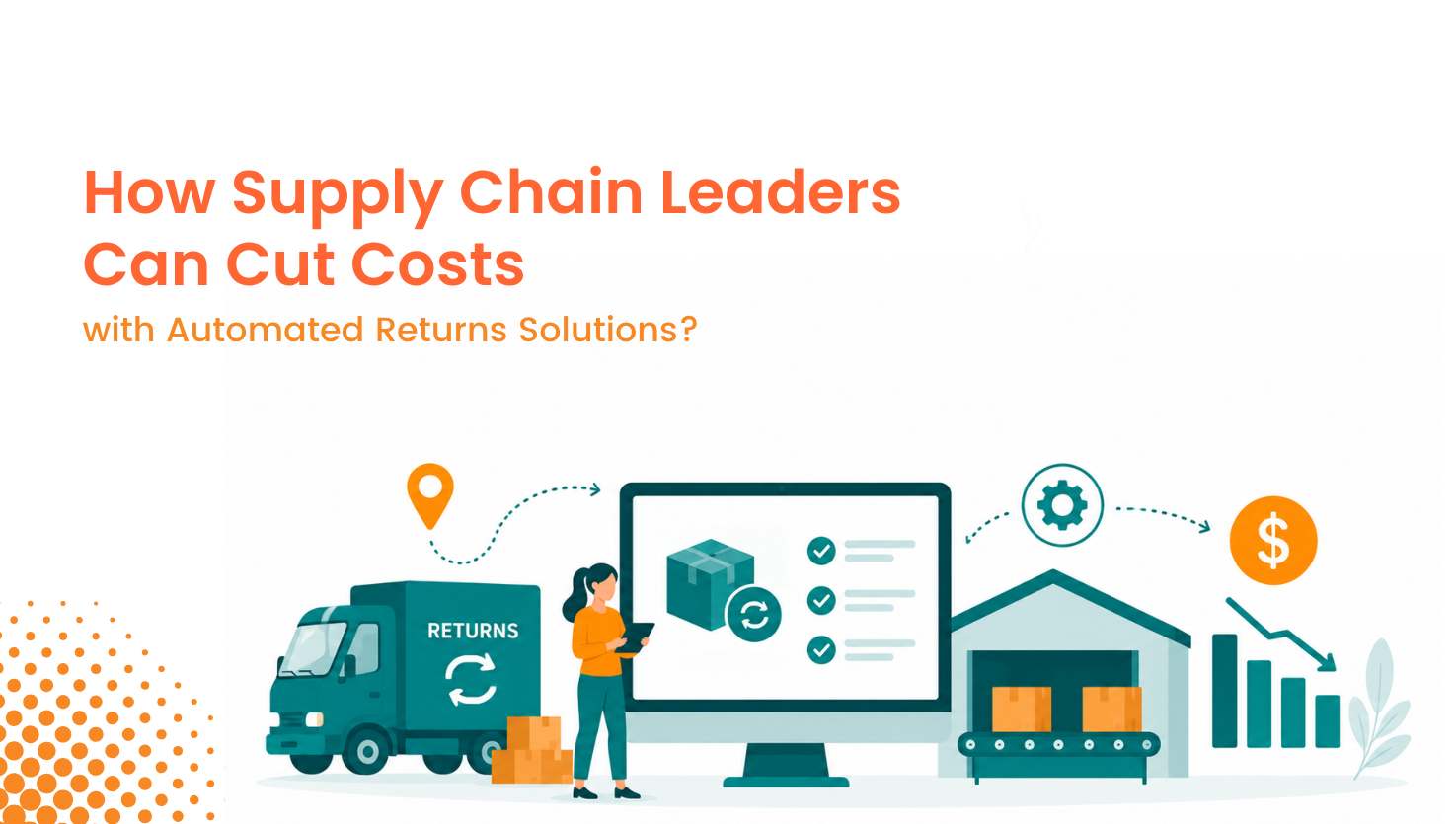
The return leg is the final stage of the supply chain management process. Many companies, especially in the retail industry, struggle to provide seamless, end-to-end returns. In most cases, returns are the deciding factor for a customer when choosing between two similar firms.
Supply Chain or Logistics?
To put it another way, logistics management focuses on the distribution and storage of goods, which makes it a vital element of supply chain management.
Furthermore, logistics management is part of supply chain management, which highlights why it is so important.
Why Are Companies Rethinking Supply Chains?
Over the last several years, most companies have come to the stark realization that their supply chains are incredibly fragile.
In particular, the pandemic made it abundantly clear that a lack of proper supply chain management can lead to devastating losses. As such, businesses have begun to rethink their supply chains.
The most common supply chain management trends and practices include the following:
- Increased visibility
- Automation
- Speed
- Diversification
- Omnichannel experience
- Sustainability
The main takeaway is that supply chain management practices are no longer focused on reducing costs,
but rather on building long-term resilience. In particular, research suggests that companies
with strong supply chain management practices bounced back from supply chain-related
disruptions around 50% faster and delivered roughly 23% higher profits.
What Is a Modern Supply Chain?
Modern supplychains are characterized by increased visibility across all stages, enhanced automation
artificial intelligence assistance, and a stronger focus on sustainability and the end-customer.
Below are some of the supply chain management trends that most businesses are adopting today.
Real-time Visibility
Modern supply chains offer real-time visibility into the logistics process, which helps eliminate
many disruptions by detecting and addressing issues as they occur.
AI and Automation
With the rise of digitization, artificial intelligence plays an increasingly large role in supply chain management.
AI is used for route optimization, demand planning and forecasting, predictive maintenance, and inventory management, among other applications. In addition, automation helps reduce costs, improve accuracy, and eliminate routine tasks. For instance, robotic process automation can help streamline picking, packing, labeling, and order processing procedures.
Sustainability and Ethical Production
Sustainability, environmental friendliness, and ethics have become essential elements of supply chain management.
Most notably, carbon footprint reduction, ethical sourcing, and sustainable packaging are the new status quo,
with the majority of consumers willing to pay a premium for eco-friendly products and services.
Omnichannel Experiences
As more and more companies provide their customers with seamless, integrated buying experiences,
modern supply chains aim to offer the same level of consistency and ease.
In other words, customers can shop online and return goods in-store, and the entire supply chain management process is optimized to facilitate this experience on both ends.
What Are the Costs of Poor Supply Chain Management?
Many businesses fail to fully appreciate the number of expenses and opportunities that supply chain management addresses.
Below are some of the most significant costs of poor supply chain management:
Poor inventory management practices lead to excess inventory, which in turn increases holding costs and ties
working capital in unnecessary inventory.
Inefficient delivery routes can increase costs by 15-25%, depending on the industry.
In addition, inventory outages can be devastating to sales, especially with the rising importance of e-commerce and continuous retail.
In the same vein, poorly planned shipping operations lead to address errors, delivery problems, and dissatisfied customers.
Without proper logistics management and control tower software, managers and planners cannot have end-to-end supply chain visibility, which leads to numerous preventable issues.
These issues, in turn, lead to lost sales and unhappy customers, and eventually cost the business its market share.
How To Design a Supply Chain Management Process That Works?
Developing a supply chain management process requires a combination of different factors and tools. Below are some of the most crucial ones.
Technology
End-to-end visibility is the foundation of supply chain management, and modern supply chain management software offers it in abundance.
Advanced logistics management software can help streamline operations, optimize costs, and provide valuable insights into the performance of the entire supply chain.
Collaboration
Supply chain management is a multi-disciplinary endeavor that requires close collaboration between different departments and stakeholders. As such, close and constant collaboration with customers, suppliers, and internal stakeholders is essential for supply chain management success.
Strategic Supplier Relationships
Suppliers are crucial to supply chain management, and relationships with them need to be built carefully.
Agility Is Critical
Most traditional supply chains are slow and rigid, which puts companies that use them at a disadvantage.
Therefore, it is critical to design a supply chain management process that is agile and flexible to respond to shifting demand, supply, and other factors.
Customer-centric
When it comes to supply chain management, the customer should always be in the focus.
What Are the Supply Chain Benefits of Adopting Technology?
Many businesses have begun to realize just how transformative technology can be to the supply chain management process.
A well-implemented solution can empower firms with end-to end supply chain visibility, enable better planning and forecasting, help optimize logistics, reduce costs, and boost customer satisfaction.
Below are some of the most crucial benefits of adopting technology in supply chain management.
Cost Reduction
By applying advanced algorithms to optimize delivery routes and shipping costs, supply chain management technology can reduce logistics expenses by 30-40%.
Efficiency Gains and Lower Costs
Supply chain management technology can help achieve numerous efficiency gains, ranging from shorter delivery times to faster warehouse turnaround.
In particular, automated solutions such as RPA can reduce manual errors by 90% or more, while eliminating time consuming, repetitive tasks entirely.
Increased Customer Satisfaction
By enhancing the efficiency and reliability of the logistics process, supply chain management technology can have a major impact on customer satisfaction.
In addition, improved supply chain visibility helps companies operate more smoothly, further contributing to customer satisfaction.
What’s Next for Technology in Supply Chain Management?
The next few years are poised to bring numerous exciting innovations and developments that will disrupt and change the supply chain management landscape forever.
Some of the most intriguing developments include blockchain traceability, IoT-enabled supply chains, autonomous vehicles, and digitization of supply chains, among others.
How Can Technology Help a Small Business Supply Chain?
A small business’s supply chain is ideally suited to benefit from modern supply chain management technologies.
Adopting the right technology can help a small business supply chain compete with much bigger competitors, offering similar levels of performance and reliability.
For instance, carrier selection software enables smaller shippers to match larger carriers’ advantages in price, speed, and quality.
Moreover, predictive analytics helps small businesses identify market trends and demand patterns.
A control tower provides supply chain visibility that would otherwise be unavailable to smaller shippers.
Finally, process automation reduces costs and helps small businesses achieve the same level of efficiency as their larger competitors.
How To Measure the ROI of Supply Chain Management Initiatives?
It is crucial to measure the ROI of any initiative that a company undertakes, and supply chain management is no different.
While there are many metrics that can be used, the following are some of the most important ones that can serve as a solid starting point.
Cost Reduction
Route optimization and carrier optimization solutions can reduce supply chain costs by 15-30% or more
and should be used as key performance indicators. Similarly, delivery costs can also be slashed by 20-25%, depending on the industry.
Efficiency Gains
Another crucial supply chain management metric is linked to efficiency gains. For instance, delivery times can be reduced by 2-3 days on average, with some industries realizing more significant improvements.
Warehouse efficiency gains can help reduce costs by 20-40%, depending on the particular business and industry.
Customer Satisfaction
Finally, a crucial supply chain management metric is related to customer satisfaction.
On average, companies report seeing customer satisfaction gains between 15-20%.
In addition, the ability to process returns faster leads to additional benefits, as customers are much more
likely to shop with a company again if their returns experience was positive.
Conclusion
Supply chain management is an overarching concept that touches on many different areas of the business.
While it may be difficult to describe succinctly, it ultimately revolves around ensuring that goods and services move from producers to consumers seamlessly and reliably. reliably.
As highlighted in this guide, companies are rethinking supply chains as a way to gain a competitive advantage.
In particular, businesses are investing in supply chain technologies and processes that enhance supply chain visibility, reduce costs, and boost customer satisfaction. In short, companies are realizing that supply chain management practices and technologies are essential for long-term success.