
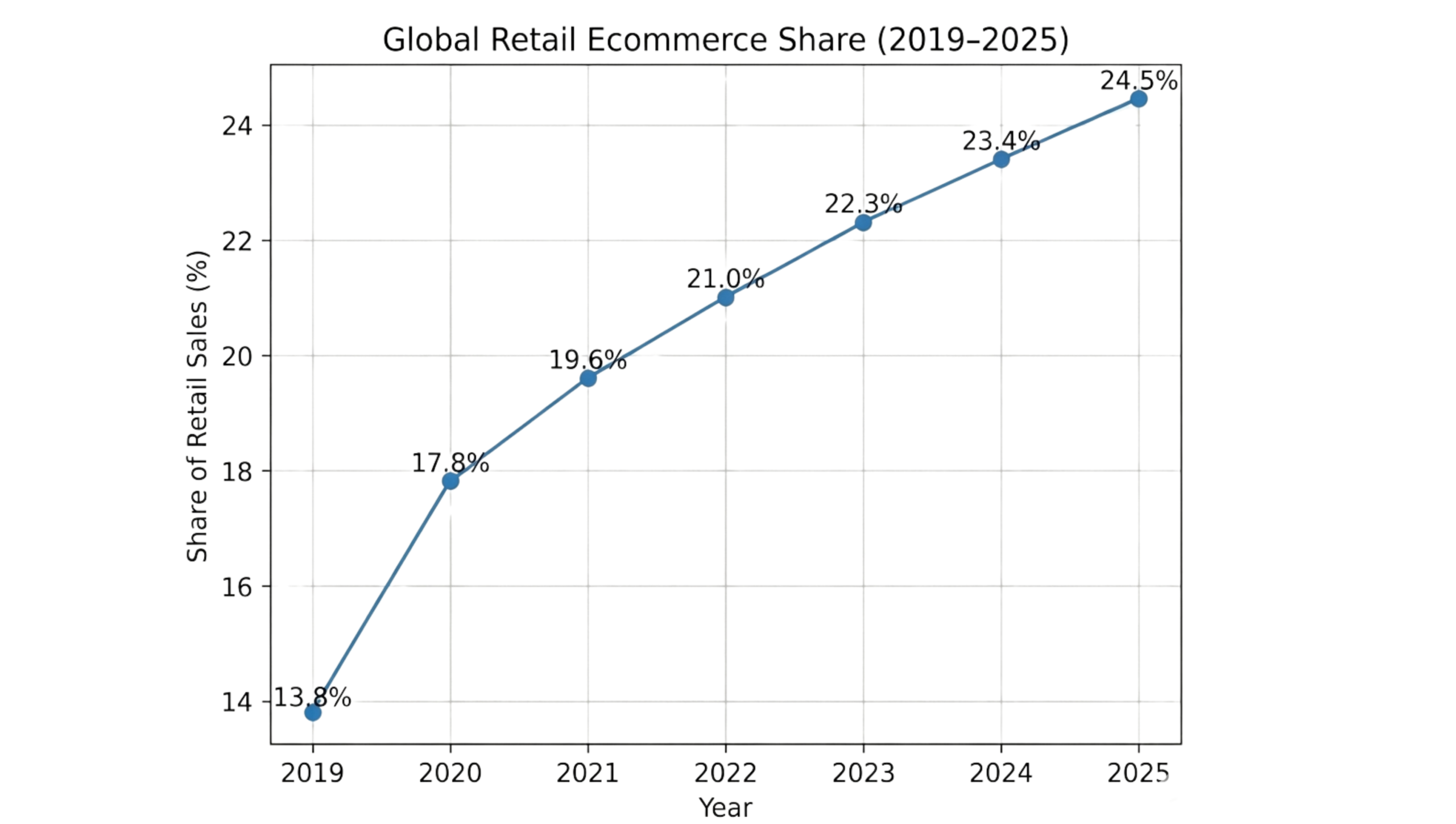
Cross-border shipping is becoming a major driver of global commerce as ecommerce continues to expand faster than ever. Worldwide online retail sales are expected to surpass $7 trillion by 2027, accounting for more than 21% of total global retail sales. At the same time, international online shopping is growing even faster. The global market for cross-border ecommerce is projected to rise from $948 billion in 2026 to over $3.4 trillion by 2035.This surge reflects a major shift in how brands reach customers.
A decade ago, selling internationally was something only large exporters could manage. Today, even a small fashion label or handmade jewelry brand in India can receive orders from customers thousands of miles away in the United States.
What makes this possible is Cross-Border Shipping, the logistics process that enables businesses to deliver products from one country to customers in another. It involves coordinating international transportation, customs documentation, duties and taxes, and final delivery through global carrier networks.
While the opportunity is enormous, the operational side can be complex. Businesses must navigate customs procedures, carrier selection, import regulations, and delivery timelines to ensure products move smoothly between countries.For Indian ecommerce brands, the United States remains one of the most valuable international markets. Understanding how global logistics works is therefore essential before scaling international orders.
In this guide, we’ll walk through how cross-border shipping from India to the US works, the challenges brands often face, and the practical strategies that make international fulfillment easier to manage
Cross-Border Shipping: Why Global Ecommerce Expansion Matters
The rise of international ecommerce is largely driven by consumer behavior.
More shoppers are comfortable purchasing products from overseas retailers. Research shows that 58 – 59% of global online shoppers have bought from an international seller at least once.
In summary, the evolution of e-commerce has been shaped by technology, consumer demand, and changing socio-economic conditions. From its humble beginnings to its current status as a global retail force, ecommerce has fundamentally altered how commerce is conducted, offering both immense opportunities and significant challenges to traditional business models.
In the United States alone:
- 31.9% of consumers have purchased from an international online store
- 43% of buyers prioritize faster international shipping options
- 38% shop globally to access products not available locally
This demand creates significant opportunities for Indian brands. Digital marketplaces and direct-to-consumer websites now allow sellers to reach American buyers without opening warehouses abroad.
Programs like global marketplace exports have already helped Indian sellers cross $20 billion in international ecommerce exports over the past decade.But once demand begins, logistics becomes the real challenge.
International Shipping Logistics: From Order to Delivery
Shipping a product internationally involves several operational steps working together behind the scenes.
Unlike domestic deliveries, international orders move through multiple checkpoints before they finally reach the customer. From documentation to transportation and customs clearance, every stage needs to be accurate and well coordinated.
A typical international shipping process usually includes the following stages:
1. Order Processing
When an international order is placed, the fulfillment system prepares the shipment for export. This includes generating shipping labels, validating the customer’s address, and preparing the necessary export documentation.
At this stage, accurate product information is essential. Customs authorities carefully verify shipment details, so incorrect or incomplete data can quickly lead to delays.
2. Export Documentation
International shipments require several documents to move smoothly across borders. Some of the most common ones include:
- Commercial invoice
- Packing list
- HS (Harmonized System) code
- Shipping declaration
- Export documentation
Even a small error in these documents can slow down customs processing. In fact, incorrect documentation is one of the most common reasons shipments get delayed during international transit.
3. Transportation and Carrier Networks
For ecommerce shipments moving from India to the United States, air freight is the most common transportation method due to its speed and reliability.Express international deliveries typically take 4 to 8 days, depending on the carrier and customs processing time.
Global logistics providers such as FedEx and DHL handle the international transportation leg. Once the shipment arrives in the destination country, it enters the local carrier network, which manages the final last-mile delivery to the customer’s doorstep.
Key Barriers in Global Ecommerce Shipping
International ecommerce offers tremendous growth opportunities, but shipping across borders comes with unique operational challenges. Businesses need to manage costs, meet customer expectations for delivery speed, and handle returns efficiently to maintain satisfaction and profitability.
|
Barrier |
Details / Impact |
Key Statistics / Notes |
| Rising Shipping Costs | Multiple cost layers including air freight, customs fees, and last-mile delivery make cross-border shipments more expensive than domestic ones. | 48% of shoppers abandon carts due to unexpected shipping fees or duties. |
| Delivery Time Expectations | Customers increasingly expect fast delivery, even for international orders. Delays can lead to lost sales and dissatisfied customers. | 38% of cross-border orders arrive within 5 days; 55% within 7 days. |
| Returns & Reverse Logistics | International returns are complex and costly, often requiring high return shipping costs, customs re-import paperwork, and inventory processing. | Global ecommerce return rates can reach 20–30%, especially in apparel. |
Despite these challenges, businesses that proactively plan for costs, set realistic delivery expectations, and implement a structured returns process are better positioned to scale globally.

Strategies for Indian Brands Expanding to the US with eShipz
Indian brands entering the US ecommerce market often discover that success depends not only on demand for their products, but also on how efficiently they manage international shipping operations. Reliable logistics, transparent pricing, and strong operational visibility play a major role in delivering a consistent customer experience.
To navigate these challenges, growing brands typically focus on a few practical logistics strategies.
Standardize Product Data
One of the most common reasons for customs delays in cross-border shipping is inconsistent or incomplete product information. When shipment data does not match documentation or customs requirements, packages can get held for verification.
To avoid this, brands should ensure that key shipment details remain consistent across every order. This includes HS codes, accurate product descriptions, declared values, and country of origin information.
Maintaining standardized product data helps shipments move through customs more smoothly, reducing delays and improving overall delivery timelines.
Use Multiple Carrier Networks
International shipping performance can vary significantly depending on the destination, carrier network, and transit routes. A carrier that performs well in one region may not always offer the same speed or reliability in another.
For this reason, many ecommerce brands rely on multiple shipping partners instead of depending on a single carrier. This approach allows businesses to select the most efficient option for each shipment based on cost, delivery speed, and reliability.
A multi-carrier strategy not only improves delivery performance but also helps brands maintain flexibility as order volumes grow.
Offer Transparent Pricing
Unexpected charges are one of the biggest pain points for customers ordering from international retailers. Duties, taxes, and additional shipping costs appearing at delivery can create frustration and often lead to order refusals.
Displaying the final landed cost upfront, including shipping fees, duties, and taxes, helps customers understand the total cost before completing their purchase. This level of transparency builds trust and significantly reduces delivery issues caused by surprise charges.
Track Shipping Performance
As international order volumes grow, tracking logistics performance becomes essential for maintaining efficiency and customer satisfaction.
Successful brands regularly monitor key metrics such as:
- Average delivery time
- Customs clearance delays
- Shipping cost per order
- Return rates
Analyzing these indicators helps businesses identify operational bottlenecks, evaluate carrier performance, and continuously improve their fulfillment strategy.
Platforms like eShipz simplify this process by providing centralized shipment tracking, performance insights, and visibility across multiple carriers. With a unified view of global shipments, brands can monitor delivery performance in real time, quickly respond to delivery exceptions, and maintain better control over their international shipping operations.
Expanding Globally with the Right Shipping Strategy
International ecommerce is no longer limited to large global brands. Today, even growing businesses can reach customers across borders thanks to digital storefronts, online payments, and global logistics networks.
For Indian ecommerce brands, the United States remains one of the most promising international markets. However, successful expansion depends on more than just marketing. Reliable logistics operations, accurate documentation, transparent pricing, and shipment visibility are essential for delivering a strong customer experience.
As cross-border ecommerce continues to grow, brands that build efficient international shipping processes early will be better positioned to scale globally.
To simplify US shipping operations and gain better delivery visibility, platforms like eShipz help brands manage multi-carrier shipping, global tracking, and logistics automation from a single platform.
Explore how eShipz supports US shipments and global deliveries for growing brands.