
According to industry data from Statista, the United States footwear market is projected to generate over $100 billion in revenue in the coming years, with a growing share coming from online sales. This rapid shift highlights how the footwear category has become one of the fastest-growing segments in digital retail. In simple terms, the footwear eCommerce industry refers to the online sale of shoes through digital platforms such as brand websites, marketplaces, and mobile apps, where consumers can browse styles, compare options, and purchase footwear without visiting a physical store.
The US footwear eCommerce market is evolving quickly as consumer expectations and technology continue to change. Sustainability is becoming a major factor influencing purchase decisions, with brands adopting eco-friendly materials and responsible production methods. At the same time, AI-powered personalization tools are helping shoppers find better size and style recommendations, improving the overall online shopping experience.
Technology is also transforming how customers buy shoes online. Augmented reality (AR) tools now allow shoppers to visualize footwear on their feet before purchasing, helping reduce return rates, one of the biggest challenges in online shoe retail. Alongside this, the demand for versatile athletic-casual footwear continues to grow as consumers prioritize comfort and everyday wear. Direct-to-consumer strategies and the rise of niche footwear brands are further reshaping the market, allowing companies to connect directly with customers and build stronger brand loyalty.
The Growth of the US Footwear eCommerce Market: Key Statistics and Market Size
The United States remains one of the largest footwear markets in the world, and online sales are playing an increasingly dominant role in that growth. According to data from Statista, the US footwear market is expected to generate over $100 billion in revenue, with a significant share of purchases now happening through digital channels. As consumers become more comfortable buying shoes online, footwear has emerged as one of the fastest-growing product categories in ecommerce.
Industry research from Straits Research highlights the scale of this shift. The global footwear ecommerce market was valued at over $120 billion in 2023 and is projected to grow steadily through the decade, driven largely by strong demand in major markets such as the United States. Analysts expect consistent annual growth as digital retail continues to expand and brands invest more in online-first sales strategies
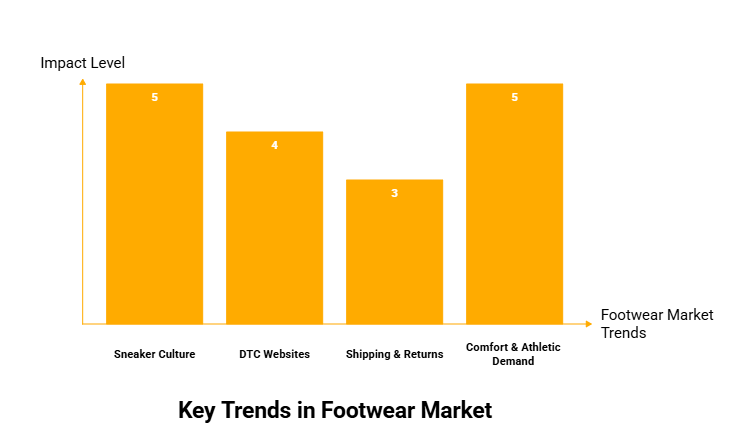
Several key factors are driving the rapid growth of footwear ecommerce:
- The rise of sneaker culture, which has turned footwear launches into highly anticipated digital events
- Expansion of direct-to-consumer (DTC) websites, allowing brands to sell directly to customers
- Improved shipping speeds and simplified return policies, making online purchases more convenient
- Strong consumer demand for comfort-focused and athletic footwear
Mobile commerce is another major growth driver. A large portion of footwear purchases now happens through smartphones, especially among younger consumers who discover products through social media platforms before completing purchases online.
At the same time, a new generation of digital-native footwear brands is entering the market. These companies often launch online first, relying on influencer marketing, social media communities, and direct customer engagement rather than traditional retail distribution.
As a result, ecommerce is no longer just an additional sales channel for footwear brands. For many companies, it has become the primary engine of growth, shaping how products are marketed, launched, and delivered to consumers in the modern footwear industry.
Types of Footwear Brands in the US Online Market
The footwear eCommerce market in the United States is not dominated by a single type of brand. Instead, it is made up of several distinct categories, each targeting different consumer needs such as athletic performance, everyday comfort, fashion-driven sneakers, or sustainability. As online shopping continues to grow, these categories help explain how brands position their products and compete in the digital marketplace.
|
Category |
Description |
Example Brands |
| Athletic & Performance Footwear | Shoes designed for sports, running, training, and high-performance activities. These dominate online footwear sales. | Nike, Adidas, Under Armour |
| Lifestyle & Streetwear Brands | Sneakers and casual footwear influenced by fashion and youth culture, often driven by collaborations and limited drops | Vans, Converse, Puma |
| Comfort & Everyday Footwear | Brands focused on ergonomic design, cushioned soles, and daily comfort for walking or work. | Skechers, Crocs |
| Sustainable Footwear Brands | Companies emphasizing eco-friendly materials, recycled fabrics, and responsible manufacturing. | Allbirds |
| Niche Performance Brands | Specialized brands targeting specific sports or outdoor activities such as trail running and hiking. | On Running, Salomon |
| Direct-to-Consumer (DTC) Brands | Digital-first brands that primarily sell through their own websites rather than traditional retailers. | Allbirds, On Running |
These brands continue to lead the US footwear market because they focus on specific performance categories while also adapting to evolving consumer trends such as athleisure, comfort-focused design, and lifestyle-driven sneakers.
For many consumers, brand loyalty is influenced not just by style but also by performance specialization, which is why brands known for specific shoe categories often dominate their segments in the online footwear market.
Changing Consumer Behavior in the US Footwear Industry
As the US footwear eCommerce market grows, consumer buying behavior is shifting toward practicality and convenience. Online shoppers today look beyond design, focusing more on comfort, versatility, and long-term usability when choosing footwear. The ability to easily compare styles, read reviews, and discover new brands online has also influenced which types of shoes gain popularity in the digital marketplace.
One major trend is the rise of athleisure footwear, where athletic sneakers are worn not only for sports but also for everyday activities such as commuting, travel, and casual outings. At the same time, retro-inspired sneakers are making a strong comeback, with classic designs and vintage silhouettes appealing to younger consumers influenced by streetwear culture and social media trends.
Comfort and sustainability are also shaping purchasing decisions. Many shoppers prefer shoes made with lightweight materials, cushioned soles, and ergonomic designs, while eco-conscious consumers increasingly look for footwear made with recycled or sustainable materials. As a result, modern footwear demand is being driven by products that combine style, comfort, and everyday functionality.

How Technology and eShipz Are Reshaping the Footwear eCommerce Market
However, as online footwear sales continue to grow, efficient shipping, delivery visibility, and returns management become equally important for maintaining a strong customer experience. This is where eShipz helps footwear brands streamline and scale their logistics operations.
Key eShipz solutions that support footwear eCommerce brands include:
- Multi-Carrier Shipping Automation – Automatically select the best courier partner based on delivery speed, cost, or service performance.
- Real-Time Shipment Tracking – Provide customers with end-to-end order visibility and proactive delivery updates.
- Estimated Delivery Date (EDD) Intelligence – Display accurate delivery timelines during checkout to set clear expectations for shoppers.
- NDR (Non-Delivery Report) Management – Quickly resolve failed delivery attempts through automated alerts and workflows.
- Returns & Reverse Logistics Management – Simplify footwear returns with streamlined return processing and better tracking.
- Post-Shipping Control Tower – Monitor shipment performance, courier SLAs, and delivery issues from a centralized dashboard.
With these capabilities, eShipz enables footwear brands to improve delivery performance, reduce operational complexity, and create a smoother post-purchase experience for online shoppers.
What’s Next for Footwear eCommerce in the US
The US footwear eCommerce market is evolving rapidly as consumer expectations, technology, and digital retail strategies continue to reshape how people shop for shoes online.
From the growing popularity of athleisure footwear to innovations like AR try-ons and AI-powered sizing tools, the online footwear shopping experience is becoming smarter, more personalized, and more convenient. At the same time, sustainability initiatives and emerging niche brands are bringing fresh competition into the market.
For footwear brands selling online, success now depends on how quickly they can adapt to these changes. Understanding consumer behavior, offering seamless online experiences, and optimizing fulfillment operations are becoming key competitive advantages.
Brands that combine strong product innovation, smooth digital shopping journeys, and efficient shipping and delivery operations will be best positioned to capture the next phase of growth in the US footwear eCommerce market.
Looking to optimize shipping and delivery for your footwear brand?
Explore how modern eCommerce logistics platforms, multi-carrier shipping solutions, and automated fulfillment systems can help footwear brands scale faster while improving delivery performance and reducing operational complexity.