



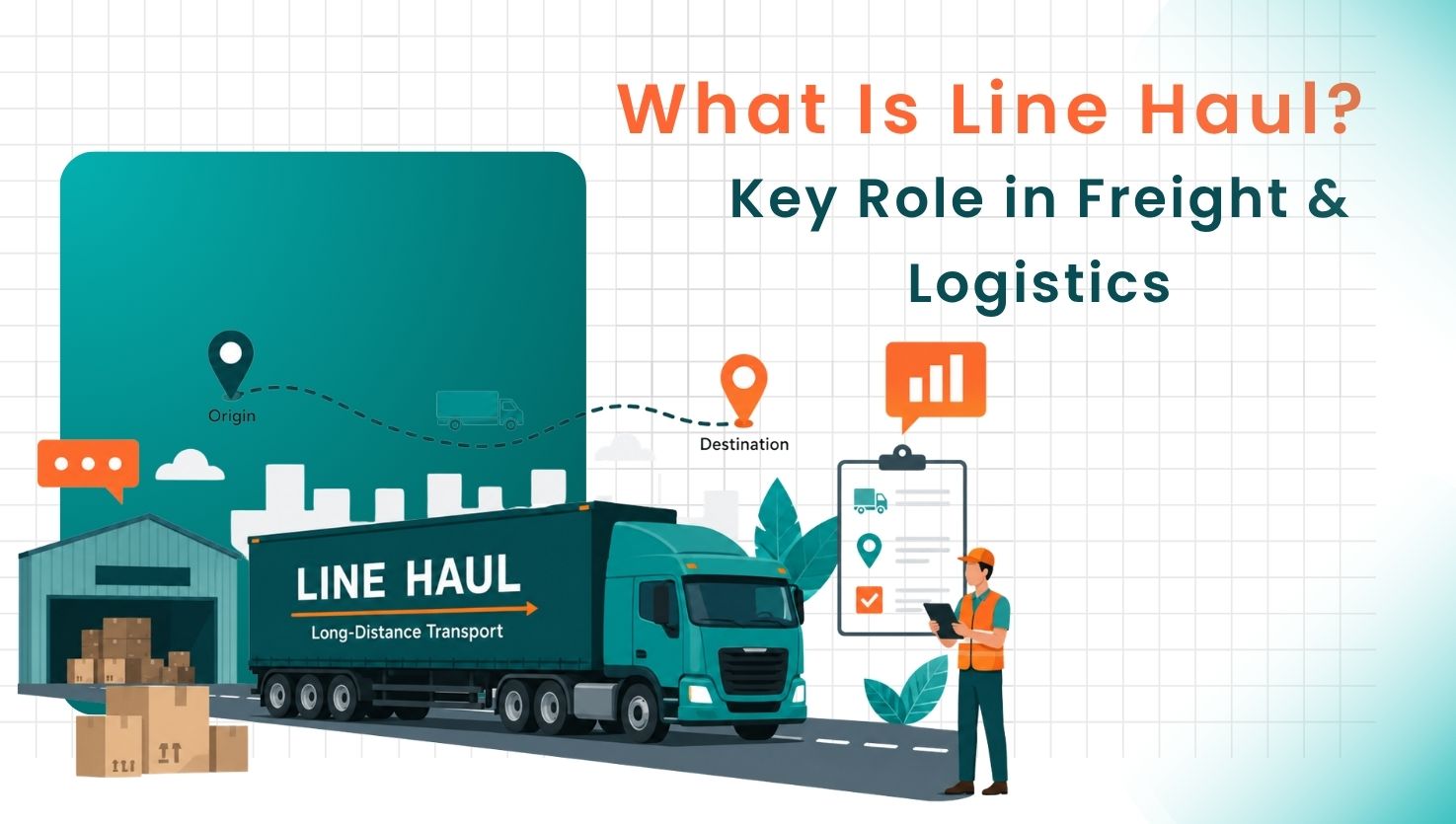
Line haul in logistics refers to the long-distance movement of goods between two major hubs, usually from one city to another, before the shipment reaches its final destination. It’s the part of the journey customers don’t see, but it’s often the one that decides whether a delivery arrives on time, or gets delayed.
Today, as ecommerce spreads deeper into Tier 2 and Tier 3 markets, this middle leg has become even more critical. Most orders still move from a handful of major fulfillment hubs across the country, which means long-distance transport is unavoidable.
In fact, industry insights from Statista suggest that logistics costs in India can account for nearly 13–14% of GDP, significantly higher than global averages. A large part of this cost is tied to how efficiently goods move between cities.
And that’s exactly what we’ll break down in this blog, where this stage fits in the delivery journey, why it impacts cost and speed so heavily, and how businesses can make smarter decisions around it.
What Happens in Freight Movement in Line haul ?
Ecommerce in India has moved far beyond metro cities. Orders now flow heavily into Tier 2 and Tier 3 regions, while fulfillment still sits in a few major hubs like Bangalore, Delhi, and Mumbai. That gap makes long-distance movement unavoidable, and far more important than it looks. Most deliveries don’t slow down at pickup or at the final doorstep. They slow down in the middle.
A typical shipment moves like this: picked up from a warehouse, sorted at a local hub, transported across cities, received at a destination hub, and then sent out for delivery. That middle stretch, where goods travel between cities, is what logistics teams rely on to keep timelines intact. It usually involves trucks, air cargo, or rail, depending on speed and cost priorities.
According to insights from Inbound Logistics and DHL, a significant part of delivery timelines is shaped by how efficiently this intercity movement runs, not just how fast orders are picked or delivered.
And when this layer doesn’t work well, the impact builds quickly. Routes aren’t always optimized, trucks don’t run at full capacity, delays happen at transit hubs, and tracking becomes patchy. Over time, this leads to higher costs, longer delivery timelines, rising RTOs, and a noticeable drop in customer trust.
The tricky part? Most businesses don’t directly control this stage, but it still affects everything they promise to customers.
What Really Impacts Freight Performance
If you zoom out and look at why some shipments move smoothly while others keep getting delayed, it usually comes down to a few underlying factors. It’s rarely one big issue, more often, it’s a mix of small decisions that either work well together or slowly create friction across the journey.
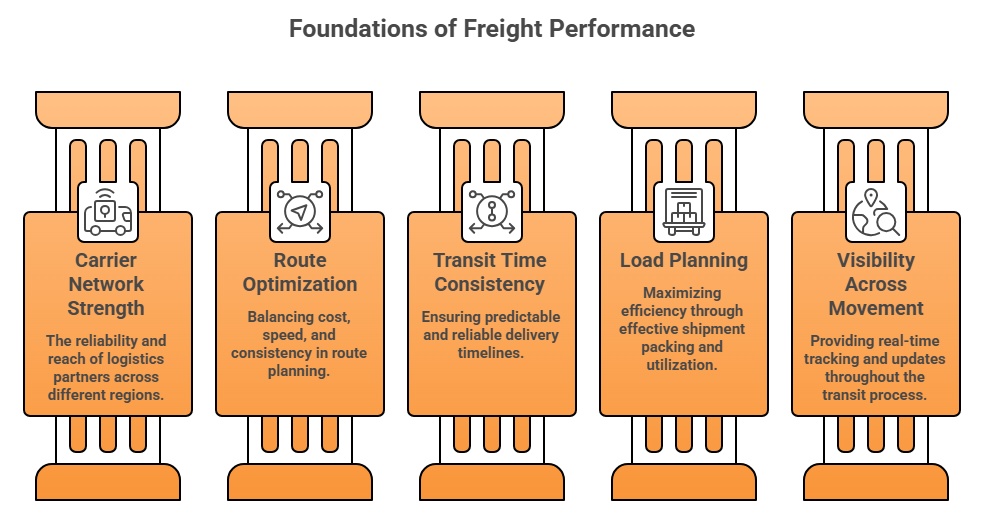
Here are the core elements that quietly decide how efficiently goods move between cities in Line haul:
1. Carrier Network Strength
Not every logistics partner performs the same across every route. Some have stronger networks in the north, others in the south, and some struggle in remote or low-density regions. Choosing the wrong partner for a route doesn’t always fail immediately, but it shows up in delays, missed timelines, and inconsistent delivery experiences over time.
2. Route Optimization
The fastest route isn’t always the most cost-effective, and the cheapest route isn’t always reliable. The real challenge is finding the right balance, where cost, speed, and consistency align. Poor routing decisions can quietly add days to delivery timelines or inflate costs without being obvious at first.
3. Transit Time Consistency
Distance is predictable. Delays are not. What affects delivery timelines more than distance is inconsistency, unexpected hold-ups at hubs, delays in handoffs, or lack of coordination between partners. When transit times vary too much, planning becomes harder and customer promises start to break.
4. Load Planning
How shipments are packed and moved matters more than it seems. Partially filled trucks or poorly planned loads increase the cost per shipment. On the other hand, well-utilized capacity improves efficiency without changing anything on the surface.
5. Visibility Across Movement
One of the biggest gaps in long-distance transport is visibility. When shipments are in transit between cities, tracking often becomes limited. Without real-time updates, delays are only noticed after they’ve already happened, leaving teams to react instead of prevent.
Freight movement isn’t just about covering distance, it’s about how well these moving parts come together.
When these factors are aligned, deliveries feel seamless, costs stay under control, and operations scale smoothly. But when even a couple of them slip, the impact builds quickly across timelines, margins, and customer experience.
Getting this layer right doesn’t always require bigger infrastructure, it often starts with better decisions.
Supply Chain Trends Shaping Freight Movement in Line haul
Freight movement in India is going through a clear shift, and the numbers show why businesses are rethinking how shipments move between cities:
- Decentralized warehousing:
Brands are no longer relying on a single fulfillment hub. Many are moving toward 3–5 regional warehouses, helping reduce delivery timelines by 20–30% in high-demand zones. - Faster delivery expectations:
Same-day and next-day delivery are no longer niche. In fact, over 60% of online shoppers in India now expect deliveries within 1–2 days, putting pressure on faster intercity movement. - Rising logistics costs:
According to Statista, logistics costs in India account for roughly 13–14% of GDP, compared to 8–9% in more optimized markets, making efficiency a major priority. - Growth in ecommerce scale:
India’s ecommerce market is projected to cross $150–200 billion by 2027, which directly increases the volume of intercity shipments moving every day. - Shift to data-driven logistics:
Businesses using analytics for carrier selection and routing decisions are seeing up to 10–15% reduction in shipping costs and improved delivery consistency.
How eShipz Fits Into the Freight Movement Layer
Most businesses don’t own trucks, aircraft, or dedicated transport networks across regions. Instead, they depend on multiple logistics partners to move shipments over long distances. That’s where complexity starts to build, because once goods leave the warehouse, control becomes fragmented across carriers, routes, and transit hubs.
This is exactly where an intelligence layer becomes important.
Platforms like eShipz don’t move shipments themselves, but they help businesses take better decisions on how shipments should move. Instead of relying on guesswork or fixed carrier choices, the focus shifts to data, performance, and optimization.
Here’s how that plays out in practice:
- Multi-carrier allocation:
Instead of depending on a single partner, shipments are assigned to the most suitable carrier based on route strength, cost efficiency, and historical performance. - Carrier performance tracking:
Over time, businesses can clearly see which partners consistently deliver on time and which ones cause delays, making carrier selection more informed and less reactive. - Cost optimization:
Unnecessary routing, inefficient carrier usage, and hidden cost leakages can be reduced by continuously comparing options across networks. - End-to-end visibility:
Even when shipments are moving between cities and hubs, tracking remains visible, helping teams act early instead of reacting after delays happen.
At a broader level, this changes how logistics decisions are made. Instead of managing each shipment manually, businesses start operating with structured data and clear performance signals. The physical movement still belongs to carriers, but the control layer becomes far more intelligent, predictable, and scalable.
Why Freight Movement Deserves More Attention Than It Gets
At the end of the day, long-distance transport is one of those parts of logistics that customers rarely think about, but it quietly decides how every order experience turns out. When it runs smoothly, deliveries feel predictable, costs stay stable, and operations feel under control. When it doesn’t, the impact shows up quickly in the form of delays, returns, and rising expenses.
The key shift is understanding that this layer isn’t just about moving goods from one city to another, it’s about how consistently and efficiently that movement happens. Once businesses start looking at it through that lens, the focus naturally moves from just shipping faster to shipping smarter.
As ecommerce continues to grow and delivery expectations get tighter, the advantage will belong to businesses that treat this movement as a system to optimize, not just a step in the process.
If this is the layer you’re trying to get more control over, it’s worth exploring how better visibility, smarter carrier decisions, and data-led shipping can change outcomes at scale.