


The $15 Billion Problem Hiding in Your Warehouse
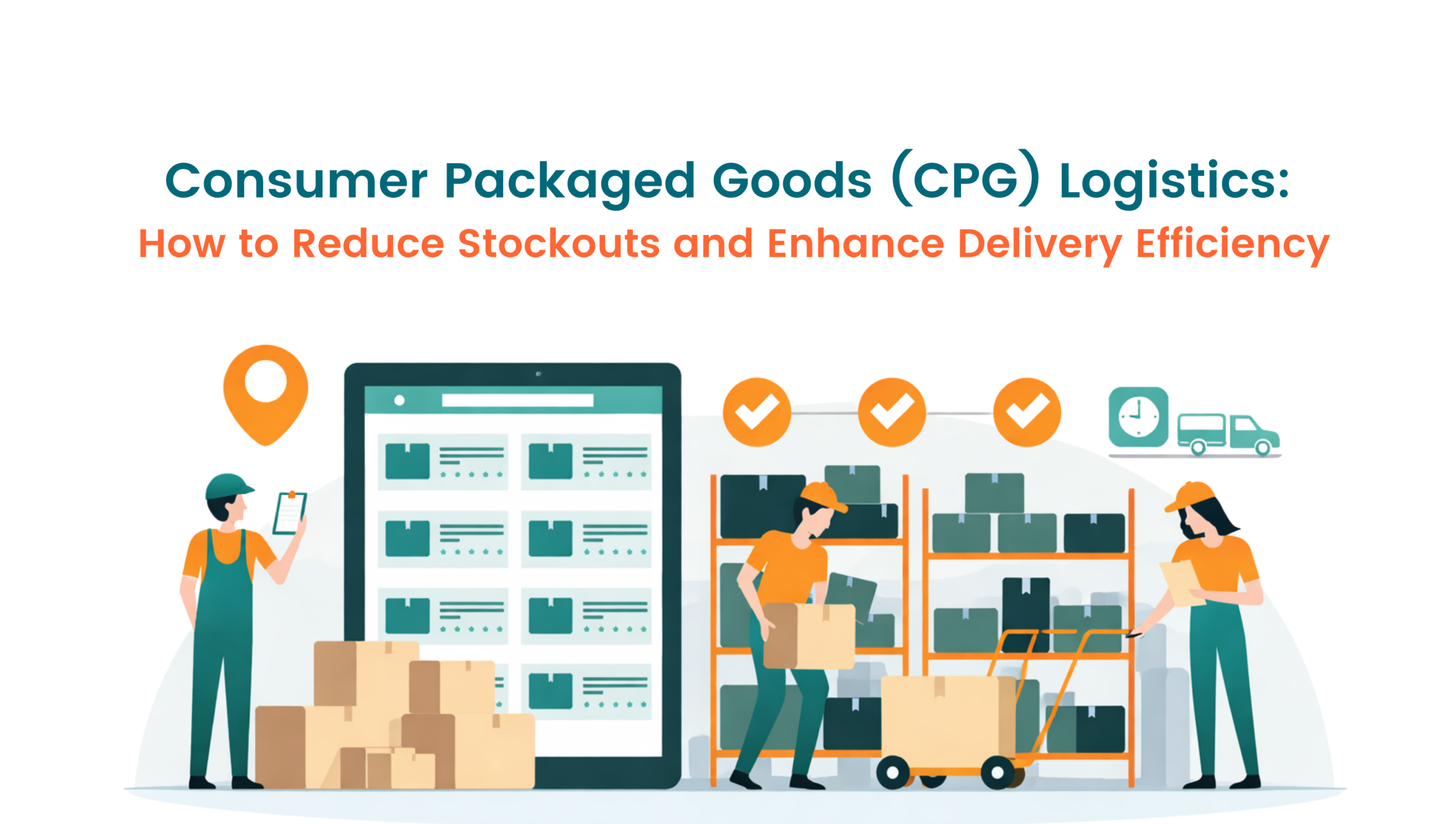
Every year, stockouts cost the consumer packaged goods (CPG) industry an estimated $15 billion in lost sales across the United States alone. For an industry built on high-volume, low-margin products that consumers expect to find on shelves every single time, that number represents more than lost revenue, it signals eroded brand loyalty, strained retail relationships, and market share quietly shifting to competitors who simply stayed available.
Consumer Packaged Goods (CPG) refer to items that are consumed and replenished frequently, including food, beverages, personal care products, and household essentials. These are typically low-cost, fast-moving products with short lifespans, sold across both physical retail stores and e-commerce channels. Global brands like Nestlé, Procter & Gamble, and Unilever operate at massive scale in this space, where efficiency, availability, and speed are critical to staying competitive.
The challenge itself isn’t new, but the pressure is. E-commerce has redefined delivery expectations, omnichannel retail has added layers of fulfillment complexity, and today’s consumers expect real-time visibility and fast delivery, whether they’re ordering toothpaste or protein bars.
In this blog, we’ll explore how CPG brands are rethinking logistics from the ground up, through smarter inventory positioning, dynamic routing, and unified visibility systems that transform supply chains from cost centers into powerful competitive advantages.
Why Traditional Distribution Models Are Failing Fast-Moving Goods?
The classic Consumer Packaged Goods (CPG) distribution playbook, centralized warehouses, fixed delivery schedules, and retailer-managed replenishment, was built for a world of predictable demand and patient customers.
That world no longer exists.
Three structural shifts have broken the old model:
- E-commerce acceleration: Online CPG sales grew 40% in 2021 and continue expanding, fragmenting order patterns across thousands of small shipments instead of bulk retail deliveries. mckinsey.com
- Retailer expectations: Major chains now impose strict delivery windows and penalize late or incomplete shipments. Walmart’s OTIF (On-Time, In-Full) requirements, for instance, carry fines of up to 3% of invoice value for non-compliance.
- Demand volatility: Seasonal spikes, social media trends, and regional preferences create demand patterns that static forecasting models miss entirely.
The result? Brands either overstock (tying up capital and risking expiration) or understock (losing sales and shelf presence). Neither outcome is sustainable.
CPG Route Optimization & Last-Mile Efficiency: Key Considerations
CPG logistics today is far more complex than simply moving goods from one point to another. With high-frequency deliveries across retail stores, distribution centers, and direct-to-consumer channels, brands need smarter, more flexible systems to keep everything running smoothly.
Here’s how modern logistics is evolving:
- High-frequency, multi-point deliveries:
CPG brands are managing hundreds of delivery points daily, from retail shelves to doorstep deliveries, often within tight timelines. - Limitations of static route planning:
Fixed routes can’t adapt to real-world disruptions, leading to delays, missed delivery windows, and inefficiencies. - Shift to dynamic routing:
Modern systems optimize routes in real time by considering multiple factors like delivery timelines, location clusters, and changing conditions. - Time-window adherence:
Retailers now enforce strict receiving hours. Missing these windows can result in rejected shipments and penalties. - Better vehicle utilization:
Efficient routing ensures optimal use of vehicle space (weight and volume), reducing the number of trips required. - Real-time traffic and weather adjustments:
Dynamic routing adapts instantly to external disruptions, helping avoid delays and maintain delivery commitments. - Multi-stop route optimization:
It’s no longer just about shortest distance, routes are planned to minimize total delivery time across multiple stops. - Cost and performance impact:
Brands adopting dynamic routing often see 18–25% reduction in transportation costs along with improved on-time deliveries.
The Rise of Micro-Fulfillment
To keep up with faster delivery expectations, many CPG brands are turning to micro-fulfillment centers, smaller, strategically located facilities positioned closer to high-demand areas. This approach is especially effective in urban markets, for fast-moving or perishable goods, and for growing D2C models that require quick, frequent deliveries. By reducing the distance between inventory and the end customer, brands can enable faster replenishment and improve overall availability.
However, this shift also introduces added complexity. Managing multiple fulfillment nodes means handling more inventory locations, tighter coordination, and a higher risk of operational gaps if not managed well. Without strong visibility and control, the very system designed to improve speed can become difficult to manage at scale.
What Separates Leaders from Laggards in CPG Logistics, and Where eShipz Fits In
The gap between leading CPG brands and the rest comes down to how well they respond to complexity, manage disruptions, and keep operations connected. In a fast-moving environment, success isn’t just about having systems in place, it’s about how effectively those systems work together to enable speed, visibility, and control. Here’s what top-performing brands do differently, along with the kind of solutions that support them:
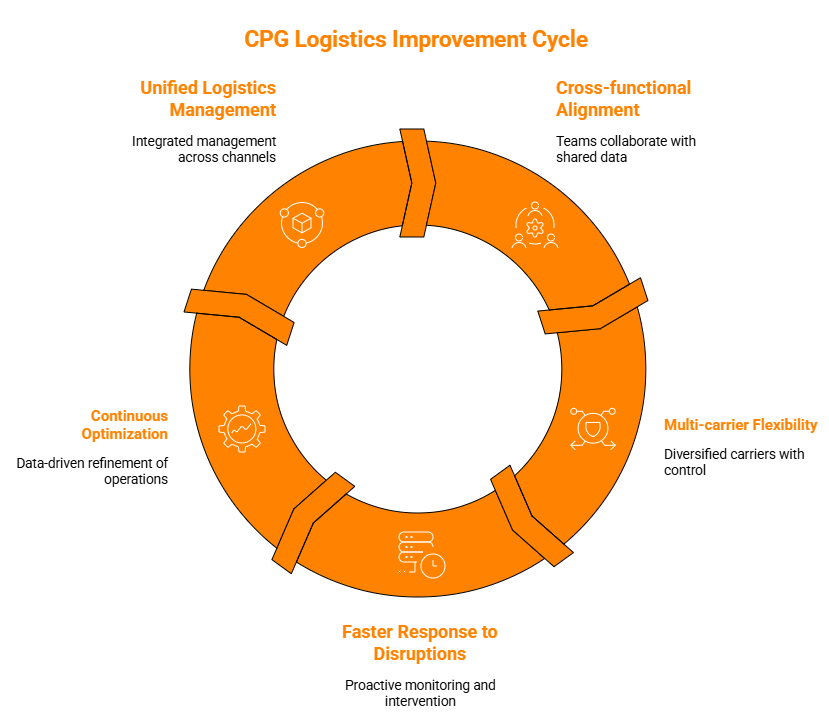
Cross-functional alignment:
Teams don’t operate in silos, logistics, sales, and demand planning are aligned through shared, real-time data. This helps brands respond faster to demand shifts and avoid miscommunication that can lead to delays or stockouts.
Solution: Centralized visibility dashboards and real-time tracking ensure all teams have access to the same, up-to-date information, improving coordination and decision-making.
Multi-carrier flexibility with control:
Instead of depending on a single logistics partner, leading brands diversify their carrier network while maintaining control and consistency. This reduces risk and improves delivery reliability.
Solution: Multi-carrier integration with intelligent allocation allows shipments to be automatically assigned to the most efficient carrier based on cost, performance, and delivery location.
Faster response to disruptions:
Leaders don’t wait for issues to escalate. They proactively monitor shipments and act quickly when something goes off track, minimizing the impact on delivery timelines.
Solution: Automated alerts and exception management systems provide real-time notifications on delays, failed deliveries, or disruptions, enabling quicker intervention.
Continuous optimization:
Logistics isn’t treated as a one-time setup. Instead, it’s continuously refined based on performance data, changing demand patterns, and operational insights.
Solution: Data-driven analytics, routing optimization, and carrier performance tracking help identify inefficiencies and improve operations over time.
Unified logistics management:
Rather than managing retail, D2C, and marketplace logistics separately, leaders bring everything into a connected ecosystem. This reduces complexity and ensures smoother execution across channels.
Solution: A single platform to manage end-to-end shipping workflows helps streamline operations, improve visibility, and maintain consistency across all fulfillment channels.
In today’s CPG landscape, it’s this combination of alignment, flexibility, and continuous improvement that helps brands stay ahead, not just keeping products moving, but keeping them consistently available where it matters most.
The Logistics Advantage Is Now a Brand Advantage
For decades, CPG brands competed on product formulation, marketing, and shelf placement. Logistics was a cost to minimize, not a capability to develop.
That calculus has inverted.
When consumers can switch brands with a single tap, availability becomes the product. When retailers penalize delivery failures, logistics performance becomes margin. When e-commerce fragments fulfillment into thousands of small shipments, operational efficiency becomes survival. The brands winning in 2025 aren’t necessarily those with the best products. They’re the ones that can get the right product to the right place before the customer even realizes they need it.
The window to build that capability is narrowing. Competitors are already investing. Retailers are already measuring. And consumers are already expecting more.
The question isn’t whether to optimize your CPG supply chain. It’s whether you’ll do it before your competitors make the decision for you.
Exploring smarter logistics for your CPG operations? See how integrated shipping platforms are helping brands reduce delivery times and improve fulfillment accuracy across India’s fastest-growing markets.