





Shipping API for custom ERP like SAP, Oracle, or Microsoft Dynamics is no longer optional, it’s critical for businesses aiming to meet growing delivery expectations. Studies show that 47% of enterprises report shipment delays due to disconnected systems, and manual shipping processes can add up to 15% extra in operational costs annually. In India, where ecommerce is growing at >25% year-on-year, efficient ERP-to-carrier integration is essential to stay competitive.
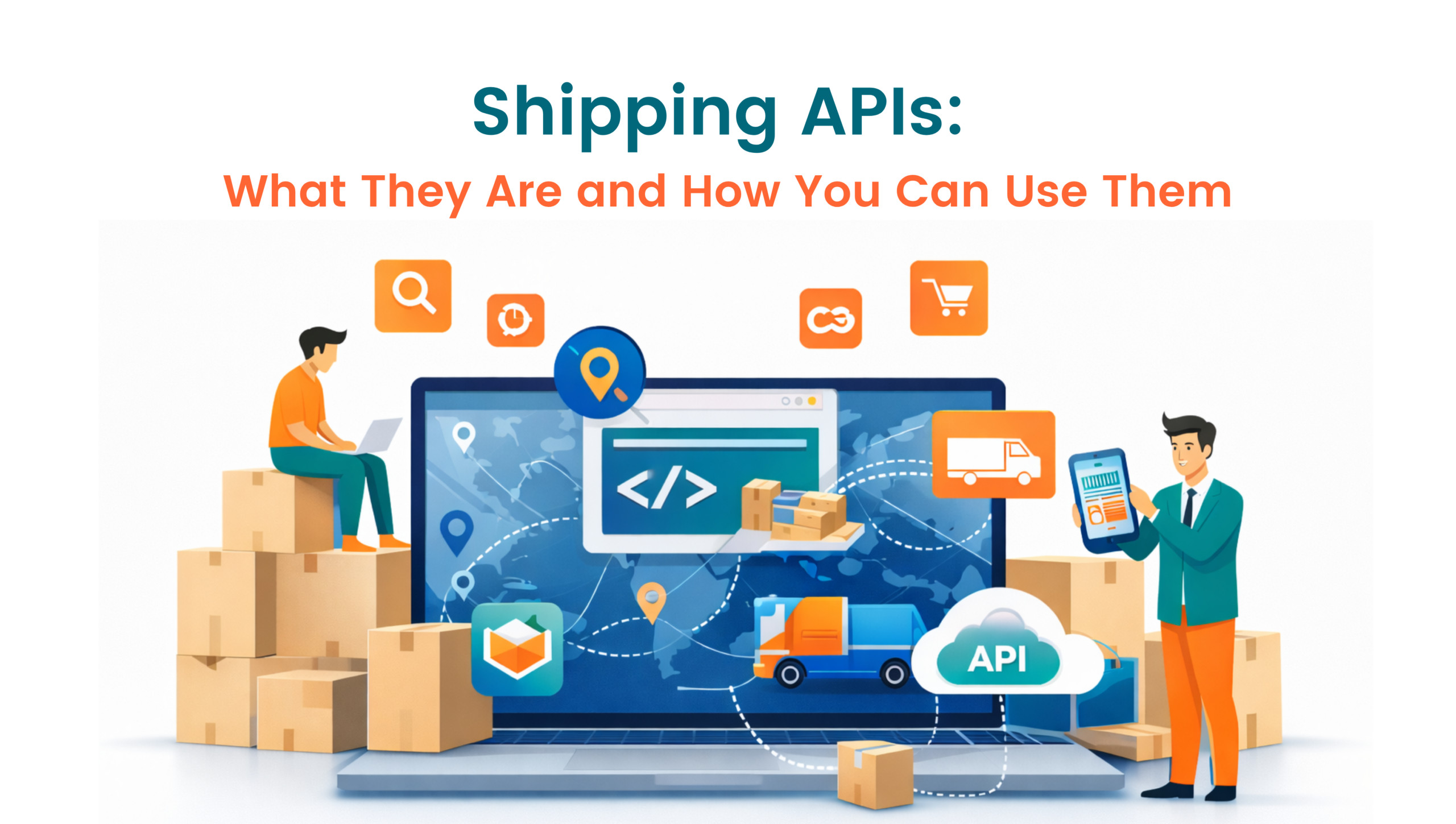
A shipping API is a software interface that connects your ERP system to multiple carriers, enabling automated tasks such as rate shopping, label generation, real-time tracking, and address validation. Essentially, it acts as the engine that powers seamless communication between your enterprise system and logistics networks, reducing errors, cutting costs, and improving customer satisfaction.
Shipping is no longer a “last‑mile afterthought”, it’s a competitive lever. And the engine that connects ERP platforms to carriers and logistics partners? A robust shipping API. This blog walks through how enterprise teams can choose the right shipping API for custom ERP systems, ensuring integration simplicity, operational scalability, and measurable ROI.
You’ll learn what matters most, what to evaluate, and how to test vendors, without being swayed by buzzwords.
Why Choosing the Right Shipping API Matters Now
Most global enterprises today rely on multi-carrier networks, from UPS and FedEx to regional LTL/FTL carriers and international partners like DHL. Yet, a survey by Gartner found that nearly 43% of companies experience increased shipping costs due to disconnected systems, while 40% report higher error rates from manual processes and fragmented workflows. Additionally, poor delivery visibility and compliance bottlenecks, especially for international shipments, continue to challenge supply chain teams.
Modern ERPs, such as SAP S/4HANA, Oracle Cloud ERP, and Microsoft Dynamics 365, are designed to unify core business processes, but their potential is limited without a fully integrated shipping layer. A robust shipping API isn’t just a connector; it’s a strategic enabler, offering:
- Real-time rate shopping to select the most cost-effective or fastest carrier
- Automated label generation, reducing manual entry errors
- Accurate address validation to prevent failed deliveries
- Seamless tracking updates for both internal teams and customers
In markets like India, where ecommerce is growing over 25% annually and cross-border trade is rising, integrating a capable shipping API directly impacts operational efficiency, reduces costs, and enhances customer satisfaction.
Key Criteria for Selecting the Right Enterprise Shipping Integration
Choosing a shipping API for your custom ERP isn’t about checking boxes, it’s about aligning capabilities with your business goals and technical landscape. Here’s a practical rubric to evaluate any candidate.
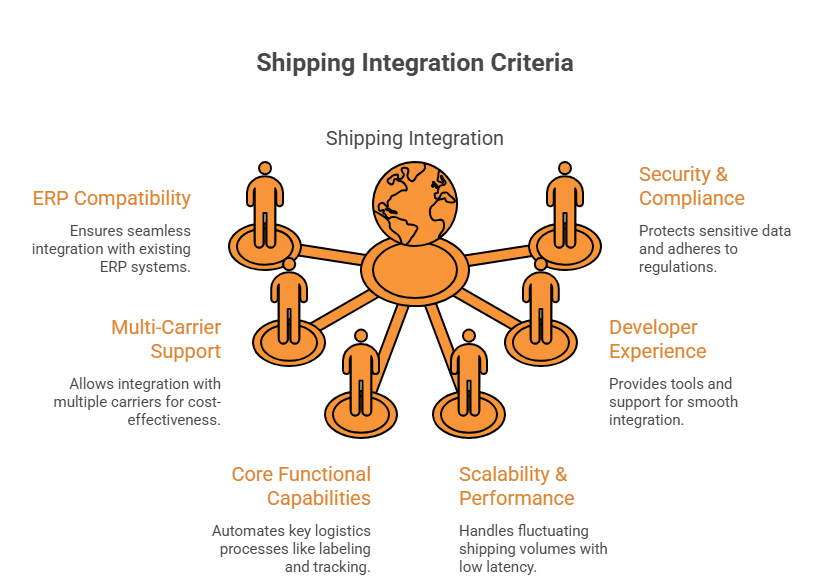
- ERP Compatibility & Certification
Integration friction is one of the biggest challenges in enterprise projects. Choose APIs that are pre-built or certified for your specific ERP, such as SAP, Oracle, or Microsoft Dynamics. Support for extension modules, native add-ins, or documented integration patterns reduces development time, minimizes errors, and lowers risk during ERP upgrades or releases. - Multi-Carrier Support & Rate Shopping
A strong shipping API should allow seamless integration with multiple domestic and international carriers without requiring separate connections for each. Real-time rate comparison enables operations teams to automatically select the most cost-effective or fastest option, improving delivery performance and reducing shipping costs. - Core Functional Capabilities
A shipping API should go beyond simple connectivity to accelerate logistics processes. Key capabilities include automated label generation for domestic and international shipments, accurate address validation to prevent failed deliveries, real-time tracking updates for internal teams and customers, and automated compliance documentation for customs and hazardous shipments. These should integrate directly into ERP workflows, eliminating manual processes. - Scalability & Performance
Enterprise shipping volumes can fluctuate significantly. The API should support low-latency performance, webhook events for real-time updates instead of constant polling, and high-availability infrastructure with failover and retry mechanisms. Reliable scalability ensures smooth operations even during peak periods. - Developer Experience & Support
Comprehensive documentation, sandbox or test environments, and reliable technical support are essential for smooth integration. These allow technical teams to prototype, validate, and troubleshoot without affecting live operations. - Security & Compliance
Sensitive business and customer data must be protected. Look for APIs that support secure authentication like OAuth 2.0, HTTPS/TLS encryption, role-based access controls, and compliance with regional and global data regulations. Strong security measures safeguard data and maintain customer trust.
Selecting the right shipping API for custom ERP is more than a technical decision, it’s a strategic move that directly impacts cost, efficiency, and customer satisfaction. By prioritizing ERP compatibility, multi-carrier support, core functional capabilities, scalability, developer experience, and security, enterprises can turn their ERP system into a powerful logistics engine. In India’s rapidly growing ecommerce market and beyond, a carefully chosen shipping API not only streamlines operations but also provides a competitive edge, enabling businesses to deliver faster, smarter, and more reliably to their customers.
How to Evaluate and Compare Shipping API Vendors
Choosing a shipping API for custom ERP isn’t just a checklist, it’s a structured process. The table below provides a step-by-step guide for enterprise teams evaluating potential vendors:
| Step | What to Do |
| Define Clear Business Needs | Identify current pain points: rising shipping costs, manual delays, limited visibility. Document must-have vs nice-to-have features. |
| Research & Shortlist Vendors | Create a target list of vendors supporting your ERP ecosystem. Prioritize certified integrations over generic connectors. |
| Request Demos & Sandbox Access | Ask for live demos tailored to your ERP, sandbox credentials for hands-on testing, and example workflows. |
| Evaluate Pricing & Total Cost | Review subscription fees, per-shipment costs, carrier access fees, and support add-ons. Compare total cost of ownership. |
| Integration & Rollout Plan | Define project milestones, KPIs (reduced ship time, fewer errors), schedule phased go-live, and plan ERP release compatibility checks. |
Selecting the right shipping API for custom ERP is more than a technical choice, it’s a strategic decision that directly impacts efficiency, cost control, and customer satisfaction. By clearly defining business needs, researching ERP-certified vendors, testing in sandbox environments, evaluating total cost of ownership, and planning a phased integration, enterprises can ensure a smooth rollout and measurable results. For organizations using SAP, Oracle, or Microsoft Dynamics, a well-chosen shipping API transforms the ERP system into a powerful logistics engine, enabling faster deliveries, better visibility, and a competitive edge in today’s rapidly growing ecommerce and global trade markets.
Next-Gen Enterprise Shipping Solutions
The logistics and ecommerce landscape is evolving at an unprecedented pace. Enterprises today face rising customer expectations, increasing shipping volumes, and growing global complexity. To remain competitive, organisations need solutions that reduce operational silos, improve visibility, and enable automation. A robust shipping API is a key enabler of this transformation, seamlessly connecting ERP systems to multiple carriers and fulfilment networks. Platforms like eShipz have already crossed 100 million shipments, demonstrating their ability to streamline operations at scale while enhancing customer satisfaction across India and global markets.
Real-Time Visibility
Customers and internal teams now expect instant updates at every stage of a shipment. Disconnected systems or manual tracking create delays, miscommunication, and added costs. By integrating shipping APIs with ERPs such as SAP, Oracle, or Microsoft Dynamics, businesses can provide real-time tracking and notifications, improving transparency and reducing customer support queries. eShipz enables enterprises to synchronise orders and shipments, ensuring accurate updates across all touchpoints.
AI-Driven Rate Optimisation
Optimising shipping costs while maintaining service levels is a constant challenge. Modern platforms leverage AI to dynamically select the most suitable carrier based on cost, speed, and reliability. Solutions like eShipz automate rate shopping across domestic and international carriers, helping organisations reduce spend, avoid delays, and improve overall efficiency.
Global Shipping Complexity
International trade adds layers of complexity, from customs requirements to tariffs and compliance regulations. Shipping APIs integrated with ERPs can automate documentation, validate addresses, and ensure regulatory compliance. eShipz supports multi-country shipping and simplifies cross-border operations, making it easier for businesses to scale globally without manual intervention.
Unified Technology Stack
ERPs are the backbone of enterprise operations, but shipping processes often remain fragmented. A fully integrated shipping API creates a bi-directional link between ERP and carriers, eliminating manual exports and reducing errors. Platforms like eShipz provide native connectivity with SAP S/4HANA, Oracle Cloud ERP, and Microsoft Dynamics 365, allowing enterprises to manage order fulfilment, tracking, and reporting from a single interface.
By aligning with these trends, real-time visibility, AI-driven optimisation, global compliance, and unified ERP connectivity, enterprises can transform shipping from a cost centre into a strategic advantage. Adopting a platform like eShipz enables organisations in India and worldwide to reduce operational inefficiencies, enhance customer satisfaction, and scale logistics operations with confidence. A modern shipping API is no longer optional; it is a critical component of any enterprise digital transformation strategy.
Making Your Shipping Integration a Strategic Advantage
Shipping APIs do more than just transmit data, they unlock speed, visibility, and scalability within your ERP ecosystem. When implemented correctly, they transform your ERP from a transactional system into a powerful operational engine. Start by prioritizing certified, ERP-specific integrations. Whether you use SAP, Oracle, or Microsoft Dynamics, native or certified connectors reduce integration risk and ensure smooth data flow.
Next, evaluate both business outcomes and technical fit. Look beyond features and assess how the API will impact costs, efficiency, and customer satisfaction. Always test in sandbox environments before committing. Hands-on trials reveal real-world usability, integration ease, and potential gaps in workflow automation.
Finally, measure improvements post-integration. Track metrics like reduced shipping errors, faster order fulfilment, and enhanced tracking visibility to ensure the API delivers tangible benefits. Logistics isn’t just a support activity, it’s a growth engine. Choosing the right shipping API can turn your ERP into a smarter, more efficient operational platform. For enterprises seeking a seamless, end-to-end shipping integration, explore eShipz and see how it can streamline operations, automate workflows, and connect your ERP to multiple carriers effortlessly.