



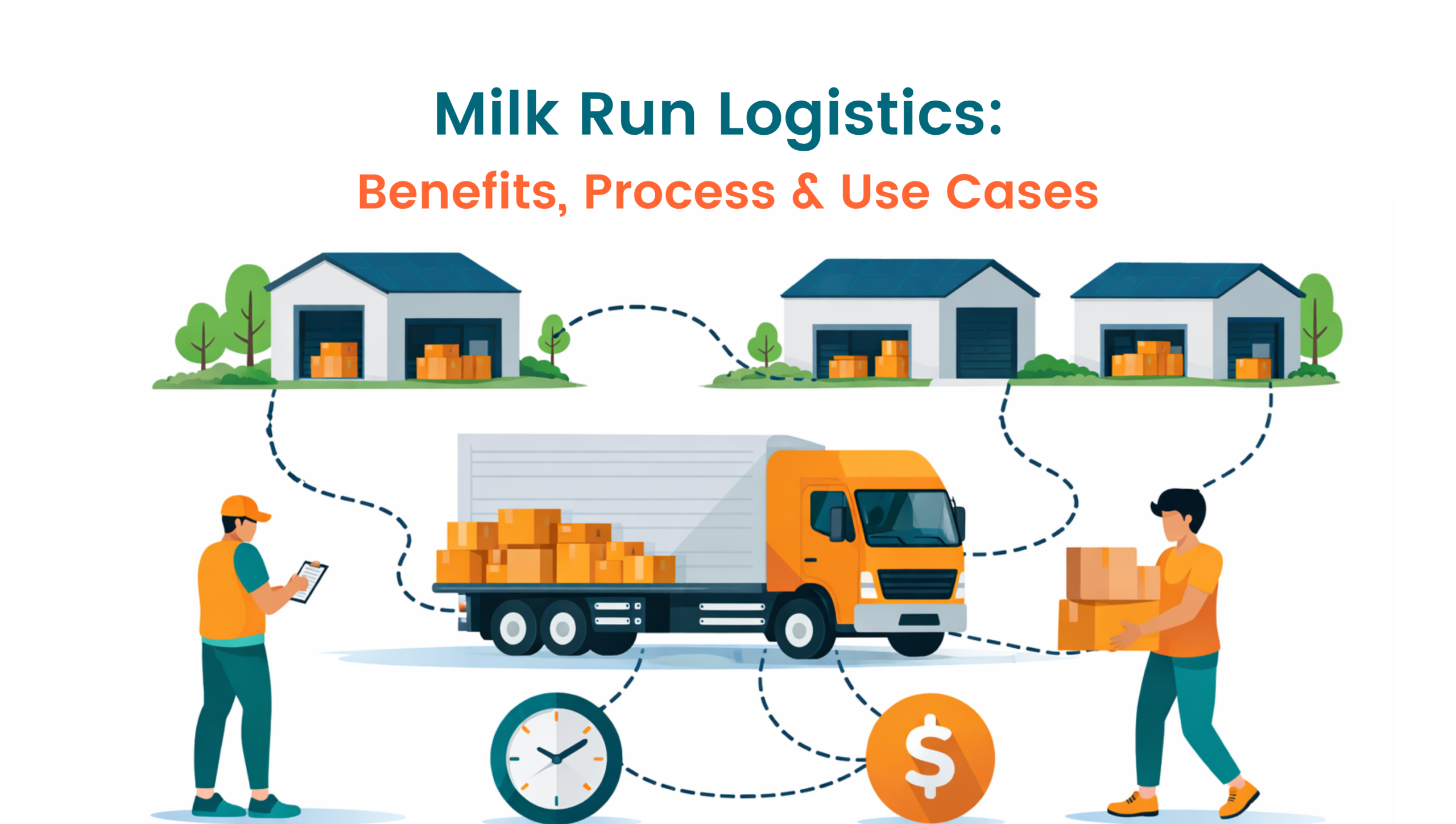
up or deliver goods across multiple locations, instead of relying on separate shipments for each supplier or destination. It helps consolidate loads, improve truck utilization, and create more predictable movement across the supply chain.
In today’s logistics landscape, inefficiency often shows up in the form of underutilized capacity and fragmented shipments. Trucks frequently operate at only 60–70% capacity, while businesses can reduce transportation costs by 15–25% through better route consolidation. At the same time, frequent small shipments can increase logistics costs by 20% or more, and poor route planning continues to drive delivery delays and higher fuel consumption.As a result, companies are shifting toward smarter, route-based transportation models that focus on consolidation, consistency, and cost control.
In this blog, we’ll explore how this model works, how it compares with traditional shipping methods, where it fits best, and how tools like eShipz Trackmile help improve visibility and control across multi-stop logistics operations.
Why Route-Based Logistics (Milk Run Model) Matters in Modern Supply Chains
Today’s supply chains are facing increasing pressure from multiple directions. Rising fuel and transportation costs are making every shipment more expensive, while customers expect faster and more reliable deliveries than ever before. At the same time, businesses are dealing with fragmented supplier networks and growing sustainability expectations, making logistics operations more complex and harder to optimize.
Traditional shipping methods, especially Less Than Truckload (LTL), often add to these challenges. Shipments are frequently moved using multiple partially filled vehicles, leading to inefficient capacity utilization. This not only increases per-unit shipping costs but also creates variability in transit times, making delivery schedules less predictable.
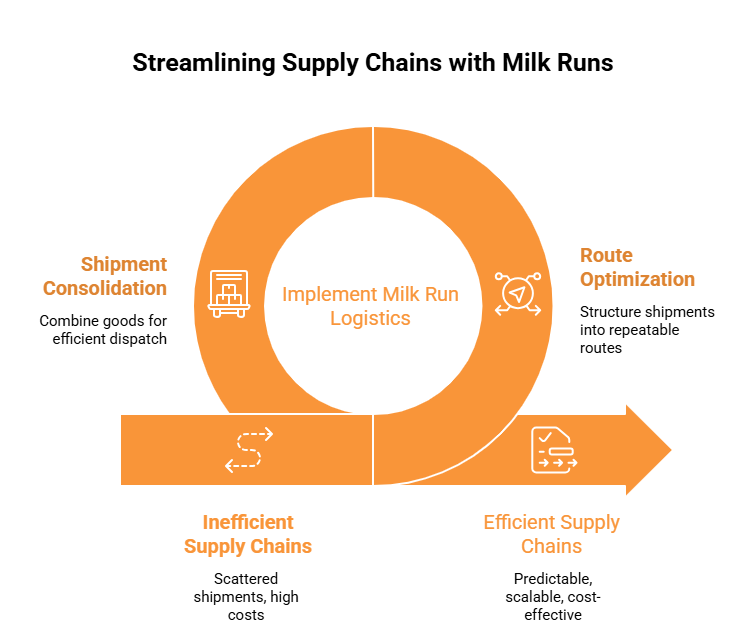
This is where route-based logistics models like milk run transportation offer a smarter, more structured alternative. By consolidating shipments into fixed, repeatable routes, businesses can improve load efficiency, reduce transportation costs, and bring greater consistency to delivery timelines, all while supporting more sustainable logistics operations.
Key Benefits of Route Optimization Logistics Using the Milk Run Model
In today’s fast-moving supply chain environment, businesses are constantly looking for ways to reduce costs, improve efficiency, and bring more predictability into their operations. Milk run logistics has emerged as a practical solution to these challenges. By replacing fragmented, ad-hoc shipments with structured, route-based transportation, companies can streamline movement across suppliers and warehouses while maintaining better control over time and cost.
- Higher Transport Efficiency
One of the biggest advantages of milk run logistics is how efficiently it uses transportation resources. Instead of sending multiple vehicles for separate shipments, goods are consolidated into a single, well-planned route. This leads to significantly higher truck utilization, often up to 90%, ensuring that every trip carries maximum load and reduces wasted capacity. - Lower Transportation Costs
With better consolidation comes fewer trips. This directly reduces fuel consumption, labor costs, and overall operational expenses. Over time, these savings add up, making logistics more cost-effective without compromising delivery timelines or service quality. - Reduced Inventory Holding
Milk runs support frequent and smaller deliveries, which means businesses no longer need to maintain high levels of safety stock. This is especially beneficial for companies following lean or just-in-time (JIT) models, as it helps reduce storage costs, free up warehouse space, and improve cash flow. - Improved Scheduling Predictability
Since milk run logistics operates on fixed routes and predefined schedules, it brings a high level of consistency to supply chain operations. This makes it easier for suppliers, warehouses, and distribution teams to plan ahead, reduce uncertainty, and avoid last-minute disruptions. - Sustainability Gains
Sustainability is becoming a key priority for modern businesses, and milk run logistics supports this shift. By reducing the number of vehicles on the road and optimizing load capacity, companies can significantly lower carbon emissions per shipment, contributing to greener and more responsible logistics operations.
Milk run logistics is more than just an operational improvement, it’s a strategic shift towards smarter, more structured supply chain management. By improving efficiency, reducing costs, and enabling better planning, it helps businesses stay competitive in an increasingly demanding market. As supply chains continue to evolve, adopting route-based models like milk runs can play a crucial role in building resilience, scalability, and long-term sustainability.
Milk Run vs LTL (Less Than Truckload): Key Differences
Choosing the right transportation model can significantly impact cost, efficiency, and delivery performance. Two commonly used approaches, Milk Run and Less Than Truckload (LTL), serve different purposes within the supply chain. While both help move smaller shipment volumes, the way they operate and optimize logistics is fundamentally different.
|
Factor |
Milk Run Model |
LTL (Less Than Truckload) |
| Shipment Style | Consolidated, route-based pickups/deliveries | Individual shipments handled separately |
| Vehicle Usage | Single vehicle on an optimized route | Multiple trucks for different shipments |
| Cost Efficiency | Lower due to shared transportation | Higher per shipment |
| Scheduling | Fixed, predictable routes and timings | Variable and dependent on carrier loads |
| Best Use Case | Clustered suppliers or nearby customers | Dispersed or irregular shipments |
While LTL remains a flexible option for handling scattered or unpredictable shipments, milk run logistics offers a more structured and cost-efficient approach when dealing with clustered networks. By prioritizing route-level optimization, milk runs help businesses improve utilization, reduce costs, and bring greater consistency to their supply chain operations. The right choice ultimately depends on your network structure, but for predictable, high-frequency movements, milk run models often deliver stronger long-term value.
Where Milk Run Logistics Works Best (Real-World Applications)
Milk run logistics delivers the most value in supply chains that rely on frequent, predictable movement across connected locations. As Indian supply chains evolve, with the rapid growth of D2C brands, distributed sourcing models, and increasing pressure to reduce logistics costs, businesses are shifting toward route-based models that offer better control, speed, and efficiency.
- Manufacturing
In industries like automotive and industrial manufacturing, milk runs play a critical role in supporting just-in-time (JIT) production. Instead of maintaining large inventories, manufacturers depend on scheduled pickups from multiple suppliers, ensuring that parts arrive exactly when needed. Up to 20–30% reduction in inventory holding costs, while keeping production lines running without interruptions. - Retail & FMCG
For retail and FMCG businesses, milk runs enable frequent, smaller store replenishments across multiple locations in a single route. This approach aligns well with the growing demand for faster replenishment cycles and better inventory control. Lower stockouts, improved shelf availability, and faster inventory turnover, critical in high-demand, fast-moving markets. - Warehouse Networks
Milk run logistics is highly effective for inter-warehouse and hub-to-hub transportation, especially as networks become more distributed. Fixed routes help reduce empty miles and improve coordination between facilities. Around 10–15% improvement in transport efficiency, along with smoother and faster inventory movement across the network. - Ecommerce Supply Chains
In ecommerce, where supplier networks are often fragmented, milk runs help streamline supplier pickups and shipment consolidation before last-mile delivery. Goods are collected through planned routes and brought to central hubs for efficient dispatch. 15–25% reduction in transportation costs through better route optimization and load consolidation, while also improving last-mile efficiency.
Across these use cases, one thing is clear, milk run logistics works best in environments where there is consistency, volume, and a need for coordination across multiple points. With increasing focus on cost optimization and sustainability in India, route optimization and shipment consolidation are quickly becoming essential strategies.
By transforming scattered shipments into structured, repeatable routes, milk run logistics helps businesses build more efficient, predictable, and scalable supply chains, ready to meet the demands of modern commerce.
How eShipz’s TrackMile Strengthens Milk Run Operations
Managing milk run logistics is not just about planning routes, it’s about maintaining control across multiple moving parts. With several pickups, handoffs, and deliveries happening within a single journey, even a minor delay or lack of visibility can create a ripple effect across the entire supply chain.
This is where eShipz’s Trackmile plays a critical role. It brings real-time visibility, smarter coordination, and operational clarity into milk run logistics, helping businesses move from reactive firefighting to proactive control.
- Real-Time Tracking Across Every Stop
Trackmile gives you complete, live visibility into each stop within a milk run route. From the first supplier pickup to the final delivery point, every movement is tracked in real time. This makes it easier to pinpoint delays, monitor route progress, and ensure that each leg of the journey is moving as planned, without relying on manual follow-ups. - Accurate, Dynamic ETA Predictions
In a multi-stop route, ETAs can constantly shift based on traffic, delays at previous stops, or route changes. Trackmile uses real-time data to continuously update ETAs, giving operations teams a more accurate picture of when shipments will arrive. This helps warehouses prepare in advance, suppliers stay aligned, and downstream delays get minimized. - Centralized Shipment Visibility
Instead of managing multiple shipments across different systems or spreadsheets, Trackmile brings everything into one unified dashboard. This centralized view allows teams to track all shipments within a route at once, making it easier to monitor performance, identify bottlenecks, and maintain full control over operations without confusion or data gaps. - Instant Exception Alerts & Proactive Issue Resolution
Delays, missed pickups, or route disruptions are inevitable, but delayed responses don’t have to be. Trackmile instantly flags any exceptions as they happen, allowing teams to act quickly. Whether it’s rerouting, informing stakeholders, or adjusting schedules, businesses can resolve issues before they escalate into larger operational problems. - Better Customer & Stakeholder Communication
Milk run logistics often involves multiple stakeholders, suppliers, warehouses, and end customers. Trackmile ensures that everyone stays informed with timely and transparent updates. Even in complex, multi-stop journeys, businesses can provide accurate delivery timelines, reducing uncertainty and building stronger trust with customers.
In industries like ecommerce, retail, and manufacturing, delivery timelines directly impact customer experience, production schedules, and overall efficiency. Without proper visibility, milk run logistics can quickly become difficult to manage.
By combining real-time tracking, accurate ETAs, and centralized control, eShipz Trackmile transforms milk run operations into a more predictable, efficient, and scalable system, helping businesses deliver not just faster, but smarter.
Bringing Efficiency, Control, and Predictability to Modern Supply Chains
Milk run logistics is no longer just an operational tactic, it’s becoming a strategic advantage for businesses looking to scale efficiently. By shifting from fragmented, shipment-based models to structured, route-based transportation, companies can unlock better cost control, improved utilization, and more reliable delivery timelines.
As supply chains grow more complex, especially in fast-moving sectors like ecommerce, retail, and manufacturing, the need for visibility and coordination becomes even more critical. This is where combining milk run strategies with the right technology makes all the difference. With real-time tracking, accurate ETAs, and centralized control, businesses can move from reactive operations to proactive decision-making.
Ultimately, milk run logistics helps create a supply chain that is not just faster, but smarter, more predictable, and built for long-term growth.
Looking to optimize your milk run operations with better visibility and control? Explore how eShipz Trackmile can help you streamline multi-stop logistics and improve delivery performance.