



Supply chains today operate in a world where customer expectations are rising, delivery windows are shrinking, and disruptions can emerge without warning. A delayed shipment, unexpected weather event, vehicle breakdown, or inventory mismatch can create ripple effects across an entire logistics network. In fact, 77% of organizations have identified supply chain visibility as a top investment priority, reflecting the growing need for real-time insights and proactive decision-making across logistics operations.
Freight logistics software is a technology platform that helps businesses plan, track, manage, and optimize the movement of goods across transportation networks. For logistics teams, visibility alone is no longer enough. Knowing where a shipment is at a particular moment helps, but businesses increasingly need to understand what might happen next and how to respond before problems occur. As logistics networks become more complex, businesses are turning to AI and IoT-powered solutions to gain greater control, improve efficiency, and reduce the impact of disruptions.
This shift is driving the adoption of freight logistics software powered by Artificial Intelligence (AI) and the Internet of Things (IoT). Together, these technologies are helping logistics providers, ecommerce brands, manufacturers, and retailers move from reactive operations to predictive decision-making.
In this blog, we’ll explore how AI and IoT are transforming modern logistics operations through real-time visibility, predictive analytics, intelligent route optimization, and data-driven decision-making, helping businesses build more efficient and resilient supply chains.
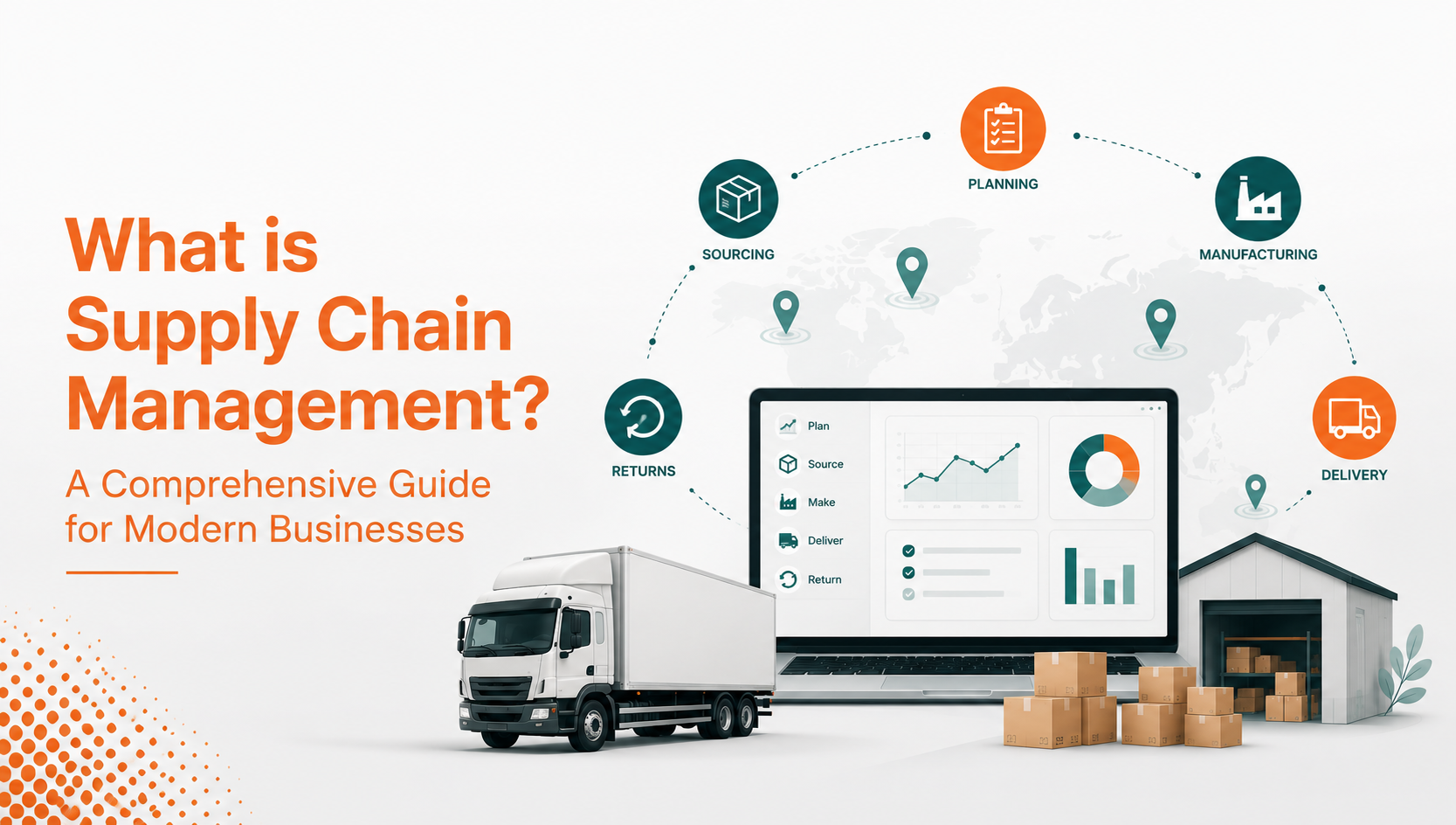
How Freight Logistics Software Is Reshaping Supply Chains
Over the last decade, logistics has evolved from a support function into a key business driver. As supply chains become more complex, businesses can no longer rely on spreadsheets, manual updates, or disconnected systems to manage operations effectively.
Several factors are accelerating this shift:
- Rapid ecommerce growth
- Rising customer expectations for faster deliveries
- Increasing transportation costs
- Supply chain disruptions and uncertainty
- Growing sustainability requirements
Traditional tracking systems can show where a shipment is, but they often can’t predict delays or recommend the best response. Businesses today need greater visibility, agility, and control across their logistics operations.
This is where freight logistics software powered by AI and IoT makes a difference. IoT devices continuously collect data from vehicles, warehouses, containers, and shipments, while AI analyzes that information to identify patterns, predict potential issues, and recommend actions.
Together, these technologies create a smarter logistics ecosystem where businesses can anticipate disruptions, optimize operations, and make faster, data-driven decisions. The result is improved visibility, greater efficiency, and stronger control across the supply chain.
Key Capabilities to Look for in Modern Logistics Platforms
Not all logistics technology delivers the same value. While basic tracking tools can tell you where a shipment is, modern platforms help businesses understand what might happen next and how to respond before small issues become costly disruptions.
Here are some of the capabilities that are increasingly shaping smarter logistics operations.
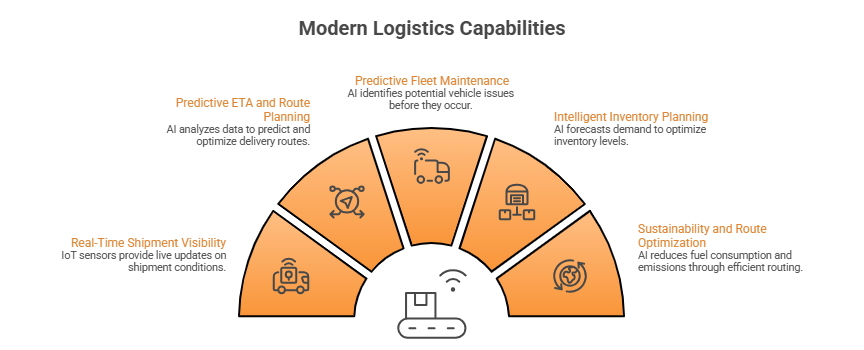
Real-Time Shipment Visibility:
One of the biggest challenges in logistics is the lack of visibility once a shipment leaves the warehouse. Without accurate updates, teams often spend valuable time chasing carriers, responding to customer inquiries, and investigating delays.
IoT-enabled sensors help solve this by continuously monitoring factors such as vehicle location, shipment movement, temperature, humidity, and cargo handling conditions. Instead of relying on periodic status updates, businesses gain a live view of what’s happening across their supply chain.
This level of visibility is especially valuable for industries such as pharmaceuticals, food, electronics, and other high-value goods, where maintaining product integrity during transit is critical.
Predictive ETA and Smarter Route Planning:
Traditional tracking systems inform teams after a delay has already occurred. Modern AI-powered platforms take a more proactive approach.
By analyzing traffic conditions, weather forecasts, historical delivery performance, and carrier data, these systems can predict potential delays before they happen. If a disruption is likely, the platform can recommend alternative routes or operational adjustments to help keep deliveries on schedule.
The result is greater reliability, improved customer communication, and fewer last-minute surprises.
Predictive Maintenance for Fleet Reliability:
Vehicle breakdowns can disrupt delivery schedules, increase operational costs, and affect customer satisfaction. In many cases, these failures show warning signs long before they occur.
Connected fleet vehicles continuously generate operational data, including engine performance, fuel consumption, and equipment health metrics. AI models can analyze this information to identify patterns that indicate potential mechanical issues.
This allows fleet operators to schedule maintenance before a breakdown occurs, reducing downtime, improving asset utilization, and extending vehicle lifespan.
Intelligent Inventory Planning:
Inventory decisions become increasingly complex as businesses expand across regions, channels, and customer segments.
AI-powered forecasting helps businesses make more informed inventory decisions by analyzing historical sales data, seasonal trends, supplier lead times, and changing customer demand patterns. Rather than relying solely on past experience, teams can use data-driven insights to better anticipate future requirements.
This helps reduce stockouts, avoid excess inventory, and improve overall inventory efficiency.
Sustainability and Route Optimization:
Sustainability has become a key priority for logistics organizations, not only for regulatory compliance but also for cost management and customer expectations.
Advanced routing systems can evaluate multiple variables, including traffic conditions, delivery density, vehicle capacity, distance, and terrain, to identify the most efficient routes. This helps reduce fuel consumption, lower emissions, and improve overall transportation efficiency.
For businesses operating electric vehicle fleets, these systems can also support route planning by identifying optimal charging locations and minimizing unnecessary energy consumption.
How Intelligent Logistics Outperforms Traditional Models in supply chains
For years, logistics teams relied on manual processes, periodic updates, and reactive decision-making to manage supply chain operations. While these approaches worked in less complex environments, today’s fast-moving logistics landscape demands greater visibility, speed, and intelligence. The combination of AI and IoT is helping businesses move beyond simply tracking shipments to actively optimizing operations.
|
Area |
Traditional Logistics |
AI-Powered Logistics |
|
Shipment Visibility |
Periodic status updates | Real-time end-to-end visibility |
| Route Planning | Fixed routes based on assumptions |
Dynamic routing based on live conditions |
| Delivery Management | Delays identified after they occur |
Potential disruptions predicted in advance |
|
Fleet Maintenance |
Reactive repairs after failures | Predictive maintenance based on vehicle data |
| Inventory Planning | Manual forecasting and historical estimates |
AI-driven demand forecasting and optimization |
|
Decision-Making |
Heavily dependent on human intervention | Data-driven recommendations and automation |
| Sustainability Efforts | Limited visibility into emissions |
Route and fuel optimization to reduce environmental impact |
The difference goes beyond technology. Traditional logistics focuses on responding to issues after they occur, while AI-powered systems are designed to anticipate challenges before they affect operations. As supply chains become increasingly complex, this ability to predict, adapt, and optimize in real time is becoming a critical advantage for businesses seeking greater efficiency, reliability, and customer satisfaction.
How eShipz Is Helping Businesses Navigate Logistics Complexity
India’s ecommerce ecosystem continues to expand rapidly, creating increasing pressure on logistics networks to deliver faster, more accurately, and at scale. At the same time, businesses must navigate rising customer expectations, growing shipment volumes, multiple carrier relationships, and the need for greater operational visibility.
For businesses managing multi-carrier operations, regional fulfillment centers, and expanding delivery networks, AI-powered logistics platforms can help:
- Improve delivery predictability
- Optimize carrier allocation
- Reduce operational costs
- Enhance customer experience
- Increase visibility across logistics partners
- Streamline shipping operations through automation
This is where eShipz helps businesses simplify logistics operationsin supply chains. By bringing carrier management, shipment tracking, shipping automation, and analytics into a unified platform, eShipz enables businesses to gain greater control over their logistics ecosystem while reducing manual effort and operational complexity.
With access to real-time data and actionable insights, businesses can make faster decisions, improve carrier performance, identify bottlenecks early, and deliver a more consistent customer experience. As shipping volumes continue to grow, these capabilities become increasingly important for organizations looking to scale efficiently without compromising service quality.
As delivery expectations continue to evolve, data-driven logistics is no longer just an operational advantage, it is becoming a critical component of building resilient, scalable, and customer-centric supply chains.
Key Industry Trends Shaping Modern Supply Chains
The rapid adoption of AI and IoT across the logistics industry is being driven by a combination of rising ecommerce demand, increasing supply chain complexity, and the need for greater operational visibility. As businesses look for ways to improve efficiency, reduce costs, and deliver better customer experiences, technology-driven logistics solutions are becoming a key part of long-term growth strategies.
Some of the latest industry trends highlight the scale of this transformation:
- India’s logistics market is projected to grow from USD 243.8 billion in 2025 to USD 429 billion by 2034, reflecting the increasing importance of technology-enabled logistics operations.
- The Indian ecommerce logistics market is expected to reach USD 46.8 billion by 2035, growing at a CAGR of 15.8%, as online retail continues to drive shipment volumes across the country.
- 77% of organizations have prioritized investments in supply chain visibility, highlighting the growing demand for real-time tracking and actionable insights.
- Supply chain visibility ranks among the top priorities for logistics leaders globally, as businesses seek better control over disruptions and delivery performance.
- The global AI-powered supply chain management market surpassed USD 40 billion in 2025, demonstrating the growing role of predictive analytics, automation, and intelligent decision-making in logistics.
- India’s warehousing sector recorded double-digit growth in 2026, driven by increasing demand for ecommerce fulfilment and modern logistics infrastructure.
These trends point to a clear shift in how businesses approach logistics operations. Rather than relying solely on traditional tracking systems, organizations are increasingly investing in AI-powered and IoT-enabled solutions that provide deeper visibility, predictive insights, and greater operational control. As the industry continues to evolve, businesses that embrace data-driven logistics strategies will be better positioned to improve efficiency, scale sustainably, and meet growing customer expectations.
The Road Ahead for Intelligent Logistics
Logistics is no longer just about tracking shipments, it’s about predicting disruptions, optimizing operations, and making faster, data-driven decisions.
By combining AI and IoT, businesses can gain deeper visibility, improve efficiency, reduce costs, and build more resilient supply chains. As customer expectations continue to evolve, intelligent logistics is quickly becoming a business necessity rather than a competitive advantage.
If you’re exploring ways to simplify logistics operations and improve delivery performance, eShipz offers solutions that bring automation, visibility, and multi-carrier management together in one platform.
Ready to build a smarter logistics operation? Explore how eShipz can help streamline your shipping journey.
The time to rethink logistics visibility is now.