




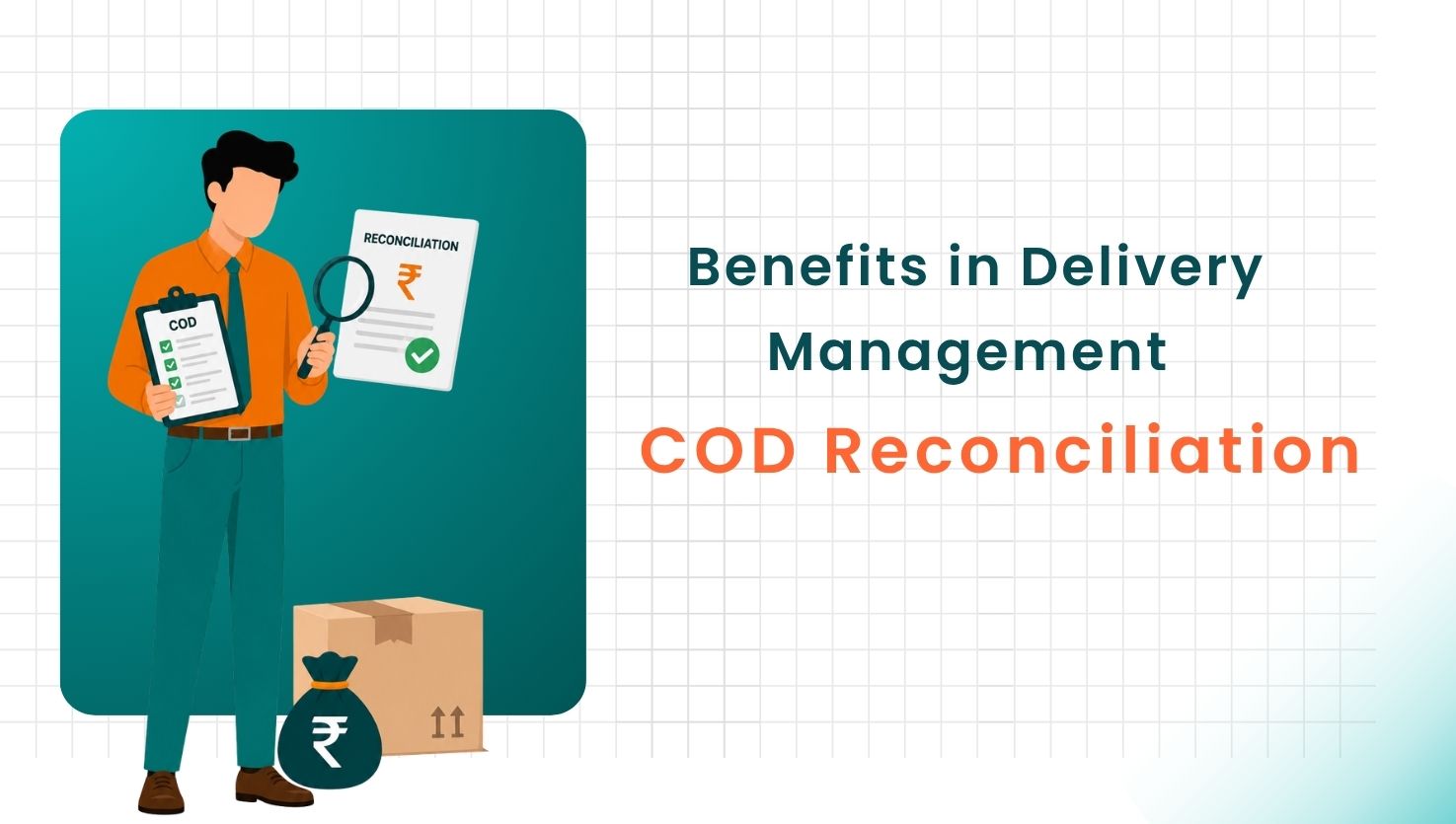
COD reconciliation is the process of matching the cash collected by courier partners against actual order values to ensure ecommerce businesses receive the correct payments without delays, missing settlements, or financial mismatches. As India’s ecommerce market continues to expand rapidly, this process has become increasingly critical for brands managing large COD order volumes.
According to recent industry reports, Cash on Delivery still contributes nearly 50 – 70% of ecommerce orders in India, especially across Tier 2 and Tier 3 markets. At the same time, COD orders continue to face significantly higher RTO rates, averaging nearly 25- 35% compared to prepaid shipments. Industry data also suggests that failed COD deliveries can cost businesses between ₹180 – ₹240 per order due to forward shipping, reverse logistics, and blocked inventory.
As order volumes grow across multiple courier partners, businesses often struggle with delayed remittances, incorrect deductions, unresolved RTO shipments, and manual settlement verification. This is where COD reconciliation becomes operationally important. In this blog, we’ll explore the major challenges ecommerce brands face with settlement tracking, why manual workflows create revenue gaps, and how automation is helping businesses improve financial visibility and operational accuracy.
Why Settlement Tracking Has Become Harder for Ecommerce Brands
The ecommerce ecosystem today is far more fragmented than it was a few years ago. Most brands no longer depend on a single courier partner. Instead, they use multiple logistics providers to improve delivery speed, reduce shipping costs, and increase serviceability across regions.
While this improves customer experience, it also creates operational complexity.
Each logistics partner follows different remittance cycles, reporting formats, dispute timelines, and deduction structures. Some remit payments every two days, while others follow weekly cycles. Certain partners provide detailed reports, while others offer limited visibility into delivered orders, RTOs, or failed settlements.
For finance and operations teams, this creates several challenges:
- Tracking thousands of COD orders across multiple carriers
- Matching courier remittance reports with order records
- Identifying underpayments or missing settlements
- Verifying deductions and handling charges
- Managing disputes for unresolved payments
- Monitoring delayed transfers affecting working capital
Without a structured system, teams often rely on spreadsheets, manual validations, and fragmented data exports from courier dashboards.
The bigger the shipping scale, the harder it becomes to maintain financial accuracy consistently.
Where Most COD reconciliation Errors Actually Happen
These operational gaps are one of the biggest reasons why finance teams increasingly prefer automated tracking and reconciliation workflows. What makes these issues more challenging is that they often remain unnoticed until businesses start seeing cash flow inconsistencies, unresolved disputes, or growing settlement backlogs.
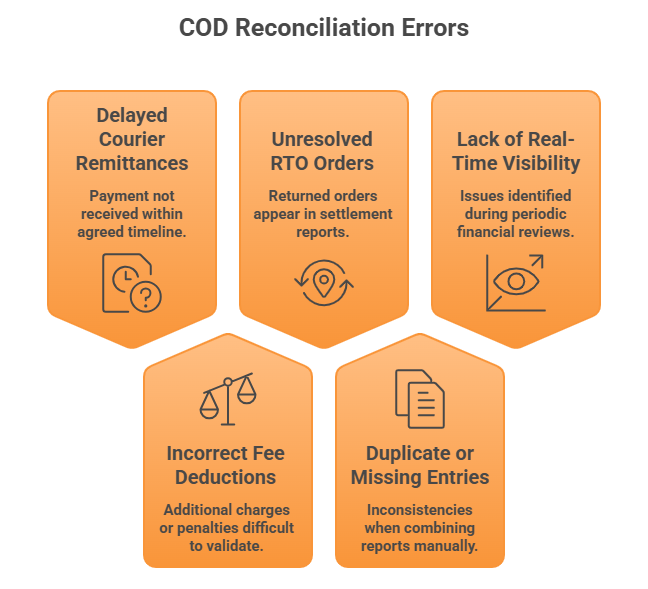
Some of the most common gaps include:
Delayed Courier Remittances
A shipment may show as delivered, but the payment has not yet reached the business account within the agreed timeline. Without proper monitoring, these delays can go unnoticed for weeks. In many cases, businesses only discover missing remittances during monthly financial reviews, making dispute resolution more difficult and time-consuming.
Incorrect Fee Deductions
Courier partners may apply additional charges, incorrect weight adjustments, or unexpected penalties that are difficult to validate manually. When businesses handle thousands of shipments every month, identifying these discrepancies across multiple carrier reports becomes increasingly challenging. Even small deduction errors repeated across orders can lead to significant revenue leakage over time.
Unresolved RTO Orders
Certain shipments marked as returned may still appear under COD settlement reports, creating discrepancies between operational and financial data. Without proper synchronization between delivery status and finance records, teams often struggle to identify which orders are eligible for settlement and which are still under reverse logistics processing.
Duplicate or Missing Entries
When teams combine reports from different systems manually, duplicate records or incomplete entries become common, especially during high-volume sale periods. These inconsistencies not only affect reconciliation accuracy but also increase the time spent on manual verification and internal audits.
Lack of Real-Time Visibility
Most businesses only identify issues during periodic financial reviews, long after the actual transaction took place. This delayed visibility slows down dispute resolution, impacts cash flow planning, and makes it harder for finance and operations teams to maintain accurate settlement tracking across courier partners.
As ecommerce operations scale across multiple carriers and higher COD volumes, even small reconciliation gaps can slowly impact operational efficiency and financial visibility. This is why many brands are now moving towards more centralized and automated workflows that help teams identify discrepancies faster, reduce manual dependency, and maintain better control over post-shipping financial operations.
What Businesses Should Evaluate in a Reconciliation Workflow
A strong settlement management process is not just about matching numbers. It should help teams improve visibility, reduce dependency on manual tracking, and speed up issue resolution.
Some important capabilities businesses should evaluate include:
- Automated order-to-payment matching across courier reports and OMS data
- Real-time settlement visibility for delivered and pending orders
- Carrier-wise tracking dashboards for faster auditing
- Dispute management workflows for missing remittances
- RTO and failed delivery mapping connected to financial records
- Centralized reporting across multiple logistics providers
- Alert systems for delayed or incomplete settlements
The goal is not simply operational convenience. It is about creating a reliable financial process that scales with order growth.
How eShipz Helps Simplify Settlement Visibility
Managing COD settlements across multiple courier partners often becomes difficult when businesses rely on separate carrier dashboards, spreadsheets, and manual tracking processes. Delayed remittance updates, mismatched reports, and fragmented shipment data can increase operational workload for both finance and logistics teams.
eShipz the best software for multi-carrier label routing helps simplify this process by bringing shipping and post-shipping visibility into a centralized workflow. With features like COD sheet uploads, shipment tracking, delivery status monitoring, and carrier-level visibility, businesses can manage operational records more efficiently from a single platform.
Instead of manually validating reports across different courier partners, teams can:
- Track shipment and delivery updates centrally
- Monitor RTO and failed delivery status more efficiently
- Maintain cleaner records for settlement verification
- Reduce dependency on manual courier coordination
- Identify delays, mismatches, and operational exceptions faster
As ecommerce operations continue to scale, connected logistics visibility plays an important role in improving both operational efficiency and financial accuracy across COD orders.
Why This Matters Beyond Finance Teams
COD reconciliation is often viewed as a finance-only responsibility. It directly affects multiple business functions.
When settlement visibility improves:
- Finance teams reduce manual workload
- Operations teams resolve courier disputes faster
- Leadership gains better cash flow visibility
- Customer support teams get clearer shipment status updates
- Businesses reduce revenue leakage over time
Most importantly, it creates confidence in operational scaling.
As ecommerce brands continue expanding into Tier 2 and Tier 3 markets where COD remains dominant, the importance of accurate settlement tracking will only increase.
What Ecommerce Brands Should Focus on Next
Modern reconciliation workflows are no longer limited to accounting accuracy alone. They now play a critical role in improving operational efficiency, cash flow visibility, and long-term ecommerce scalability. As order volumes continue to grow, businesses need more connected systems that help logistics and finance teams work with better clarity and faster issue resolution.
This is where platforms like eShipz help ecommerce brands simplify shipping operations, improve shipment visibility, and manage post-shipping workflows more efficiently through the best software for multi-carrier label routing centralized logistics platform.
The businesses that strengthen financial visibility and operational control today will be far better prepared for the next phase of ecommerce growth.