




Route optimization in ecommerce logistics is becoming increasingly important as delivery expectations continue to rise across the Indian ecommerce market. Customers today expect faster shipping, real-time tracking, and predictable delivery timelines, while businesses are under constant pressure to reduce logistics costs and improve operational efficiency. For many brands, managing delivery operations manually or relying on static shipping workflows is no longer sustainable at scale.
According to Statista, India’s ecommerce market is projected to continue growing rapidly over the next few years, with increasing order volumes coming from Tier 2 and Tier 3 cities. At the same time, last-mile delivery costs can account for more than 50% of overall shipping expenses, as highlighted by multiple supply chain industry studies from organizations like Deloitte Insights. This makes delivery planning, carrier allocation, and route efficiency critical factors for profitability and customer experience.
Many ecommerce businesses focus heavily on shipping rates while overlooking how inefficient delivery routing impacts transit times, failed deliveries, and operational costs in the background. In this blog, we’ll explore why smarter delivery planning matters, how route optimization improves logistics performance, and what ecommerce brands should evaluate while building more scalable and efficient shipping operations.
Why Delivery Efficiency Has Become a Competitive Advantage
For ecommerce brands today, delivery experience has become just as important as the product itself. Customers are no longer comparing brands only based on pricing or product quality, they also remember how quickly an order arrived, whether tracking updates were accurate, and how smooth the overall delivery experience felt. As ecommerce volumes continue to grow across India, businesses are realizing that efficient delivery operations are no longer just a backend function, but a major factor influencing customer satisfaction and repeat purchases.
Brands are now managing:
- Multi-location deliveries
- Same-day and next-day shipping expectations
- Higher COD order volumes
- Frequent returns and NDR cases
- Multiple courier partnerships
- Rising transportation costs
In many cases, delivery operations still depend on static workflows or manual shipment allocation. This creates inefficiencies such as:
- Longer delivery timelines
- Unnecessary fuel consumption
- Failed delivery attempts
- Uneven courier utilization
- Increased customer complaints
Improving delivery speed today is not only about choosing faster carriers. It also depends on how intelligently shipments are planned, allocated, and routed.
Why Route Optimization Is Becoming Essential for Ecommerce Deliveries
For ecommerce brands today, delivery experience plays a major role in customer satisfaction. Customers are not just expecting good products anymore, they also expect faster deliveries, accurate tracking updates, and a smooth post-purchase experience. As ecommerce operations continue expanding across India, managing deliveries efficiently has become far more challenging for brands handling growing order volumes.
Businesses today are managing multiple courier partners, same-day and next-day delivery expectations, rising COD orders, frequent returns, and increasing transportation costs. In many cases, shipments are still allocated manually or through static workflows, which often leads to delays, failed deliveries, uneven courier utilization, and higher operational costs.
This is where route optimization becomes important in ecommerce logistics. Instead of relying on fixed delivery patterns, intelligent shipping systems help businesses plan shipments more efficiently by considering factors like delivery location, courier performance, traffic conditions, shipment priority, and serviceability. The goal is not just reducing travel distance, but improving delivery consistency, operational efficiency, and overall customer experience, especially during high-volume sales periods and festive seasons.
The Operational Problems Many Ecommerce Brands Often Overlook
Many ecommerce businesses invest heavily in customer acquisition, marketing campaigns, and storefront experience, but logistics inefficiencies often continue affecting profitability silently in the background. While deliveries may appear operationally stable on the surface, recurring delays, failed shipments, and inefficient courier allocation slowly increase operational pressure over time.
A single delayed or failed shipment can create multiple downstream issues for businesses, including additional delivery attempts, higher return processing costs, increased support tickets, inventory delays, and reduced customer trust. These challenges become even more difficult to manage when brands are working with multiple courier partners across different regions and serviceability zones.
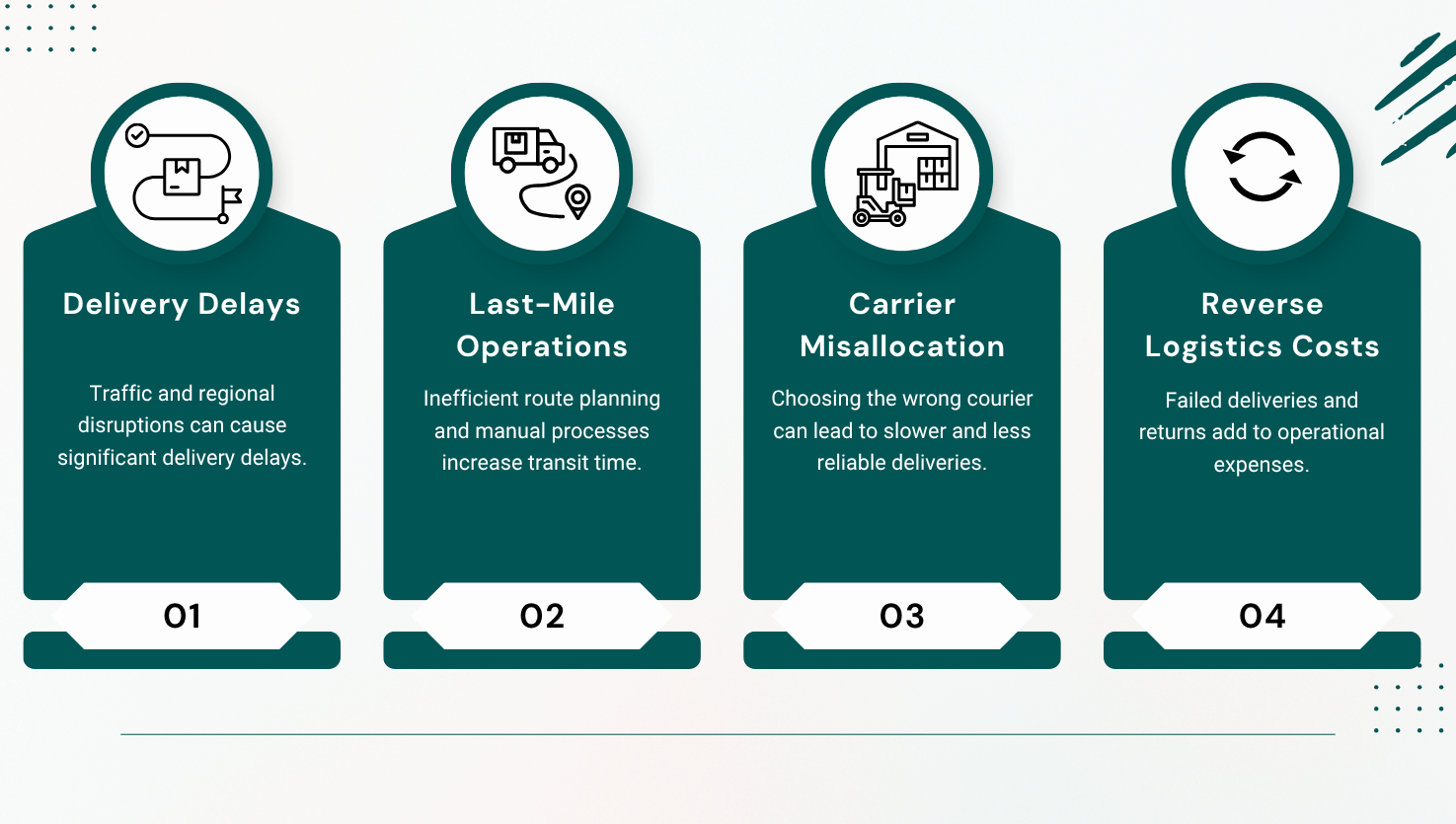
Without intelligent delivery planning, businesses often struggle with several operational gaps:
Carrier Misallocation
The lowest-cost courier may not always provide the fastest or most reliable service for a specific delivery location or pin code.
Delivery Delays in High-Traffic Zones
Static delivery workflows cannot adapt quickly to changing traffic conditions, regional disruptions, or operational bottlenecks.
Inefficient Last-Mile Operations
Poor route sequencing and manual shipment planning can increase transit time while reducing overall delivery capacity.
Higher Reverse Logistics Costs
Failed deliveries and RTO orders create additional operational expenses that directly affect logistics margins and customer experience.
As ecommerce order volumes continue increasing, these inefficiencies become harder to manage manually. Businesses that improve delivery planning, shipment allocation, and routing visibility are often better positioned to reduce operational costs while maintaining a more consistent customer experience.
How Smarter Shipping Platforms Support Operational Efficiency
As ecommerce operations grow across multiple regions and sales channels, managing deliveries manually becomes increasingly difficult for businesses handling high shipment volumes. Smarter shipping platforms help brands streamline logistics operations through automation, better visibility, and more intelligent delivery planning, making it easier to improve both operational efficiency and customer experience.
For example, eShipz supports several capabilities that help businesses optimize delivery operations more effectively:
AI-Driven Carrier Allocation
Selecting the right courier partner for every shipment can significantly impact delivery speed, costs, and customer experience. AI-driven carrier allocation helps businesses automatically assign shipments based on factors like courier performance, SLA adherence, serviceability, shipping cost, delivery timelines, and regional efficiency. This reduces manual decision-making while improving delivery consistency across different locations.
Automated Courier Selection
Manually choosing courier partners for thousands of daily orders can slow down operations and increase allocation errors. Automated courier selection simplifies this process by instantly assigning the most suitable carrier based on predefined operational rules and live shipping conditions. This helps businesses improve fulfillment efficiency while reducing operational dependency on manual coordination.
Multi-Carrier Shipping Workflows
Relying on a single courier partner often creates operational risks during high-volume periods, regional disruptions, or serviceability issues. Multi-carrier shipping workflows allow businesses to distribute shipments across multiple courier partners dynamically, helping maintain delivery continuity while improving shipping flexibility and operational scalability.
Delivery Analytics and Reporting
Logistics visibility plays a major role in improving operational performance. Delivery analytics and reporting help businesses track courier efficiency, delivery timelines, delayed shipments, failed delivery attempts, regional performance trends, and overall shipping health. These insights make it easier for operations teams to identify recurring delivery issues and make data-driven logistics improvements over time.
NDR Management Workflows
Non-delivery reports (NDRs) continue to be one of the major operational challenges for ecommerce businesses, especially in high COD markets. Automated NDR management workflows help businesses respond faster to failed delivery attempts, automate customer communication, trigger reattempts efficiently, and reduce unnecessary RTO losses.
Shipping Automation Across Channels
Many ecommerce brands today sell through multiple channels including marketplaces, brand websites, social commerce platforms, and offline fulfillment systems. Shipping automation across channels helps centralize logistics operations by streamlining order processing, shipment creation, courier allocation, and tracking workflows from a unified platform.
As delivery expectations continue rising, businesses are increasingly adopting shipping automation to reduce operational complexity, improve delivery performance, and scale logistics operations more efficiently. Smarter shipping systems are gradually becoming an essential part of building faster, more reliable, and customer-focused ecommerce delivery operations.

Industry Trends Shaping Ecommerce Logistics in India
India’s ecommerce logistics landscape is growing rapidly, and delivery operations are becoming more complex than ever before. According to Statista, India’s ecommerce market is expected to cross $350 billion by 2030, with a significant rise in demand coming from Tier 2 and Tier 3 cities. At the same time, industry reports estimate that last-mile delivery alone contributes nearly 50% of total shipping costs.
Several trends are increasing the need for smarter logistics planning:
- – Rising same-day and next-day delivery expectations
- – Over 65% of ecommerce demand now coming from non-metro regions
- – Growing COD order volumes and return rates
- – Increasing fuel and transportation expenses
- – Rapid expansion of D2C and omnichannel brands
- – Higher customer expectations around tracking and delivery visibility
According to Deloitte Insights, businesses are increasingly investing in logistics automation and supply chain visibility to improve operational efficiency and customer experience. As shipping volumes continue rising, manual delivery planning becomes harder to manage efficiently at scale.
The Role of Route Optimization in Ecommerce Growth
In ecommerce, delivery operations now play a major role in customer satisfaction and brand experience. Faster deliveries, accurate tracking, and reliable shipping workflows directly influence repeat purchases and long-term customer trust.
As order volumes continue growing, inefficient delivery planning can increase delays, operational costs, and fulfillment challenges. This is why many businesses are investing in route optimization and shipping automation to improve delivery efficiency and operational visibility.
In today’s competitive ecommerce landscape, smarter logistics systems help brands scale operations more efficiently while improving overall delivery performance. Businesses looking to streamline shipping workflows and build more efficient ecommerce logistics operations can explore more through eShipz.