




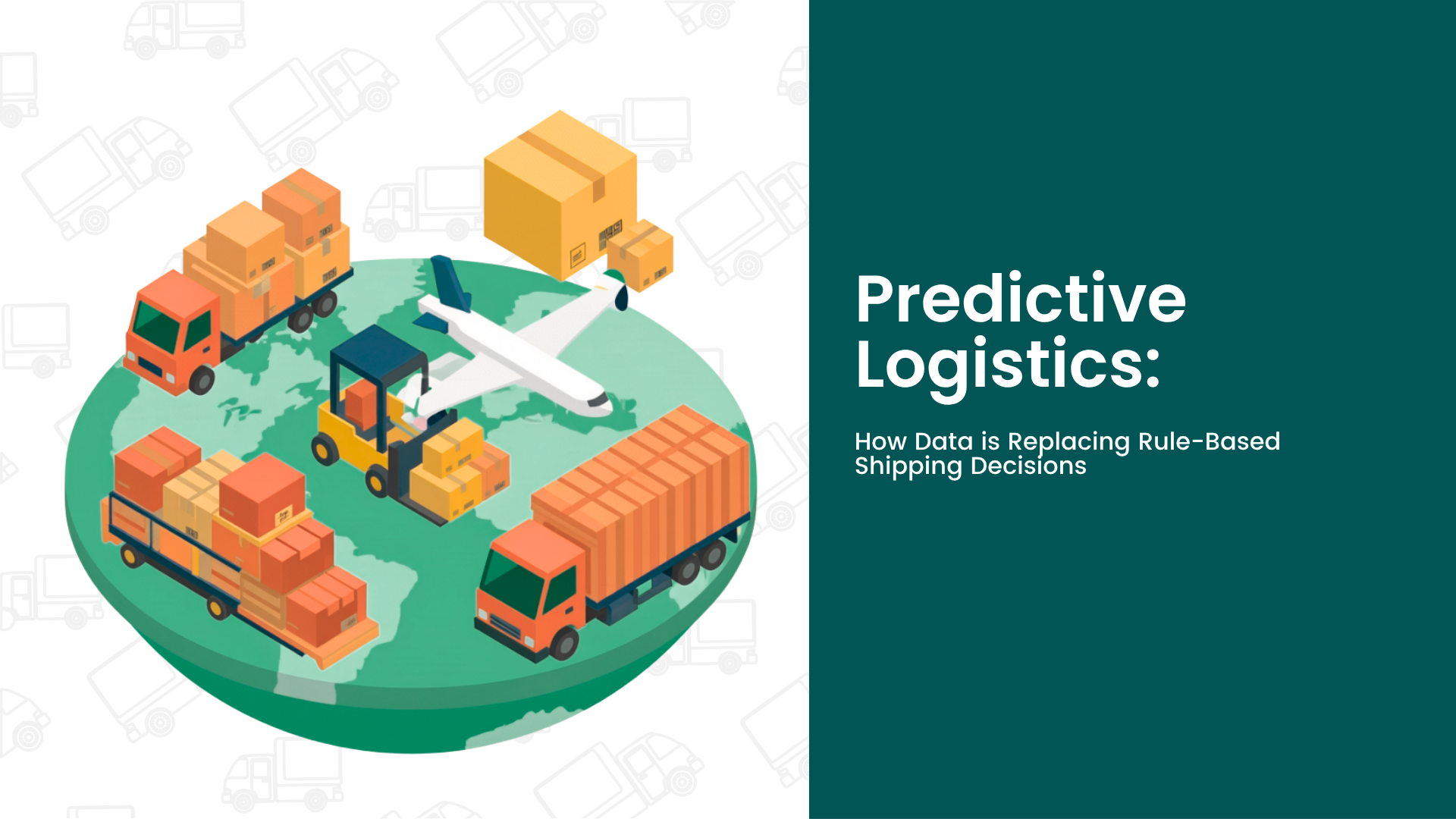
Traditional shipping systems were built on rules. Fixed courier preferences, delivery zones, pin code logic, and static routing conditions have long helped businesses automate order allocation at scale. But logistics today is far less predictable. During festive demand spikes, weather disruptions, operational bottlenecks, or sudden courier slowdowns, these rule-based systems often break down. This is where Predictive Logistics is reshaping modern shipping decisions.
A courier may consistently perform well in one region but struggle during peak sales periods due to overload. A static shipping rule may continue assigning orders to that courier simply because it is tagged as the lowest-cost option, even while delivery delays increase. Similarly, brands often face a trade-off between delivery speed and shipping cost, with rigid rules unable to optimize both in real time.
Modern logistics is moving away from fixed logic toward adaptive, data-driven decision-making. Instead of relying only on predefined rules, predictive systems analyze real-time carrier performance, historical delivery trends, and operational conditions to make smarter shipping decisions. Platforms such as eShipz’s CarrierSmart AI follow this approach by enabling courier allocation based on SLA performance, cost scoring, and delivery efficiency rather than static preferences.
According to research from IBM, organizations using advanced AI and analytics in supply chain operations report 72% higher annual net profits and 17% higher revenue growth, highlighting how predictive, data-led logistics is becoming a competitive advantage rather than just an operational upgrade.
Market Trends Driving Predictive Logistics Adoption
The logistics industry is becoming increasingly volatile. Consumer expectations are rising while operational complexity continues to grow.
Several market shifts are accelerating the adoption of predictive shipping systems:
Growing demand for faster deliveries
Consumers now expect same-day or next-day delivery options across categories such as electronics, beauty, fashion, and grocery. Static shipping rules cannot always adapt fast enough to support these expectations during peak order volumes.
Rising logistics costs
Fuel price fluctuations, higher reverse logistics expenses, and increasing last-mile delivery costs are forcing businesses to optimize shipping decisions dynamically rather than relying on fixed courier hierarchies.
Higher pressure on delivery accuracy
Late deliveries, failed attempts, and inaccurate ETAs directly affect customer satisfaction and retention. Businesses are prioritizing predictive systems that can improve delivery precision.
Expansion into tier-2 and tier-3 markets
As brands expand into wider geographic regions, serviceability challenges increase. Predictive logistics helps identify better carrier combinations based on regional delivery performance.
The result is clear: logistics is no longer just about shipment movement. It is becoming an intelligence layer that drives customer experience and operational profitability.
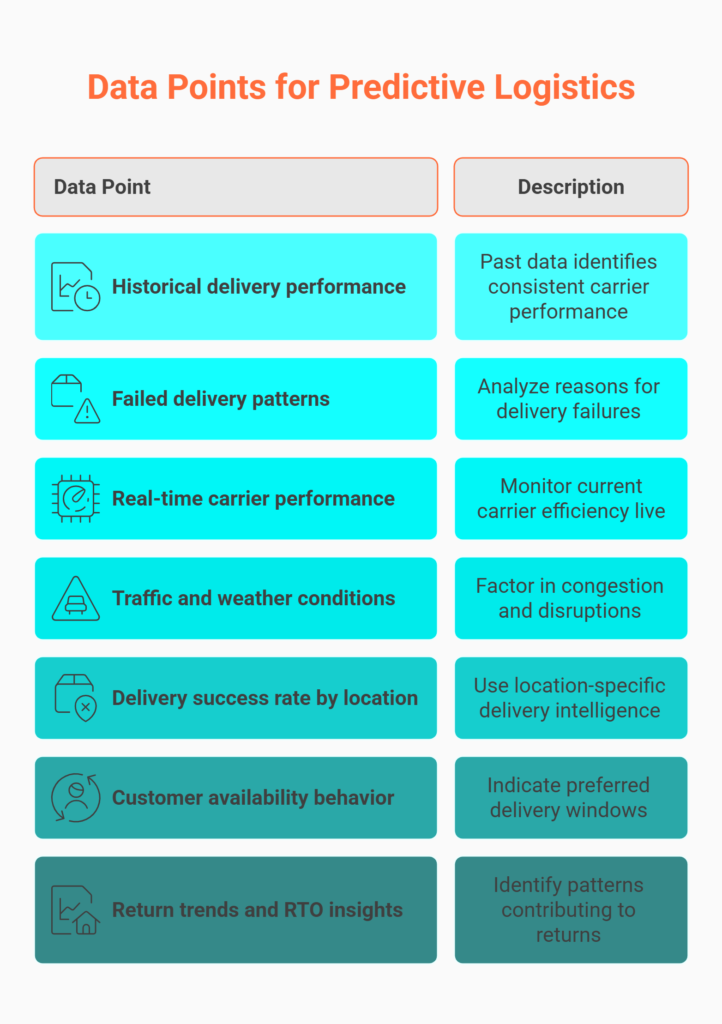
The Data Behind Predictive Logistics: What Modern Shipping Systems Analyze
Predictive logistics works because it transforms shipping decisions into data-led actions.
Rather than relying on assumptions or manually configured rules, modern systems continuously analyze multiple data points to improve courier selection, routing, and exception management.
Historical delivery performance
Past delivery data helps identify which carriers consistently perform well across regions, product categories, and delivery timelines.
For example, one courier may deliver fashion orders efficiently in metro cities but underperform in remote locations.
Failed delivery patterns
Delivery failures are rarely random. Predictive systems analyze failed delivery reasons such as customer unavailability, address issues, or courier delays to reduce repeat failures.
Real-time carrier performance
Live data allows businesses to monitor current carrier efficiency, including delivery delays, pickup performance, and SLA adherence.
If a courier starts missing SLAs due to network congestion, predictive systems can automatically deprioritize it.
Traffic and weather conditions
Urban traffic congestion, roadblocks, and weather disruptions can significantly affect delivery performance.
Predictive logistics models factor in these variables to improve route planning and ETA accuracy.
Delivery success rate by location
Certain pin codes or regions may show consistently lower delivery success rates for specific carriers.
Instead of blindly following static rules, predictive systems use delivery intelligence at the location level.
Customer availability behavior
Historical customer behavior can indicate preferred delivery windows, successful contact rates, and likelihood of first-attempt delivery success.
Return trends and RTO insights
High return-to-origin rates impact profitability. Predictive models identify patterns contributing to returns, enabling businesses to optimize carrier selection and customer communication.
Solutions like eShipz’s PredictShip ETA and Track360 support this transition by combining real-time tracking visibility with AI-driven delivery prediction capabilities.
The biggest advantage is that predictive systems improve continuously. Unlike static rules that remain unchanged until manually updated, predictive models learn from every shipment.
Real-World Scenarios Where Predictive Logistics Outperforms Rule-Based Shipping
The true value of predictive logistics becomes clearer in real business scenarios.
E-commerce brands during festive sales
During festive or seasonal sales, courier performance often changes dramatically due to volume surges.
A rule-based system may continue assigning orders to a low-cost carrier even as delays rise.
A predictive system can detect worsening performance early and shift allocations dynamically.
Multi-warehouse inventory allocation
Brands operating multiple fulfillment centers must decide not only which courier to use but also which warehouse should fulfill an order.
Predictive logistics can evaluate warehouse proximity, inventory availability, delivery speed, and cost simultaneously.
High-value electronics shipments
Electronics shipments require stricter delivery reliability, lower damage risk, and stronger tracking visibility.
Predictive models can prioritize carriers with better performance for fragile or expensive products.
eShipz’s consumer electronics fulfillment automation solutions align well with such use cases.
Deliveries in low-serviceability regions
Remote or difficult delivery zones often require carrier decisions based on historical success data.
Rule-based systems may not account for evolving serviceability conditions.
Predictive logistics identifies carriers with higher success rates in challenging regions.
Failed delivery recovery
When deliveries fail, speed matters.
Instead of manual intervention, predictive systems can automate recovery workflows such as reattempt scheduling, alternate delivery instructions, or courier reassignment.
eShipz’s ReDelivR supports failed delivery recovery by improving reattempt success and reducing revenue loss.
Same-day and next-day delivery optimization
Fast deliveries require high coordination precision.
Predictive logistics can dynamically allocate shipments based on warehouse readiness, courier pickup availability, and route conditions.
This reduces missed delivery promises.
A simple example highlights the difference:
A rule-based system keeps assigning orders to the cheapest courier because the rule prioritizes cost. Meanwhile, delivery delays rise sharply.
A predictive system notices the trend, compares live performance data, and reroutes shipments to a better-performing courier before customer experience suffers.
That is the difference between reacting late and adapting in real time.

Beyond Cost Savings: How Predictive Logistics Improves Customer Experience
While cost optimization is a major benefit, predictive logistics has a broader business impact.
Customer expectations are shaped by delivery quality.
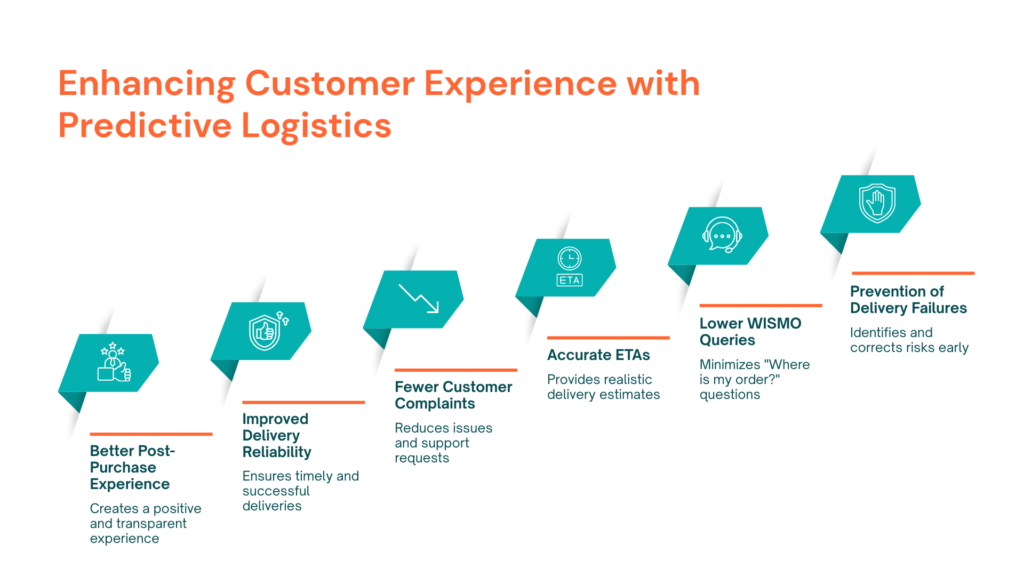
Improved delivery reliability
More accurate courier allocation reduces delays, failed deliveries, and missed SLAs.
Reliable delivery performance builds customer trust.
Fewer customer complaints
Late shipments often trigger support tickets and escalations.
Predictive logistics reduces operational uncertainty, which lowers complaint volumes.
Accurate ETAs
Customers increasingly expect realistic delivery promises.
Predictive ETA models improve delivery forecasting accuracy, reducing expectation gaps.
Lower WISMO queries
“Where is my order?” queries remain a major customer support burden.
Real-time tracking visibility and proactive updates reduce inbound support dependency.
Prevention of delivery failures
Predictive systems identify high-risk shipments early and trigger corrective actions before failures occur.
Better post-purchase experience
Shipping is no longer an invisible backend process.
It directly shapes customer satisfaction, repeat purchases, and brand perception.
Solutions such as eShipz’s PostShip Engage and Track360 help improve shipment visibility, communication, and customer transparency.
A strong post-purchase experience can often differentiate brands in highly competitive markets where products alone are no longer enough.
The Future of Shipping: Autonomous, Predictive, and AI-Driven Logistics Networks
Shipping operations are moving toward greater automation and intelligence.
The next phase of logistics will be defined by systems that are increasingly autonomous, predictive, and self-learning.
Key developments shaping the future include:
AI-driven carrier allocation
Courier selection will become fully dynamic, based on live data rather than manually maintained logic.
Predictive ETAs
Delivery timelines will become increasingly accurate as predictive models improve with higher data volumes.
Automated exception management
Shipping issues such as delays, failed attempts, or SLA risks will trigger automated workflows without manual intervention.
Real-time logistics intelligence
Businesses will gain unified visibility across carriers, warehouses, and customer touchpoints.
Self-learning shipping workflows
Logistics systems will continuously refine routing, allocation, and communication strategies based on shipment outcomes.
Unified logistics visibility platforms
Modern businesses increasingly prefer centralized platforms that combine shipping automation, tracking, analytics, and customer engagement in one ecosystem.
Predictive logistics is no longer a future concept. It is becoming a competitive advantage for businesses managing scale, customer expectations, and operational complexity.
Platforms such as eShipz demonstrate how logistics automation can evolve beyond basic shipping rules into integrated systems powered by data, visibility, and predictive intelligence.
Businesses that continue relying only on rigid shipping rules risk slower adaptation, higher delivery failures, and weaker customer experience.
The future belongs to logistics systems that can think, learn, and adapt in real time.