
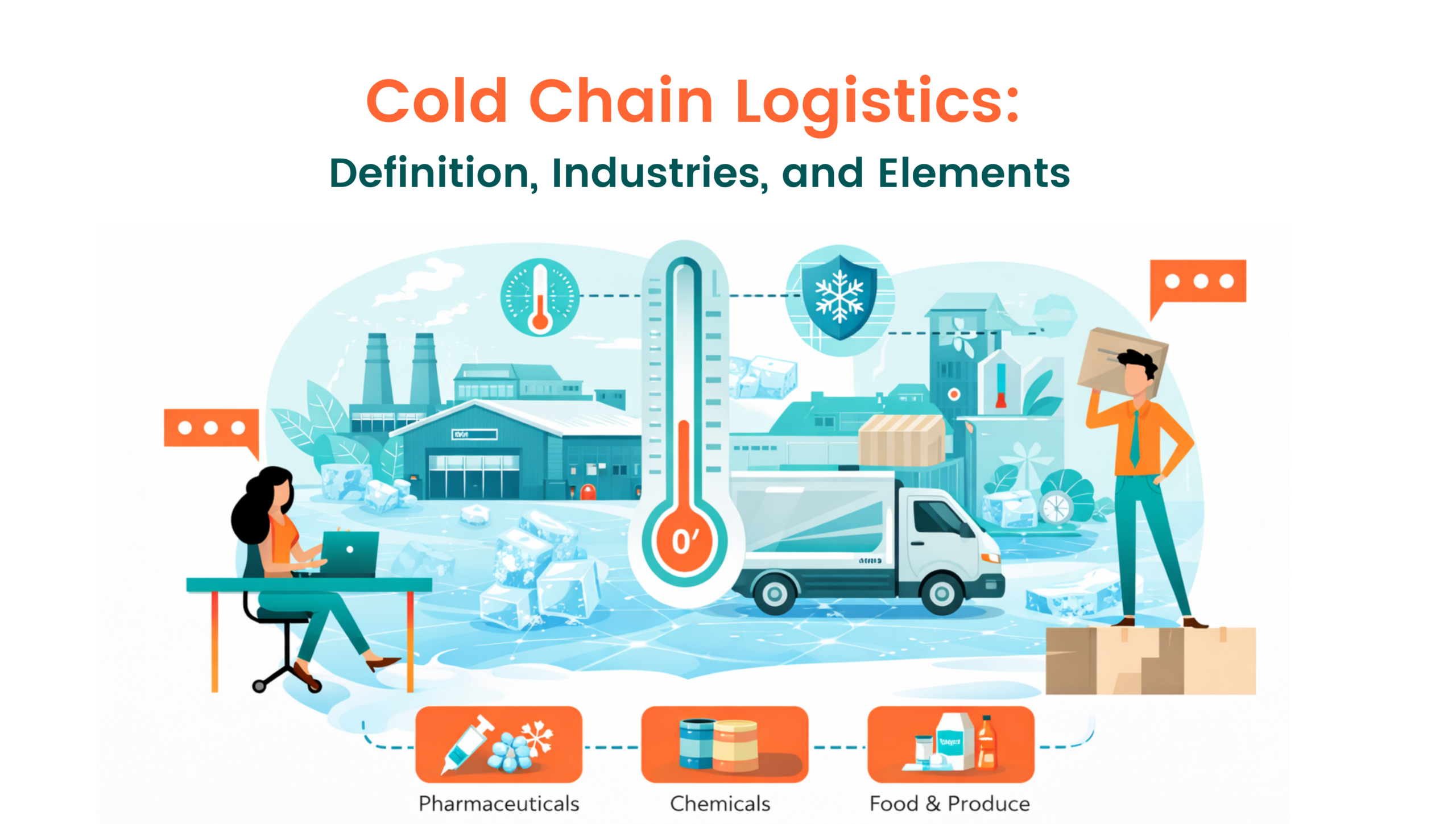
Cold chain logistics is the backbone of moving temperature-sensitive goods, ensuring products like vaccines, fresh food, and chemicals are stored and transported within precise temperature ranges from origin to delivery.
But this isn’t just about controlled storage anymore.
According to industry estimates, nearly 20–30% of perishable products are lost globally due to supply chain failures, with temperature deviations being one of the biggest causes. That’s not just wastage,it’s lost revenue, broken trust, and, in some cases, serious health risks.
A vaccine losing potency. Seafood spoiling mid-transit. Fresh produce arriving unusable. In supply chains handling sensitive goods, even a small disruption can lead to complete loss. As industries scale and delivery expectations tighten, maintaining consistency across every stage has become more complex than ever.
In this blog, we’ll explore how these systems work, where they fail, and what businesses need to rethink to manage them effectively.
Why Temperature-Controlled Supply Chains Matter More Than Ever
This shift isn’t just about logistics, it’s about rising expectations.
Customers expect products to arrive in perfect condition, whether it’s fresh food or critical medicines. At the same time, healthcare systems demand precision, and D2C brands are expanding into categories where inconsistency isn’t an option.
What’s driving this change, especially in markets like India?
- Rapid growth in online grocery and pharma delivery
- Expansion into tier 2 and tier 3 cities
- Stricter product safety regulations
- Increasingly global sourcing and distribution
As a result, supply chains have become more dynamic, but also more fragile. They’re no longer linear or predictable. With multiple handoffs and tighter timelines, even small disruptions can have a significant impact, making consistency absolutely critical.
Key Components That Keep Temperature-Sensitive Supply Chains Stable
Maintaining consistent conditions in Cold Chain Logistics across the entire journey isn’t about a single solution, it’s about how multiple layers work together seamlessly. It goes far beyond just using refrigerated trucks; it requires tight coordination between infrastructure, technology, and handling practices at every stage.
- Refrigerated Transport
At the heart of movement are specialized vehicles designed to maintain precise temperature zones based on product needs:
- Frozen goods: below -18°C
- Chilled products: between 2°C and 8°C
These vehicles ensure that conditions remain stable even across long distances and varying external climates.
- Controlled Storage Facilities
Before and after transit, storage plays an equally critical role. Modern warehouses are designed to:
- Maintain consistent temperature levels
- Control humidity to prevent degradation
- Enable proper segregation of sensitive inventory
A well-managed storage environment acts as a buffer, reducing risks during transitions.
- Real-Time Monitoring and Visibility
Technology is what connects and strengthens the entire system.
- IoT sensors continuously track temperature and environmental conditions
- GPS tracking provides real-time shipment visibility
- Automated alerts notify teams instantly when thresholds are breached
This layer shifts operations from reactive problem-solving to proactive control.
- Temperature-Protected Packaging
Even with strong transport and storage, packaging acts as the final line of defense.
- Passive methods: ice packs, gel packs, dry ice
- Active systems: battery-powered or electrically controlled cooling units
The right packaging ensures product stability, especially during last-mile delivery where risks are highest.
Each of these components plays a distinct role, but their real strength lies in how well they work together. Because in temperature-sensitive supply chains, even a small gap at any stage can compromise the entire shipment.
Sectors Dependent on Cold Storage and Distribution
Not every supply chain demands strict environmental control, but for some industries, it’s non-negotiable.
Pharmaceuticals and Vaccines
Medicines often require tightly regulated temperature ranges to maintain efficacy. Even minor deviations can make them unusable, directly impacting patient safety.
Food and Beverage
From fresh produce to frozen goods, maintaining consistency is essential to prevent spoilage, extend shelf life, and meet customer expectations.
Chemicals and Specialty Materials
Certain materials can degrade, react, or become hazardous if exposed to the wrong conditions, making controlled handling essential for both safety and compliance.
Floriculture and Agriculture Exports
Flowers, fruits, and other perishables rely on stable conditions during long-distance transit to retain quality and market value.
Across these industries, the common thread is clear, when product integrity depends on controlled environments, consistency isn’t optional. It’s the foundation of the entire operation.
Operational Challenges in Managing Sensitive Supply Chains
Even with the right infrastructure and advanced technology in place in Cold Chain Logistics, things don’t always go as planned, especially as operations grow in scale and complexity.
What works for a limited network often starts to break when volumes increase, geographies expand, and multiple partners get involved.
- Rising Operational Costs
Maintaining controlled environments across storage and transportation isn’t cheap. From specialized equipment to energy usage, costs increase significantly as scale grows. - High Energy Dependency
Continuous cooling across warehouses and transit systems leads to heavy energy consumption, adding both financial and sustainability pressures. - Equipment Reliability Risks
A minor malfunction, a refrigeration unit failure or temperature fluctuation, can result in entire shipments being compromised. - Limited End-to-End Visibility
With multiple carriers, warehouses, and handoff points, tracking becomes fragmented. This lack of real-time visibility creates blind spots and delays in response. - Complex Compliance Requirements
Different regions and industries come with their own regulatory standards, making it harder to maintain consistency across the supply chain.
For businesses operating in India, these challenges are often amplified by infrastructure gaps, unpredictable transit conditions, and last-mile delivery constraints. As the network grows, so does the need for tighter coordination and better control, because in sensitive supply chains, small inefficiencies can quickly turn into significant losses.
Where Platforms Like eShipz Fit Into This Complexity
As temperature-sensitive supply chains grow more fragmented, the challenge is no longer just infrastructure, it’s coordination. Multiple carriers, storage points, and delivery timelines create gaps in visibility and control. This is where orchestration layers start becoming relevant.
Platforms like eShipz help bring these moving parts together by acting as a central coordination system rather than replacing existing infrastructure.
Instead of managing each leg separately, businesses can:
- Gain end-to-end shipment visibility across partners
- Set up automated alerts for delays or disruptions
- Improve carrier allocation decisions based on performance
- Reduce dependency on manual tracking and follow-ups
In environments where even small delays can impact product quality, having a unified operational view becomes essential.
And at scale, this becomes even more critical. Having supported over 100 million shipments, platforms like eShipz reflect how coordinated, tech-enabled systems are no longer optional, they’re becoming the foundation for managing complex, sensitive supply chains effectively.
Comparing Traditional vs Modern Handling
As supply chains evolve, the difference between older systems and modern approaches becomes more visible, not just in efficiency, but in how risks are managed and outcomes are controlled.
What once relied heavily on manual processes and reactive decisions is now shifting toward data-driven, real-time coordination. This shift is especially critical in environments where even minor disruptions can lead to significant losses.
A Comparative View
|
Factor |
Traditional Systems |
Modern Systems |
| Visibility | Limited, manual tracking | Real-time monitoring |
| Risk Handling | Reactive | Predictive |
| Coordination | Fragmented | Centralized |
| Cost Efficiency | Higher wastage | Optimized routing |
| Scalability | Difficult | Flexible and tech-driven |
Future Trends in Perishable Goods Supply Chains
The next phase of supply chain evolution is already taking shape, and it’s being driven by technology, sustainability, and rising delivery expectations.
AI-driven optimization is becoming a core capability, with advanced analytics helping businesses predict delays, improve routing, and reduce spoilage. In fact, studies suggest AI-led logistics can improve operational efficiency by up to 15–20%, especially in high-volume networks.
At the same time, sustainability is moving to the forefront. With cold storage and transport being energy-intensive, companies are investing in energy-efficient cooling systems, eco-friendly packaging, and carbon reduction strategies to balance performance with environmental impact.
There’s also a clear push toward last-mile innovation, particularly with the growth of online grocery and pharma delivery. Faster, specialized delivery models are emerging to handle time- and temperature-sensitive shipments more reliably.
Finally, digital control towers are gaining traction, bringing together real-time visibility, faster decision-making, and better coordination across multiple supply chain nodes.
Together, these shifts indicate one thing: supply chains are no longer just about movement, they’re becoming smarter, more responsive, and increasingly resilient.
Rethinking How Sensitive Shipments Are Managed
The challenge today isn’t just about moving goods, it’s about preserving their value at every step of the journey.
As supply chains grow more complex, the margin for error continues to shrink. Businesses that invest in better visibility, smarter coordination, and proactive systems won’t just reduce losses, they’ll build stronger trust with every delivery.
The real shift is already happening. The question is, are your operations ready for it?