




Multi-Carrier Shipping Software has become a critical tool for businesses that manage complex logistics operations across regions and customer segments. At its core, it is a platform that connects multiple shipping carriers into a single system, allowing businesses to compare rates, automate decisions, and streamline fulfillment. As e-commerce continues to scale globally, relying on a single carrier is no longer practical. Companies need flexibility to choose the best option for each shipment based on cost, speed, and reliability.
According to research by McKinsey & Company, AI-driven supply chain optimization can reduce logistics costs by up to 15 percent while improving service levels. This highlights a growing shift toward intelligent logistics systems that not only manage shipping but actively optimize it. Multi-carrier environments powered by AI are at the center of this transformation, enabling businesses to stay competitive while delivering better customer experiences.
Barriers in Carrier Distribution
Choosing the Right Carrier
While having access to multiple carriers offers flexibility, it also introduces complexity. Carrier allocation is no longer a simple operational decision. Different carriers perform better in different regions, and their pricing structures vary depending on distance, weight, and service level. Without a structured system, businesses often rely on static rules or manual decisions, which can lead to inefficiencies.
Balancing Cost and Speed
Another issue is balancing cost and speed. Customers expect fast delivery, but expedited shipping can quickly erode margins. Businesses must constantly decide whether to prioritize affordability or speed, often without complete visibility into real-time trade-offs.
Managing Multiple Carrier Partnerships
Managing multiple carrier partnerships adds another layer of difficulty. Each carrier comes with its own service levels, tracking systems, and performance inconsistencies. Coordinating between them can become time-consuming, especially when order volumes increase.
Handling Inconsistent Delivery Performance
Inconsistent delivery performance is a major concern. Delays, failed deliveries, and varying service quality can negatively impact customer satisfaction. Without proper tracking and analysis, it becomes difficult to identify underperforming carriers and make informed decisions.
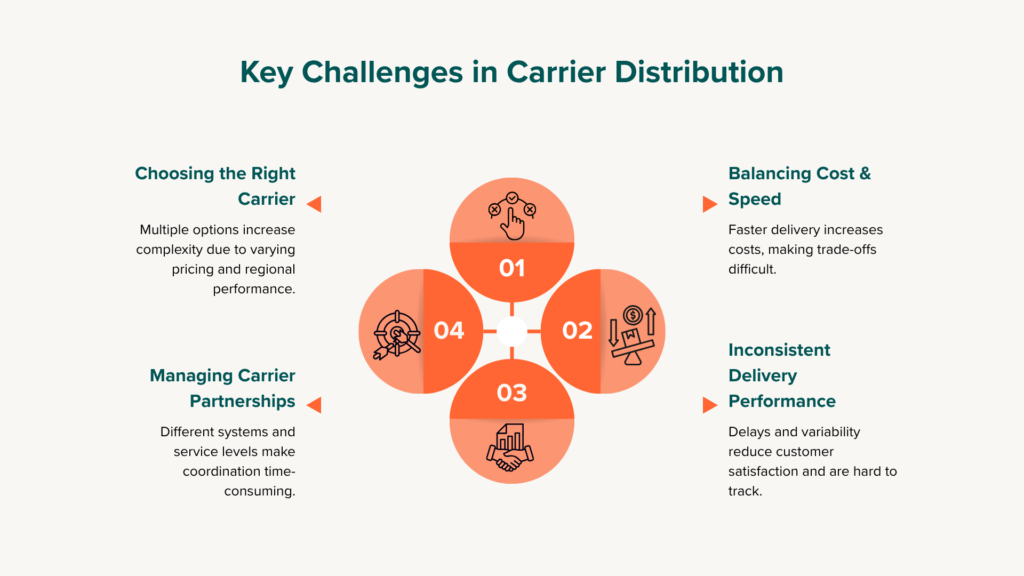
These challenges show that simply integrating multiple carriers is not enough. Businesses need a smarter way to manage and optimize carrier allocation.
AI-Driven Improvements in Carrier Assignment
Artificial intelligence is transforming how businesses approach carrier allocation. Instead of relying on static rules or manual decision-making, AI enables dynamic and data-driven optimization.
One of the key advantages of AI is its ability to analyze historical shipping data. By studying past deliveries, AI can identify patterns such as which carriers perform best in specific regions, which routes are prone to delays, and how pricing fluctuates over time. This insight allows businesses to make more informed decisions.
AI also brings predictive capabilities into logistics. It can forecast delivery times, estimate potential delays, and recommend the most reliable carrier for each shipment. This is particularly useful during peak seasons or in regions with unpredictable conditions.
Another major benefit is automated carrier selection. AI systems can evaluate multiple factors simultaneously, including cost, delivery timeline, destination, and carrier performance. Based on this analysis, the system can automatically assign the most suitable carrier without human intervention.
Real-time decision-making is another area where AI excels. Shipping conditions can change quickly due to weather, traffic, or operational disruptions. AI can adapt to these changes instantly, ensuring that each shipment is routed through the most efficient option available at that moment.
In essence, AI transforms carrier allocation from a reactive process into a proactive and intelligent system.

Key Features and Best Practices
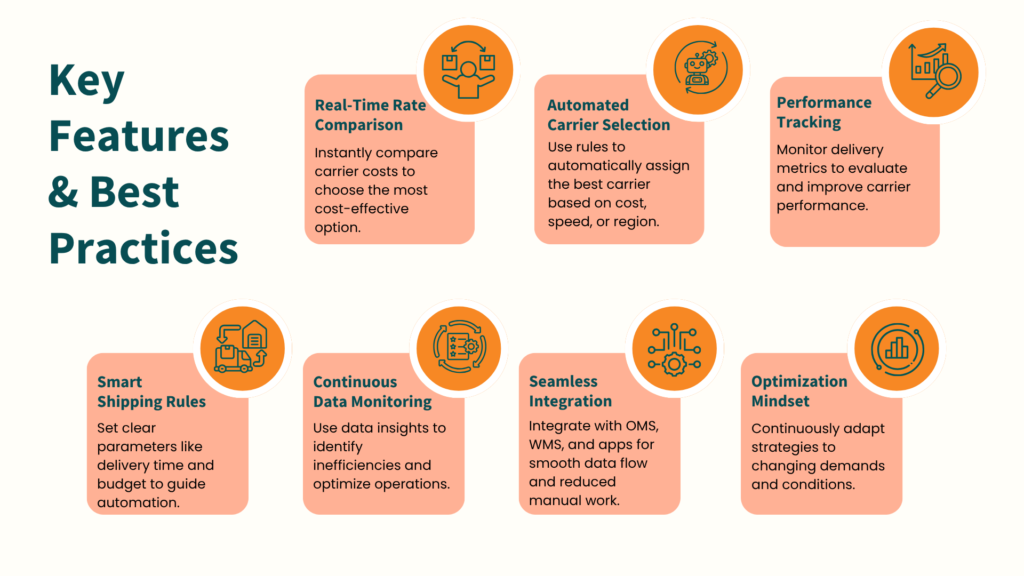
To fully leverage Multi-Carrier Shipping Software, businesses must focus on both the features they use and how they implement them. Technology alone is not enough. Execution plays a crucial role in achieving optimal results.
Real-Time Rate Comparison
Real-time rate comparison is one of the most important features. It allows businesses to compare shipping costs across multiple carriers instantly. This ensures that every shipment is assigned the most cost-effective option without compromising on delivery timelines.
Automated Carrier Selection
Automated carrier selection is another essential capability. Instead of manually choosing carriers, businesses can define rules and let the system handle allocation. These rules can be based on factors such as delivery speed, cost thresholds, or preferred carriers for specific regions.
Performance Tracking
Performance tracking is critical for continuous improvement. By monitoring key metrics such as delivery times, success rates, and customer feedback, businesses can evaluate carrier performance and make data-driven adjustments.
Setting Smart Shipping Rules
Setting clear shipping rules is a best practice that enhances automation. Businesses should define parameters such as maximum delivery time, budget limits, and service preferences. These rules act as a foundation for AI-driven decision-making.
Continuous Data Monitoring
Regularly monitoring shipping data is equally important. Insights from data can reveal inefficiencies, highlight trends, and uncover opportunities for optimization. Businesses that actively use data are better positioned to improve their logistics strategy.
Seamless System Integration
System integration is another key factor. Multi-carrier shipping platforms should integrate seamlessly with order management systems, warehouses, and customer-facing applications. This ensures a smooth flow of information and reduces manual effort.
Adopting a Continuous Optimization Mindset
Finally, businesses should adopt a continuous optimization mindset. Logistics is not static, and strategies must evolve with changing customer expectations and market conditions.
Business Impact of AI-Driven Shipping Optimization
The adoption of AI-powered multi-carrier shipping solutions delivers measurable benefits across the entire logistics operation.
One of the most immediate impacts is cost reduction. By selecting the most efficient carrier for each shipment, businesses can significantly lower shipping expenses. Even small savings per order can add up to substantial cost reductions at scale.
Faster deliveries are another major advantage. AI ensures that shipments are routed through carriers that offer the best combination of speed and reliability. This helps businesses meet customer expectations and stay competitive in a fast-paced market.
Improved customer satisfaction is a natural outcome of better delivery performance. On-time deliveries, accurate tracking, and fewer disruptions contribute to a positive customer experience. In turn, this leads to higher retention and repeat purchases.
Operational efficiency also improves significantly. Automation reduces the need for manual intervention, allowing teams to focus on strategic tasks rather than routine decision-making. This not only saves time but also minimizes the risk of human error.
AI-driven optimization also enhances scalability. As order volumes grow, businesses can handle increased complexity without compromising performance. The system adapts to higher demand while maintaining efficiency and accuracy.
In the long run, businesses gain a competitive advantage. Those that leverage intelligent shipping solutions are better equipped to respond to market changes, optimize costs, and deliver superior service.
Turning Multi-Carrier Shipping into a Strategic Advantage
Multi-Carrier Shipping Software is no longer just a convenience. It is a necessity for businesses looking to scale efficiently in a competitive logistics landscape. When combined with AI, it becomes a powerful tool that transforms carrier allocation into a strategic advantage. By adopting the right features, following best practices, and leveraging data-driven insights, businesses can optimize their shipping operations and unlock long-term growth.
To take this a step further, businesses can explore advanced solutions like AI-powered courier allocation platforms. For example, eShipz’s Courier Allocation capabilities demonstrate how automation and real-time intelligence can simplify complex shipping decisions. By automatically selecting the most suitable courier based on cost, delivery timelines, and performance data, such platforms help businesses improve efficiency while maintaining control over their logistics strategy.
As logistics continues to evolve, companies that invest in intelligent, AI-driven systems will be better positioned to reduce costs, improve delivery outcomes, and deliver consistent customer experiences.