



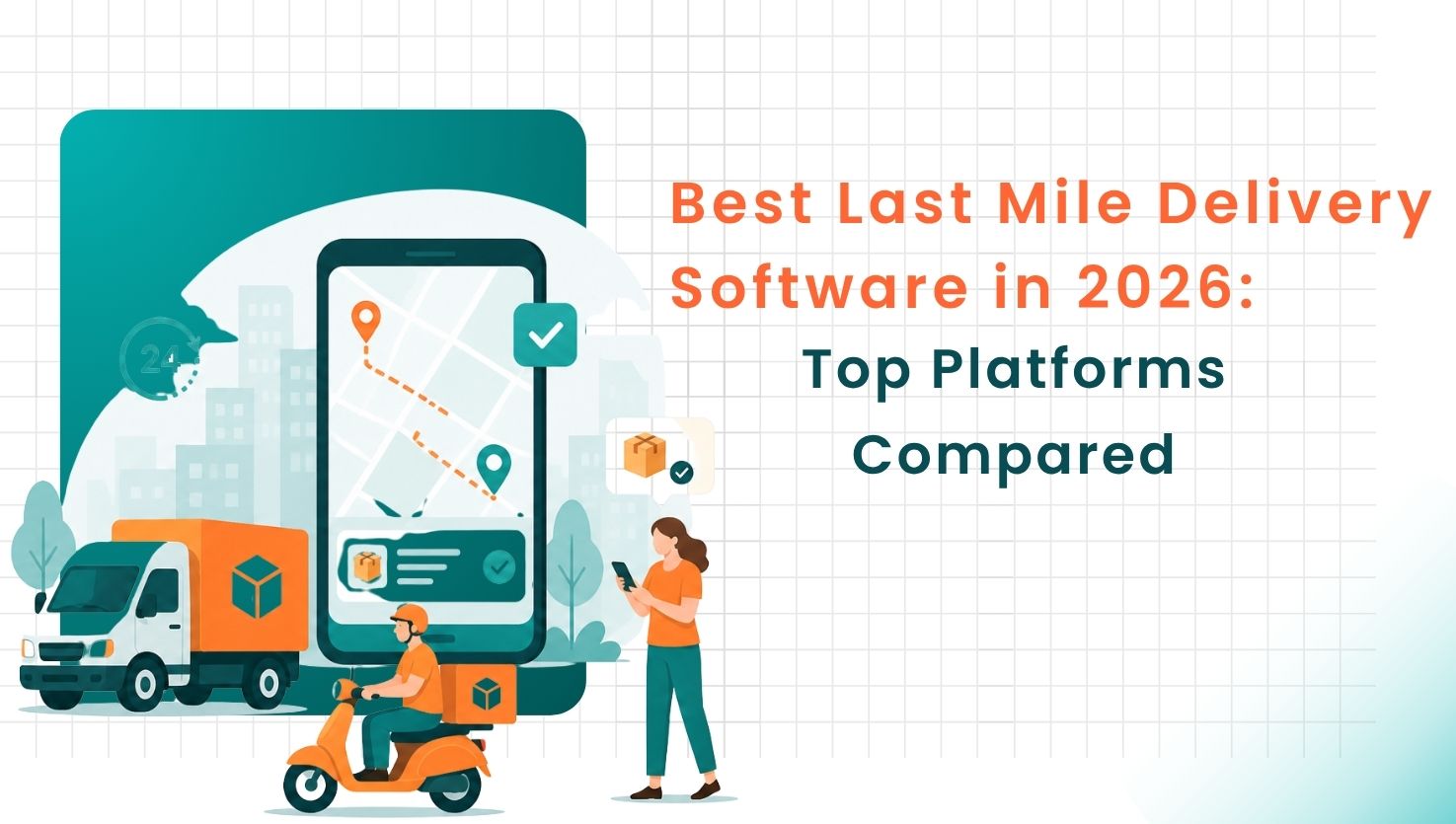
Last mile delivery is the final step in the shipping journey, when an order moves from a warehouse or distribution hub to the customer’s doorstep. It sounds simple, but in reality, it’s the most complex and unpredictable part of logistics, where multiple variables like location accuracy, customer availability, and delivery coordination come into play.
And it’s also where the biggest impact is felt. Industry data shows that last mile operations can contribute to 50–55% of total shipping costs, making it the most expensive leg of delivery. At the same time, nearly 20–30% of deliveries in high-COD markets like India face first-attempt failures, leading to rising RTO rates and operational strain. Add to that the fact that over 70% of customers now expect real-time tracking and proactive updates, and the pressure on logistics teams becomes even more intense. What used to be a backend function is now directly tied to customer satisfaction and brand perception.
This is exactly why choosing the right last mile delivery software matters more than ever. It’s no longer just about moving parcels, it’s about reducing delivery failures, improving visibility, and delivering a better customer experience at scale. In this blog, we’ll break down what makes a strong platform in 2026, the features that truly matter.
Let’s dive into this blog.
Key Features That Actually Matter in Shipping Automation Tools in 2026
By 2026, last-mile delivery has evolved far beyond just moving parcels from point A to point B. Customers expect speed, transparency, and reliability, and businesses need systems that can deliver all three without constant manual effort.
The truth is, not every platform is built to handle this complexity. What really sets the best ones apart is how deeply they solve everyday operational challenges while improving the customer experience at the same time.
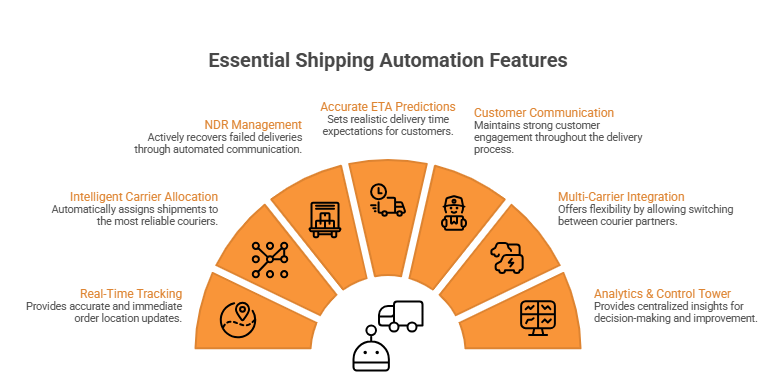
Here are the features that genuinely make a difference:
Real-Time Tracking That Builds Trust
Tracking is no longer just a status update, it’s a promise. Customers want to know exactly where their order is and when it will arrive, without confusion or vague messages.
When tracking is accurate and truly real-time, it reduces anxiety, builds trust, and cuts down on support queries. For businesses, it also creates better visibility into delays and exceptions, allowing faster action when something goes wrong.
Intelligent Carrier Allocation That Improves Outcomes
Manually choosing courier partners for every shipment simply doesn’t work at scale anymore.
Modern platforms use data to make these decisions smarter, automatically assigning shipments based on location, historical performance, and delivery success rates. This ensures each order is routed through the most reliable option, improving delivery success and reducing costly returns.
NDR Management That Actively Reduces Failures
Non-delivery reports are often where losses begin to pile up. But a strong system doesn’t just record failures, it works to recover them.
By triggering automated communication with customers after a failed attempt, collecting updated delivery inputs, and enabling quick reattempts, NDR management can significantly reduce RTO rates and save revenue that would otherwise be lost.
Accurate Delivery Time Predictions (ETA)
One of the biggest reasons for failed deliveries is simple, customers aren’t available.
Accurate ETAs help solve this by setting the right expectations upfront. When customers know when to expect their order, they are more likely to be prepared, which improves first-attempt delivery success and reduces WISMO queries.
A Strong Customer Communication Layer
Delivery is one of the few physical touchpoints a customer has with a brand. That experience matters.
From branded tracking pages to proactive WhatsApp or SMS updates, a strong communication layer keeps customers informed at every stage. It removes uncertainty, builds confidence, and makes the entire delivery experience feel more reliable and professional.
Multi-Carrier Integration for Flexibility and Control
No single courier partner performs equally well across all regions. Relying on just one increases risk.
A multi-carrier setup gives businesses the flexibility to switch based on performance, cost, or location. This not only improves delivery outcomes but also ensures operations continue smoothly even when one carrier underperforms.
Analytics & Control Tower for Better Decisions
Good logistics isn’t just about execution, it’s about continuous improvement.
A centralized control tower provides a clear view of everything happening across shipments—carrier performance, delays, NDR trends, and delivery timelines. With these insights, businesses can identify patterns, fix inefficiencies, and make smarter decisions over time.
In 2026, the focus isn’t just on delivering faster, it’s on delivering smarter and more predictably.
The platforms that truly stand out are the ones that combine automation, intelligence, and customer experience into one seamless system. When done right, these features don’t just optimize logistics, they directly impact customer satisfaction, costs, and long-term growth.
Comparative Breakdown: Top Platforms in 2026
Choosing the right last-mile delivery platform in 2026 isn’t about features, it’s about fit. What works for large enterprises won’t always suit fast-growing D2C brands. Each platform serves a different need, some focus on AI and automation, others on visibility or simplicity. The key is knowing which one aligns with your business.
Here’s a simplified way to look at some of the leading platforms today:
| Platform | Core Strength | Best For | Key Differentiator |
| eShipz | Unified tracking + post-shipping visibility | D2C brands, SMBs, scaling businesses | Strong control over tracking, NDR, and customer experience in one layer |
| Shipsy | AI-powered logistics orchestration | Enterprises, large-scale ops | Advanced route optimization & automation |
| ClickPost | Delivery visibility & tracking APIs | Mid to large ecommerce brands | Strong integrations and tracking workflows |
| FarEye | End-to-end delivery management | Enterprise logistics teams | High customization and route planning |
| Onfleet | Route optimization & dispatch | Hyperlocal deliveries | Driver-centric mobile experience |
| Tookan | Task & delivery management | Small logistics teams | Simple interface for quick deployment |
There’s no single “best” platform, only the one that aligns best with your business needs.
For some, that means deep automation and enterprise-grade control. For others, it’s about simplicity, flexibility, and improving customer experience without overcomplicating operations.
The smartest approach is to look beyond feature lists and focus on impact:
Which platform helps you reduce failures, improve delivery success, and create a smoother experience for your customers? That’s where the real value lies.
eShipz
About the company:
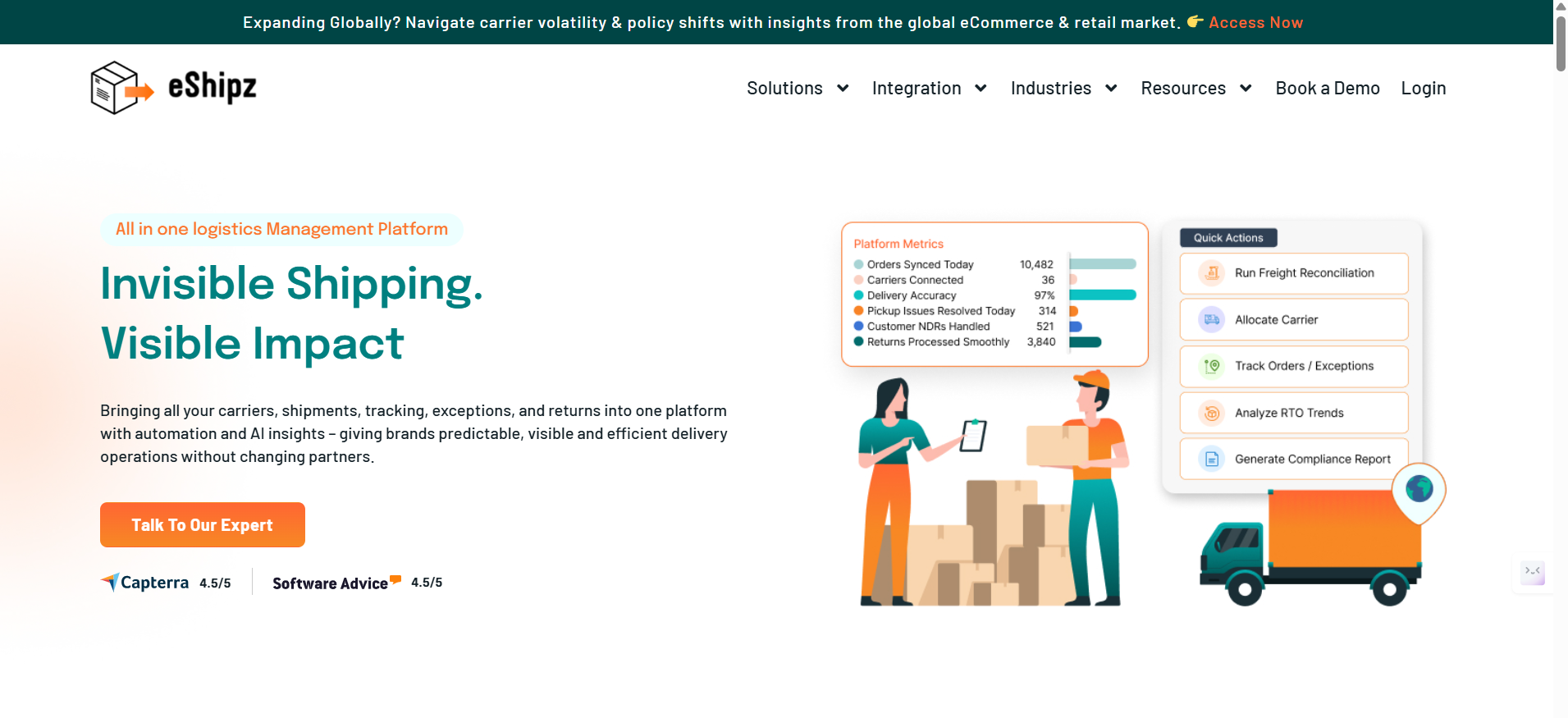
eShipz is a logistics automation platform built primarily for ecommerce, D2C brands, and fast-growing businesses. It focuses on simplifying shipping operations while improving what happens after dispatch, a stage where most delivery issues and customer experience gaps occur.
Key features:
- Real-time shipment tracking across multiple carriers
- Automated NDR (Non-Delivery Report) management workflows
- Branded tracking pages and customer communication (WhatsApp, SMS, email)
- Multi-carrier integration with smart allocation
- Centralized dashboard for delivery visibility and performance tracking
How it helps in last mile:
eShipz strengthens the post-shipping layer by improving visibility, reducing failed deliveries, and keeping customers informed, leading to better delivery success rates and lower RTO.
Shipsy
About the company:
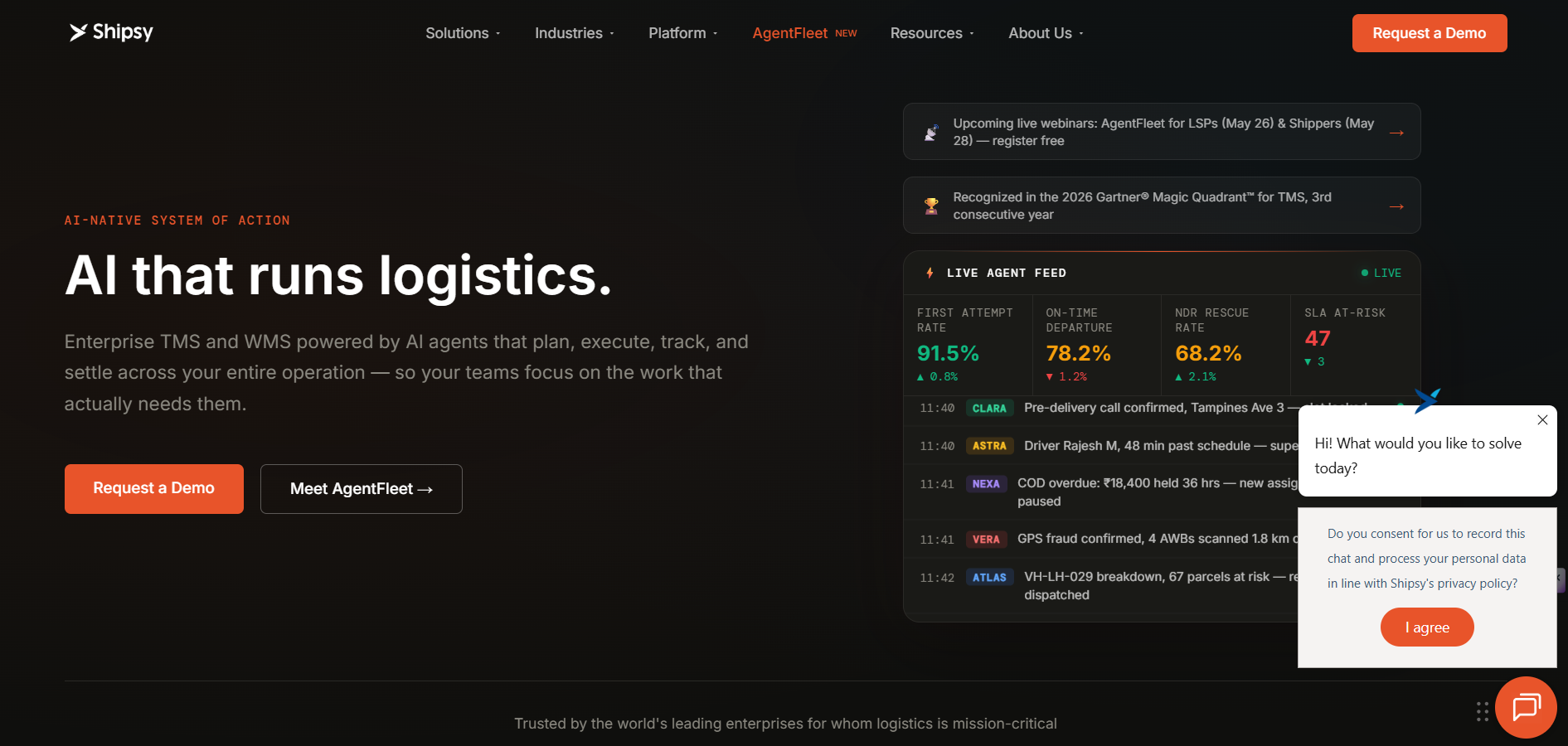
Shipsy is an AI-powered logistics and supply chain platform designed for enterprises handling large-scale, complex operations. It focuses on optimization and automation across the logistics lifecycle.
Key features:
- AI-driven route optimization and planning
- Automated logistics decision-making
- Demand forecasting and capacity planning
- End-to-end supply chain orchestration
- Real-time visibility across shipments and networks
How it helps in last mile:
Shipsy improves efficiency at scale by optimizing routes and automating decisions, helping enterprises reduce delivery time, cost, and operational inefficiencies.
ClickPost
About the company:
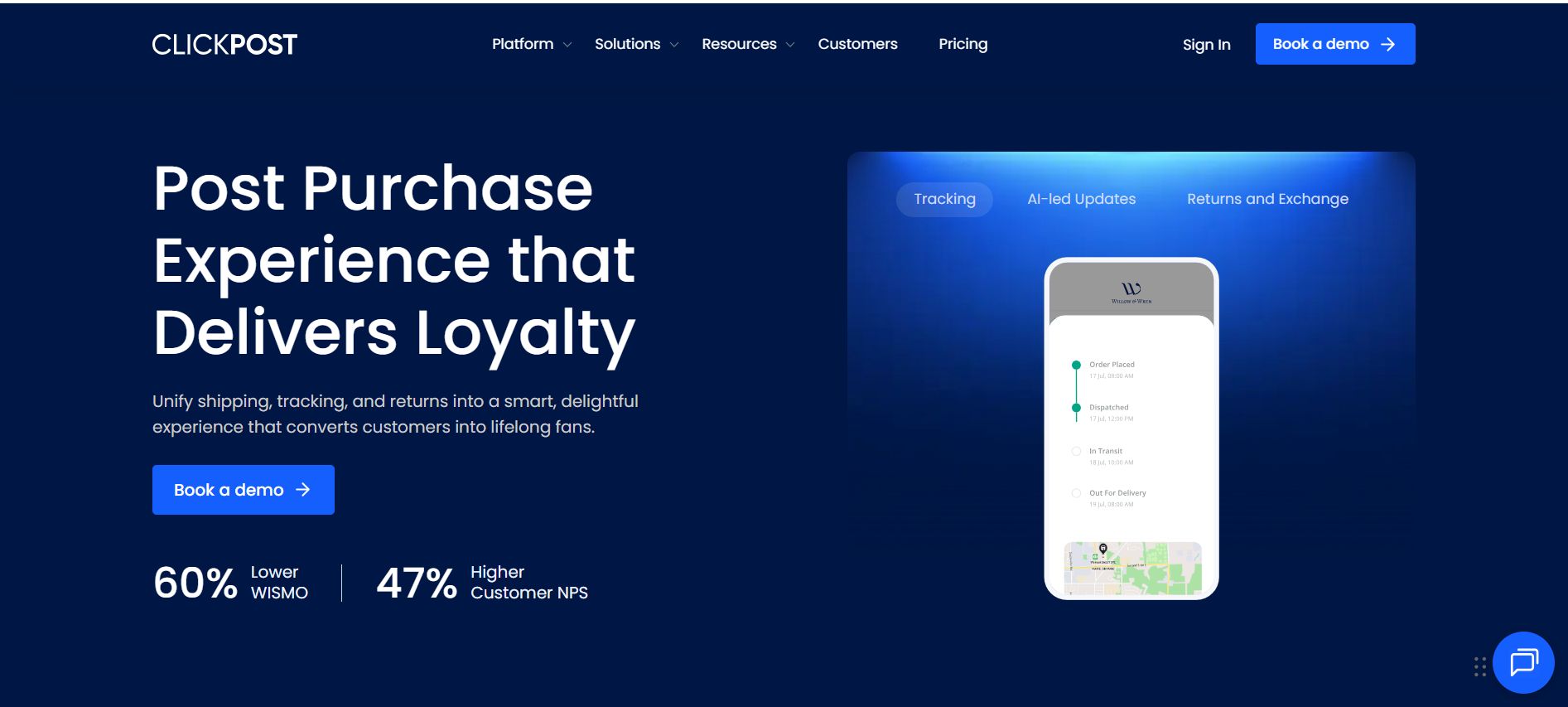
ClickPost is a logistics intelligence platform that focuses on delivery visibility and seamless integrations with ecommerce systems. It acts as a strong tracking and communication layer.
Key features:
- API-based shipment tracking and webhook updates
- Multi-carrier integrations
- Customizable tracking workflows
- Exception handling and alert systems
- Analytics on delivery performance
How it helps in last mile:
ClickPost enhances tracking clarity and coordination, helping reduce WISMO queries and ensuring smoother communication between systems and customers.
FarEye
About the company:
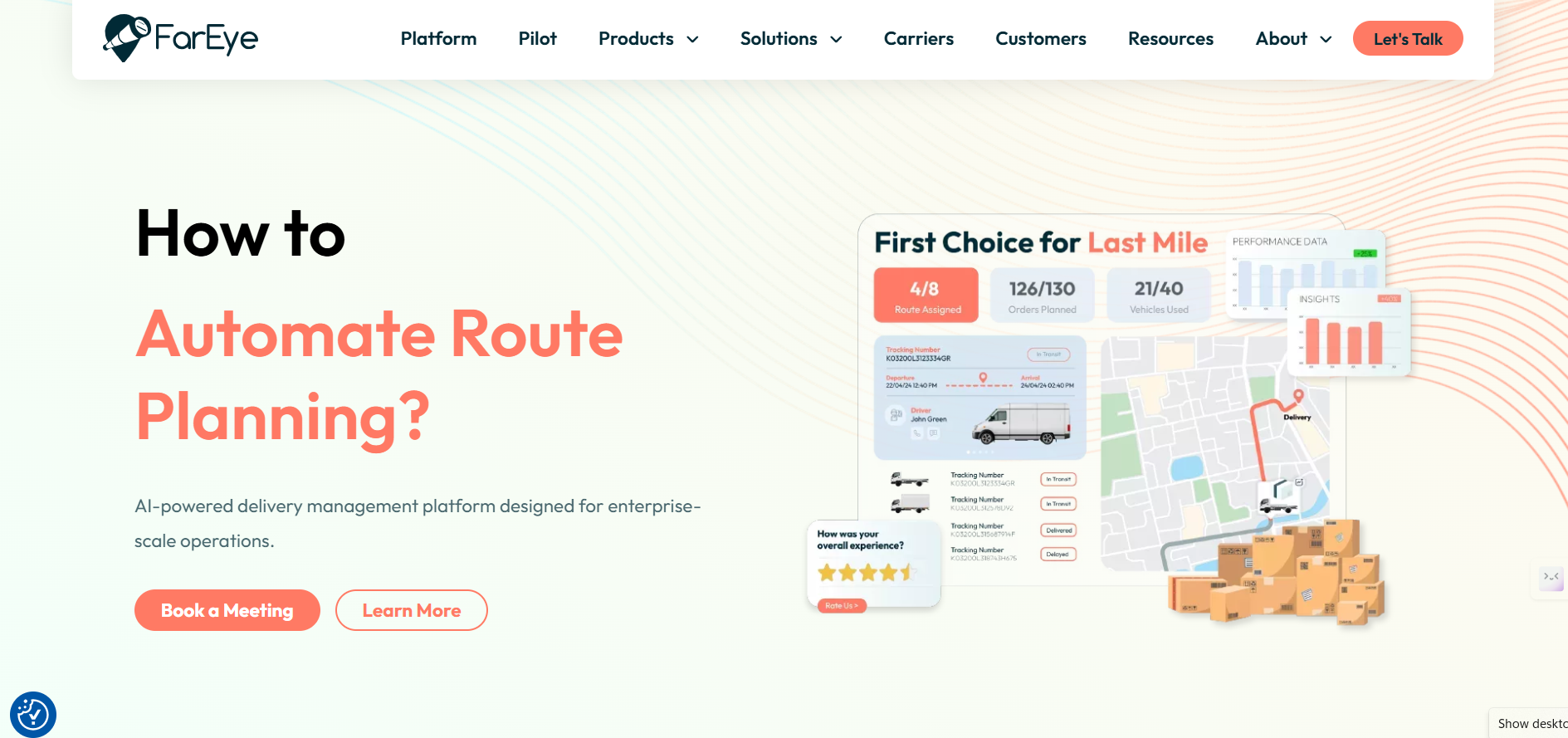
FarEye is an enterprise-grade delivery management platform built for companies that need deep customization and control over their logistics operations.
Key features:
- Advanced route planning and optimization
- Workforce and fleet management
- Real-time delivery tracking
- Configurable workflows and automation
- Predictive analytics for delivery performance
How it helps in last mile:
FarEye allows enterprises to design and optimize complex delivery networks, improving efficiency, reducing delays, and maintaining tight operational control.
Onfleet
About the company:
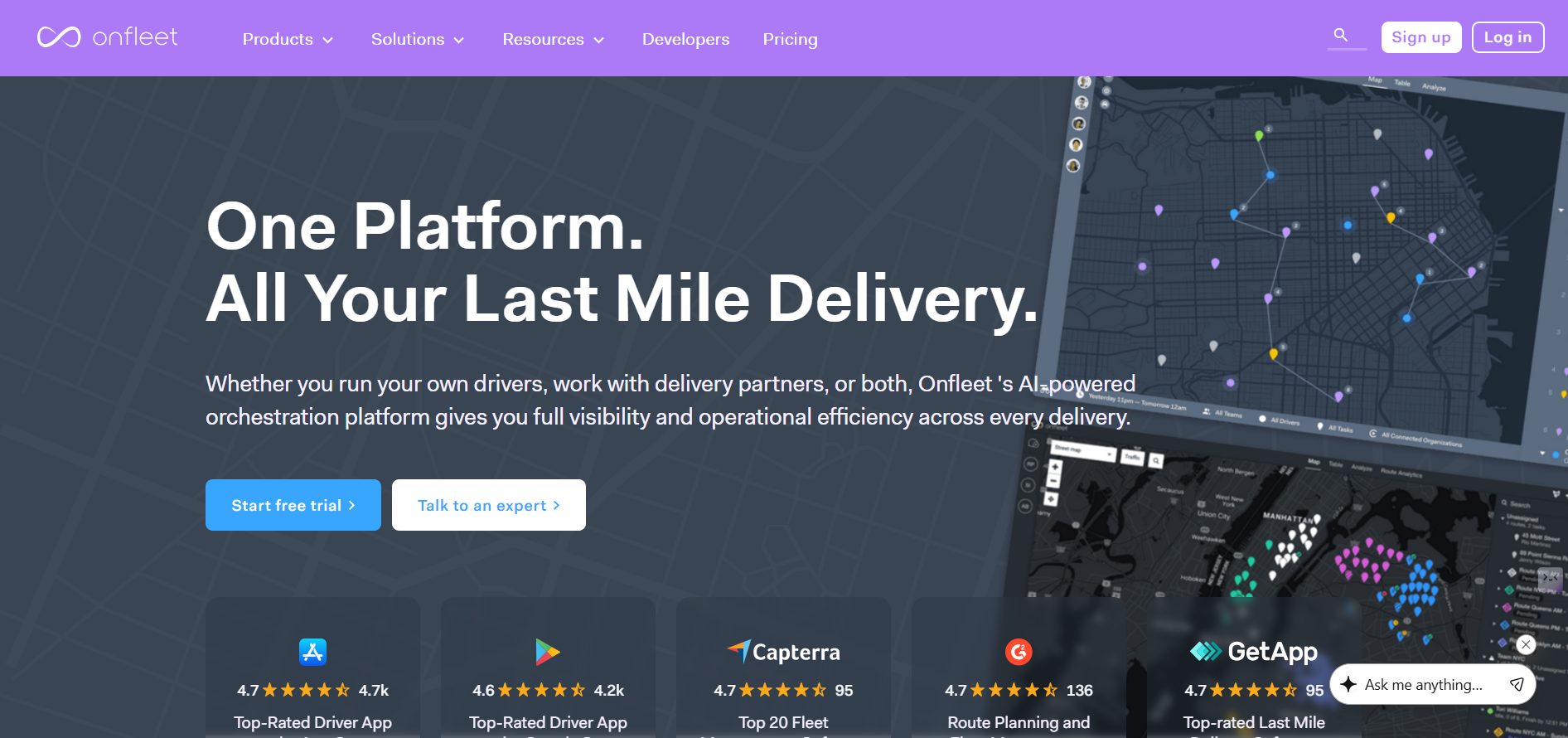
Onfleet is a delivery management platform focused on businesses that operate their own delivery fleets, especially in hyperlocal and urban environments.
Key features:
- Route optimization and automated dispatching
- Real-time driver tracking
- Driver mobile app with task management
- Proof of delivery and status updates
- Customer notifications and ETA updates
How it helps in last mile:
Onfleet improves on-ground execution by making driver operations more efficient, leading to faster and more reliable local deliveries.
Tookan
About the company:
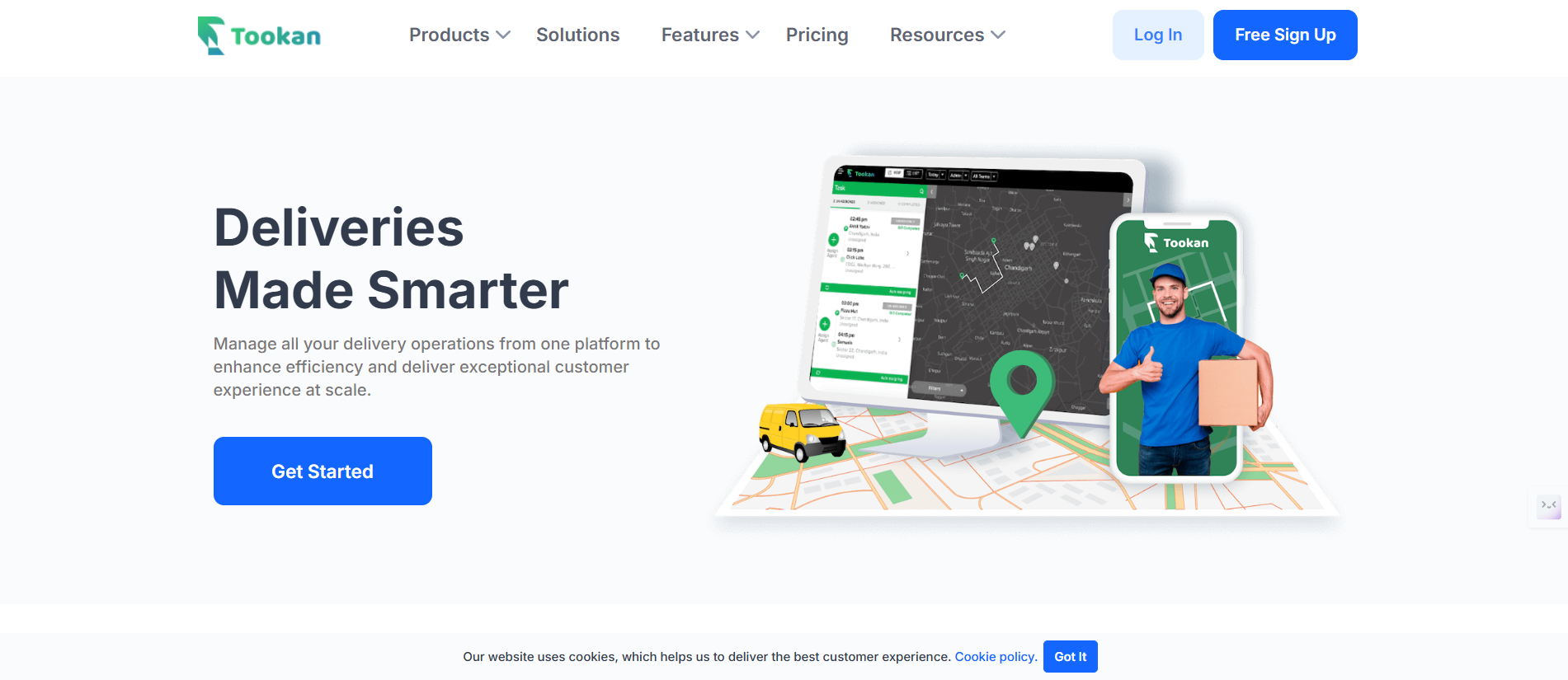
Tookan is a simple and flexible delivery and task management platform designed for small businesses and teams that need a quick, easy-to-use solution.
Key features:
- Task and delivery assignment
- Basic dispatch and tracking
- Real-time status updates
- Simple dashboard and reporting
- Quick setup with minimal technical effort
How it helps in last mile:
Tookan helps smaller teams organize and manage deliveries without complexity, making it ideal for businesses just starting or operating at a smaller scale.
Each platform brings something different to the table. While enterprise tools focus on scale and optimization, others prioritize visibility, ease of use, or customer experience. The right choice depends on where your biggest challenges lie, whether it’s reducing delivery failures, improving tracking, or scaling operations efficiently.
In the end, the goal isn’t just better logistics, it’s a smoother, more reliable delivery experience for your customers.
Trends Shaping Delivery Technology in 2026
Last-mile delivery is no longer just about moving orders, it’s about delivering a reliable customer experience. In 2026, brands are rethinking logistics as a growth driver, not just a cost.
- From Logistics to Customer Experience
Delivery is now part of CX, not just operations.
- 80%+ customers say delivery impacts repeat purchases
- 70% of brands are investing more in post-purchase experience
- AI Driving Smarter Decisions
AI is improving speed and accuracy across deliveries.
- 15–25% higher delivery success rates with AI-based carrier selection
- Up to 20% fewer failed deliveries with predictive ETAs
- Focus on Post-Shipping Optimization
What happens after dispatch matters the most.
- 20–40% RTO rates in COD-heavy markets like India
- ~50% support queries are WISMO
- 10–20% reduction in returns with NDR automation
- Growth Beyond Metros
Tier-2 and Tier-3 cities are driving ecommerce expansion.
- 60%+ demand coming from smaller cities
- 50–70% orders still COD
The shift is clear, delivery is becoming smarter, more proactive, and customer-first. The real advantage in 2026 isn’t just faster shipping, but delivering with better predictability and experience.
Choosing What Actually Works for Your Delivery
The right delivery platform isn’t about who has the most features, it’s about what actually solves your problems. Some businesses need stronger route optimization to handle scale. Others need clearer tracking and visibility.
And many simply need a way to reduce delivery failures without increasing costs.
The real question is: where is your delivery process breaking today? That’s where the right platform starts adding value.
Logistics is evolving fast, and expectations even faster.
The sooner you align your tools with your real challenges, the stronger your delivery experience becomes.