




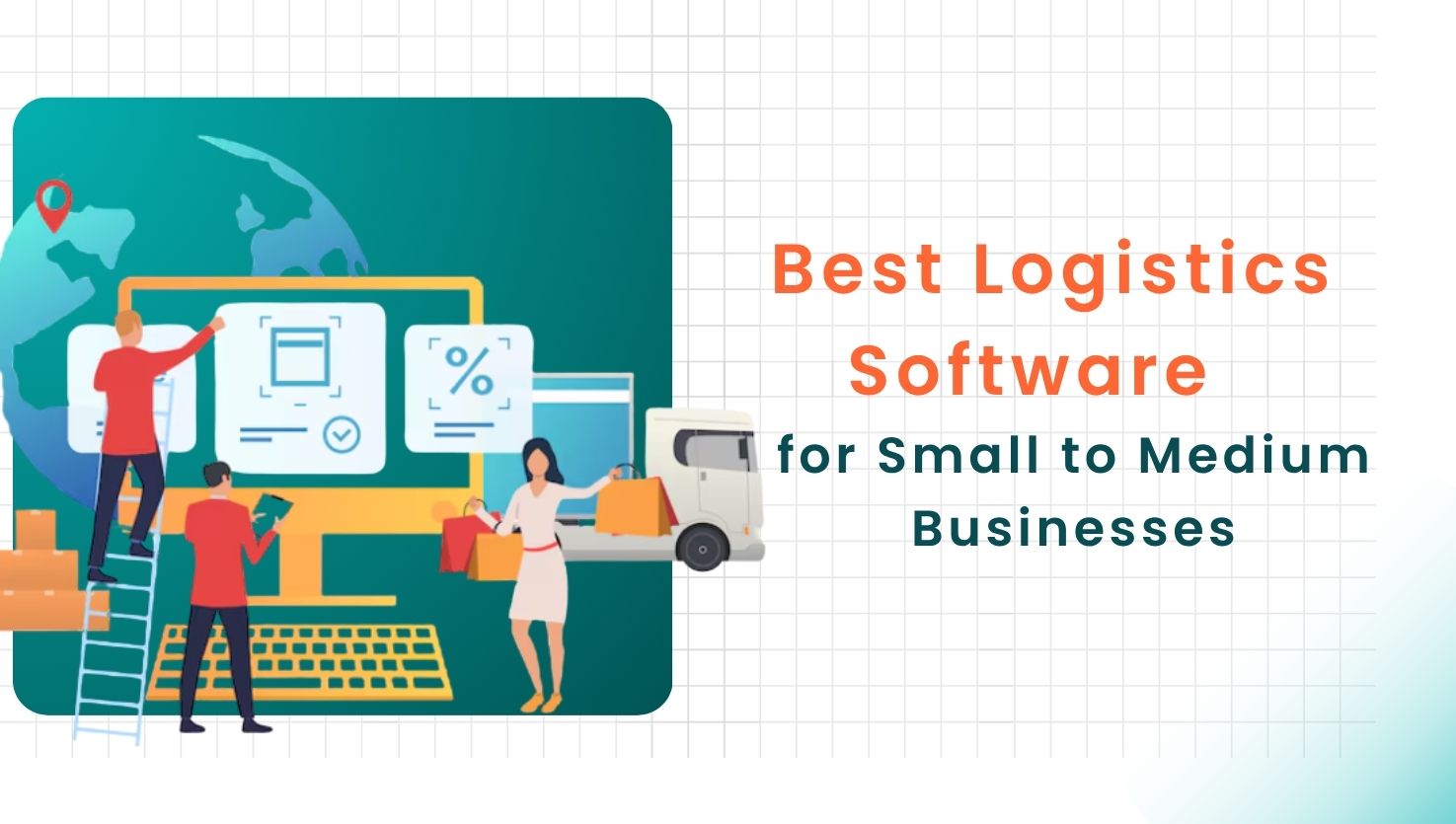
Logistics software helps businesses manage shipping operations more efficiently by automating order processing, carrier allocation, tracking, returns, and delivery workflows from a single platform.
For growing ecommerce brands and small businesses, managing logistics manually can quickly become difficult as order volumes increase. Delayed deliveries, rising shipping costs, courier coordination issues, and return management often create operational bottlenecks that directly impact customer experience.
The need for smarter shipping operations in logistics softwareis growing rapidly. According to Statista, India’s ecommerce market is expected to cross $200 billion by 2027, while nearly 70% of online shoppers now expect faster and more transparent deliveries. At the same time, businesses using logistics automation solutions report significant reductions in manual work and shipping inefficiencies.
This is why many businesses are now investing in the best logistics software for small to medium businesses to streamline operations, improve delivery performance, and manage multiple courier partners more effectively.
In this blog, we’ll look at some of the top logistics platforms available today, the key features businesses should evaluate, and the major trends shaping modern shipping operations.
Key Features to Evaluate Before Choosing a Logistics software Platform
Choosing the right logistics platform is not just about finding a tool that can ship orders. As businesses grow, logistics operations become more complex, involving multiple courier partners, increasing order volumes, customer communication, returns, and delivery performance management.
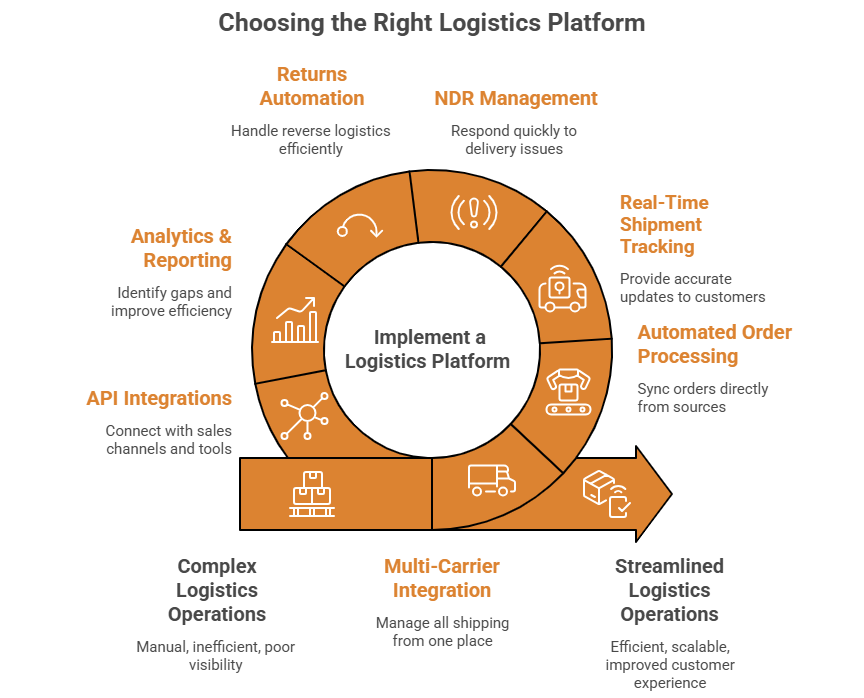
This is why businesses should look beyond basic shipping features and evaluate whether a platform can support long-term operational efficiency, scalability, and customer experience. The right solution should help reduce manual work, improve shipment visibility, and simplify day-to-day logistics management.
Here are some of the most important features businesses should consider before selecting a platform:
Multi-Carrier Integration:
Working with multiple courier partners gives businesses greater flexibility in terms of pricing, delivery speed, and serviceability. A platform with multi-carrier integration allows businesses to manage all shipping operations from a single dashboard instead of switching between different courier portals manually.
Automated Order Processing:
Manual order management can become time-consuming as shipment volumes increase. Automation helps businesses sync orders directly from ecommerce websites, marketplaces, or ERP systems, reducing operational dependency and minimizing human errors.
Real-Time Shipment Tracking:
Customers today expect complete visibility after placing an order. Real-time tracking helps businesses provide accurate shipment updates, improve customer confidence, and reduce repetitive support queries related to delivery status.
NDR & Delivery Exception Management:
Failed deliveries and delivery exceptions can significantly impact logistics costs and customer satisfaction. Efficient NDR (Non-Delivery Report) management helps businesses respond quickly to delivery issues, reduce return-to-origin shipments, and improve successful delivery rates.
Returns Automation:
Returns are now a major part of ecommerce operations. A smooth and well-managed returns process not only improves customer experience but also helps businesses handle reverse logistics more efficiently without increasing manual coordination.
Analytics & Reporting:
Shipping data plays an important role in operational decision-making. Detailed analytics and reporting help businesses identify courier performance gaps, monitor delivery timelines, track shipping costs, and improve overall logistics efficiency.
API & Ecommerce Integrations:
As businesses expand across multiple sales channels, integration capabilities become increasingly important. Platforms that support integrations with Shopify, WooCommerce, Magento, Amazon, ERP systems, and other tools help create a more connected and streamlined workflow.
Ultimately, the best logistics software platform is one that grows alongside the business. Instead of solving only short-term shipping needs, businesses should focus on choosing a solution that improves operational visibility, supports automation, and helps create a better delivery experience over time.
Top Logistics Software for Small to Medium Businesses
With so many logistics software available today, choosing the right one often depends on the specific operational needs of a business. Some platforms are designed for growing ecommerce brands that need centralized automation, while others focus more on shipment tracking, cross-border logistics, or marketplace shipping support.
Instead of looking for a one-size-fits-all solution, businesses should evaluate which platform aligns best with their shipping volume, customer expectations, operational complexity, and long-term growth plans.
| Platform | Best for |
Major Strength |
| eShipz | SMBs & growing ecommerce brands |
Centralized logistics automation |
|
Shiprocket |
Marketplace sellers | Courier aggregation |
| ClickPost | Post-purchase visibility |
Tracking & delivery experience |
|
NimbusPost |
Cost-effective logistics automation | Shipping management |
| ShipStation | International ecommerce |
Workflow automation |
| Easyship | Cross-border businesses |
Global shipping support |
Each platform brings different strengths to the table, but the overall goal remains the same, helping businesses simplify logistics operations, improve delivery efficiency, and create better customer experiences.
- eShipz
eShipz is designed to simplify shipping operations for ecommerce brands, retailers, distributors, and growing businesses managing multiple courier partners.
The platform offers centralized logistics management with features such as:
- Multi-carrier shipping automation
- Real-time tracking visibility
- NDR management
- Returns automation
- Smart carrier allocation
- Shipping analytics
- API integrations
One of the major advantages for SMBs is operational simplicity. Businesses can manage orders, courier allocation, tracking, and delivery workflows from a single dashboard instead of coordinating manually across different carrier portals.
For businesses expanding across India, this kind of centralized visibility can significantly reduce operational dependency and improve delivery efficiency.
- Shiprocket
Shiprocket is widely used by D2C brands and online sellers in India. It provides courier aggregation, shipping label generation, tracking, and marketplace integrations.
The platform is often preferred by smaller ecommerce sellers looking for marketplace-focused shipping support.
Best suited for:
- Small ecommerce businesses
- Marketplace sellers
- D2C startups
- ClickPost
ClickPost focuses heavily on post-purchase operations, shipment visibility, and delivery management.
Its strengths include:
- Tracking APIs
- Delivery communication
- Returns management
- Logistics software intelligence
Businesses looking for strong post-purchase experience management often evaluate ClickPost alongside broader logistics platforms.
- NimbusPost
NimbusPost provides shipping aggregation and courier management solutions for ecommerce businesses.
The platform supports:
- Courier rate comparison
- Shipping automation
- COD management
- Tracking support
It is commonly used by growing online sellers seeking affordable shipping management tools.
- ShipStation
ShipStation is a globally recognized shipping platform popular among international ecommerce businesses.
It offers:
- Order management
- Carrier integrations
- Inventory visibility
- Workflow automation
While more globally focused, some Indian businesses with international operations also evaluate ShipStation.
- Easyship
Easyship is known for cross-border shipping support and international courier integrations.
Key capabilities include:
- International shipping calculations
- Tax and duty management
- Multi-carrier support
- Global fulfillment workflows
It is especially relevant for businesses managing overseas deliveries.
Best Logistics Software Trends Every Growing Business Should Know
The logistics industry is changing rapidly as ecommerce growth, customer expectations, and delivery demands continue to rise. Businesses today are no longer focused only on moving shipments, they are investing in smarter, faster, and more connected logistics operations to stay competitive.
According to recent industry reports, over 70% of customers now expect real-time shipment tracking, while nearly 60% prefer brands that offer faster and more flexible delivery options. At the same time, businesses using logistics automation platforms have reported significant reductions in manual operational work and delivery delays.
Several key trends are now shaping how modern businesses approach logistics management.
AI-Driven Carrier Selection:
Many logistics platforms are now using AI-based automation to allocate shipments based on delivery performance, courier success rates, shipping costs, and location efficiency. This helps businesses improve delivery accuracy while optimizing operational expenses.
Growing Focus on Post-Purchase Experience:
Customer experience no longer ends after checkout. Studies show that nearly 84% of customers are less likely to return after a poor delivery experience. As a result, businesses are investing more in shipment visibility, delivery communication, and smoother returns management.
Rise of Hyperlocal & Same-Day Deliveries:
Faster deliveries are becoming a competitive advantage, especially in ecommerce. Industry estimates suggest that same-day delivery demand is expected to grow significantly over the next few years, pushing businesses toward more agile and flexible courier ecosystems.
Centralized Logistics Visibility:
As businesses expand across marketplaces, websites, and regions, managing logistics manually becomes increasingly difficult. Centralized dashboards are helping businesses gain better visibility across carriers, orders, tracking updates, and operational performance from a single platform.
Businesses investing in logistics automation and shipping technology are seeing measurable improvements in operational efficiency, customer retention, and delivery reliability. As the industry continues to evolve, adopting smarter logistics systems will become essential for long-term growth and scalability.
Choosing the Right Logistics Platform for Growth
Logistics today is no longer just about shipping products from one place to another. For growing businesses, it plays a major role in customer experience, operational efficiency, and long-term scalability.
The right logistics platform helps businesses automate shipping workflows, improve delivery visibility, reduce manual effort, and manage increasing order volumes more efficiently.
As ecommerce competition continues to grow, businesses that modernize their logistics operations early will be better prepared to handle rising customer expectations and operational complexity.
The future of logistics is smarter, faster, and more connected, making this the right time for businesses to rethink their shipping operations.