



Direct-to-consumer brands are no longer competing only on product quality or pricing. Today, the customer experience after checkout plays a major role in shaping loyalty, repeat purchases, and brand perception. This is where a strong post-purchase experience platform for D2C brands becomes critical.
Customers now expect real-time tracking, proactive delivery updates, easy returns, and seamless communication throughout the delivery journey. A customer may love the product, but if they do not know where their order is for five days, the brand experience already starts breaking. In many cases, poor delivery communication creates anxiety, increases support queries, and even discourages future purchases.
The post-purchase stage has become one of the longest and most visible interactions customers have with a brand. Every shipping notification, tracking update, and return experience directly impacts customer trust. For D2C businesses that rely heavily on repeat purchases, this stage is no longer just an operational process. It is a retention strategy.
According to research from PwC Customer Experience Report, customers are willing to pay more for a great experience, while poor communication and inconsistent service can quickly push them toward competitors. This is especially relevant for ecommerce brands where customers cannot physically interact with the store or product before purchasing.
Market Insight: Why Post-Purchase Experience Matters More Than Ever
The D2C ecommerce landscape has become highly competitive. Customer acquisition costs continue to rise across digital channels, making retention more important than ever. Brands are now realizing that improving post-purchase engagement is often more cost-effective than constantly acquiring new customers.
Modern consumers expect:
- Faster and transparent delivery communication
- Real-time shipment visibility
- Easy return and refund experiences
- Personalized engagement after delivery
- Consistent communication across channels
When these expectations are not met, customer frustration increases rapidly. Delayed updates, failed deliveries, and unresponsive support teams often lead to negative reviews and lower customer trust.
This shift has pushed many brands to invest in automation platforms that can streamline delivery communication, returns management, and customer engagement from a single dashboard.
The Biggest Post-Purchase Challenges D2C Brands Face
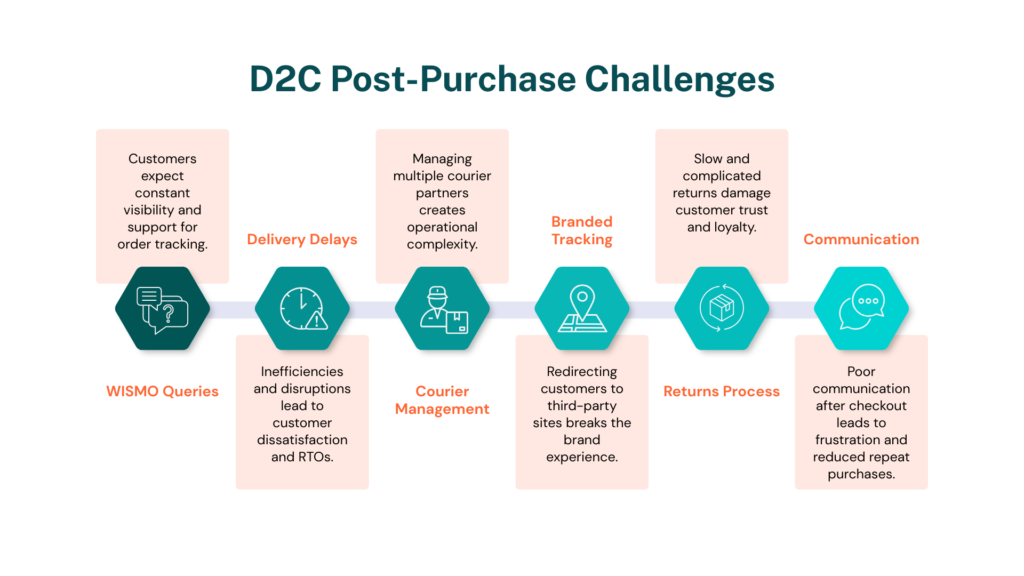
Once an order is placed, many D2C brands struggle to maintain a smooth customer experience. Operational inefficiencies during shipping and delivery often create friction that affects brand loyalty.
Rising WISMO Queries
One of the biggest challenges ecommerce brands face is WISMO queries, or “Where Is My Order?” requests. Customers expect constant visibility after placing an order. When tracking information is unclear or delayed, support teams get flooded with calls and emails.
For growing brands, handling these requests manually becomes difficult and expensive.
Delivery Delays and Failed Deliveries
Delivery delays can happen due to courier inefficiencies, weather disruptions, incorrect addresses, or failed delivery attempts. When customers do not receive proactive communication about these delays, dissatisfaction increases quickly.
In many cases, failed deliveries also result in Return to Origin (RTO) shipments, which directly impact profitability.
Managing Multiple Courier Partners
D2C brands often work with multiple courier providers to optimize shipping costs and delivery timelines. However, managing several courier dashboards separately creates operational complexity.
Without centralized visibility, brands struggle to:
- Monitor shipment performance
- Compare courier efficiency
- Handle delivery exceptions quickly
- Maintain consistent customer communication
Lack of Branded Tracking Experience
Many ecommerce brands redirect customers to third-party courier websites for shipment tracking. This breaks the customer journey and reduces brand recall.
A branded tracking page helps businesses maintain customer engagement even after checkout while creating a more professional experience.
Slow Returns and Refund Processes
Returns are a major part of ecommerce operations, especially in categories like fashion, beauty, and electronics. Complicated return requests, delayed pickups, and slow refunds negatively affect customer trust.
For customers, the return experience often becomes as important as the original purchase.
Poor Communication Creates Customer Frustration
Imagine a customer waiting for an important order without receiving a single update for several days. Eventually, they contact customer support only to receive vague responses.
This experience not only damages trust but also reduces the likelihood of repeat purchases. Poor communication after checkout can make even a good product experience feel disappointing.
Features That Define the Best Post-purchase experience platform for D2C brands
The best post-purchase platforms help brands go beyond shipment tracking. They create transparency, automate communication, and improve customer confidence throughout the delivery journey.
Real-Time Shipment Tracking
Customers want accurate tracking updates without constantly contacting support teams. Real-time shipment visibility allows brands to proactively inform customers about order movement, delays, and estimated delivery timelines.
This reduces uncertainty and improves customer satisfaction.
Automated Notifications Across Channels
Modern customers engage through multiple communication channels. A strong platform should support automated updates through:
- SMS
- Push notifications
Automated alerts for order confirmation, shipment dispatch, out-for-delivery status, and delivery completion help customers stay informed at every stage.
Branded Tracking Pages
Branded tracking experiences help businesses maintain customer engagement beyond checkout. Instead of redirecting customers to courier websites, brands can provide customized tracking pages with:
- Brand logos and colors
- Personalized recommendations
- Promotional banners
- Customer support access
This creates stronger brand recall while improving the overall experience.
AI-Based Courier Allocation
Courier performance varies based on region, order type, and delivery timelines. AI-driven courier allocation helps brands automatically assign shipments to the best-performing carrier based on delivery success rates and cost optimization.
This improves operational efficiency while reducing delivery delays.
Delivery Exception Management
Unexpected delivery issues are common in ecommerce logistics. The best platforms help brands identify and resolve exceptions quickly, including:
- Delayed shipments
- Failed delivery attempts
- Incorrect addresses
- Lost shipments
Proactive issue resolution helps prevent customer dissatisfaction.
Self-Service Return Portals
Customers increasingly expect hassle-free returns. Self-service return portals allow buyers to initiate returns, track refund status, and schedule pickups without contacting support teams.
This reduces operational workload while improving customer convenience.
NDR and RTO Reduction Tools
Non-delivery reports (NDRs) and Return to Origin shipments can significantly increase logistics costs for D2C brands.
Modern post-purchase platforms help reduce RTOs through:
- Automated delivery reattempt workflows
- Address verification
- Customer confirmation messages
- AI-driven delivery optimization
Customer Feedback and Engagement
Post-delivery engagement creates opportunities for brands to strengthen customer relationships. Feedback collection tools help businesses gather reviews, understand customer sentiment, and improve service quality.
Personalized engagement after delivery can also encourage repeat purchases and upselling opportunities.
The best post-purchase platforms do not just track shipments. They create customer confidence.
Platforms like eShipz help businesses centralize shipping operations, automate communication, manage returns, and improve delivery visibility within a single ecosystem.
How a Strong Post-Purchase Experience Drives Customer Retention
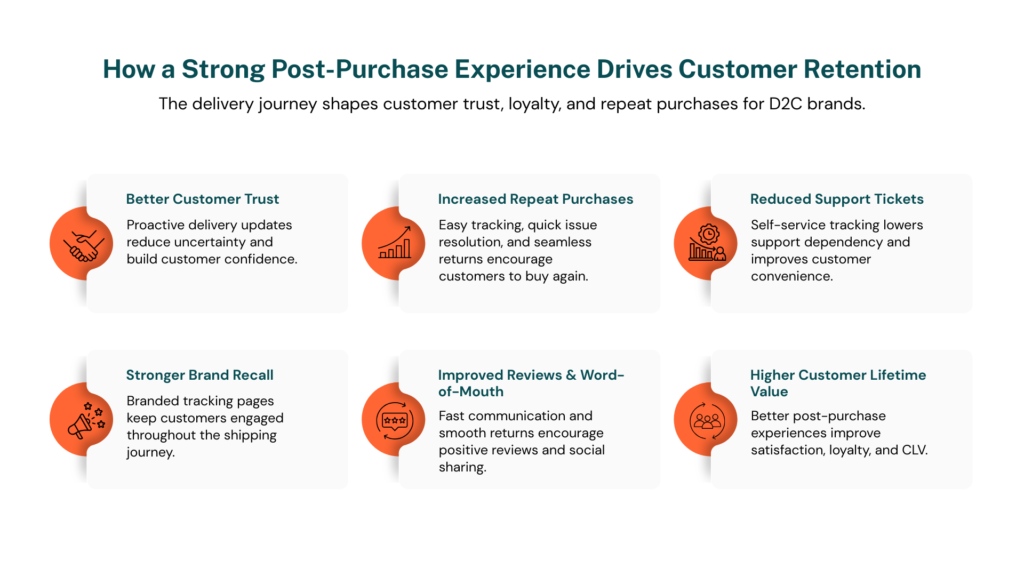
For many D2C brands, the delivery journey becomes the longest interaction customers have with the brand. Every message, update, and delivery interaction influences whether customers will purchase again.
Better Customer Trust
Transparent communication builds confidence. When customers receive proactive updates about delays or delivery schedules, they feel more informed and less anxious.
Trust is built through consistency, especially after checkout.
Increased Repeat Purchases
Customers are more likely to reorder from brands that provide smooth delivery experiences. Easy tracking, fast issue resolution, and seamless returns contribute directly to repeat purchase behavior.
A positive delivery experience can become a competitive advantage.
Reduced Support Tickets
Automated communication and self-service tracking reduce dependency on customer support teams. This lowers operational costs while improving customer convenience.
Instead of answering repetitive tracking questions, support teams can focus on higher-value interactions.
Stronger Brand Recall
Branded tracking pages keep customers connected to the brand throughout the shipping journey. This increases visibility and creates more opportunities for engagement after purchase.
Over time, consistent post-purchase experiences strengthen brand recognition.
Improved Reviews and Word-of-Mouth
Customers often share delivery experiences publicly through reviews and social media. Fast communication and smooth returns can turn ordinary deliveries into positive brand experiences.
Happy customers become long-term advocates.
Higher Customer Lifetime Value
Retention is one of the biggest growth drivers for D2C brands. A better post-purchase experience increases customer satisfaction, improves loyalty, and contributes to higher customer lifetime value (CLV).
Personalized engagement after shipping can transform logistics from an operational process into a retention opportunity.
Choosing the Right Post-Purchase Experience Platform for Your Brand
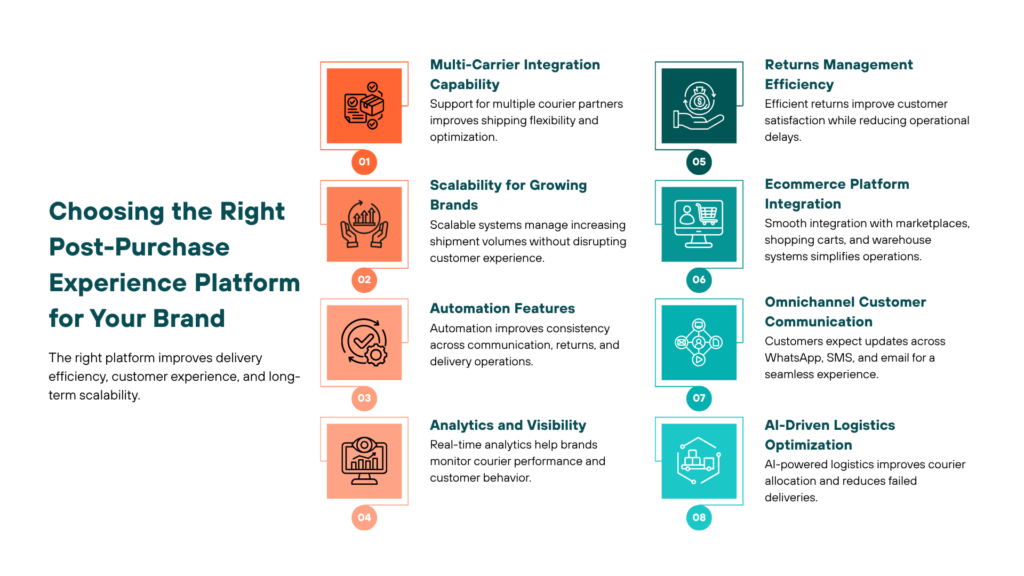
Selecting the right platform requires more than just shipment tracking capabilities. D2C brands should evaluate solutions based on scalability, automation, visibility, and customer experience features.
Here are some important factors to consider:
Multi-Carrier Integration Capability
The platform should support seamless integration with multiple courier partners to improve flexibility and shipping optimization.
Scalability for Growing Brands
As order volumes grow, brands need systems that can handle increasing shipment complexity without affecting customer experience.
Automation Features
Automation reduces manual effort and improves consistency across customer communication, returns management, and delivery workflows.
Analytics and Visibility
Detailed insights into delivery performance, courier efficiency, and customer behavior help businesses make informed decisions.
Returns Management Efficiency
A streamlined returns process improves customer satisfaction while reducing operational bottlenecks.
Ecommerce Platform Integration
The platform should integrate easily with ecommerce marketplaces, shopping carts, and warehouse systems.
Omnichannel Customer Communication
Customers expect communication through their preferred channels. The ability to manage notifications across WhatsApp, SMS, and email is essential.
AI-Driven Logistics Optimization
AI-powered automation can improve courier allocation, reduce failed deliveries, and optimize shipping performance.
Conclusion
The post-purchase journey has become one of the most important stages in the D2C customer experience. From shipment tracking and delivery communication to returns and refunds, every interaction after checkout shapes how customers perceive a brand. A smooth and transparent experience not only reduces customer frustration but also improves retention, loyalty, and long-term revenue growth.
As customer expectations continue to rise, D2C brands can no longer rely on manual tracking updates or disconnected logistics processes. Investing in the right post-purchase experience platform for D2C brands helps businesses streamline operations, improve visibility, reduce support queries, and create stronger customer relationships.
Brands that prioritize proactive communication, faster issue resolution, and seamless returns will stand out in an increasingly competitive ecommerce market. Platforms like Post-Shipment Engagement by eShipz help businesses simplify shipping operations, automate customer engagement, and deliver smoother post-purchase experiences that turn one-time buyers into loyal customers.