




Consumer purchasing behavior refers to how customers make decisions when buying products or services. It explains the patterns people follow while evaluating options, influenced by factors such as needs, preferences, trust, budget, emotions, and research before purchase. Some customers take time to compare alternatives and review details, while others make quick decisions based on convenience, recommendations, or past experiences. Understanding these differences helps businesses improve customer experience and align their strategies with real buying behavior.
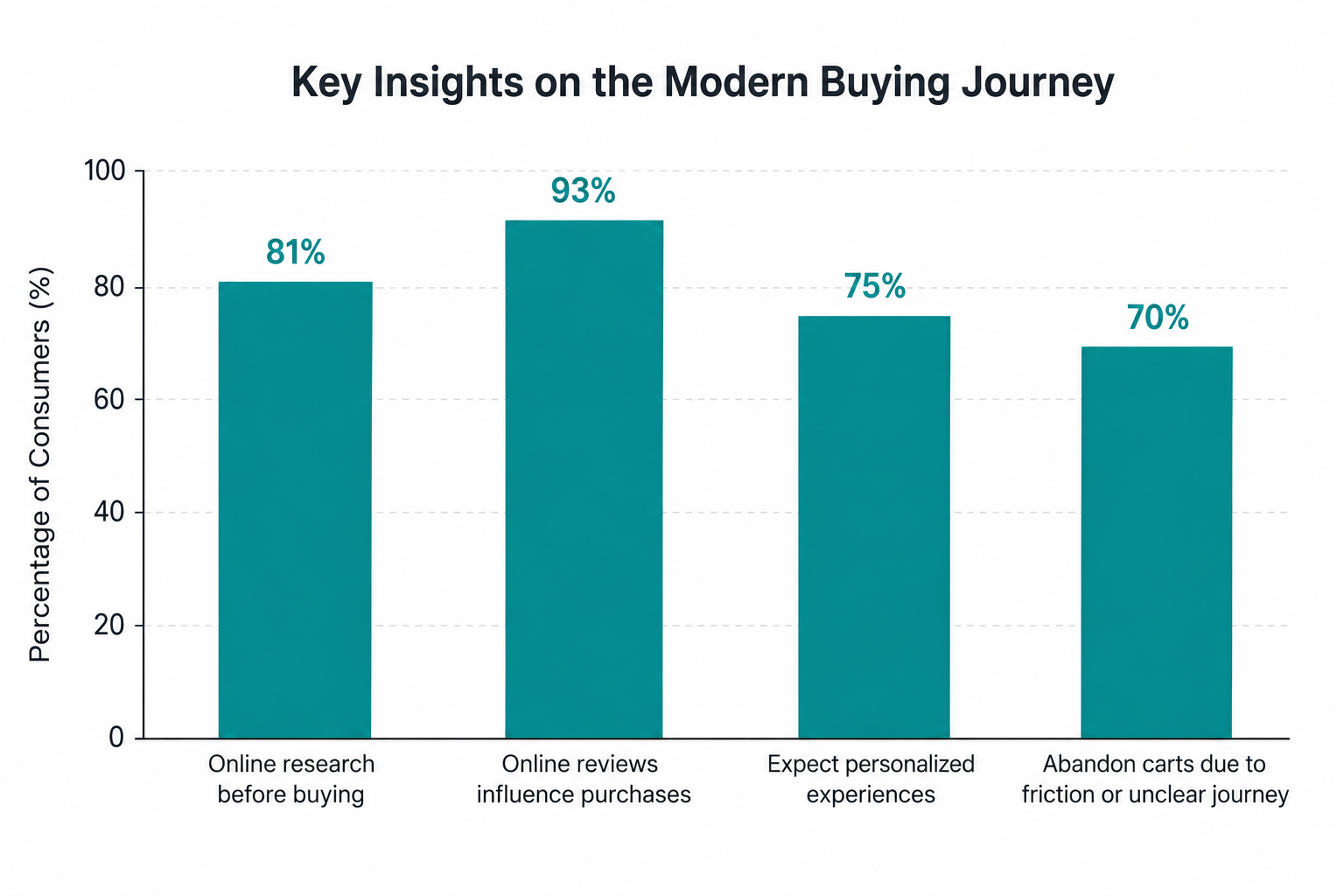
The modern buying journey has become more complex with the growth of ecommerce, digital marketplaces, and personalized shopping experiences. Consumers today have access to product reviews, competitor comparisons, social media recommendations, and instant information before making a purchase. Research shows that around 81% of shoppers conduct online research before buying, and nearly 93% of consumers say online reviews influence their purchase decisions, highlighting the importance of trust and social proof in the decision-making process. In addition, about 75% of users expect personalized experiences from brands, while nearly 70% of customers abandon carts due to friction in the buying journey or lack of clarity. This shift has made it important for brands to understand not only what customers buy, but also why and how they make decisions.
For ecommerce businesses, the challenge goes beyond attracting visitors. Different customers respond differently to pricing, promotions, product information, reviews, and brand messaging. A first-time shopper may need more trust-building content, while a returning customer may prioritize speed and convenience. Recognizing these patterns helps businesses improve marketing strategies, reduce abandoned carts, increase conversions, and create stronger customer relationships.
In this blog, we will explore the major consumer buying behavior patterns, the factors that influence purchase decisions, examples of each behavior type, and how businesses can use these insights to create more effective customer experiences.
Why Understanding Consumer Buying Patterns Matters Today
Customer decisions are no longer based only on product features or pricing. The buying process now involves multiple touchpoints where customers interact with brands before they complete a purchase. From discovering a product through social media to checking reviews and comparing alternatives, every interaction influences the final decision.
For businesses, understanding purchasing patterns helps answer important questions:
- Why do customers choose one brand over another?
- What motivates a buyer to complete a purchase?
- Why do some shoppers abandon their carts?
- Which factors influence repeat purchases?
Consumer behavior insights help brands design experiences that match customer expectations. Instead of using the same strategy for every buyer, companies can create targeted approaches based on different decision-making styles.
For example:
- A customer purchasing a premium electronic product may spend weeks researching specifications and reviews.
- A customer buying everyday essentials may prioritize availability and convenience.
- A fashion shopper may be influenced by trends, recommendations, and emotional appeal.
Each situation requires a different approach.
As competition increases across online channels, brands that understand customer psychology have a stronger advantage. They can improve product positioning, personalize communication, and remove barriers that prevent customers from completing purchases.
The Four Main Categories of Consumer Purchasing Behavior
Every customer follows a different path before completing a purchase. While some buyers spend considerable time researching and comparing options, others make decisions quickly based on familiarity, convenience, or personal preferences. The level of involvement, perceived risk, emotional connection, and differences between available choices all influence how consumers approach a buying decision.
Understanding these different patterns helps businesses predict customer needs and create better experiences at every stage of the journey. A customer purchasing a high-value product will not think the same way as someone buying a frequently used item. By identifying these behaviors, brands can improve their messaging, personalize interactions, and build strategies that match how customers actually make decisions.
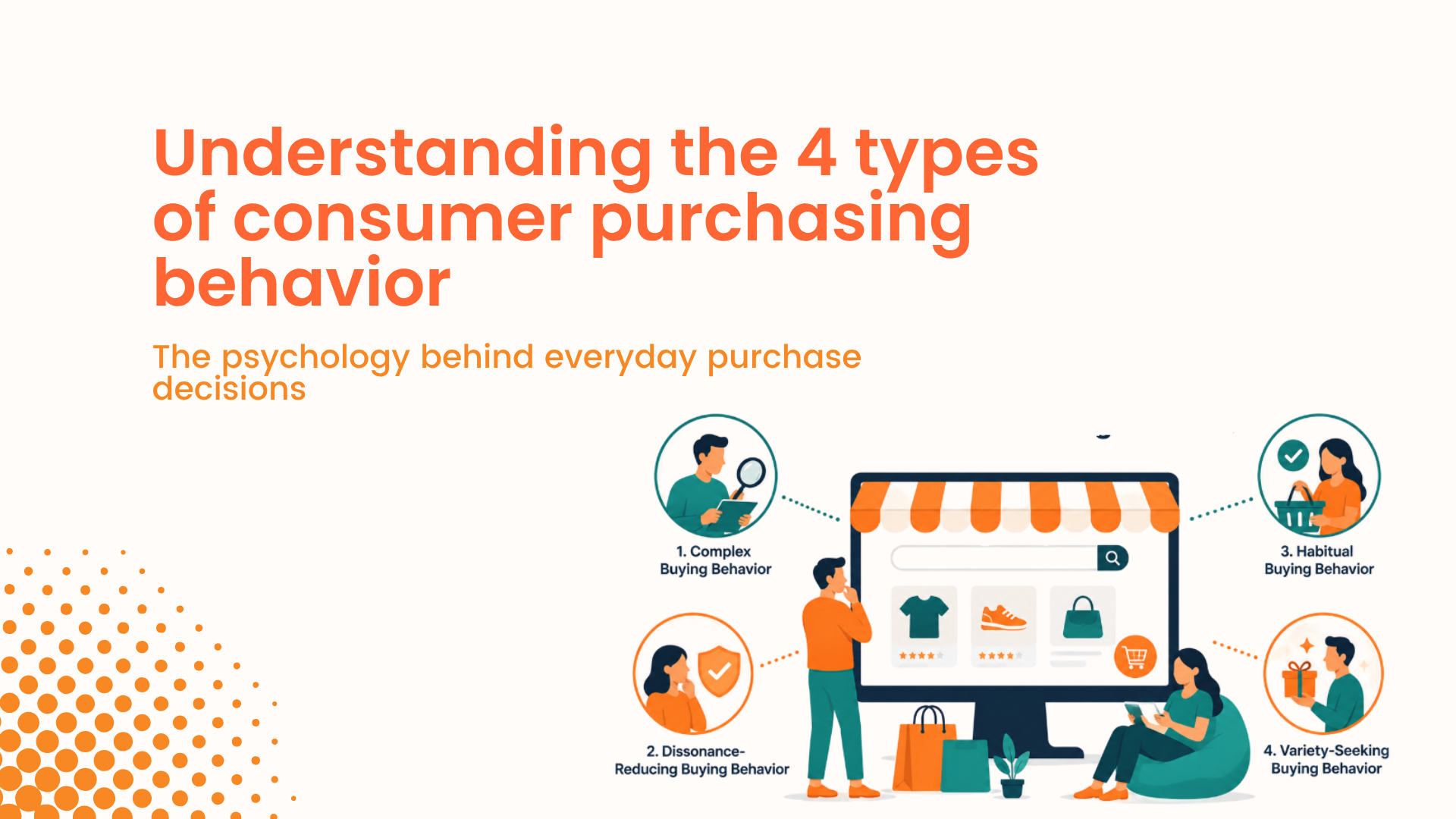
Based on customer involvement and purchase motivations, consumer purchasing behavior is generally divided into four major categories:
-
Complex Buying Behavior
Complex buying behavior occurs when customers are making important purchase decisions that involve higher cost, greater risk, or a long-term commitment. In these situations, customers usually do not make quick decisions. Instead, they spend significant time collecting information, comparing alternatives, understanding features, and evaluating whether the product or service truly meets their needs.
This type of behavior is common when the purchase has a major impact on the customer’s lifestyle, business operations, or financial decisions. Since the consequences of making the wrong choice are higher, buyers usually want complete clarity before moving forward.
For example, a customer purchasing a car may compare multiple models, check safety ratings, read customer reviews, calculate ownership costs, and evaluate financing options before making a final decision. Similarly, a business selecting enterprise software may consider pricing, scalability, integrations, security, customer support, and long-term value before choosing a solution.
Common examples of complex buying decisions include:
- Buying a car or premium vehicle
- Purchasing high-end electronics such as laptops, smartphones, or home appliances
- Selecting business software or technology solutions
- Choosing insurance, investment, or financial services
- Buying expensive furniture or professional equipment
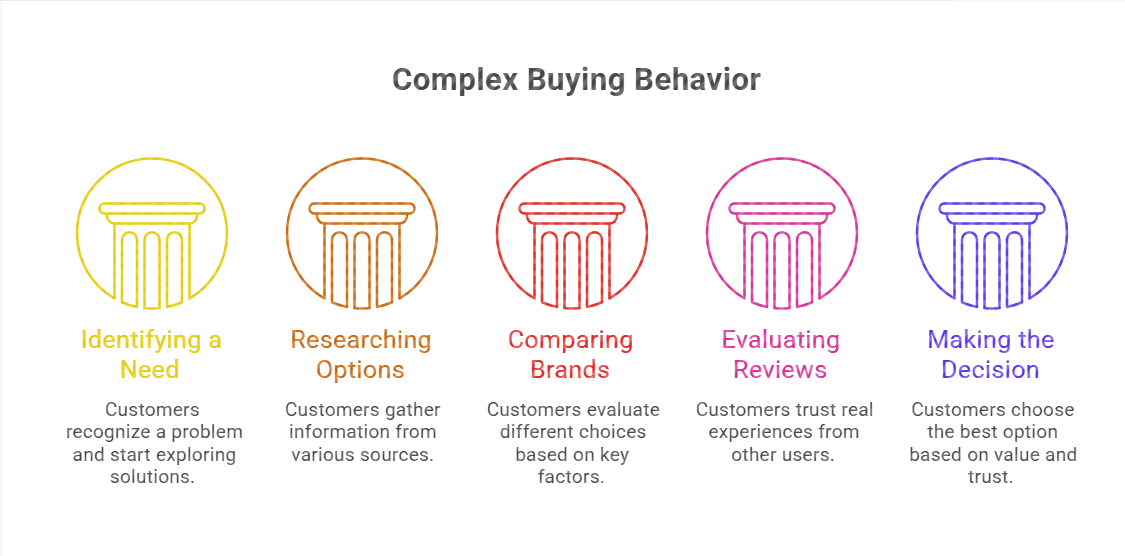
The decision-making journey in complex buying behavior usually follows a structured process:
Identifying a Need:
The process begins when customers recognize a problem or requirement. They understand that their current solution is no longer enough and start exploring possible options.
For example, a growing business may realize that manual operations are slowing down productivity and start searching for a better technology solution.
Researching Available Options:
Customers then gather information from different sources, including brand websites, online reviews, comparison articles, social media discussions, and recommendations.
At this stage, customers are not only looking at product features but also trying to understand reliability, performance, and overall value.
Comparing Brands and Features:
Once customers have enough information, they compare different choices based on factors such as:
- Pricing
- Features
- Quality
- Customer experience
- Brand reputation
- Long-term benefits
A strong brand presence and transparent information can influence customers during this stage.
Evaluating Reviews and Recommendations:
Customer reviews, testimonials, expert opinions, and word-of-mouth recommendations play a major role in reducing uncertainty. Buyers often trust real experiences from other users before making a high-involvement purchase.
Making the Final Decision:
After evaluating all factors, customers choose the option that provides the best balance between value, trust, and confidence.
For brands targeting customers with complex buying behavior, the focus should not only be on selling a product but also on helping customers make an informed decision. Educational content, detailed product explanations, comparison guides, demos, and transparent communication can help reduce hesitation.
A customer involved in a complex purchase is not simply looking for a product. They are looking for confidence that their decision will deliver the expected value.
-
Dissonance-Reducing BuyingBehavior
Sometimes customers are highly involved in a purchase but see very little difference between available brands. This creates a situation where they may worry about making the wrong decision after buying.
This behavior is common in categories such as:
- Home appliances
- Furniture
- Insurance plans
- Professional services
Customers often compare options, but the final choice may depend on factors like:
- Price
- Availability
- Customer support
- Brand reputation
- Delivery experience
After purchase, reassurance becomes important. Customers may look for confirmation that they selected the right product.
Businesses can reduce this uncertainty through:
- Clear return policies
- Warranty information
- Customer testimonials
- Helpful support content
The goal is to make customers feel confident before and after the purchase.
-
Habitual BuyingBehavior
Habitual buying behavior occurs when customers make purchases regularly with very little research or decision-making effort. These purchases are usually low-risk, frequently needed, and based on routine rather than extensive comparison.
In these situations, customers often choose products because they are familiar, convenient, or easily available. Brand loyalty and previous experience play a major role in influencing these decisions.
Examples of habitual purchases include:
- Grocery items
- Personal care products
- Household essentials
- Daily-use products
- Regular subscriptions
For instance, a customer buying toothpaste may not compare dozens of options every time they shop. They may simply choose the brand they already trust or the product they have used before.
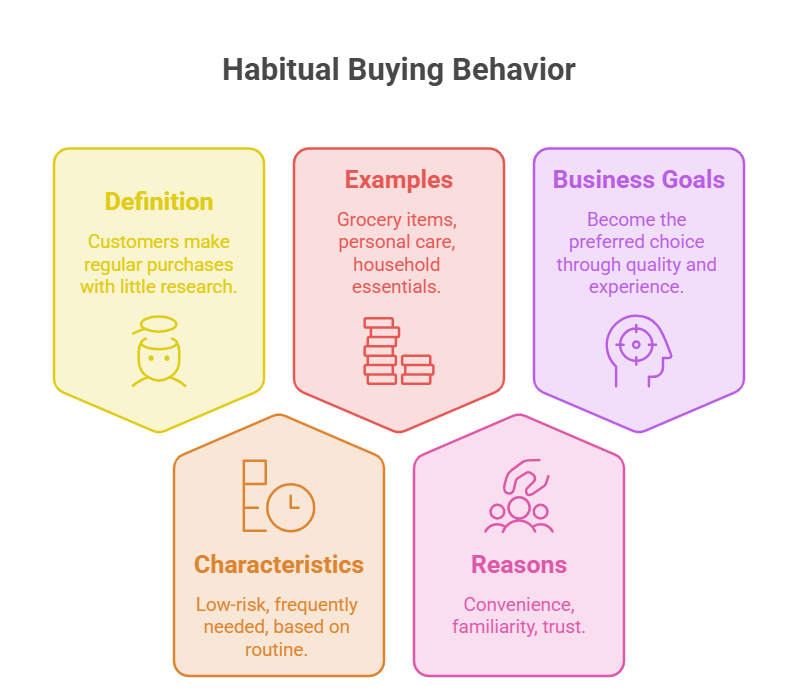
The main reasons behind habitual buying behavior include:
Convenience:
Customers prefer options that save time and require less effort. Easy availability and a smooth buying process encourage repeat purchases.
Familiarity:
Customers often stick with brands they already know because they have previous positive experiences.
Trust:
Consistent product quality and reliable service help brands become part of a customer’s regular routine.
For businesses, the goal is to become the preferred choice whenever customers need a particular product. This can be achieved through:
- Consistent product quality
- Simple purchasing experiences
- Loyalty programs
- Personalized recommendations
- Subscription models
While these purchases may seem simple, they represent valuable opportunities for brands to build long-term customer relationships.
-
Variety-Seeking BuyingBehavior
Variety-seeking buying behavior occurs when customers frequently switch between brands or products, not because they are dissatisfied, but because they enjoy trying new options.
These customers usually make low-risk purchases but look for excitement, innovation, and new experiences. They are motivated by curiosity, trends, promotions, and the desire to explore different choices.
Examples include:
- Snacks and beverages
- Fashion products
- Beauty products
- Entertainment subscriptions
- New technology accessories
A customer who regularly tries different coffee flavors or switches between clothing brands may not be searching for a better product. They may simply want something different.
Factors that influence variety-seeking behavior include:
New Experiences:
Customers are attracted to brands that introduce new products, limited editions, or unique features.
Promotions and Offers:
Discounts and special campaigns often encourage customers to experiment with alternatives.
Trends and Social Influence:
Social media, influencers, and peer recommendations can strongly impact customers who enjoy discovering new products.
Brands targeting variety-seeking customers can focus on:
- Product innovation
- Seasonal launches
- Creative marketing campaigns
- Personalized recommendations
- Customer engagement
The key is to keep the customer interested by continuously offering fresh experiences.
Factors That Influence Consumer Purchasing Decisions
Every purchase decision has a reason behind it. Customers may choose a product because of its price, quality, convenience, emotions, recommendations, or even a small detail that creates trust. While buying behavior may look simple from the outside, several internal and external factors influence how customers evaluate options and decide what to purchase.
A customer’s decision is rarely based on a single factor. Their personal needs, previous experiences, social influence, financial situation, and perception of a brand all work together during the buying journey. Understanding these influences helps businesses create better experiences, communicate more effectively, and offer solutions that match customer expectations.
Some of the key factors that shape consumer purchasing decisions include:
| Factor Influencing Purchase Decisions
|
How It Shapes Consumer Behavior |
| Personal Factors | Customer preferences, lifestyle, age, income level, and individual needs influence what products they consider valuable. Personal priorities determine whether a buyer focuses on quality, convenience, durability, or affordability. |
| Psychological Factors | Emotions, motivation, perception, and beliefs affect how customers view brands and products. Trust, familiarity, confidence, and emotional connection often influence the final purchase decision. |
| Social Factors | Consumer choices are influenced by social interactions, recommendations, reviews, communities, and shared experiences. People often consider the opinions and experiences of others before purchasing. |
| Economic Factors | Financial situation, pricing, discounts, and perceived value impact how customers evaluate purchases. Buyers balance the benefits of a product with the overall cost involved. |
Understanding consumer purchasing behavior is not just about identifying how people buy, it is about understanding why they buy in the first place. Every customer decision is shaped by a mix of logic, emotion, influence, and personal need, and these factors vary across different buying situations. From complex, high-involvement purchases to simple habitual decisions, each behavior type reflects a different level of thought process and engagement.
For businesses and ecommerce brands, these insights are essential for building better customer experiences. When companies align their strategies with how customers think and decide, they can reduce friction, improve trust, and guide users more effectively through the buying journey. This leads not only to higher conversions but also stronger long-term relationships with customers.
In a market where choices are endless and attention spans are limited, understanding customer behavior becomes a key competitive advantage. Brands that continuously study and adapt to these patterns are better positioned to stay relevant, build loyalty, and grow sustainably in the evolving ecommerce landscape.
How Ecommerce Brands Can Use Consumer Behavior Insights
Understanding customer behavior helps businesses move from generic selling to more customer-focused experiences. When brands recognize how different customers think and make decisions, they can design journeys that feel more relevant, timely, and efficient.
Brands can use these insights to:
- Create personalized recommendations
- Improve website and checkout experiences
- Develop targeted marketing campaigns
- Reduce customer hesitation during purchase decisions
- Increase repeat purchases and retention
- Build stronger long-term customer relationships
For example, a customer showing complex buying behavior may need detailed product guides, comparison content, and trust-building information, while a habitual buyer may respond better to quick checkout flows, reorder options, and simplified navigation.
In ecommerce and logistics-driven environments, these insights also extend beyond marketing and directly impact fulfillment experiences. Platforms like eShipz demonstrate how understanding customer behavior can improve post-purchase journeys as well. By enabling smarter shipping automation, multi-carrier selection, real-time tracking updates, and delivery experience management, businesses can align fulfillment speed and reliability with customer expectations, especially for high-involvement buyers who value transparency and control.
The more accurately brands understand customer behavior, the easier it becomes to deliver relevant experiences at every stage of the journey, from discovery to checkout to final delivery.
From Customer Behavior to Business Impact
Consumer purchasing decisions are shaped by a mix of needs, emotions, trust, research, and past experiences. Every customer follows a different path before making a purchase, and these differences define how they interact with brands across the buying journey.
The four major purchasing behavior types, complex, dissonance-reducing, habitual, and variety-seeking, show that customers do not think in the same way when they buy. Some need detailed information and reassurance, while others rely on speed, familiarity, or discovery-driven choices.
For ecommerce brands, understanding these behaviors is not just about improving sales, it is about connecting the entire experience, from marketing to fulfillment. Platforms like eShipz help extend this understanding into execution by improving shipping visibility, delivery reliability, and post-purchase experience, ensuring that customer expectations are met consistently even after the purchase is made.