



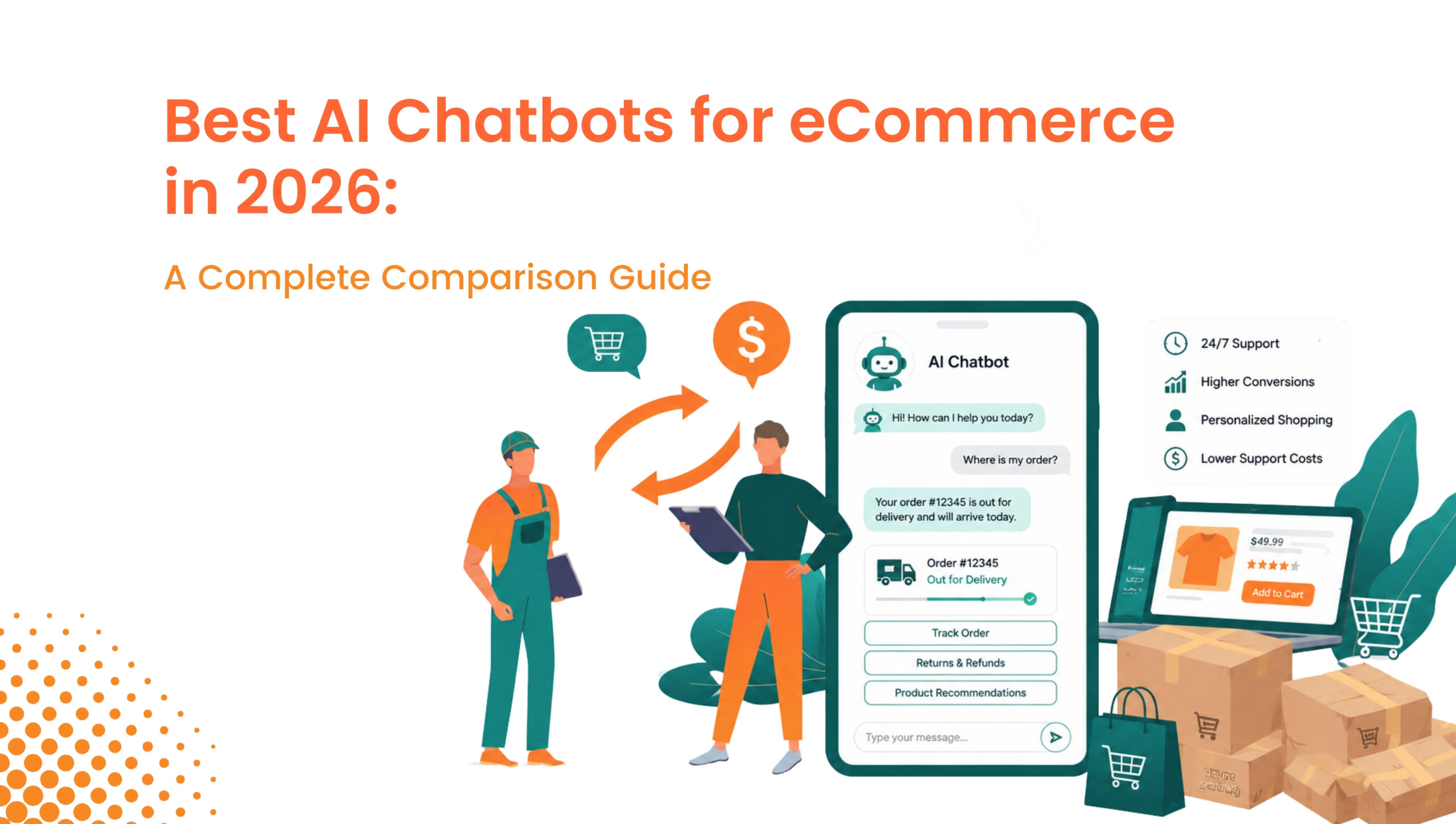
AI chatbots for ecommerce have become essential as customer expectations continue to evolve faster than ever. Ecommerce businesses are under increasing pressure to deliver instant responses, personalized product recommendations, real-time order tracking, and seamless support across websites, mobile apps, and social media channels, all available 24/7. Traditional customer support models, built around long wait times and manual processes, are no longer enough. As a result, AI-powered chatbots are helping brands automate customer conversations, resolve issues faster, improve engagement, and deliver personalized shopping experiences at scale. These AI chatbots are becoming a core part of modern customer support automation, helping businesses provide faster and more efficient customer interactions.
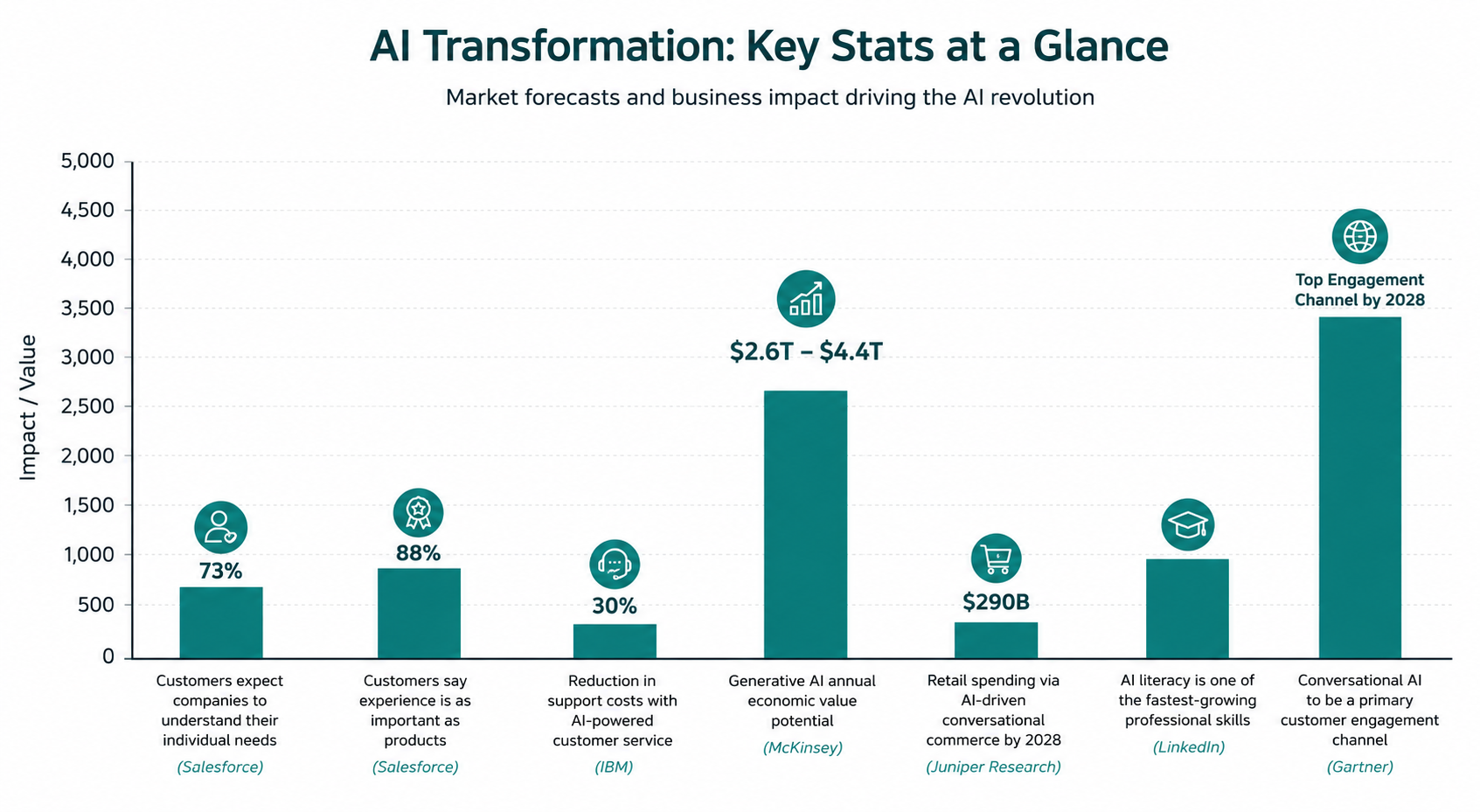
The numbers highlight just how quickly this transformation is happening. Gartner predicts that Conversational AI will become one of the primary customer engagement channels for businesses worldwide. McKinsey estimates that generative AI could create $2.6 trillion to $4.4 trillion in annual economic value, with customer operations among the biggest beneficiaries. According to Salesforce, 73% of customers expect companies to understand their individual needs, while 88% say the experience a company provides is as important as its products. Research from IBM shows AI-powered customer service can reduce support costs by up to 30%, and Juniper Research forecasts that retail spending through AI-driven conversational commerce will exceed $290 billion by 2028. Meanwhile, LinkedIn’s Workplace Learning Report identifies AI literacy as one of the fastest-growing professional skills, reflecting how businesses across ecommerce, logistics, sales, and marketing are rapidly investing in AI-driven operations.
As AI capabilities continue to advance, chatbots have evolved far beyond answering basic FAQs. Modern AI chatbot software can understand natural conversations, access live business data, automate returns, recommend products, recover abandoned carts, provide shipment updates, and integrate with ecommerce platforms, CRMs, payment gateways, and logistics systems. These AI chatbot platforms are helping businesses create seamless digital experiences while reducing dependency on manual support processes.
With dozens of AI solutions available, businesses are now evaluating the best AI chatbot tools based on automation capabilities, integrations, scalability, and customer experience impact. The right AI chatbot for customer service can reduce support costs, improve customer satisfaction, increase conversions, and deliver a seamless shopping experience, while the wrong choice can create operational complexity and fragmented customer journeys.
Why AI Chatbots Matter More Than Ever in 2026
The ecommerce landscape has become increasingly competitive. As customer acquisition costs continue to rise and consumer expectations evolve, businesses are looking beyond traditional customer support to build stronger, more personalized relationships throughout the buying journey.
Several industry trends are accelerating the adoption of AI customer service solutions:
- Customers increasingly expect 24/7 support across websites, mobile apps, WhatsApp, Instagram, Facebook Messenger, and email.
- Global ecommerce sales continue to grow, creating significantly higher support volumes for online retailers.
- Generative AI has made conversations more natural, contextual, and human-like than previous chatbot generations.
- Businesses are shifting from reactive customer service toward proactive engagement, where AI can anticipate questions before customers even ask them.
- Brands are integrating AI with logistics, CRM, and inventory systems to deliver real-time information without requiring human intervention.
This shift is especially relevant for businesses operating in India’s rapidly expanding ecommerce ecosystem. As digital commerce reaches Tier II and Tier III cities, brands must support diverse customer segments, regional languages, multiple payment methods, and increasingly complex fulfillment networks. AI chatbot for ecommerce businesses is helping brands scale these operations while maintaining consistent service quality across channels.
Beyond customer support, AI chatbots are becoming valuable business intelligence tools. Every customer interaction provides insights into buying behavior, product preferences, recurring issues, and emerging trends. When combined with analytics, these conversations help businesses optimize inventory planning, marketing campaigns, product recommendations, and post-purchase experiences through advanced customer experience automation.
What Makes Today’s AI Chatbots Different?
Earlier chatbot solutions primarily relied on predefined scripts and decision trees. While effective for answering repetitive questions, they often struggled with complex requests, unexpected inputs, or conversations requiring context.
Today’s AI chatbot platforms operate very differently. Powered by large language models and advanced machine learning, they can:
- Understand conversational language instead of relying solely on keyword matching.
- Maintain context throughout multi-step conversations.
- Access real-time business data, including orders, inventory, shipping updates, and customer history.
- Recommend products based on customer intent and browsing behavior.
- Automate returns, refunds, cancellations, and support workflows.
- Escalate complex issues intelligently when human intervention is needed.
- Continuously improve through machine learning and customer interactions.
These capabilities are transforming AI chatbots into autonomous digital assistants and advanced chatbot solutions for businesses that support both customers and internal teams across the entire ecommerce lifecycle.
Key Features to Evaluate Before Choosing an AI Chatbot
With dozens of AI-powered customer engagement platforms available today, choosing the right one requires more than comparing feature lists. The best solution depends on your business model, ecommerce platform, customer support volume, and long-term automation goals.
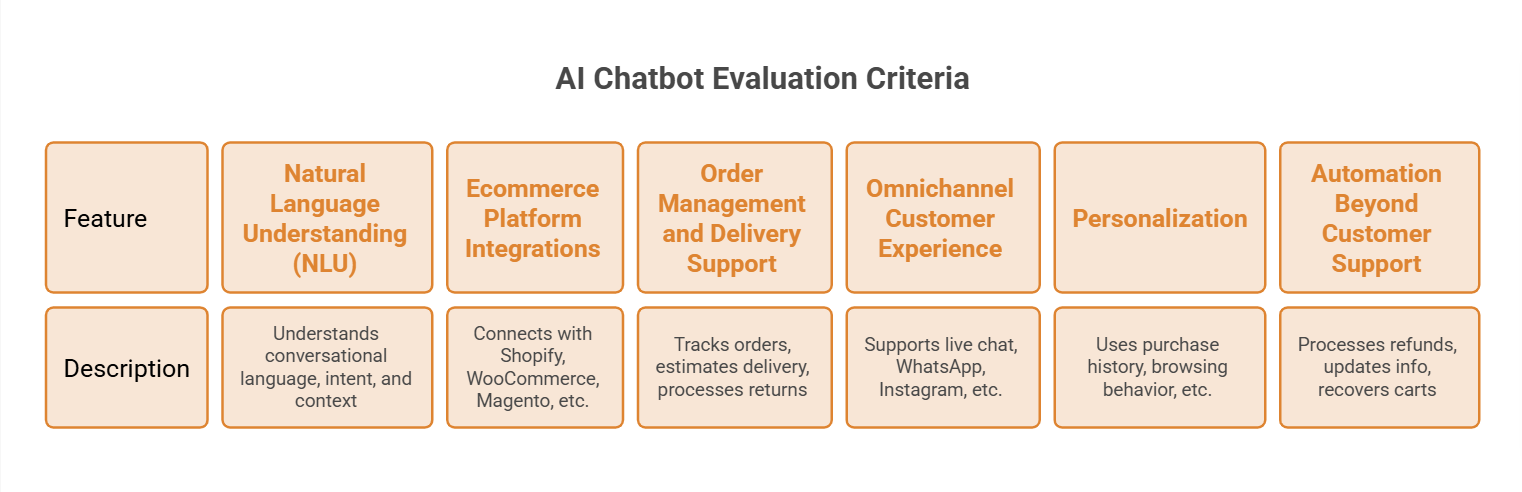
Before making a decision, evaluate each platform across these essential capabilities.
- Natural Language Understanding (NLU)
Modern customers don’t communicate using predefined keywords. They ask questions naturally, often combining multiple requests in a single conversation.
An effective AI chatbot should be able to:
- Understand conversational language
- Recognize customer intent
- Handle follow-up questions
- Maintain context throughout the conversation
- Respond accurately without requiring scripted workflows
Large Language Models (LLMs) have significantly improved this capability, allowing chatbots to sound more human while reducing misunderstandings.
- Ecommerce Platform Integrations
A chatbot becomes truly valuable only when it can connect with the systems your business already uses.
Look for integrations with:
- Shopify
- WooCommerce
- Magento
- BigCommerce
- Salesforce
- HubSpot
- Zendesk
- Payment gateways
- Shipping platforms
- Inventory management systems
The deeper these integrations, the more tasks the chatbot can automate without requiring manual intervention.
- Order Management and Delivery Support
Post-purchase support represents one of the highest customer inquiry volumes for online retailers.
The ideal AI assistant should automatically help customers:
- Track orders
- Check shipment status
- Estimate delivery dates
- Modify delivery details
- Process cancellations
- Initiate returns
- Resolve delivery exceptions
This significantly reduces repetitive support tickets while improving customer satisfaction.
- Omnichannel Customer Experience
Today’s shoppers move between multiple communication channels before making a purchase.
Rather than limiting conversations to your website, look for platforms supporting:
- Live chat
- Facebook Messenger
- SMS
- Mobile applications
Maintaining conversation history across every channel creates a far more consistent customer experience.
- Personalization
AI has evolved far beyond answering FAQs.
Leading platforms now personalize conversations using:
- Previous purchase history
- Browsing behavior
- Loyalty status
- Customer location
- Product preferences
- Cart activity
According to Salesforce, customers are significantly more likely to purchase from brands that deliver personalized experiences throughout the buying journey.
- Automation Beyond Customer Support
The strongest AI platforms don’t simply answer questions, they execute business processes.
Examples include:
- Processing refund requests
- Updating customer information
- Creating support tickets
- Escalating complex issues
- Triggering workflows
- Recovering abandoned carts
- Booking appointments
- Collecting customer feedback
The more actions AI can perform independently, the greater the operational efficiency.
Comparing the Top AI Chatbots for eCommerce
|
Platform |
Best For |
Key Strength |
| Gorgias
|
Shopify brands
|
Deep ecommerce automation
|
| Tidio | SMBs & growing stores
|
Fast AI deployment
|
| Intercom
|
Enterprise support
|
Advanced AI customer service
|
| ManyChat
|
Social commerce | Instagram & Facebook automation |
| YourGPT
|
No-code AI workflows
|
Visual AI builder |
| Bloomreach
|
Personalized shopping
|
AI product discovery
|
| Chatfuel
|
Small businesses | Messaging automation |
| Zendesk AI
|
Large support teams
|
AI-powered ticket management
|
| Ada
|
Global enterprises
|
Autonomous multilingual support
|
| Ada
|
Technical teams
|
Highly customizable AI agents
|
Every platform brings different strengths to the table. Some prioritize customer service automation, while others focus on conversational commerce, product recommendations, or enterprise workflow orchestration.
Let’s examine each solution in detail.
-
Gorgias
Best for: Shopify-first ecommerce businesses
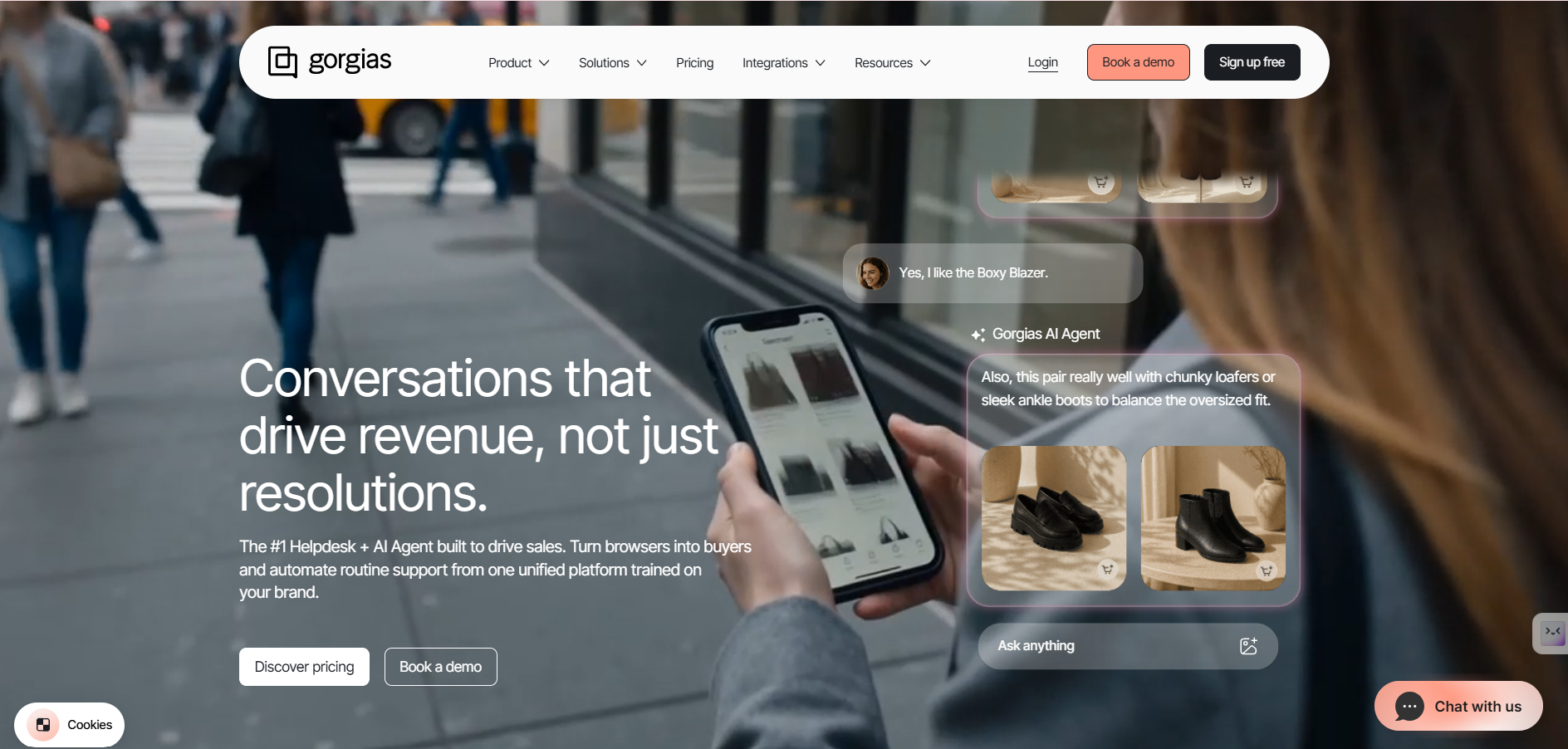
Gorgias has become one of the most recognized AI-powered customer support platforms for Shopify merchants. Unlike traditional helpdesk software, it is purpose-built for ecommerce, allowing support teams to access orders, modify subscriptions, issue refunds, and manage customer conversations from a single workspace.
Its AI Agent automates repetitive customer requests, enabling support teams to focus on complex issues rather than answering the same shipping or return questions repeatedly.
Key Features
- Native Shopify integration
- AI-powered customer support automation
- Order editing and cancellation
- Returns management
- Customer sentiment analysis
- Shared omnichannel inbox
- Automation rules for repetitive tickets
Pros
✔ Excellent Shopify ecosystem support
✔ Reduces repetitive customer inquiries
✔ Strong automation capabilities
✔ Easy deployment
Considerations
- Less suitable for businesses outside the Shopify ecosystem
- Premium pricing may not suit smaller startups
-
Tidio
Best for: Small and medium-sized ecommerce businesses
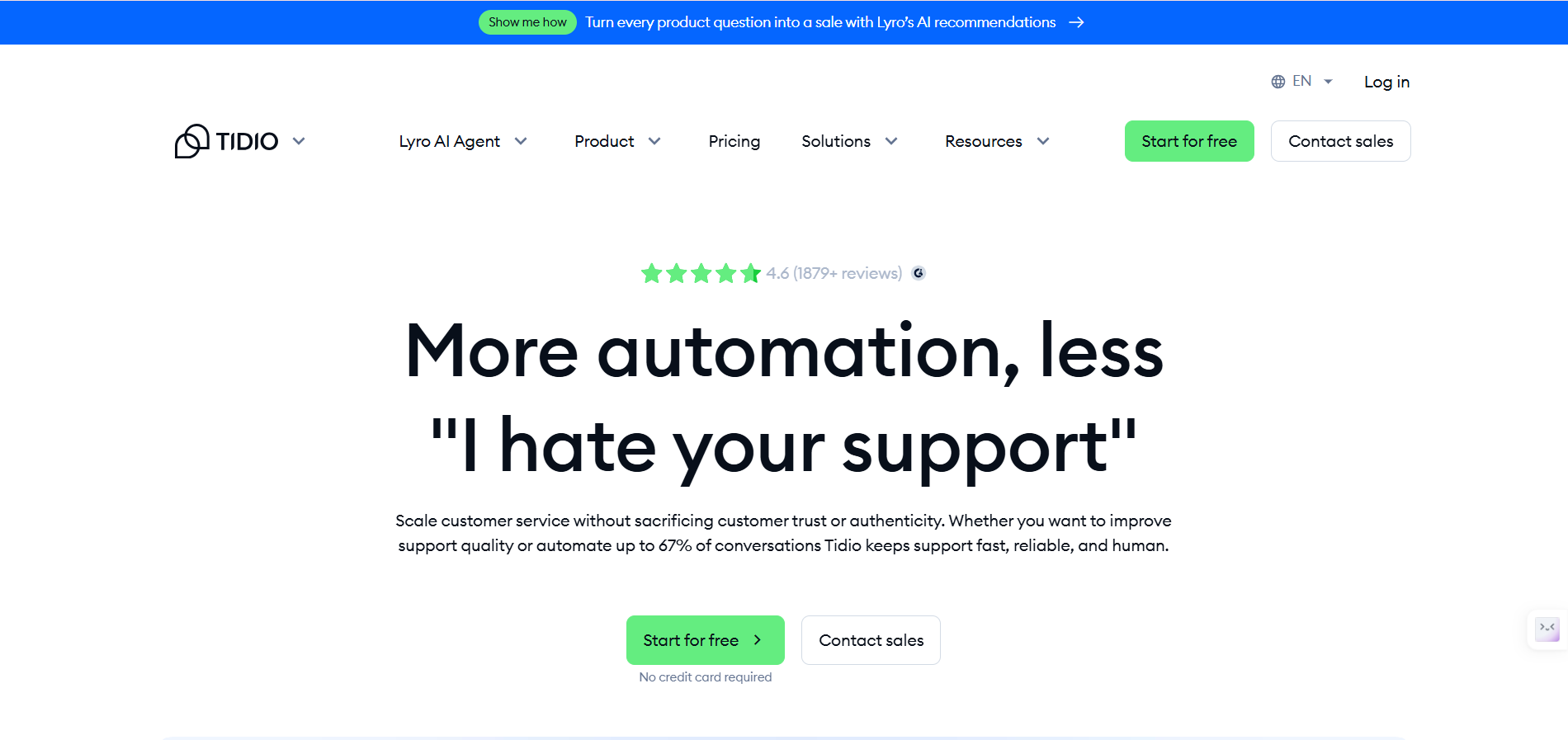
Tidio combines live chat with conversational AI, making it an attractive option for businesses beginning their automation journey. Its proprietary AI assistant, Lyro, learns from existing support content and starts responding to customers with minimal setup.
The platform is designed for teams that want to automate customer interactions without investing months in AI training or implementation.
Key Features
- Lyro AI assistant
- Live chat
- Visitor behavior tracking
- Shopify integration
- Email automation
- Lead generation
- Multichannel messaging
Pros
✔ Quick implementation
✔ User-friendly interface
✔ Affordable pricing
✔ Strong live chat capabilities
Considerations
- Limited enterprise customization
- Advanced workflows require higher-tier plans
-
Intercom
Best for: Large ecommerce businesses and enterprise support teams
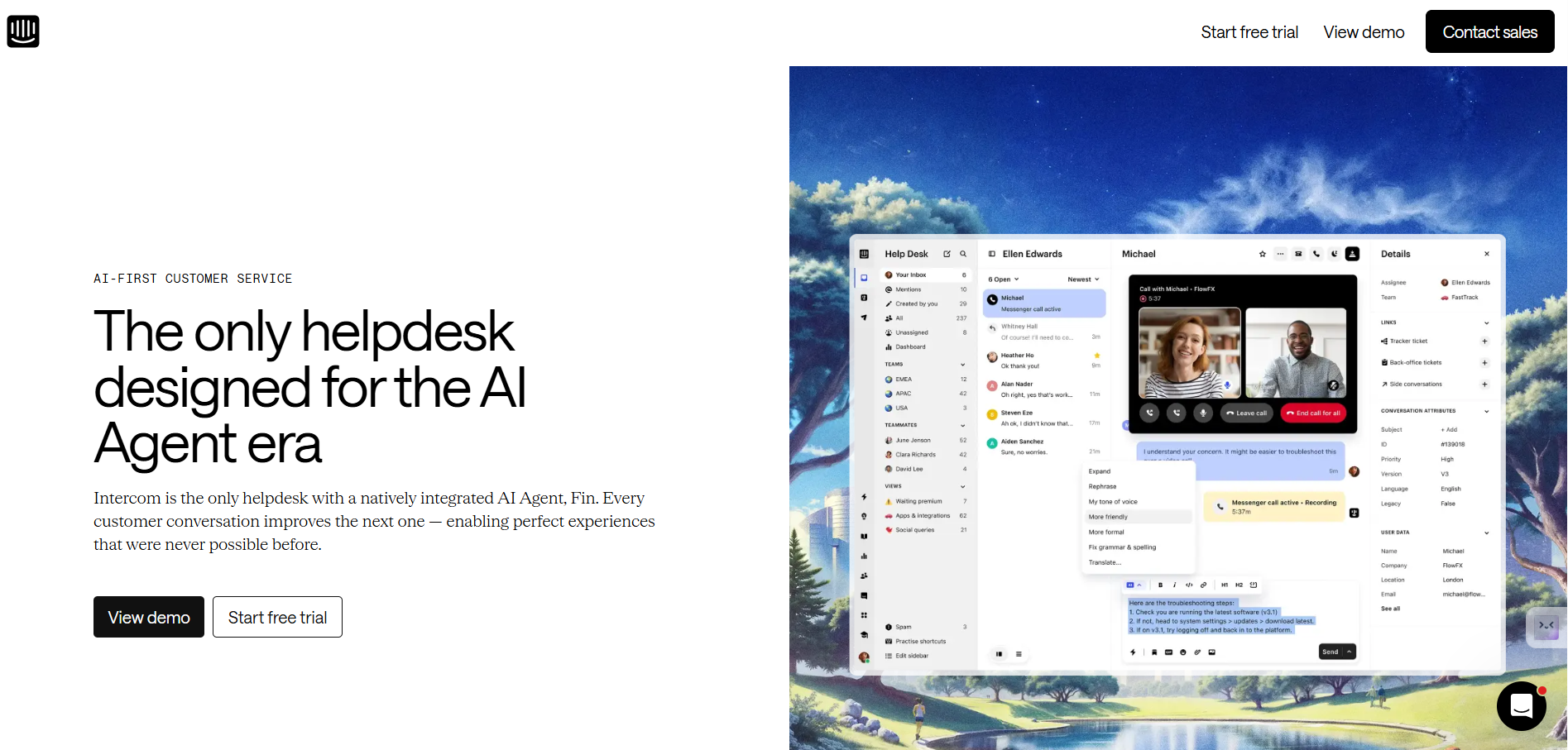
Intercom has evolved from a messaging platform into a sophisticated AI customer service solution. Its Fin AI Agent leverages advanced language models to resolve customer questions using business knowledge bases, help center articles, and connected business systems.
The platform excels in organizations managing thousands of customer conversations daily across multiple communication channels.
Key Features
- Fin AI Agent
- Omnichannel inbox
- Knowledge base integration
- Workflow automation
- AI ticket routing
- Customer segmentation
- Reporting dashboards
Pros
✔ Highly scalable
✔ Enterprise-grade automation
✔ Strong analytics
✔ Excellent omnichannel experience
Considerations
- Higher implementation cost
- More configuration compared to SMB-focused tools
-
ManyChat
Best for: Social commerce and conversational marketing

ManyChat specializes in helping businesses engage customers across Instagram, Facebook Messenger, and WhatsApp. Rather than functioning as a traditional support platform, it focuses on automating marketing campaigns, customer engagement, lead generation, and abandoned cart recovery directly through messaging apps.
As social commerce continues to grow, platforms like ManyChat enable brands to convert conversations into purchases without directing customers away from their preferred channels.
Key Features
- Instagram automation
- Facebook Messenger automation
- WhatsApp messaging
- Automated campaigns
- Lead generation
- Customer segmentation
- Cart recovery workflows
Pros
✔ Excellent for social selling
✔ Easy visual workflow builder
✔ Strong marketing automation
✔ No coding required
Considerations
- Limited traditional helpdesk functionality
- Better suited for customer engagement than complex support operations
-
YourGPT
Best for: Businesses seeking flexible, no-code AI automation
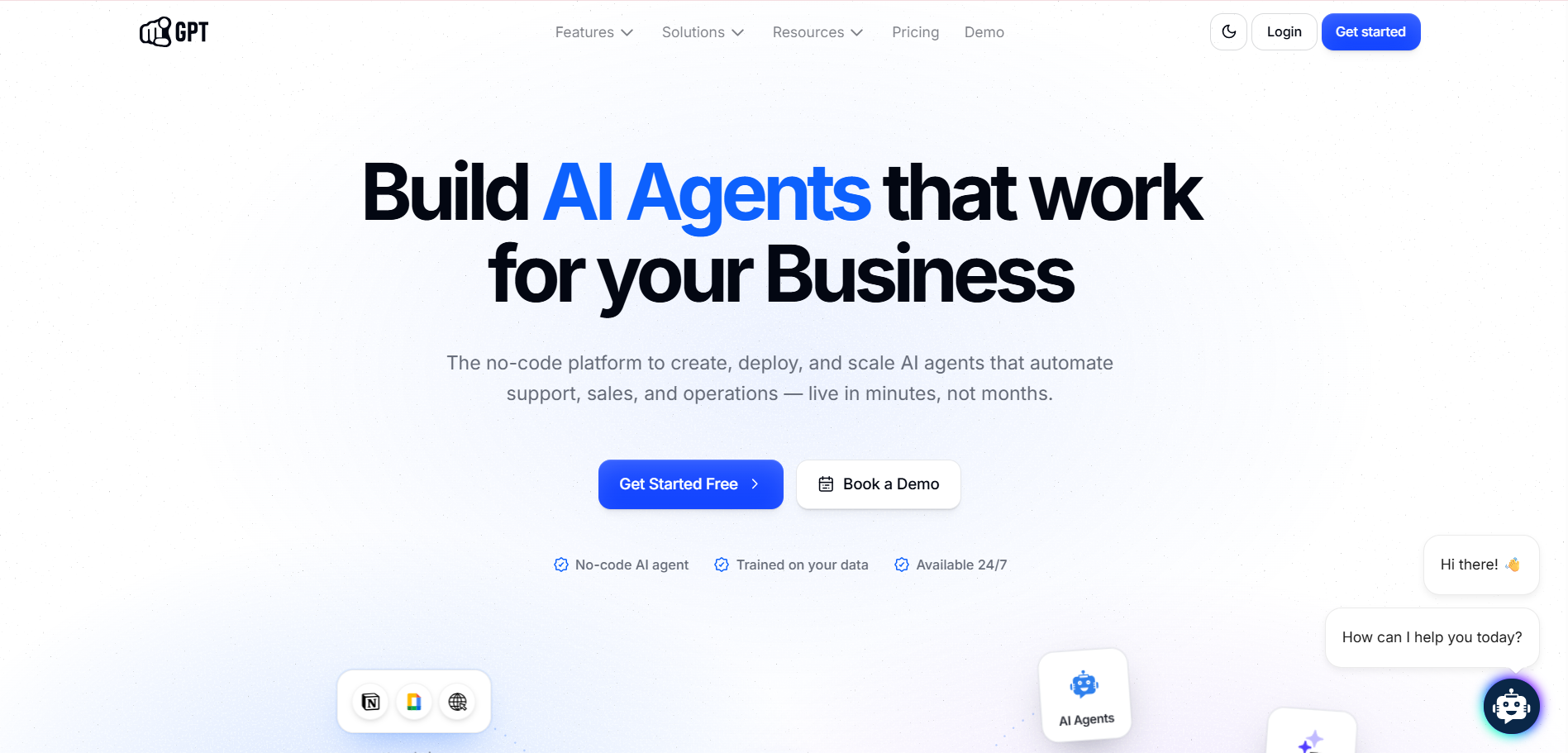
YourGPT focuses on giving businesses the flexibility to create intelligent AI assistants without requiring development expertise. Using its visual workflow builder, organizations can design conversational experiences that extend beyond customer support into sales, onboarding, internal operations, and product discovery.
The platform also supports multimodal interactions, allowing users to combine text, documents, images, and structured workflows within a single conversational interface.
Key Features
- No-code chatbot builder
- Visual workflow automation
- Multimodal AI
- CRM integrations
- API connectivity
- Knowledge base support
- Custom AI agents
Pros
✔ Highly flexible
✔ Easy workflow customization
✔ Suitable for multiple business functions
✔ Rapid deployment
Considerations
- Requires thoughtful workflow planning for complex use cases
- Smaller ecosystem compared to more established enterprise platforms
-
Bloomreach
Best for: AI-powered product discovery and personalized shopping experiences
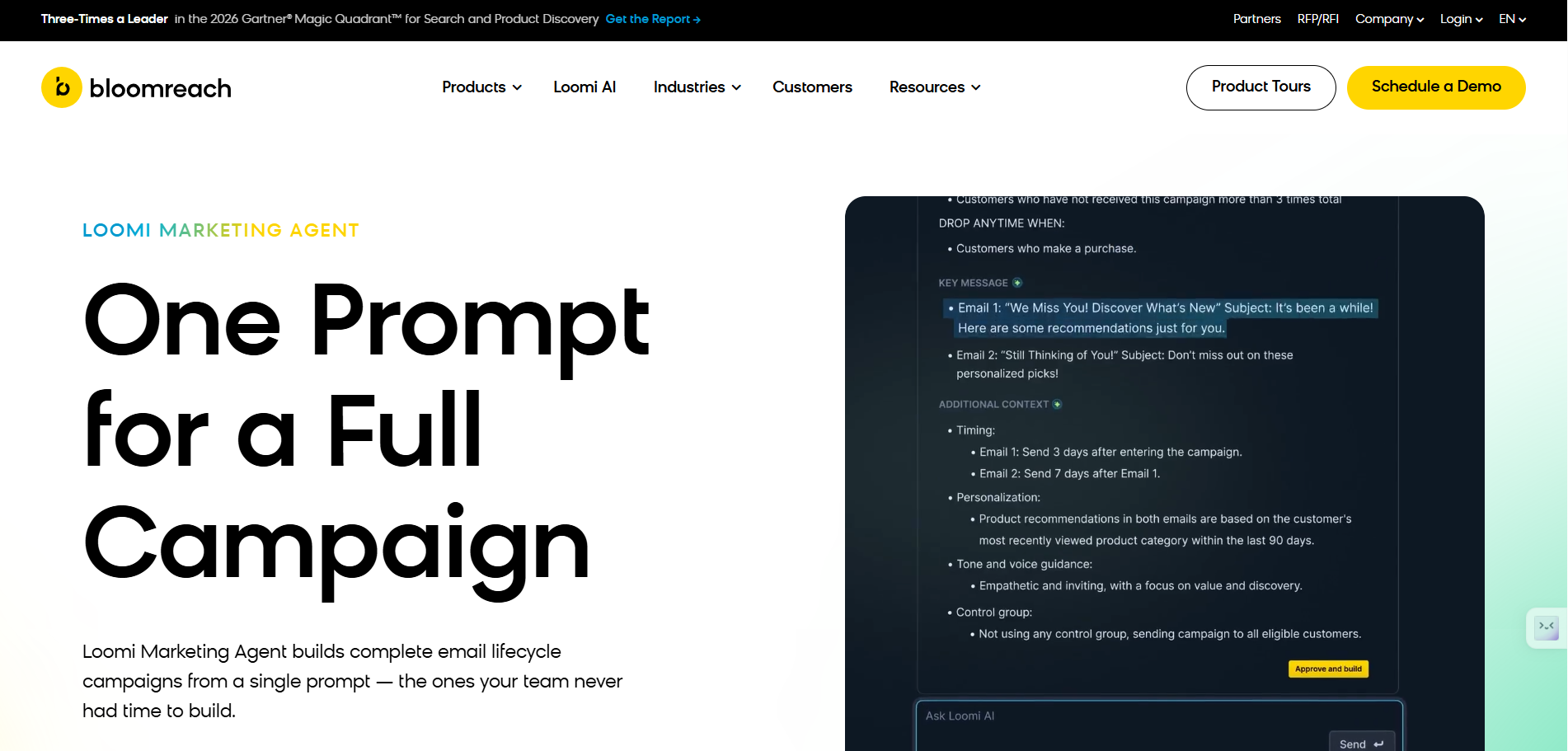
Bloomreach approaches conversational AI from a commerce-first perspective. Instead of focusing solely on customer support, it helps shoppers discover products faster through intelligent search, guided selling, and personalized recommendations.
Its AI understands product catalogs, customer intent, browsing behavior, and zero-party data to create highly relevant shopping experiences. For retailers managing thousands of SKUs, this can significantly improve product discovery while reducing friction during the buying journey.
Key Features
- AI-powered product recommendations
- Intelligent site search
- Guided selling experiences
- Product catalog understanding
- Personalization engine
- Customer journey orchestration
- Marketing automation integrations
Pros
✔ Excellent for large product catalogs
✔ Strong personalization capabilities
✔ Supports higher conversion rates
✔ Unified commerce experience
Considerations
- More commerce-focused than support-focused
- Best suited for mid-market and enterprise retailers
-
Chatfuel
Best for: Small ecommerce teams and messaging automation
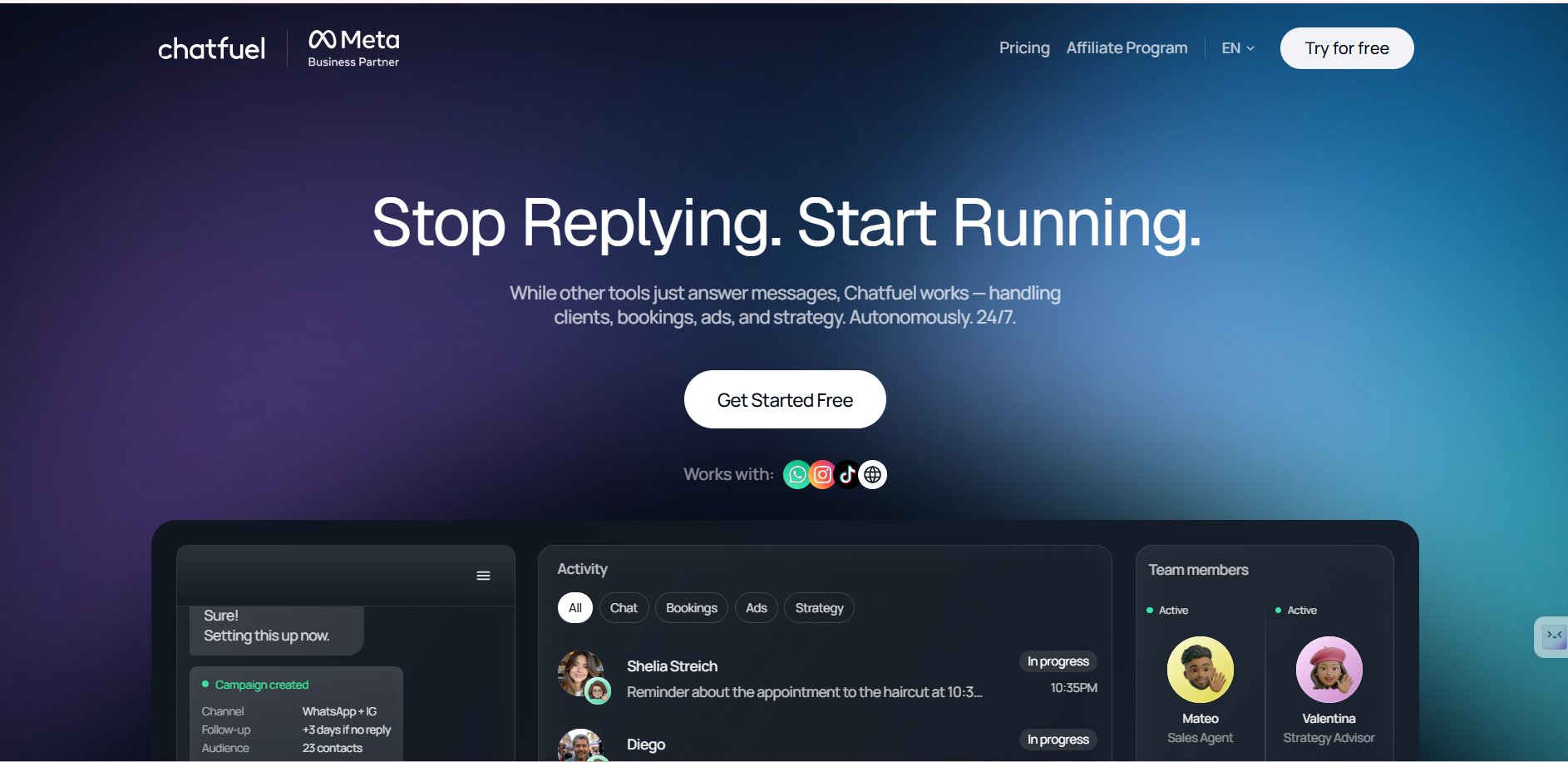
Chatfuel has long been a popular no-code platform for automating conversations on messaging applications. While originally built for Facebook Messenger, it now supports multiple channels, allowing businesses to automate FAQs, collect leads, qualify prospects, and engage customers without extensive technical expertise.
For small ecommerce businesses that need a simple, affordable automation solution, Chatfuel offers a practical starting point.
Key Features
- No-code chatbot builder
- Facebook Messenger automation
- Instagram automation
- WhatsApp integration
- Lead qualification
- FAQ automation
- CRM connectivity
Pros
✔ Beginner-friendly
✔ Quick deployment
✔ Affordable pricing
✔ Easy campaign automation
Considerations
- Less advanced AI capabilities compared to enterprise platforms
- Better suited for straightforward conversational workflows
-
Zendesk AI
Best for: Large customer support operations

Zendesk has been one of the leading customer service platforms for years, and its AI capabilities now enhance nearly every stage of the support lifecycle. Rather than replacing human agents, Zendesk AI assists them by automatically categorizing tickets, suggesting responses, surfacing knowledge base articles, and routing requests to the appropriate teams.
For ecommerce businesses handling thousands of support tickets across multiple regions, this can dramatically improve response times and operational efficiency.
Key Features
- AI-powered ticket routing
- Knowledge base integration
- Intelligent triage
- Suggested responses
- Omnichannel support
- Workflow automation
- Customer service analytics
Pros
✔ Mature enterprise platform
✔ Excellent reporting capabilities
✔ Strong workflow automation
✔ Scales globally
Considerations
- Primarily designed for customer support
- Advanced features require premium plans
-
Ada
Best for: Global enterprises with multilingual customer support
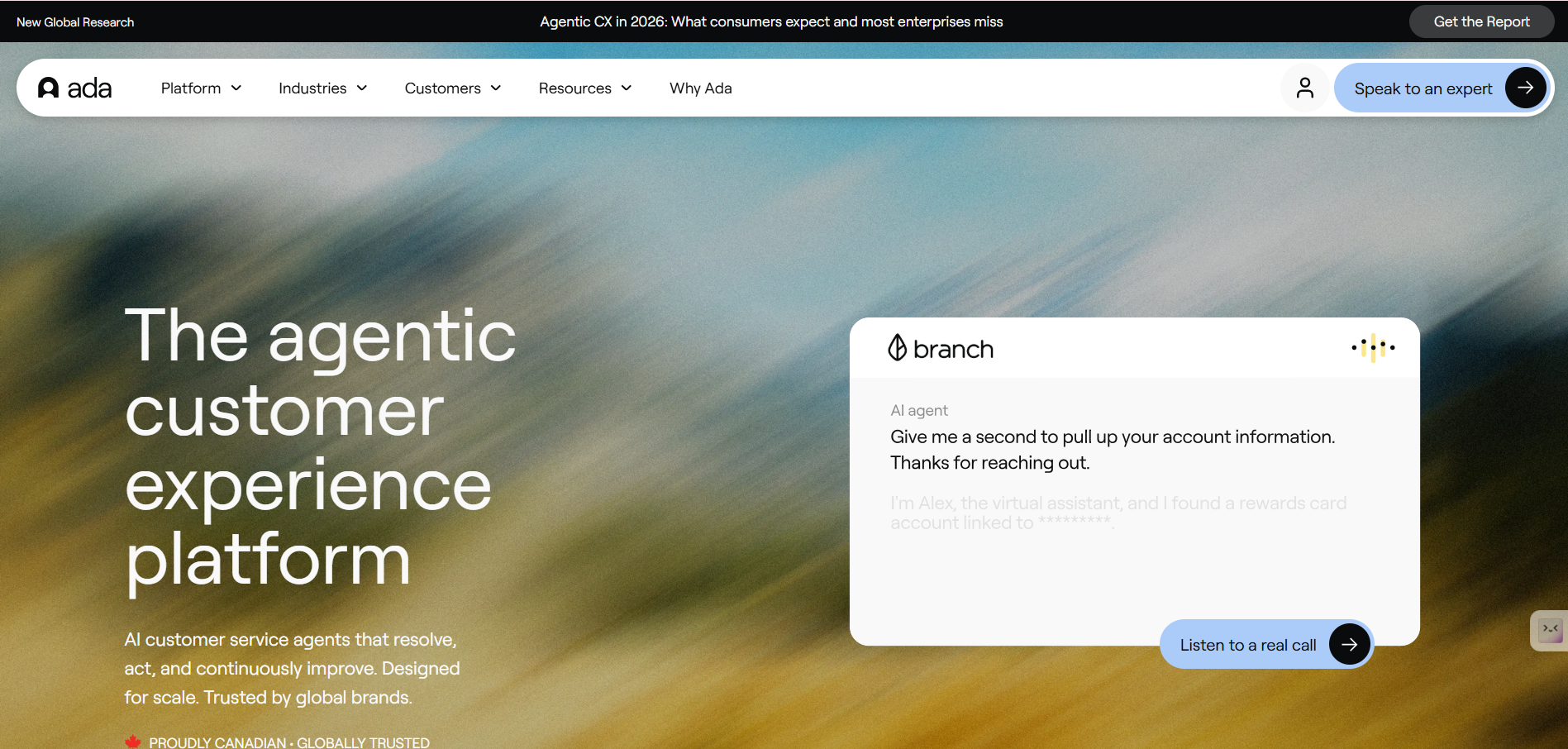
Ada is designed to automate customer service at enterprise scale. Its AI agents resolve customer requests independently while continuously learning from previous interactions. The platform supports multiple languages, making it particularly valuable for international ecommerce businesses serving customers across different regions.
Instead of relying on scripted conversations, Ada leverages generative AI to provide more natural, context-aware interactions while integrating with existing business systems.
Key Features
- Autonomous AI agents
- Multilingual support
- Workflow automation
- CRM integrations
- Knowledge base connectivity
- Analytics dashboard
- Continuous AI learning
Pros
✔ Enterprise-grade scalability
✔ Excellent multilingual capabilities
✔ High automation rates
✔ Strong customer experience
Considerations
- Better suited for larger organizations
- Implementation may require dedicated onboarding
-
Botpress
Best for: Engineering teams requiring advanced customization
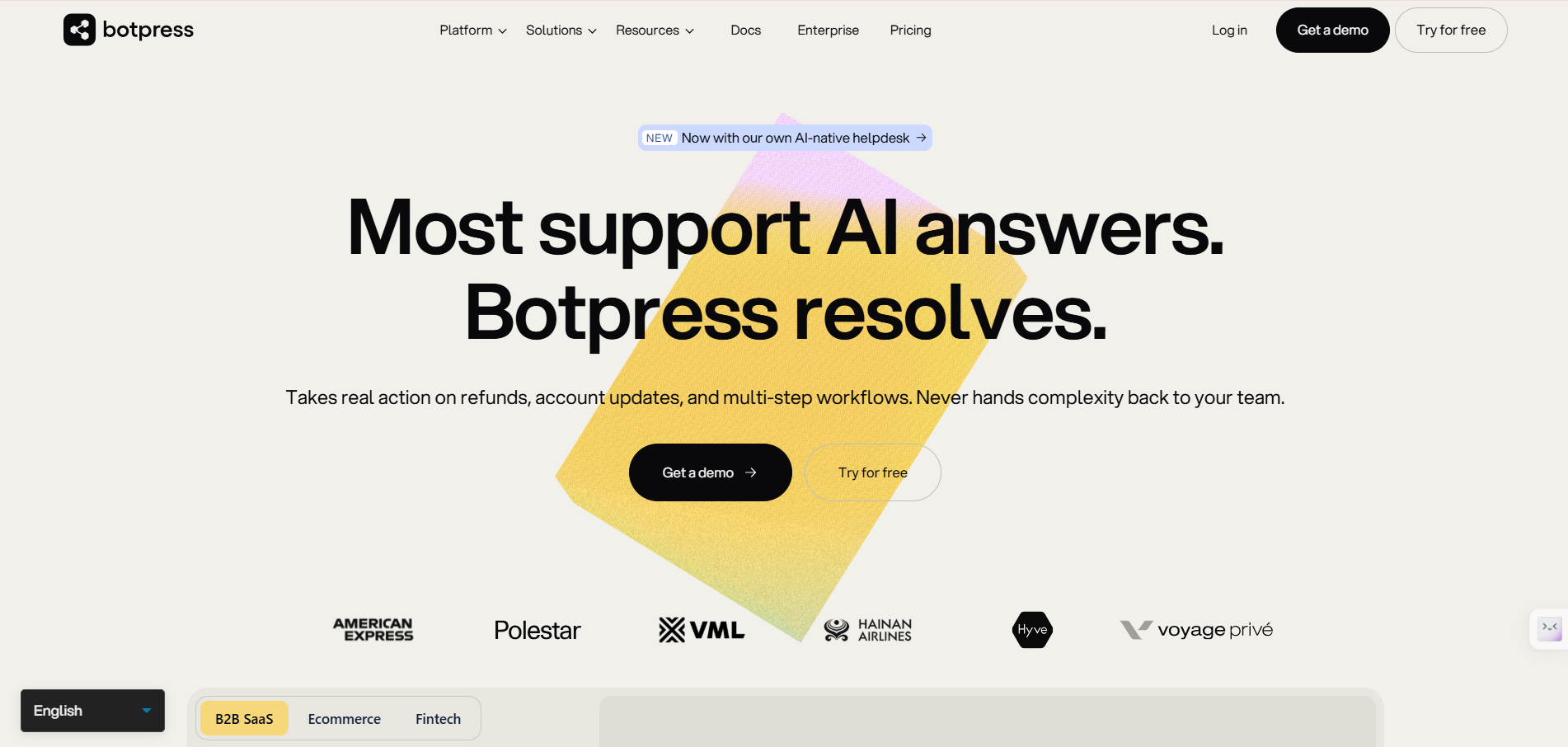
Botpress takes a developer-first approach to conversational AI. Unlike many no-code platforms, it gives technical teams extensive control over workflows, integrations, large language model selection, and AI orchestration.
Businesses with unique operational requirements or complex customer journeys often choose Botpress because it supports custom AI agents tailored to highly specific workflows.
Key Features
- Custom AI agents
- Visual conversation builder
- Multiple LLM support
- API integrations
- Workflow automation
- Knowledge base connectivity
- Developer SDKs
Pros
✔ Extremely customizable
✔ Supports advanced AI workflows
✔ Flexible architecture
✔ Strong developer community
Considerations
- Steeper learning curve
- Best suited for technical teams
Industry Trends Shaping AI Chatbots in 2026
Conversational AI is evolving rapidly, driven by advances in generative AI, changing consumer expectations, and increasing business investment in automation. Rather than acting as standalone support tools, chatbots are becoming intelligent digital assistants that influence the entire customer journey.
Several trends are defining the next generation of ecommerce experiences:
- Autonomous AI Agents
Businesses are moving beyond simple question-and-answer bots toward AI agents capable of completing tasks independently. These systems can process returns, update orders, trigger workflows, and coordinate with backend applications without requiring constant human involvement.
- Hyper-Personalization
Modern AI platforms analyze browsing behavior, purchase history, loyalty data, and customer preferences to deliver highly personalized recommendations and conversations. According to McKinsey, organizations that excel at personalization can generate 40% more revenue from those activities than slower-moving competitors.
- Omnichannel Conversations
Customers increasingly expect to begin a conversation on one channel and continue it on another without repeating information. AI platforms are responding by creating unified conversational experiences across websites, mobile apps, email, WhatsApp, Instagram, and social commerce platforms.
- Voice and Multimodal AI
Chatbots are expanding beyond text. Businesses are adopting voice interactions, image recognition, document understanding, and multimodal AI to create richer customer experiences. For ecommerce, this means customers can upload product images, ask voice-based questions, or receive visual recommendations through a single AI assistant.
- AI Supporting Operational Decisions
Conversational AI is increasingly connected to logistics, inventory management, and customer analytics. Instead of simply answering customer questions, AI assistants are helping businesses identify recurring issues, predict customer needs, and improve operational efficiency through actionable insights.
How to Choose the Right AI Chatbot for Your Business
The ideal platform depends less on popularity and more on your operational priorities.
If your business primarily sells through Shopify, Gorgias offers deep ecommerce integrations that simplify post-purchase support.
If you’re a growing online retailer looking for a quick, affordable solution, Tidio provides an excellent balance between ease of use and AI capabilities.
Organizations managing high customer support volumes across multiple channels may find Intercom, Zendesk AI, or Ada better suited to enterprise-scale operations.
For brands focused on social commerce, ManyChat remains one of the strongest options for automating conversations across Instagram, Facebook Messenger, and WhatsApp.
Businesses looking to build custom AI workflows without extensive coding should consider YourGPT, while engineering-led organizations requiring complete flexibility may benefit from Botpress.
Retailers prioritizing product discovery and personalized shopping experiences will likely find Bloomreach particularly compelling.
Ultimately, the right chatbot is the one that integrates seamlessly with your existing technology stack, aligns with your customer experience strategy, and scales alongside your business growth.
The Future of Customer Engagement Starts with AI
AI chatbots have evolved far beyond answering frequently asked questions. In 2026, they have become intelligent business assistants that help brands engage customers, increase sales, automate post-purchase support, and deliver faster, more personalized experiences across every touchpoint. As conversational AI, large language models, and intelligent automation continue to advance, businesses are shifting from reactive customer service to proactive, data-driven customer engagement.
For ecommerce brands, the real opportunity isn’t simply adopting AI, it’s choosing solutions that fit seamlessly into the broader commerce ecosystem. The most valuable platforms connect customer conversations with order management, shipping, inventory, payments, and support workflows, enabling businesses to automate repetitive tasks while maintaining a consistent customer experience from checkout to final delivery. This integrated approach helps teams improve operational efficiency while delivering the speed and convenience that modern shoppers expect.
As customer expectations continue to rise, selecting the right AI platform should go beyond comparing features alone. Look for solutions that can scale with your business, integrate effortlessly with your existing technology stack, and support end-to-end customer journeys. Businesses that combine conversational AI with intelligent commerce and logistics automation will be better positioned to reduce operational complexity, strengthen customer loyalty, and build the seamless shopping experiences that define the future of ecommerce.
Frequently Asked Questions
Which AI chatbot is best for Shopify stores?
Gorgias is widely recognized for its deep Shopify integration, enabling businesses to automate order management, returns, shipping updates, and customer support from a single interface.
Are AI chatbots suitable for small ecommerce businesses?
Yes. Platforms such as Tidio and Chatfuel offer affordable, easy-to-deploy solutions that help smaller businesses automate customer interactions without requiring significant technical resources.
Can AI chatbots handle order tracking and returns?
Many modern AI chatbots integrate with ecommerce and logistics systems, allowing customers to track orders, initiate returns, request refunds, and receive delivery updates through conversational interfaces.
Do AI chatbots replace human support agents?
Not entirely. Most organizations use AI to automate repetitive inquiries while allowing human agents to focus on complex, sensitive, or high-value customer interactions.
What should businesses consider before choosing an AI chatbot?
Evaluate factors such as AI capabilities, ecommerce integrations, omnichannel support, scalability, personalization, analytics, implementation complexity, and long-term operational fit rather than selecting a platform based solely on popularity.