





Supply chain cost reduction strategies have become a top priority for businesses as rising operational costs, increasing customer expectations, and supply chain disruptions continue to impact profitability. According to Gartner, over 79% of supply chain organizations have invested in digital transformation initiatives to improve efficiency and reduce costs. Meanwhile, McKinsey estimates that AI-powered supply chain planning can reduce logistics costs by 15%, lower inventory levels by 35%, and improve service levels by up to 65%.
In today’s highly competitive business environment, supply chain leaders are expected to do more than simply move products from one location to another. They are responsible for building agile, resilient, and cost-efficient supply chains that can withstand market disruptions while delivering exceptional customer experiences. Rising fuel prices, increasing labor costs, global supply chain disruptions, and growing ecommerce demand have made supply chain cost reduction strategies a strategic business priority across retail, manufacturing, FMCG, healthcare, electronics, and D2C commerce.
Every operational decision, from procurement and inventory planning to transportation, warehousing, and returns, directly impacts profitability. As a result, organizations are investing heavily in supply chain cost optimization, digital transformation, and supply chain automation to streamline operations and improve efficiency. While many businesses have optimized outbound logistics, one critical area still remains underutilized as a cost-saving opportunity: reverse logistics.
According to the National Retail Federation, retailers process nearly $890 billion worth of returned merchandise annually, while ecommerce return rates average 20–30%, significantly higher than physical retail. Every returned shipment adds transportation, warehouse handling, inventory management, and customer service costs, making efficient reverse logistics essential for businesses looking to reduce supply chain costs.
Without a structured returns process, businesses struggle to reduce supply chain costs, maintain customer satisfaction, and recover inventory quickly. Manual approvals, disconnected systems, delayed inspections, and poor shipment tracking increase operational complexity while slowing down the movement of products back into sellable inventory.
This is where automated returns solutions are transforming the industry. By combining intelligent workflows, carrier optimization, real-time supply chain visibility, AI-driven decision-making, and automated inventory updates, businesses can simplify reverse logistics while significantly improving operational performance.
Instead of viewing returns as an unavoidable business expense, leading organizations now consider them one of the most effective supply chain cost reduction strategies available. Companies that automate returns experience lower processing costs, faster inventory recovery, better customer experiences, and measurable logistics cost reduction across the entire supply chain.
In this guide, we’ll explore how automated returns solutions help businesses achieve long-term supply chain optimization, improve warehouse optimization, strengthen inventory optimization, enhance transportation cost optimization, leverage AI supply chain optimization and demand forecasting, and build a more resilient logistics network that supports sustainable growth.
Why Reverse Logistics Has Become a Major Cost Driver
For years, reverse logistics was treated as a back-office function that simply handled returned products. Today, that perspective has changed dramatically. As return volumes continue to increase, reverse logistics has evolved into one of the largest contributors to operational costs within modern supply chains. Businesses can no longer afford to overlook the financial impact of inefficient returns management if they want to implement successful supply chain cost reduction strategies. In fact, optimizing reverse logistics has become one of the most impactful supply chain cost reduction strategies for organizations looking to improve profitability while maintaining customer satisfaction.
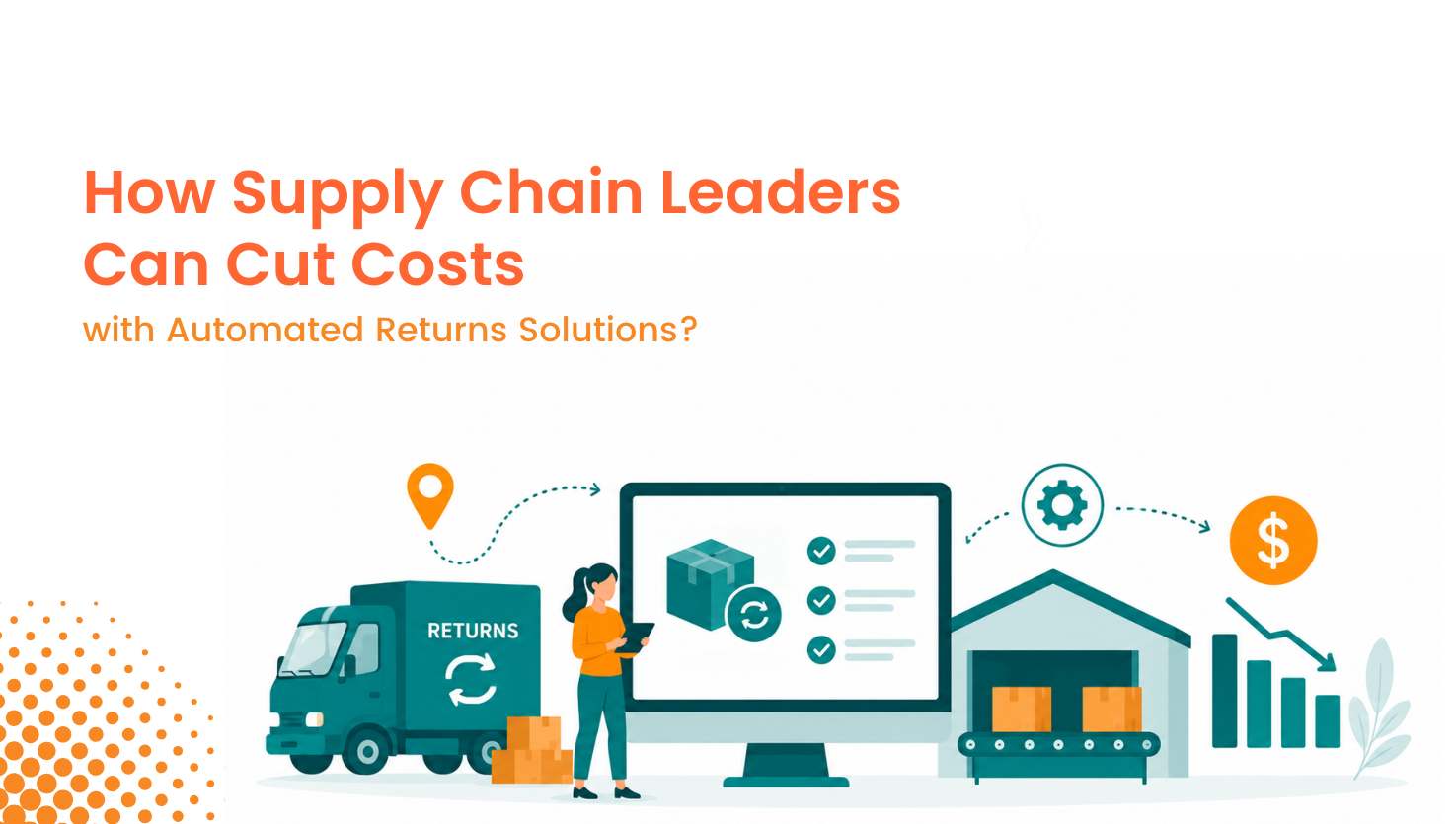
Every returned product begins a complex operational journey. A customer initiates a return request, the request is validated, a pickup is scheduled, the most suitable carrier is selected, transportation is arranged, the warehouse receives the shipment, product inspections are completed, inventory records are updated, and finally a refund, replacement, or exchange is processed. While each individual activity appears manageable, together they create a resource-intensive workflow that consumes valuable time, labor, and infrastructure. Streamlining each of these stages through automation is one of the most effective supply chain cost reduction strategies businesses can implement to eliminate unnecessary operational expenses.
Growing Return Volumes Are Increasing Operational Complexity
As businesses scale, return management becomes increasingly difficult. Processing a few hundred returns each month may still be manageable through manual workflows. However, businesses processing thousands, or even hundreds of thousands, of returns quickly experience operational bottlenecks.
Delays begin to affect warehouse receiving, transportation scheduling, finance, inventory management, customer support, and procurement. Employees spend more time coordinating returns manually instead of focusing on strategic initiatives that improve operational efficiency.
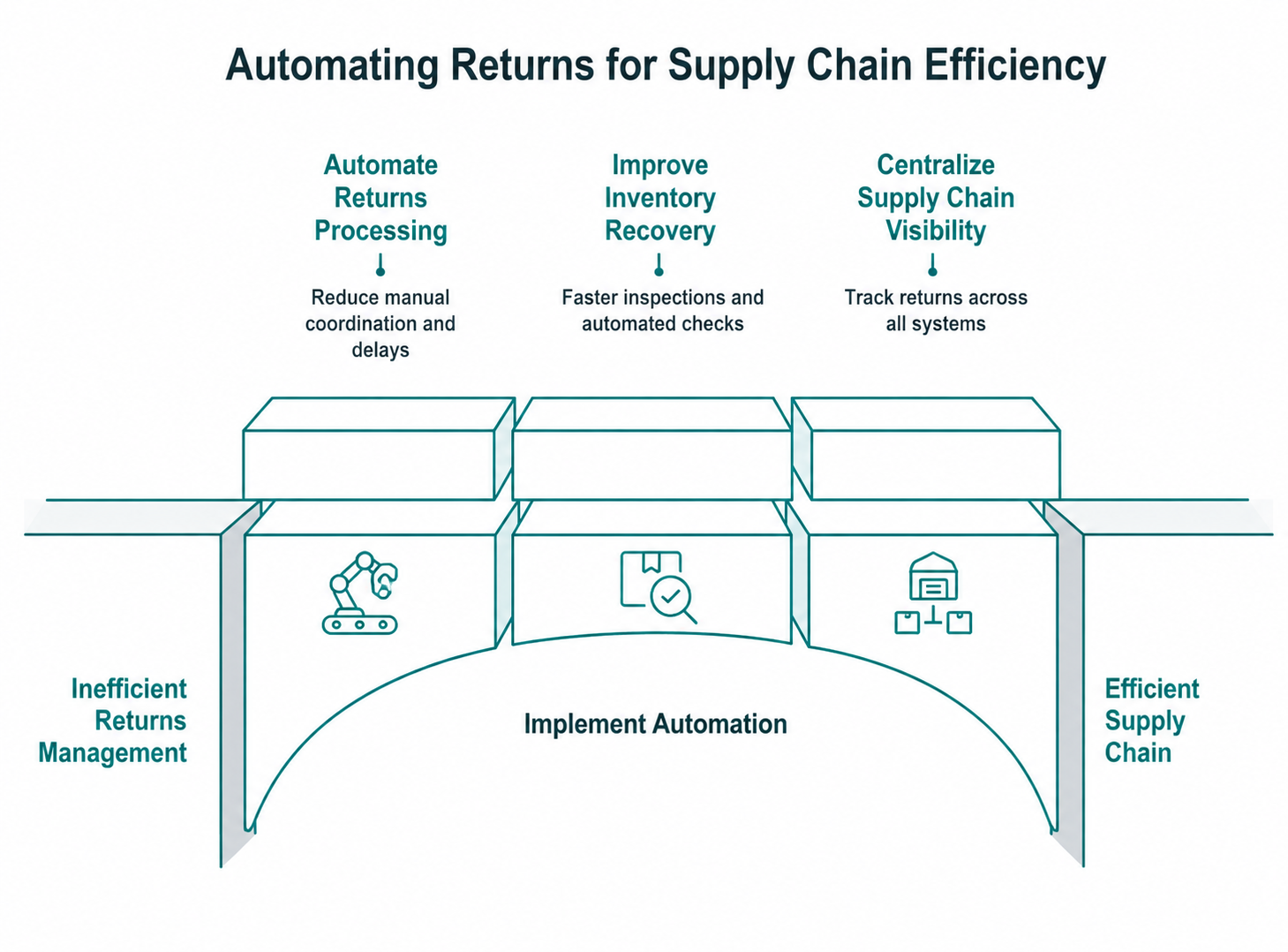
These inefficiencies directly impact supply chain cost reduction, increasing labor expenses while limiting opportunities for broader supply chain cost optimization. For many enterprises, automating high-volume returns has become one of the smartest supply chain cost reduction strategies for reducing repetitive manual work, improving productivity, and scaling operations efficiently.
Slow Inventory Recovery Reduces Profitability
One of the most significant hidden costs of inefficient reverse logistics is delayed inventory recovery.
Returned products often remain in warehouses waiting for inspection or sit in transit for several days before becoming available for resale. During this period, businesses continue carrying inventory costs while losing valuable sales opportunities.
Improving inventory optimization means reducing the amount of time returned products spend outside active inventory. Faster inspections, automated quality checks, and immediate inventory updates help organizations recover inventory quickly, improve cash flow, and reduce unnecessary procurement costs. These improvements not only accelerate inventory recovery but also support long-term supply chain cost reduction strategies by minimizing holding costs and improving inventory turnover.
Limited Visibility Creates Operational Challenges
Another major obstacle is the lack of complete supply chain visibility.
Many businesses still rely on multiple carrier portals, spreadsheets, and disconnected systems to track returned shipments. This fragmented approach makes it difficult for operations teams to answer simple questions such as:
- Where is the returned shipment?
- Has the pickup been completed?
- When will the warehouse receive the product?
- When can inventory be restocked?
Without centralized visibility, planning becomes reactive rather than proactive. Warehouse managers struggle to allocate labor effectively, procurement teams work with outdated inventory data, and customer support teams face increasing “Where is my refund?” enquiries.
Improving supply chain visibility enables organizations to make faster decisions, reduce operational delays, and support more effective supply chain optimization across the business. Greater visibility also empowers leaders to make data-driven decisions, making it one of the foundational supply chain cost reduction strategies for building a resilient, efficient, and customer-centric supply chain.
The Hidden Costs of Manual Returns Management
Many organizations have embraced supply chain automation across procurement, warehousing, and transportation, yet returns management often remains one of the least automated areas of the business.
Instead of operating through an integrated platform, many companies still process returns using spreadsheets, emails, disconnected courier portals, and manual approvals. Although these methods may appear sufficient for smaller businesses, they become increasingly inefficient as order volumes grow.
One of the biggest challenges is transportation planning. Without intelligent carrier optimization, businesses frequently select carriers based on familiarity instead of cost, service quality, or network performance. This results in higher shipping expenses while limiting opportunities for transportation cost optimization and freight cost reduction.
Manual workflows also slow inventory recovery. Every additional day that products remain in transit or await inspection delays resale opportunities and reduces overall inventory optimization. Businesses often purchase replacement inventory even though returned products are sitting idle inside warehouses waiting to be processed.
Warehouse productivity suffers as well. Employees spend hours inspecting products, validating return reasons, updating inventory records, processing refunds, and coordinating with customer service teams. These repetitive tasks reduce workforce efficiency and create unnecessary bottlenecks that prevent effective warehouse optimization.
The absence of centralized supply chain visibility makes the problem even worse. Managers struggle to monitor shipment movement, evaluate carrier performance, and identify delays before they impact customers. As a result, organizations lose valuable opportunities to improve operational efficiency and strengthen their overall supply chain cost reduction strategies.
What Is an Automated Returns Solution?
An automated returns solution is a technology platform designed to digitize and optimize every stage of the reverse logistics lifecycle. As businesses face increasing return volumes and rising operational costs, implementing automated returns has become one of the most effective supply chain cost reduction strategies for improving efficiency, reducing manual work, and streamlining reverse logistics operations.
Rather than relying on multiple disconnected systems, businesses manage return requests, pickup scheduling, carrier optimization, shipment tracking, warehouse receiving, inventory updates, exchanges, refunds, and analytics through a single integrated platform. This centralized approach not only simplifies operations but also supports supply chain cost reduction strategies by eliminating process inefficiencies, reducing administrative overhead, and accelerating return processing.
This centralized approach enables organizations to eliminate repetitive manual tasks while improving operational consistency. By automating routine workflows, businesses can allocate resources more effectively, improve productivity, and implement scalable supply chain cost reduction strategies that deliver long-term operational and financial benefits.
Modern returns platforms also integrate seamlessly with ecommerce marketplaces, warehouse management systems (WMS), enterprise resource planning (ERP) platforms, transportation management systems (TMS), and customer support tools. This integration improves supply chain visibility while ensuring every department works with accurate, real-time information. Better connectivity across systems helps organizations make faster decisions and strengthens supply chain cost reduction strategies by reducing delays, minimizing data silos, and improving collaboration across teams.
Automation also plays a significant role in improving supply chain automation initiatives. Instead of requiring employees to manually coordinate every stage of the returns process, intelligent workflows automatically validate requests, assign the most appropriate logistics partner, notify warehouses, and update inventory records. This level of automation improves operational efficiency while helping businesses execute more effective supply chain cost reduction strategies across transportation, warehousing, inventory management, and customer service.
Many platforms now incorporate AI supply chain optimization capabilities that analyze historical returns data, predict future return volumes through demand forecasting, recommend optimal carrier selection, and identify process bottlenecks before they become costly operational issues. These AI-driven insights allow businesses to continuously refine their operations, improve decision-making, and support long-term supply chain optimization.
As organizations continue modernizing their logistics operations, automated returns are becoming a critical pillar of broader supply chain optimization strategies. By integrating automation, AI, analytics, and real-time visibility into a single platform, businesses can build resilient supply chains, reduce operational costs, and create sustainable supply chain cost reduction strategies that support long-term business growth
How Automated Returns Help Supply Chain Leaders Reduce Costs
For many businesses, returns are often viewed as an unavoidable operational expense. However, leading organizations are changing this perspective by treating returns as an opportunity to improve efficiency and profitability. With the right technology in place, automated returns solutions can become one of the most effective supply chain cost reduction strategies, helping businesses eliminate manual processes, accelerate inventory recovery, optimize transportation, and improve customer satisfaction.
Unlike traditional returns management, which relies heavily on manual coordination, automation creates a connected ecosystem where every stakeholder, from customers and warehouse teams to carriers and finance departments, works with real-time information. This enables businesses to reduce supply chain costs, improve productivity, and build a more agile logistics network.
Faster Inventory Recovery Improves Cash Flow and Inventory Optimization
One of the biggest financial challenges in reverse logistics is the amount of time products remain unavailable for resale. Every returned product that sits in transit or waits for inspection represents lost revenue, higher storage costs, and increased working capital requirements.
Automated returns solutions eliminate these delays by creating standardized workflows for receiving, inspection, quality verification, and restocking. Instead of manually updating inventory after every return, the platform automatically synchronizes inventory across warehouse management systems and ecommerce platforms.
This significantly improves inventory optimization, allowing businesses to recover sellable products much faster while reducing excess inventory purchases.
For example, an apparel retailer processing 5,000 returns every month can reduce inventory recovery time from seven days to less than three days through automation. The result is better product availability, improved cash flow, and stronger supply chain cost optimization.
Faster inventory recovery also supports better demand forecasting, as inventory records remain accurate and available stock reflects real-time conditions. This helps procurement teams make informed purchasing decisions while preventing unnecessary overstocking.
Intelligent Carrier Optimization Reduces Transportation Costs
Transportation remains one of the largest operational expenses within both forward and reverse logistics. Businesses that manually assign carriers often overlook important variables such as shipping rates, delivery performance, pickup availability, and regional service coverage.
Automated returns platforms solve this problem through intelligent carrier optimization.
Instead of assigning carriers manually, the system evaluates multiple logistics partners based on:
- Pickup location
- Delivery destination
- Product category
- Carrier performance
- SLA commitments
- Shipping costs
- Historical success rates
By selecting the most cost-effective carrier for every return, businesses achieve measurable transportation cost optimization while improving customer experience.
Smarter routing also contributes to continuous freight cost reduction, enabling organizations to reduce unnecessary shipping expenses without sacrificing delivery speed or service quality.
As businesses expand into multiple regions, intelligent carrier allocation becomes one of the most valuable supply chain cost reduction strategies available.
Warehouse Optimization Through Automated Workflows
Warehouse teams play a critical role in determining how quickly returned products become available for resale.
Unfortunately, manual returns processing often creates bottlenecks that slow warehouse operations.
Employees spend valuable hours:
- Verifying returned products
- Updating inventory records
- Coordinating refunds
- Inspecting damaged goods
- Identifying replacement items
These repetitive administrative activities reduce productivity while increasing operational costs.
Automated returns solutions streamline these workflows by automatically categorizing products, assigning inspection priorities, updating inventory records, and triggering the next operational step based on predefined business rules.
This level of automation significantly improves warehouse optimization, allowing fulfillment centers to process larger return volumes without increasing labor costs.
As warehouse efficiency improves, businesses naturally achieve greater supply chain optimization while supporting broader supply chain cost reduction strategies.
End-to-End Supply Chain Visibility Improves Decision-Making
Modern supply chains generate enormous amounts of operational data. Without centralized visibility, much of this information remains trapped inside disconnected systems, making it difficult for decision-makers to respond quickly.
Automated returns platforms provide complete supply chain visibility across every stage of the returns lifecycle.
Operations managers can monitor:
- Return requests
- Pickup status
- Carrier performance
- Warehouse processing
- Inventory availability
- Refund completion
- Return cycle times
Having this information available through a centralized dashboard enables businesses to identify bottlenecks before they become costly operational issues.
Better supply chain visibility also supports improved supply chain optimization, as leaders gain actionable insights that help optimize labor planning, transportation scheduling, and warehouse capacity.
Instead of making reactive decisions based on outdated information, businesses can proactively manage their operations using accurate, real-time data.
AI Supply Chain Optimization Creates Smarter Operations
Artificial intelligence is rapidly becoming one of the most valuable technologies in modern logistics. As businesses continue to modernize their operations, AI is emerging as one of the most effective supply chain cost reduction strategies, enabling organizations to make faster, data-driven decisions while reducing operational inefficiencies across the supply chain.
Today’s automated returns platforms do much more than digitize workflows, they continuously analyze operational data to improve performance. By combining automation with predictive analytics, businesses can strengthen their supply chain cost reduction strategies, optimize resource allocation, and improve overall operational efficiency.
| AI Capability | How It Helps Businesses |
| Predict Seasonal Return Volumes | Analyzes historical returns data to anticipate seasonal spikes, enabling businesses to allocate warehouse space, labor, and transportation resources more efficiently. |
| Detect Fraudulent Return Requests | Identifies unusual return patterns and potential fraud, helping businesses reduce revenue leakage and improve returns management. |
| Recommend the Best Logistics Partner | Uses intelligent carrier optimization to select the most cost-effective and reliable carrier based on pricing, serviceability, delivery performance, and SLAs. |
| Forecast Warehouse Workloads | Improves demand forecasting by predicting incoming return volumes, allowing warehouses to optimize staffing and reduce processing delays. |
| Improve Carrier Selection | Continuously evaluates carrier performance, shipping costs, transit times, and service quality to improve logistics efficiency and customer satisfaction. |
| Optimize Transportation Planning | Enhances transportation cost optimization by identifying the most efficient shipping routes, reducing transit times, and contributing to long-term freight cost reduction. |
These AI-powered capabilities help organizations eliminate manual decision-making while supporting long-term supply chain cost reduction strategies through smarter planning, improved logistics execution, and more efficient resource utilization.
When AI is combined with advanced demand forecasting, businesses gain the ability to anticipate operational requirements rather than simply responding to problems after they occur. Instead of reacting to seasonal spikes or unexpected return volumes, organizations can proactively allocate labor, warehouse capacity, and transportation resources based on predictive insights. This proactive approach strengthens supply chain cost reduction strategies by reducing delays, preventing resource shortages, and improving service levels.
For example, if historical data indicates that electronics returns increase during festive shopping seasons, warehouses can proactively allocate additional staff while transportation teams reserve additional carrier capacity. AI can also recommend the most cost-effective carriers, identify warehouse bottlenecks before they occur, and optimize inventory movement based on historical trends, making it an integral part of modern supply chain cost reduction strategies.
This predictive approach reduces delays while supporting long-term supply chain cost optimization. By combining AI supply chain optimization, intelligent automation, and predictive analytics, businesses can build resilient operations that improve customer satisfaction, reduce logistics costs, and implement sustainable supply chain cost reduction strategies that deliver measurable business value.
Measurable Business Benefits of Automated Returns Solutions
The value of automation extends beyond operational efficiency.
Organizations implementing automated returns frequently experience measurable improvements across key business metrics, making automation one of the most impactful supply chain cost reduction strategies available today.
Some of the most common business outcomes include:
- Lower operational expenses through logistics cost reduction
- Improved inventory optimization and faster inventory recovery
- Better transportation cost optimization
- Reduced shipping expenses through freight cost reduction
- Enhanced carrier optimization
- Increased warehouse productivity through warehouse optimization
- Better planning with AI-powered demand forecasting
- Greater operational transparency through supply chain visibility
- Improved customer satisfaction with faster refunds and replacements
- Higher overall supply chain optimization across the organization
Collectively, these improvements help businesses reduce supply chain costs while creating a more agile and resilient logistics operation.
Rather than treating returns as a necessary expense, leading organizations now recognize automated returns as a strategic investment that delivers long-term operational efficiency, stronger customer loyalty, and sustainable business growth.
Industry Use Cases: How Different Industries Reduce Supply Chain Costs with Automated Returns
Returns management is not limited to ecommerce businesses. Today, organizations across retail, manufacturing, consumer electronics, healthcare, automotive, and third-party logistics are investing in automated returns to improve operational efficiency. While every industry faces unique challenges, the objective remains the same, implement smarter supply chain cost reduction strategies that reduce waste, improve visibility, and optimize resources across the supply chain.
Ecommerce and D2C Brands
For ecommerce and direct-to-consumer brands, returns are a daily operational reality. Categories such as fashion, footwear, beauty, electronics, and home décor often experience high return rates due to sizing issues, product expectations, or damaged shipments.
Managing these returns manually can overwhelm warehouse teams, delay refunds, and increase transportation expenses. Automated returns platforms simplify the entire process by allowing customers to initiate returns online, automatically scheduling pickups, selecting the best logistics partner through intelligent carrier optimization, and providing real-time supply chain visibility throughout the journey.
By accelerating inventory recovery and improving inventory optimization, ecommerce businesses can quickly return products to active inventory while achieving significant logistics cost reduction and stronger supply chain optimization.
Retail Chains
Retailers operating multiple stores and distribution centers often struggle to coordinate returns across different sales channels. Products returned in one location may need to be transferred to another warehouse or retail outlet where demand is higher.
Automated returns solutions eliminate this complexity by providing centralized visibility into inventory, warehouse capacity, and transportation networks.
This improves warehouse optimization, enables better transportation cost optimization, and supports long-term supply chain cost optimization by ensuring inventory is routed to the most appropriate location instead of remaining idle.
Manufacturing Companies
Manufacturers frequently process warranty claims, damaged components, supplier returns, and defective products. Manual workflows often delay inspections and increase administrative effort, making reverse logistics expensive and time-consuming.
Automation enables manufacturers to standardize return approvals, improve product traceability, automate quality inspections, and monitor supplier performance through centralized dashboards.
These improvements strengthen reverse logistics, improve supply chain visibility, and contribute to sustainable supply chain cost reduction strategies.
Electronics and Consumer Goods
Consumer electronics companies manage some of the most complex return processes because products often require testing before replacement or refund decisions can be made.
Automated workflows assign inspection tasks immediately after products arrive, reducing warehouse delays while improving warehouse optimization.
AI-powered routing also helps determine whether products should be repaired, refurbished, replaced, or recycled, supporting AI supply chain optimization while reducing unnecessary operational costs.
Third-Party Logistics (3PL) Providers
Third-party logistics providers manage returns for multiple clients simultaneously, making operational visibility extremely important.
Automated returns platforms allow logistics providers to monitor carrier performance, warehouse processing, shipment movement, and customer communication through a centralized dashboard.
Improved supply chain visibility, better carrier optimization, and enhanced reporting help 3PLs deliver better service while supporting their customers’ supply chain cost reduction strategies.
Common Mistakes That Increase Supply Chain Costs
Many businesses invest in new technology expecting immediate results. However, automation alone cannot solve operational challenges if inefficient processes remain unchanged.
One of the most common mistakes is treating reverse logistics as a separate function rather than integrating it with procurement, transportation, warehousing, finance, and customer service. This fragmented approach limits supply chain visibility and prevents organizations from achieving end-to-end supply chain optimization.
Manual vs. Automated Returns Management
| Common Mistake | Business Impact | How Automation Solves It |
| Treating reverse logistics as a separate process | Creates operational silos, limits supply chain visibility, and delays decision-making | Integrates returns with procurement, warehousing, transportation, ERP, and customer service for end-to-end supply chain optimization |
| Relying on manual approvals and spreadsheets | Slower processing, higher labor costs, and delayed inventory recovery | Automates return approvals, workflows, and inventory updates to improve warehouse optimization and inventory optimization |
| Poor operational visibility | Difficult to track returns, identify bottlenecks, and manage customer expectations | Provides real-time supply chain visibility with centralized dashboards and shipment tracking |
| Ignoring analytics and demand forecasting | Inefficient staffing, inaccurate planning, and recurring operational issues | Uses analytics and demand forecasting to predict return volumes, optimize resources, and improve planning |
| Focusing only on shipping costs | Misses opportunities to improve warehousing, inventory, and customer experience | Supports holistic supply chain cost reduction through intelligent carrier optimization, transportation cost optimization, and freight cost reduction |
Another common issue is relying heavily on manual approvals and spreadsheets. Manual workflows slow inventory recovery, increase administrative costs, and reduce opportunities for warehouse optimization and inventory optimization.
Businesses also underestimate the value of operational analytics. Without accurate reporting and demand forecasting, organizations struggle to identify return trends, optimize staffing, or improve transportation planning.
Perhaps the biggest mistake is focusing only on reducing shipping costs instead of optimizing the entire returns ecosystem. Sustainable supply chain cost reduction requires improvements across transportation, inventory, warehousing, customer communication, and analytics, not just lower freight rates.
Why eShipz Is the Ideal Automated Returns Solution
As return volumes continue to grow, businesses need more than just a returns management tool, they need a platform that streamlines reverse logistics, improves operational efficiency, and supports long-term supply chain cost reduction strategies. eShipz brings together automation, intelligence, and real-time visibility to help businesses manage returns seamlessly across multiple carriers, warehouses, marketplaces, and sales channels.
Centralized Returns Management Across Every Channel
Managing returns across multiple carriers, marketplaces, warehouses, and sales channels can quickly become complex without the right technology.
eShipz simplifies this process by providing a unified returns management platform that automates every stage of the reverse logistics lifecycle. From return initiation and pickup scheduling to shipment tracking, warehouse processing, and customer communication, every activity is managed through a single centralized platform.
Intelligent Carrier Optimization for Lower Shipping Costs
Choosing the right logistics partner is essential for reducing operational expenses.
eShipz uses intelligent carrier optimization to automatically select the most suitable carrier based on serviceability, pricing, delivery performance, and business rules. This improves transportation cost optimization, minimizes shipping delays, and contributes directly to freight cost reduction, helping businesses lower logistics costs while maintaining service quality.
Real-Time Supply Chain Visibility
With real-time supply chain visibility, businesses can monitor every returned shipment from pickup to final resolution.
Operations teams can identify delays, track carrier performance, monitor warehouse processing, and make faster, data-driven decisions from a centralized dashboard. This complete visibility improves collaboration across logistics, customer service, warehouse operations, and finance while strengthening overall supply chain optimization.
Faster Inventory Recovery and Warehouse Optimization
Returns should move back into inventory as quickly as possible to maximize product availability and revenue.
eShipz supports inventory optimization by accelerating product inspections, reducing restocking delays, and maintaining accurate inventory records across multiple warehouses. Automated workflows also improve warehouse optimization, allowing teams to process higher return volumes with greater efficiency and fewer manual interventions.
AI-Powered Insights for Smarter Decision-Making
Beyond automation, eShipz leverages analytics and AI supply chain optimization to help businesses continuously improve operations.
The platform analyzes returns data to identify trends, improve demand forecasting, optimize warehouse workloads, recommend the best logistics partners, and uncover opportunities for greater operational efficiency. These data-driven insights enable organizations to refine their supply chain cost reduction strategies while building a more agile and resilient supply chain.
A Scalable Solution for Growing Businesses
Whether you’re an ecommerce brand, enterprise retailer, manufacturer, distributor, or third-party logistics provider, eShipz provides a scalable platform that grows with your business.
By combining intelligent automation, real-time visibility, AI-driven analytics, and seamless integrations, eShipz enables organizations to implement effective supply chain cost reduction strategies, improve profitability, enhance customer experiences, and build a future-ready supply chain.
The Future of Supply Chain Cost Reduction Starts with Automated Returns
As global supply chains become more dynamic and customer expectations continue to rise, businesses can no longer afford to treat returns as an operational afterthought. Reverse logistics has become a strategic function that influences inventory availability, transportation efficiency, warehouse productivity, customer loyalty, and overall business profitability.
Organizations that embrace supply chain automation and intelligent returns management gain a competitive advantage by reducing operational complexity, improving warehouse optimization, strengthening inventory optimization, and enhancing end-to-end supply chain visibility.
Automated returns solutions also enable better carrier optimization, measurable transportation cost optimization, significant freight cost reduction, and data-driven AI supply chain optimization, allowing businesses to make smarter operational decisions while improving long-term resilience.
Ultimately, successful supply chain cost reduction strategies are no longer focused solely on cutting expenses, they are about building an intelligent, connected, and customer-centric supply chain that can adapt to future challenges. Businesses that invest in automated returns today will be better positioned to reduce supply chain costs, improve operational performance, and achieve sustainable supply chain cost optimization for years to come.
Frequently Asked Questions (FAQs)
- What are the most effective supply chain cost reduction strategies?
The most effective supply chain cost reduction strategies include automating reverse logistics, improving inventory optimization, adopting supply chain automation, enhancing supply chain visibility, optimizing transportation networks, and using AI-driven analytics to improve decision-making.
- How do automated returns help reduce supply chain costs?
Automated returns eliminate manual workflows, accelerate inventory recovery, improve carrier optimization, strengthen warehouse optimization, and support logistics cost reduction, helping businesses reduce operational expenses while improving customer satisfaction.
- Why is reverselogisticsimportant in supply chain optimization?
Reverse logistics directly affects transportation, inventory, warehousing, refunds, and customer experience. Optimizing returns helps businesses improve supply chain optimization, reduce waste, and recover inventory more efficiently.
- How does AI improve supply chain optimization?
AI supply chain optimization uses predictive analytics, automation, and machine learning to improve demand forecasting, optimize transportation planning, recommend the best carriers, and identify operational bottlenecks before they impact performance.
- What role does supply chain visibility play in reducing costs?
Complete supply chain visibility enables businesses to monitor shipments, inventory, warehouse operations, and carrier performance in real time. This helps organizations make faster decisions, improve efficiency, and implement better supply chain cost reduction strategies.
- How does inventory optimization contribute to supply chain cost reduction?
Effective inventory optimization improves inventory turnover, reduces holding costs, accelerates product recovery after returns, and minimizes unnecessary procurement, supporting long-term supply chain cost optimization.
- Why is transportation cost optimization important?
Transportation cost optimization ensures businesses choose the most efficient shipping routes and carriers while reducing unnecessary freight expenses. Combined with carrier optimization, it helps achieve sustainable freight cost reduction and better operational efficiency.
- Why should businesses chooseeShipzfor automated returns?
eShipz provides a unified platform for automating returns, improving reverse logistics, enhancing supply chain visibility, optimizing carriers, and reducing logistics costs. It enables businesses to implement scalable supply chain cost reduction strategies while delivering a seamless post-purchase experience.