



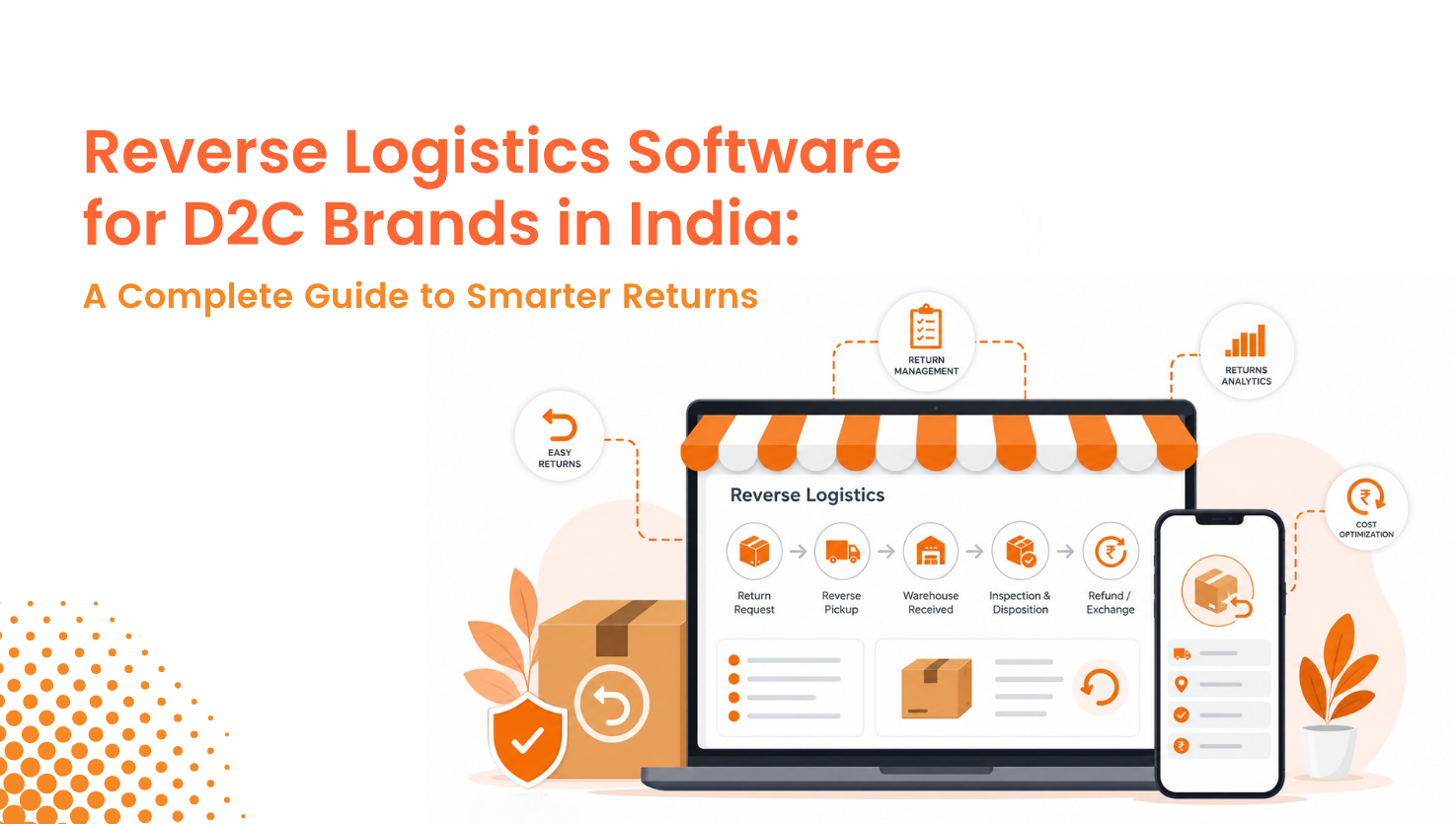
Reverse logistics software is now a core part of how D2C brands handle returns, reverse pickups, inventory recovery, and post-purchase operations. Returns aren’t just a post-purchase issue anymore, they directly affect margins, inventory, customer experience, and operational efficiency.
As online commerce grows across India, shipment volumes across the ecommerce ecosystem are rising fast. A 2026 SEBI-filed industry document citing Redseer estimates that India handled approximately 4.9–5.3 billion ecommerce shipments in FY2025, with volumes projected to reach 15–16 billion by FY2030. The same analysis says Tier-2+ cities already contributed around 55% of ecommerce GMV and 62% of total shipments in FY2025.
For D2C brands, more shipments also bring more exchanges, failed deliveries, customer returns, RTOs, reverse pickups, inventory movement, and refund requests. Managing this expanding reverse flow manually can create operational bottlenecks very quickly.
That is why reverse logistics software matters.
A modern reverse logistics software platform helps brands get off spreadsheets, emails, separate courier portals, and customer support tickets. It can connect return requests, reverse pickup software India, courier allocation, tracking, warehouse processing, inventory, refunds, and returns analytics software in one structured workflow.
The need is even higher for brands selling through marketplaces, Shopify stores, their own websites, social commerce, and multiple courier partners. A strong reverse logistics software India solution can support automated returns management, multi carrier reverse logistics, return shipping management, and reverse logistics automation. That gives businesses better visibility, tighter cost control, and faster returned inventory recovery.
This matters even more for growing D2C businesses that see D2C reverse logistics India as a long-term operational capability, not just a returns process.
This guide looks at how reverse logistics software for D2C brands works, the key capabilities to evaluate, how different solutions compare, and how technologies such as AI, analytics, and automation are shaping the future of reverse logistics in India.
Reverse Logistics Software Comparison for D2C Brands
The right reverse logistics software for D2C brands does more than process returns. As a brand grows, returns start involving multiple courier partners, pickup locations, warehouses, refunds, exchanges, and inventory decisions. A strong reverse logistics software India platform brings all of that into one system, makes returns easier to manage, and gives teams a clearer view of where time and money are going.
The table below compares different approaches to D2C reverse logistics software, from manual processes and basic return tools to advanced platforms with automation, analytics, and AI capabilities. It helps brands see what to expect at each stage and decide which type of reverse logistics solution India fits their current operations and growth plans best.
| Capability | Manual Process | Basic Return Tool | Dedicated Reverse Logistics India Software | Advanced AI-Enabled Platform |
|---|---|---|---|---|
| Return request management | Manual | Basic | Automated | Automated |
| Reverse pickup creation | Manual | Partial | Automated | Automated |
| Multi-courier support | Difficult | Limited | Strong | Strong |
| Return tracking | Spreadsheet/portal | Basic | Real-time | Real-time |
| Return routing | Manual | Limited | Rule-based | AI-assisted |
| Inventory visibility | Delayed | Partial | Connected | Connected |
| Returns analytics | Manual | Basic | Advanced | Predictive |
| Disposition management | Manual | Limited | Structured | Intelligent |
| Cost analysis | Difficult | Basic | Detailed | Predictive |
| Customer communication | Manual | Basic | Automated | Automated |
| Scalability | Low | Medium | High | High |
The difference is not simply about adding another software layer. The right reverse logistics software connects the entire return journey, from customer return requests and reverse pickups to courier management, warehouse operations, inventory, refunds, and analytics.
For D2C brands, a strong reverse logistics solution India businesses can rely on should also support automated returns management, reverse pickup software India, multi carrier reverse logistics, and returns analytics software. This gives teams better visibility, reduces manual work, and helps drive reverse logistics cost reduction while delivering a smoother customer experience.
1. Automated Returns Management
The first major capability to look for in reverse logistics software is automated returns management. Instead of asking support teams to manually handle every request, brands can set predefined rules for return eligibility, return windows, exchanges, product categories, pickup locations, product conditions, refunds, and replacements.
Once a request meets the required conditions, the workflow can automatically move to the next step. This makes returns automation software especially useful for growing D2C businesses that want faster processing, fewer manual errors, and a more consistent customer experience.
Pros
- Faster return processing
- Less manual work
- Consistent return policies
- Better customer experience
- Easier to scale
Cons
- Requires proper workflow configuration
- Incorrect rules can lead to wrong approvals
- Initial integrations may require setup
2. Reverse Pickup Software
After a return is approved, the product needs to get back to the brand fast. Reverse pickup software India helps D2C brands create, assign, track, and manage reverse shipments across multiple courier partners through one centralized workflow.
With reverse logistics software, teams can handle pickup details, return reasons, courier allocation, tracking, failed attempts, delivery status, and exceptions without jumping between multiple courier portals. That gives operations teams a clear view of every reverse shipment, and it helps them respond quickly when a pickup is delayed or unsuccessful.
For growing brands, multi carrier reverse logistics matters because courier performance changes by location, pin code, cost, and serviceability. Choosing the right carrier for each return can improve pickup success, strengthen return shipping management, and support reverse logistics cost reduction.
Connected with automated returns management, reverse logistics management software, returned inventory management, and reverse logistics automation, reverse pickups become part of a single return journey instead of a separate manual task. That helps D2C brands process returns faster, reduce operational effort, and deliver a better customer experience.
3. Multi-Carrier Reverse Logistics
As D2C brands expand, relying on a single logistics provider may not always be practical. Different carriers can perform differently across locations, pin codes, product categories, costs, and service levels. This makes multi carrier reverse logistics an important capability within modern reverse logistics software.
A strong reverse logistics platform India can help brands automatically select the right carrier based on serviceability, cost, pickup success, transit time, and past performance. This is where reverse shipping software India goes beyond basic tracking, it helps businesses make smarter decisions for every return.
Instead of asking only, “Where is the return?”, brands can ask:
“Which courier can handle this return most efficiently?”
With the right reverse logistics software for D2C brands, teams can manage multiple carriers from one place, compare performance, monitor failed pickups, and improve return shipping management. This also supports reverse logistics automation, reducing manual carrier selection and helping brands reduce ecommerce returns costs.
By connecting carrier allocation with automated returns management, reverse pickup software India, and returns analytics software, brands can build a more flexible and cost-efficient reverse logistics network as they scale.
4. Return Shipping Management
Reverse shipping can quickly become a major part of overall return costs, especially as D2C brands expand across more cities and pin codes. Good return shipping management within a reverse logistics software India platform helps brands track every reverse shipment, see where costs are rising, and spot delays or weak courier performance.
A strong reverse logistics software India for D2C brands brings these metrics into one place:
Pickup success rate
Number of pickup attempts
Reverse shipping cost
Courier performance
Pin-code performance
Transit time
Failed pickups
Repeat pickup attempts
With reverse shipping software India, teams can compare courier performance, spot expensive return lanes, and choose better carriers for future pickups. Combined with multi carrier reverse logistics and reverse pickup software India, it gives brands more control over their reverse network. Different carriers often perform differently by location, cost, serviceability, and product category, so managing them from one system makes day-to-day decisions easier and more accurate.
These insights also support reverse logistics automation and reverse logistics cost reduction. They help businesses cut unnecessary pickup attempts, improve service levels, and manage returns more efficiently. Over time, this data can feed into returns analytics software and help brands make better decisions about carriers, routes, and return operations.
5. Returns Analytics Software
Returns should not simply be processed, they should be understood. This is where returns analytics software becomes an important part of modern reverse logistics software. Instead of only tracking whether a return was completed, D2C brands can use return data to understand why products are coming back, where costs are increasing, and which parts of the reverse journey need improvement.
A strong reverse logistics software India for D2C brands can bring return, courier, shipment, inventory, and customer data into one view. Brands can track:
- Return and exchange rates
- Return reasons
- SKU-level return rates
- Product performance
- Geography-wise returns
- Courier performance
- Reverse shipping costs
- Refund turnaround time
- Recovery value
- Resale rate
- Disposition outcomes
With reverse logistics management software, these insights can help teams identify high-return products, expensive return lanes, frequent pickup failures, and underperforming courier partners. When combined with reverse shipping software India and multi carrier reverse logistics, brands can make better decisions about carriers, routes, and return operations.
For example, if one product consistently receives returns because of sizing issues, the solution may not be better logistics. It could be better sizing information, product descriptions, or customer communication. Similarly, if returns from a particular location show higher reverse shipping costs, brands can review their courier allocation and pickup strategy.
This makes analytics an important part of reverse logistics automation and reverse logistics cost reduction. By turning return data into actionable insights, brands can improve their D2C reverse logistics India operations while also making better product, marketing, merchandising, inventory, and customer experience decisions.
Ultimately, the goal of reverse logistics software is not just to manage more returns, it is to help brands understand them and use that information to build a more efficient, scalable return operation.
6. Returned Inventory Management
A returned product should not simply arrive at a warehouse and sit there. Once the reverse pickup is completed, the next priority is to decide what happens to that product and how quickly its value can be recovered. This makes returned inventory management an important capability within reverse logistics software for growing D2C brands.
A connected reverse logistics software for D2C brands can track the product from return approval and reverse pickup software India through warehouse receipt, inspection, and final disposition. Depending on its condition, a returned product may be:
- Restocked
- Exchanged
- Repaired
- Refurbished
- Repackaged
- Liquidated
- Returned to a supplier
- Written off
Without a structured process, returned inventory can remain idle for days or weeks, tying up working capital and increasing the risk of inventory loss. With reverse logistics management software, brands can create clear workflows for inspection, inventory updates, and recovery.
This is where reverse logistics automation becomes valuable. Once the warehouse receives a return, the system can help trigger the next step based on predefined rules. It can also connect returned inventory with returns disposition management, helping teams decide whether a product should go back into sellable stock, be repaired, refurbished, or moved to another channel.
For D2C brands, this connected approach can improve inventory visibility while supporting reverse logistics cost reduction. Combined with returns analytics software, brands can also understand how much inventory value is recovered from returns and identify products that repeatedly create losses.
Ultimately, effective reverse logistics software India should not stop when the returned package reaches the warehouse. It should help businesses move that product toward its next outcome faster, recover more value, and keep the entire reverse journey measurable and efficient.
7. Returns Disposition Management
One of the most important, and often overlooked, parts of reverse logistics is deciding what happens to a product after it reaches the warehouse. Returns disposition management helps D2C brands answer a simple but important question:
What should happen to this returned product now?
A strong reverse logistics software platform can connect the return journey with inspection, returned inventory management, and final disposition, helping brands decide the next action based on the product’s condition, value, and business rules.
Unopened
The product can be inspected and, if it meets the required quality standards, returned directly to sellable inventory.
Opened but Usable
The product may require quality checks, repackaging, cleaning, or reconditioning before it can be resold.
Damaged
Depending on the level of damage, it may need repair, refurbishment, liquidation, or write-off.
Defective
The product may need to move to a manufacturer, service centre, or supplier for further evaluation or resolution.
This is where reverse logistics management software becomes more valuable than basic return management. Instead of allowing returned products to sit in warehouses, businesses can create structured workflows that move each item toward its most suitable outcome.
With reverse logistics automation, brands can connect warehouse inspection with inventory updates, refunds, exchanges, and disposition decisions. Combined with returns analytics software, teams can also track how much value is recovered from returned products and identify where inventory losses are occurring.
For D2C brands, this can directly support reverse logistics cost reduction. A product that is quickly inspected and restocked can return to the sales cycle, while products that cannot be resold can be directed toward repair, refurbishment, liquidation, or other recovery channels.
A complete reverse logistics solution India businesses can use should therefore look beyond the return pickup. It should help manage the product until its final outcome, making D2C reverse logistics India more measurable, efficient, and scalable.
Ultimately, effective reverse logistics software India for D2C brands turns returned products from idle inventory into an opportunity for recovery, resale, and better operational control.
8. AI Reverse Logistics Software
Reverse shipping can become a major part of overall return costs, especially as D2C brands expand across more cities and pin codes. Good return shipping management within a reverse logistics software India platform helps brands track every reverse shipment, see where costs are rising, and spot delays or weak courier performance.
A strong reverse logistics software India for D2C brands brings these metrics into one place:
Pickup success rate
Number of pickup attempts
Reverse shipping cost
Courier performance
Pin-code performance
Transit time
Failed pickups
Repeat pickup attempts
With reverse shipping software India, teams can compare courier performance, identify expensive return lanes, and choose better carriers for future pickups. Combined with multi carrier reverse logistics and reverse pickup software India, brands get more control over their reverse network.
These insights also support reverse logistics automation and reverse logistics cost reduction. They help businesses cut unnecessary pickup attempts, improve service levels, and manage returns more efficiently. Over time, the data can also feed into returns analytics software, helping brands make better decisions about carriers, routes, and return operations.
Why D2C Brands Need Reverse Logistics Software India
For a growing D2C brand, a return is rarely just a return. It can involve the customer, courier, warehouse, inventory, finance, and customer support teams, all working together to move one product back through the supply chain. As order volumes grow, managing this process manually can quickly become difficult, expensive, and time-consuming.
D2C businesses often sell across multiple channels, work with several courier partners, maintain distributed inventory, and serve customers across thousands of Indian pin codes. This makes reverse logistics software for D2C brands an important part of the overall ecommerce logistics strategy.
The challenge is even greater for categories such as fashion, footwear, beauty, electronics, and lifestyle products, where exchanges and returns can happen for several reasons:
- Size or fit issues
- Product expectations not being met
- Damaged products
- Wrong products delivered
- Product defects
- Change of mind
- Duplicate orders
- Delivery-related issues
With the right reverse logistics software, brands can bring these processes into one connected workflow instead of managing them through spreadsheets, emails, and separate courier portals.
What D2C Brands Need to Manage Across the Return Journey:
| Return Requirement | How Reverse Logistics Software Helps |
|---|---|
| Return requests | Enables automated returns management and return validation |
| Reverse pickups | Supports reverse pickup software India for faster pickup creation and tracking |
| Multiple couriers | Enables multi carrier reverse logistics and smarter carrier allocation |
| Reverse shipments | Provides reverse shipping software India for centralized shipment management |
| Return costs | Supports return shipping management and reverse logistics cost reduction |
| Return insights | Uses returns analytics software to identify trends and problem areas |
| Returned products | Supports returned inventory management from warehouse receipt to recovery |
| Product outcomes | Enables returns disposition management for restocking, repair, refurbishment, or liquidation |
| Ecommerce returns | Helps streamline ecommerce returns management India across growing order volumes |
| D2C returns | Supports D2C returns management through automated, connected workflows |
| Shopify orders | Can support workflows around Shopify returns management software and Shopify reverse logistics software |
| Overall operations | Connects returns with reverse logistics management software and broader shipping workflows |
| Intelligent decisions | AI reverse logistics software can help identify patterns and support predictive decisions |
A brand also needs clear answers to practical questions:
- Why was the product returned?
- When will it be picked up?
- Which courier should handle the pickup?
- Where is the returned package?
- Has the warehouse received it?
- Is the product resellable?
- Should it be restocked, repaired, refurbished, exchanged, or written off?
- Has the customer’s refund been processed?
- How much did the return actually cost?
This is where platforms such as eShipz can fit into the D2C logistics workflow. eShipz brings together shipping automation, multi-carrier management, tracking, returns, NDR/RTO workflows, analytics, and integrations, helping brands manage both forward and reverse logistics through a connected platform.
With D2C reverse logistics software, brands can automate return workflows, manage reverse pickup software India, connect multiple carriers through multi carrier reverse logistics, and gain better visibility into return shipping management. Returns analytics software can then help teams understand return reasons, courier performance, costs, and inventory recovery.
The result is more than faster returns. A connected reverse logistics platform India can help D2C brands reduce manual work, improve customer experience, recover inventory faster, and support reverse logistics cost reduction as the business scales.
In simple terms, the goal is to move from “Where is my return?” to “How can we manage every return better?”—and that is where modern reverse logistics software becomes a valuable operational layer for D2C brands.
How Reverse Logistics Software Can Help Reduce Costs
The goal of reverse logistics software should not be to prevent every return. Returns are a natural part of ecommerce, especially for D2C brands operating across categories such as fashion, footwear, beauty, electronics, and lifestyle.
The real objective is to make every return faster, more controlled, more visible, and more cost-efficient while recovering as much product value as possible.
A strong reverse logistics software in India for D2C brands can help businesses manage the complete return journey, from the initial request and reverse pickup software India to courier allocation, warehouse processing, inventory recovery, refunds, and final disposition.
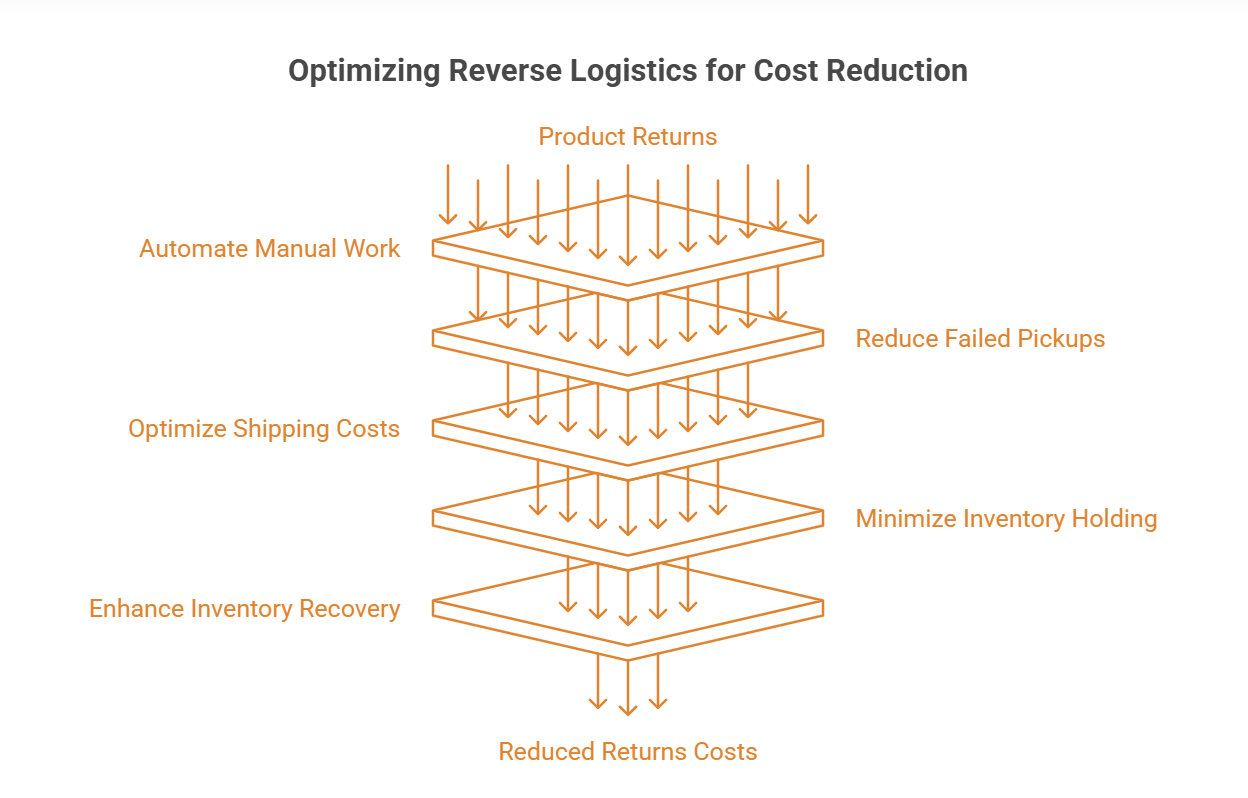
Reduce Unnecessary Manual Work
Automated returns management can reduce the amount of repetitive work handled by customer support and operations teams. Return validation, pickup creation, notifications, tracking updates, and status changes can be connected through reverse logistics automation.
This helps teams spend less time switching between spreadsheets, courier portals, and support tickets.
Reduce Failed Pickups
Failed or repeated pickups can increase both operational effort and reverse shipping costs. Using reverse pickup software India with carrier performance data can help brands identify better-performing couriers for specific locations and pin codes.
With multi carrier reverse logistics, brands can also create rules around serviceability, pickup success, cost, and transit performance.
Reduce Reverse Shipping Costs
Return shipping management becomes easier when brands can compare courier performance and route returns more intelligently.
A reverse logistics platform India can help businesses evaluate carriers based on geography, serviceability, cost, pickup performance, and transit time. This can support reverse logistics cost reduction while maintaining the required service levels.
Reduce Inventory Holding Time
A returned product that sits in a warehouse for days or weeks is not generating value.
Returned inventory management helps teams move products through inspection and disposition faster. Depending on the condition, the product can be restocked, exchanged, repaired, refurbished, repackaged, liquidated, or written off.
This makes returns disposition management an important part of an effective reverse logistics solution India.
Improve Inventory Recovery
Not every returned product is a loss.
Some products can quickly return to sellable inventory after inspection and repackaging. A connected reverse logistics management software workflow can help teams identify these products faster and improve recovery value.
This can reduce unnecessary inventory write-offs and help brands get products back into the sales cycle sooner.
Identify High-Return Products
Returns data can reveal problems that may not be visible through regular shipping reports.
With returns analytics software, brands can identify:
- High-return SKUs
- Frequent return reasons
- High-return locations
- Courier-related issues
- Expensive return lanes
- Repeat customer return patterns
- Products with low recovery value
For example, if a particular SKU consistently receives returns because of sizing issues, the solution may be better product information rather than a logistics change.
Together, these capabilities help reduce ecommerce returns costs without compromising the customer experience.
Trends Shaping D2C Reverse Logistics in India
The role of reverse logistics software is changing as India’s D2C ecosystem becomes larger, more distributed, and more technology-driven. Returns are no longer treated as an isolated post-purchase activity. Brands are looking at the complete reverse journey, from return requests and reverse pickup software India to courier selection, warehouse processing, inventory recovery, refunds, and analytics.
For D2C businesses, this shift is creating demand for smarter reverse logistics software for D2C brands, D2C reverse logistics software, and reverse logistics platform India solutions that can automate repetitive work while helping teams make better operational decisions.
| Emerging Trend | What It Means for D2C Brands | Role of Reverse Logistics Software |
|---|---|---|
| Data-driven returns | Brands want to understand why products are returned | Returns analytics software identifies patterns and return drivers |
| AI-powered decisions | Logistics teams are moving toward predictive operations | AI reverse logistics software supports smarter decisions |
| Tier-2+ expansion | Returns need to work across more locations and pin codes | Reverse pickup software India and automated carrier allocation |
| Multi-carrier operations | Brands need flexibility across courier networks | Multi carrier reverse logistics improves carrier selection |
| Faster inventory recovery | Returned products need to move back into the sales cycle | Returned inventory management and disposition workflows |
| Cost optimisation | Reverse shipping can significantly impact margins | Return shipping management and reverse logistics cost reduction |
| Better customer experience | Customers expect simple and transparent returns | Automated returns management improves return journeys |
The broader trend is clear: reverse logistics software is moving from a basic returns-processing tool to a connected technology layer for the entire post-purchase journey.
As D2C businesses scale, the brands that manage returns effectively will not simply process products faster. They will use D2C reverse logistics software India , returns analytics software, AI reverse logistics software, and reverse logistics automation to understand returns, recover inventory value, control costs, and improve customer experience.
In the long run, the competitive advantage will come from treating every return as more than a reverse shipment, it is customer data, inventory value, operational insight, and an opportunity to improve the next order.
Capabilities of the Right Reverse Logistics Platform
The right reverse logistics software India should do more than process return requests. For growing D2C brands, it should connect returns, courier operations, tracking, inventory, and analytics through one scalable workflow.
A platform such as eShipz brings together capabilities including shipping automation, multi-carrier management, tracking, returns management, and logistics analytics. These capabilities can help brands manage both forward and reverse logistics within a connected ecosystem.
For a D2C business, the right reverse logistics platform India should offer capabilities such as:
- Automated returns management to simplify return requests and approvals
- Reverse pickup software India to create and track reverse shipments
- Multi carrier reverse logistics to manage different courier partners
- Reverse shipping software India for centralized reverse shipment visibility
- Returns analytics software to understand return reasons, costs, and trends
- Returned inventory management to improve inventory recovery
- Returns disposition management to manage restocking, refurbishment, liquidation, or write-offs
- Reverse logistics automation to reduce repetitive manual tasks
- Integrations with Shopify, marketplaces, ERP, WMS, OMS, and courier partners
The key is to choose a reverse logistics solution India that can connect the complete journey, from
return request → reverse pickup → tracking → warehouse → inventory → refund → final disposition, while giving D2C teams the visibility and control they need as they scale.
Returns Should Not Be the End of the Customer Journey
For a growing D2C brand, a return is more than a product moving backwards. It’s a full operational journey that affects shipping costs, inventory, customer experience, and overall margins.
As return volumes rise, handling this journey manually across spreadsheets, courier portals, emails, and warehouse systems gets hard to scale. Reverse logistics software helps bring returns, reverse shipping, courier management, inventory, refunds, and analytics into one connected workflow.
For Indian D2C brands, this matters even more as ecommerce shipment volumes grow, Tier-2+ markets expand, and customers expect faster, simpler post-purchase experiences. Tools such as automated returns management, reverse pickup software India, multi carrier reverse logistics, returns analytics software, and returned inventory management help brands manage the reverse journey more efficiently and support reverse logistics cost reduction.
Returns shouldn’t be treated as an unavoidable cost centre. Brands can build a connected reverse logistics solution India businesses can use to manage returns, reverse shipping, courier operations, inventory recovery, and analytics through a more structured process.
Platforms such as eShipz bring together shipping automation, multi-carrier management, tracking, returns, NDR/RTO workflows, and analytics. That gives D2C brands a broader logistics ecosystem for managing post-shipment operations. For brands that want reverse logistics to be more connected, automated, and scalable, eShipz is a practical next step. The future of ecommerce logistics isn’t only about delivering products faster. It’s also about bringing them back smarter.
Frequently Asked Questions
What is reverse logistics software?
Reverse logistics software is technology used to manage product returns, reverse pickups, exchanges, returned inventory, disposition, refunds, tracking, analytics, and related workflows.
Why do D2C brands need reverse logistics software?
D2C brands often manage high order volumes across multiple channels and courier partners. Manual returns management becomes difficult to scale. Reverse logistics software for D2C brands helps automate and centralize these processes.
What is the difference between returns management and reverse logistics?
Returns management focuses primarily on the customer’s return request and resolution. Reverse logistics covers the broader physical and operational movement of the returned product, including pickup, transportation, warehouse receipt, inventory, and disposition.
Can Shopify stores use reverse logistics software?
Yes. Brands using Shopify can connect their ecommerce order flow with dedicated Shopify returns management software and broader Shopify reverse logistics software capabilities.
How does reverse logistics software reduce costs?
It can help reduce manual effort, improve carrier allocation, reduce failed pickups, improve return visibility, speed up inventory recovery, and identify costly return patterns.
What is reverse pickup software?
Reverse pickup software India solutions help brands create, track, and manage shipments that move products from customers back to sellers or warehouses.
Is AI useful for reverse logistics?
Yes. AI reverse logistics software can support predictive analysis, return-risk identification, carrier recommendations, anomaly detection, and inventory or disposition decisions.
![The Complete Guide to Returns Automation in eCommerce [2027]](https://www.eshipz.com/wp-content/uploads/2026/10/The-Complete-Guide-to-Returns-Automation-in-eCommerce-2027.png)