





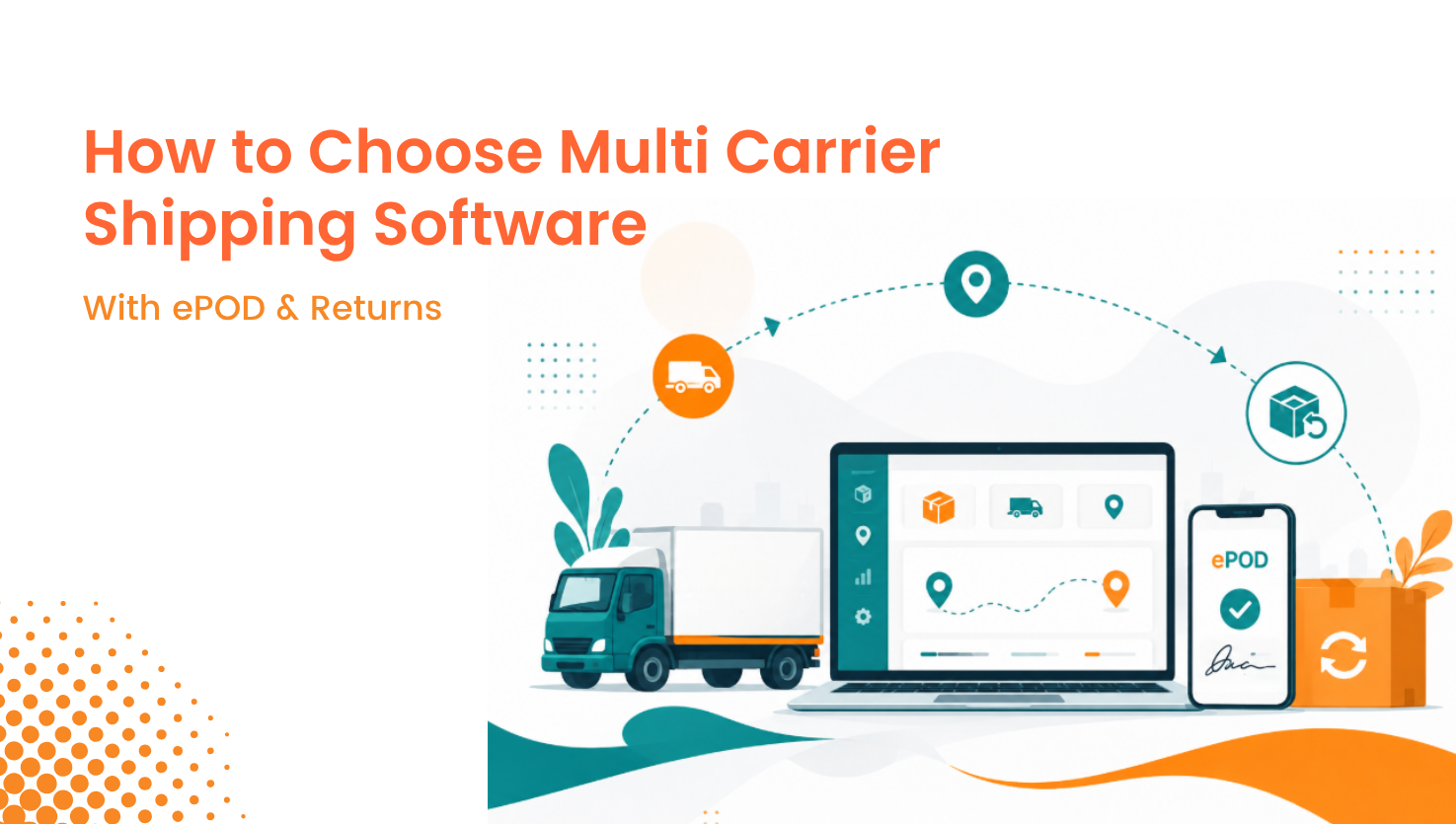
Multi carrier shipping software has become an important part of ecommerce operations as brands work with multiple carriers, growing order volumes, and increasingly demanding customers. But choosing a shipping platform is no longer just about finding one that can generate labels or connect with courier partners. Businesses now need better visibility across delivery, failed shipments, proof of delivery, and returns, all without creating more manual work for their teams.
The numbers show why this matters. NRF estimates that 16.9% of annual retail sales were expected to be returned in 2024, with total retail returns projected at $890 billion. The same research found that 76% of consumers consider free returns an important factor when deciding where to shop, while 67% said a negative returns experience could stop them from shopping with a retailer again.
Delivery expectations are equally high. DHL’s 2024 research found that 9 in 10 online shoppers consider tracking important, while 61% of global shoppers want next-day delivery but are not willing to pay extra for it. In India, DHL’s latest returns research also shows that 83% of shoppers consider free delivery important, highlighting just how much delivery and post-purchase experience can influence ecommerce decisions.
And there is another part of the journey businesses cannot ignore: delivery confirmation. APQC’s cross-industry benchmark reports a median of 80% of deliveries with electronic proof of delivery, showing how digital delivery confirmation is becoming a measurable part of logistics operations.
So, what should an ecommerce brand actually look for in a shipping platform?
In this article, we’ll look at how a modern multi-carrier solution can bring together carrier management, NDR workflows, electronic proof of delivery, returns, and customer-facing returns experiences. We’ll also look at eShipz, and how its shipping and post-shipping capabilities can help businesses manage more of the order journey from one connected platform.
What Should You Look for in a Multi-Carrier Shipping Solution?
Choosing the right multi carrier shipping software is about more than simply checking how many courier partners a platform supports. Carrier connectivity is important, but as shipping operations grow, businesses also need better control over what happens before, during, and after delivery.
A growing ecommerce business has to answer questions at every stage of the order journey. Which carrier should handle a particular shipment? Can the order be delivered to the customer’s location? What happens when the first delivery attempt fails? How quickly can the customer be contacted? How is delivery confirmation recorded? And when a customer wants to send something back, how easy is the process?
A good multi carrier shipping software solution should bring these moving parts together instead of making teams manage each one separately.
The capabilities that actually matter:
A practical shipping platform should cover the core areas of day-to-day shipping operations, including:
- Multiple carrier integrations
- Automated carrier allocation
- Shipment tracking and delivery visibility
- NDR management for failed delivery attempts
- Non delivery report visibility and actionable insights
- Automated customer communication
- ePOD software for digital delivery confirmation
- Electronic proof of delivery for maintaining delivery records
- Returns management from initiation to completion
- Returns management software for handling return workflows at scale
- A customer-friendly returns portal
- Ecommerce returns management and reverse shipment visibility
- Analytics and operational reporting
The important thing is not simply having all these features. It is how well they work together.
From a failed delivery to the next action:
Consider a shipment that could not be delivered. With effective NDR management, the team should be able to identify why the attempt failed, see the relevant order details, and decide what action needs to happen next.
A non delivery report should therefore be more than a status sitting inside a dashboard. It should help teams understand failed deliveries and take timely action, whether that means contacting the customer, scheduling another attempt, or choosing another resolution.
This becomes especially useful when customer communication is connected to the shipping workflow. Instead of manually checking different systems and figuring out what happened to each order, teams can work from a single view.
Making proof of delivery part of the shipment journey:
Delivery does not end when the package reaches the customer. Businesses also need a reliable way to confirm that the shipment was delivered.
This is where ePOD software becomes useful. With electronic proof of delivery, businesses can capture digital confirmation and keep it linked to the shipment record. Depending on the workflow, this can include delivery confirmation, recipient details, timestamps, signatures, or other relevant information. The advantage is simple: ePOD becomes part of the delivery workflow rather than another document teams have to track separately.
For businesses handling large shipment volumes, having this information digitally available can make it easier to resolve delivery queries, maintain records, and give operations teams better visibility.
Returns should not be treated as a separate process:
The same thinking applies after delivery.
A customer may receive the order and later decide to return it. If returns management starts from scratch, teams can end up dealing with additional emails, spreadsheets, support tickets, and manual coordination.
This is where returns management software can simplify the process. Instead of treating every return as a separate case, businesses can connect the return to the original order and shipment information.
A customer-facing returns portal can make this even easier. Customers can initiate a return, select the relevant reason, and follow the next steps without having to contact customer support for every update.
For brands dealing with a growing number of returns, ecommerce returns management also needs to be scalable. The process should work just as smoothly when return volumes increase during sales, festive periods, or product launches.
Look at the complete shipping journey:
Ultimately, the right multi carrier shipping software should not only help businesses ship orders. It should help them manage the journey around every shipment.
That means choosing carriers intelligently, tracking orders, responding to delivery exceptions, capturing electronic proof of delivery, and making returns management easier for both customers and internal teams.
When these capabilities work together, shipping becomes easier to manage and customers get a more consistent experience from checkout to delivery and, when required, return.
eShipz: A Multi-Carrier Solution With Returns Portal and ePOD
eShipz brings multi carrier shipping software, NDR management, ePOD, and returns into one connected shipping platform. Instead of using separate tools for delivery exceptions, non delivery report tracking, electronic proof of delivery, and returns, businesses can manage the complete shipment journey in one platform.
One platform for the complete shipping journey:
| Capability | What it helps with |
| Multi carrier shipping software | Manage multiple carriers and shipments |
| NDR management | Act on failed delivery attempts |
| Non delivery report | Identify shipments needing attention |
| ePOD software | Capture delivery confirmation digitally |
| Electronic proof of delivery | Keep digital delivery records |
| Returns management | Manage the reverse journey |
| Returns management software | Streamline return workflows |
| Returns portal | Let customers initiate returns easily |
| Ecommerce returns management | Manage returns at scale |
The value of eShipz goes beyond carrier selection. NDR management helps teams act before failed deliveries become RTOs, while ePOD software keeps delivery confirmation accessible. When customers need to return an order, returns management software and the returns portal make the process easier for both teams and customers. Together, these capabilities give businesses a more connected way to manage shipping, delivery, and ecommerce returns management without relying on multiple disconnected tools.
How eShipz Connects Shipping, NDR, ePOD and Returns
A shipment does not stop being an operational responsibility once it leaves the warehouse. Carrier selection, delivery exceptions, proof of delivery, and returns all play a role in how smoothly an order reaches the customer and what happens afterwards. eShipz connects these workflows through one multi carrier shipping software platform, helping businesses manage more of the shipment lifecycle from a single place.
Smarter Carrier Selection Before Delivery
Shipping starts with choosing the right carrier. Delivery location, serviceability, shipment type, cost, and carrier performance can all influence which carrier makes sense for an order. With multi carrier shipping software, businesses can create rules to automate carrier allocation instead of manually deciding which courier should handle every shipment. This can help teams save time, maintain consistency, and make better use of their available carrier network. But carrier selection is only the first step. Once the shipment is in transit, businesses also need visibility into what happens if delivery does not go as planned.
Turning Failed Deliveries Into Action
A failed delivery can quickly become a bigger operational problem if it is not addressed on time. The customer may have missed the delivery, the address may need clarification, or the carrier may have faced a location-related issue.
This is where NDR management becomes important. A non delivery report can help teams identify shipments where delivery was unsuccessful and understand which orders need immediate attention.
Instead of treating a non delivery report as just another status update, teams can use it to take action, follow up with customers, arrange delivery reattempts, resolve address issues, and monitor shipments that are at risk of becoming RTOs. With ndr management connected to the wider shipping workflow, teams get a clearer view of failed deliveries and can spend less time manually tracking exceptions.
Keeping Delivery Confirmation Digital
Once the shipment reaches the customer, businesses need a reliable way to confirm that delivery has actually been completed.
This is where ePOD software comes into the picture. Electronic proof of delivery allows businesses to maintain digital delivery confirmation linked to the shipment. Instead of depending on physical paperwork or searching through multiple records, teams can access delivery information when they need it.
For operations teams, epod can make delivery verification easier. For customer support teams, electronic proof of delivery can help resolve delivery-related questions with the right information available in one place. As shipment volumes increase, using epod software can also make it easier to manage and retrieve delivery records without adding more manual work.
Making Returns Part of the Same Journey
The customer journey does not always end with a successful delivery. A product may need to be returned because of a size issue, product preference, damage, or another customer request.
This makes returns management an important part of the overall shipping operation. With returns management software, businesses can create a more structured process for handling return requests, reverse pickups, and the movement of products back to the business.
A customer-facing returns portal can make the process simpler from the customer’s side. Instead of contacting support for every return request, customers can use the portal to initiate the return, provide the required details, and follow the next steps.
For growing brands, ecommerce returns management also needs to work at scale. Connecting returns with the original order and shipment information can help teams avoid creating an entirely separate process for every return.
One Connected Shipping Workflow
The advantage of bringing these capabilities together is that teams do not have to look at shipping, ndr management, delivery confirmation, and returns as completely separate operations.
The same multi carrier shipping software can support the journey from carrier selection to failed delivery resolution, electronic proof of delivery, and reverse logistics. That gives businesses a more connected view of every order while making day-to-day shipping operations easier to manage.
With eShipz, multi carrier shipping software, non delivery report visibility, ePOD software, returns management software, and a customer-friendly returns portal work together as part of the broader shipping journey.
How Returns Management Software Supports Ecommerce Growth
Returns are a normal part of ecommerce, but managing them manually becomes difficult as order volumes grow. What may work when a brand receives a few dozen return requests can quickly become difficult when that number reaches hundreds or thousands.
This is where returns management software can make a real difference. Instead of handling every request through emails, spreadsheets, and manual follow-ups, businesses can create a structured returns management process that keeps return requests, pickups, reverse shipments, and resolutions connected.
Making Returns Easier for Customers and Teams
A good returns portal can give customers a simple way to start a return without having to contact customer support for every step. At the same time, returns management software gives internal teams better visibility into what is happening with each request.
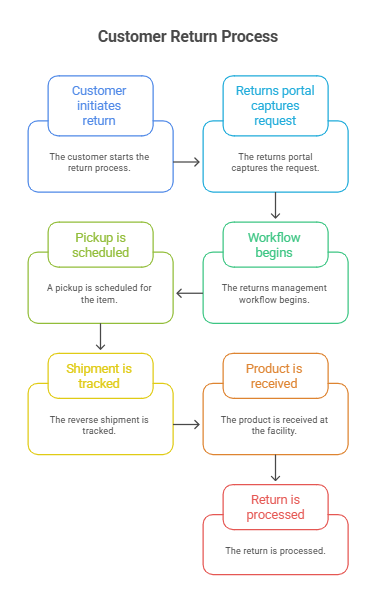
A typical ecommerce returns management workflow can look like this:
This structured approach makes returns management easier to monitor and helps businesses reduce the amount of manual coordination involved in everyday returns.
Connecting Returns With Shipping
Returns should not have to operate as a completely separate process from forward shipping. When returns management software works alongside multi carrier shipping software, businesses can use their existing carrier network and shipping visibility to manage the reverse journey as well.
This can make ecommerce returns management more connected, especially for businesses handling multiple carriers, large order volumes, and frequent reverse shipments.
A returns portal can handle the customer-facing side, while returns management software helps operations teams manage what happens behind the scenes. Together, they create a smoother process from the initial return request to the final resolution.
Supporting Growth Without Adding More Manual Work
As an ecommerce business grows, returns naturally become more complex. More customers mean more return requests, more pickups, more reverse shipments, and more information for teams to keep track of.
A scalable returns management process helps businesses handle this increase without simply adding more manual work. When ecommerce returns management, returns management software, and multi carrier shipping software work together, businesses can manage the forward and reverse journey with better visibility.
The goal is simple: make returns easier for customers, easier for operations teams to manage, and easier for the business to scale.
ePOD and Electronic Proof of Delivery: Why They Matter
Delivery confirmation is an important part of the shipping journey, especially for businesses managing high shipment volumes across multiple carriers. Customers want confirmation that their order has been delivered, while operations and support teams need quick access to delivery records when questions come up.
With ePOD software, businesses can capture delivery confirmation digitally instead of relying on physical paperwork. Electronic proof of delivery makes these records easier to access, verify, and manage across the shipment lifecycle.
ePOD vs. Traditional Proof of Delivery
| Traditional Proof of Delivery | ePOD Approach |
| Paper-based records | Digital delivery records |
| Manual retrieval | Faster access |
| Physical documentation | Electronic proof of delivery |
| Difficult to organize | Easier to manage |
| More manual work | More efficient workflows |
But eShipz takes this a step further with AI POD.
What Makes eShipz Different?
The purpose of multi carrier shipping software should be to simplify the entire shipping operation, not add another tool for teams to manage. eShipz connects carrier management with post-shipping workflows such as ndr management, AI POD, electronic proof of delivery, and returns.
The journey can look like:
Carrier selection → Shipment creation → Tracking → NDR management → Delivery → AI POD → Returns management
When a delivery fails, ndr management helps teams identify shipments that need attention. A non delivery report provides visibility into failed deliveries and supports timely action. Once the shipment is delivered, epod software and AI POD help businesses manage delivery confirmation digitally. Electronic proof of delivery keeps the completed delivery record accessible within the shipment workflow.
If the customer later wants to return the product, returns management takes over. A returns portal makes it easier for customers to initiate the return, while returns management software helps teams manage the reverse journey. Together, these capabilities give ecommerce businesses a connected approach to multi carrier shipping software, delivery operations, and ecommerce returns management, with eShipz bringing the different stages together in one platform.
How to Choose the Right Multi-Carrier Shipping Software
Choosing multi carrier shipping software is not just about finding a platform with the most carrier integrations. The right solution should fit the way your business actually ships, handle day-to-day operations without adding more manual work, and continue to support you as order volumes grow.
Here are the areas worth checking before making a decision.
- Carrier Coverage
Start with the carriers your business already works with. A good multi carrier shipping software platform should let you manage multiple carrier relationships from one place while giving your team flexibility to choose the right option for different shipments.
- Automation
Look beyond basic shipment creation. Check whether the platform can automate carrier selection, tracking, delivery updates, and other repetitive shipping tasks. Good automation allows your team to spend less time on routine work and more time resolving the shipments that actually need attention.
- NDR Management
Failed deliveries need more than a status update. Strong ndr management should help your team understand why a delivery failed and what action should be taken next.
A useful non delivery report can make it easier to identify problem shipments, prioritize follow-ups, and reduce avoidable RTOs. This makes NDR capabilities an important part of any multi carrier shipping software evaluation.
- Returns Management
Returns are another area worth checking closely. Ask whether the platform provides returns management and whether the returns management software can handle your current and future return volumes.
It is also worth looking at the customer experience. A simple returns portal can allow customers to initiate returns without depending on customer support for every step.
- ePODCapabilities
Delivery confirmation should also be part of your evaluation. Check whether the platform provides epod software and how easily teams can access electronic proof of delivery.
The right epod solution should keep delivery confirmation connected to the shipment, making it easier for operations and support teams to retrieve the information when required.
- Scalability
Think beyond your current order volume. Your shipping requirements will change as your business grows, and your ecommerce returns management needs may become more complex as well.
The platform you choose should be able to handle higher shipment volumes, more carriers, more delivery exceptions, and growing return activity without creating additional operational complexity.
- Overall Value
Finally, look at the bigger picture. Instead of comparing platforms only on individual feature costs, consider how much of your shipping operation one solution can support.
A multi carrier shipping software platform that brings carrier management, ndr management, epod software, and returns management software together can offer better value than maintaining several disconnected tools.
The best multi carrier shipping software should make your team’s current operations easier without limiting what you can do as the business grows. Look for a platform that can bring shipping, ndr management, electronic proof of delivery, and ecommerce returns management together, while keeping the experience simple for both your team and your customers.
The Future of Connected Ecommerce Shipping
Ecommerce shipping is moving beyond simply choosing a carrier and generating a label. As order volumes grow, businesses need better ways to manage delivery exceptions, capture delivery confirmation, and handle returns without adding more manual work.
This is where multi carrier shipping software can play a bigger role. A connected platform can bring ndr management, non delivery report visibility, epod software, electronic proof of delivery, AI POD, and returns management into the same shipping workflow. Instead of managing each process separately, teams can follow the shipment from carrier selection and delivery to ecommerce returns management.
For customers, this can mean a smoother experience when a delivery does not go as planned or when an order needs to be returned. For operations teams, it means having the right information in one place, from NDR management and ePOD to returns management software and a customer-friendly returns portal.
The question, then, is not just how many carriers your multi carrier shipping software supports. It is whether the platform can support the complete shipping lifecycle as your business grows. That is where eShipz brings together carrier management, AI POD, electronic proof of delivery, ndr management, and returns management in one connected platform.
If you are looking to simplify carrier operations while improving delivery visibility, NDR management, ePOD, and ecommerce returns management, explore how eShipz can help you manage more of your shipping journey from one platform.
Frequently Asked Questions
What is multi carrier shipping software?
Multi carrier shipping software allows businesses to manage shipments across multiple carriers from a centralized platform. Depending on the solution, it can also support tracking, carrier allocation, NDR workflows, delivery confirmation, and returns.
Why is ndr management important?
ndr management helps businesses respond to failed delivery attempts before they become avoidable RTO shipments. A structured non delivery report can help teams identify the reason for failure and decide what action should happen next.
What is a non delivery report?
A non delivery report provides information about shipments that were not successfully delivered. It can help operations teams monitor exceptions and prioritize follow-up actions.
What is ePOD?
ePOD stands for electronic proof of delivery. Businesses use epod software to capture and manage digital delivery confirmation. Electronic proof of delivery can make delivery records easier to access and manage.
Why should ecommerce businesses use a returns portal?
A returns portal gives customers a structured way to initiate a return without relying entirely on customer support. It can make returns management more convenient for both customers and internal teams.
What does returns management software do?
Returns management software helps businesses organize return requests, reverse shipments, customer communication, and related workflows. It can make ecommerce returns management more structured as return volumes increase.
What should I look for in multi carrier shipping software?
Look for carrier coverage, automation, tracking, ndr management, non delivery report visibility, returns management, a returns portal, epod software, electronic proof of delivery, and scalable ecommerce returns management capabilities.
Can shipping and returns be managed through one platform?
A connected multi carrier shipping software platform can bring forward shipping and reverse logistics workflows closer together. This can help businesses manage returns management, returns management software, and a returns portal alongside their regular shipping operations.
Is eShipz suitable for growing ecommerce businesses?
eShipz is designed to support businesses that need more than basic carrier connectivity. Its broader approach brings shipping, ndr management, epod, electronic proof of delivery, and ecommerce returns management into a connected shipping ecosystem.
What is the difference between ePOD and electronic proof of delivery?
There is essentially no difference in what they refer to. ePOD is the commonly used abbreviation for electronic proof of delivery, while epod software refers to the technology used to capture and manage that digital delivery confirmation.