




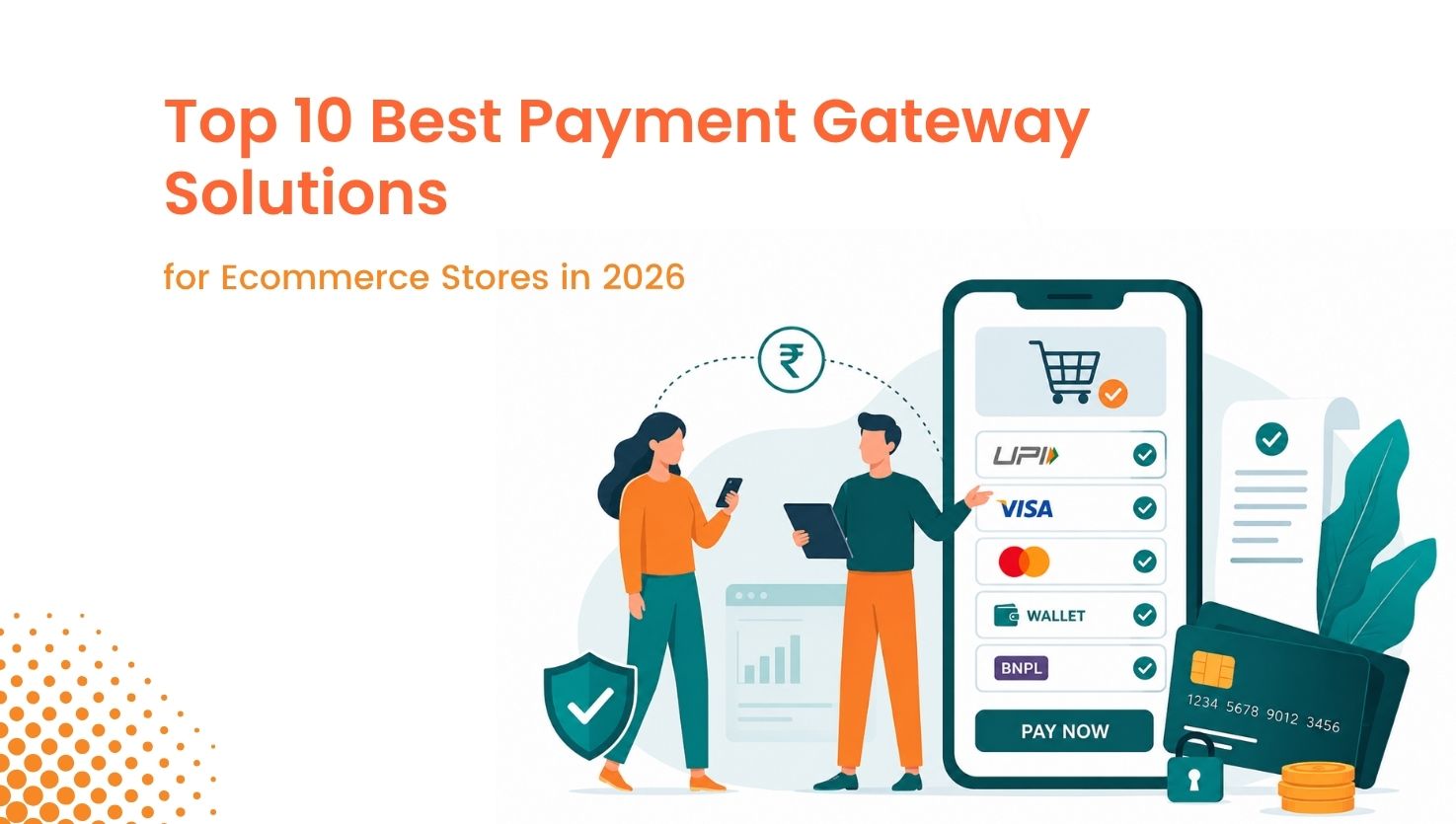
Payment gateway solutions for ecommerce have become a critical part of the online buying experience, acting as the digital bridge between customers, banks, and ecommerce platforms. These systems securely authorize transactions, transfer payment information, and ensure that funds move safely from a buyer’s account to a merchant’s store. By encrypting sensitive details and validating transactions in real time, a reliable gateway helps create faster checkouts, fewer payment failures, and a more trusted shopping experience.
As ecommerce continues to scale, payment infrastructure has become a major growth driver for online businesses. The global digital payments market is expected to cross multi-trillion-dollar transaction volumes as consumers increasingly move toward online purchases, mobile payments, and instant checkout experiences. In India, UPI has transformed digital commerce, processing over 15 billion transactions every month and contributing to the rapid adoption of cashless payments. Industry reports also indicate that more than 70% of online shoppers prefer flexible digital payment options, while payment failures remain one of the key reasons behind checkout abandonment. With ecommerce brands handling thousands to millions of transactions, even a 1–2% improvement in payment success rates can create a significant impact on revenue and customer retention.
Modern ecommerce businesses now evaluate payment platforms based on capabilities such as intelligent transaction routing, higher payment success rates, faster settlements, fraud detection, analytics, and seamless integration with existing commerce systems. A poorly optimized payment flow can lead to abandoned carts, while a smooth checkout journey can directly influence customer satisfaction and repeat purchases.
In this guide, we explore the top payment gateway solutions for ecommerce stores in 2026, their key features, and the factors businesses should consider before selecting the right platform for their growth.
Why Ecommerce Brands Need Better Payment Infrastructure in 2026
The ecommerce landscape in 2026 is no longer defined only by product quality or pricing, customer experience has become a major differentiator. From browsing products to completing a purchase, every step of the buying journey needs to be fast, reliable, and friction-free. A slow checkout page, failed transaction, or limited payment option can quickly push customers toward competitors.
This is where payment gateway solutions for ecommerce play an important role. A modern payment gateway does more than process transactions; it helps businesses create smoother checkout experiences, improve payment acceptance rates, and support multiple digital payment methods. With customers expecting instant confirmations and flexible payment choices, ecommerce brands need payment infrastructure that can handle high transaction volumes without disruptions.
Even a small issue in the payment process can impact business performance. For brands managing thousands of online orders every month, unsuccessful transactions can result in lost revenue, increased cart abandonment, and reduced customer trust. Improving payment success rates through better payment processing systems can directly contribute to higher conversions and stronger customer retention.
The expectations from online payment solutions have also changed significantly. Ecommerce businesses today are managing several challenges, including:
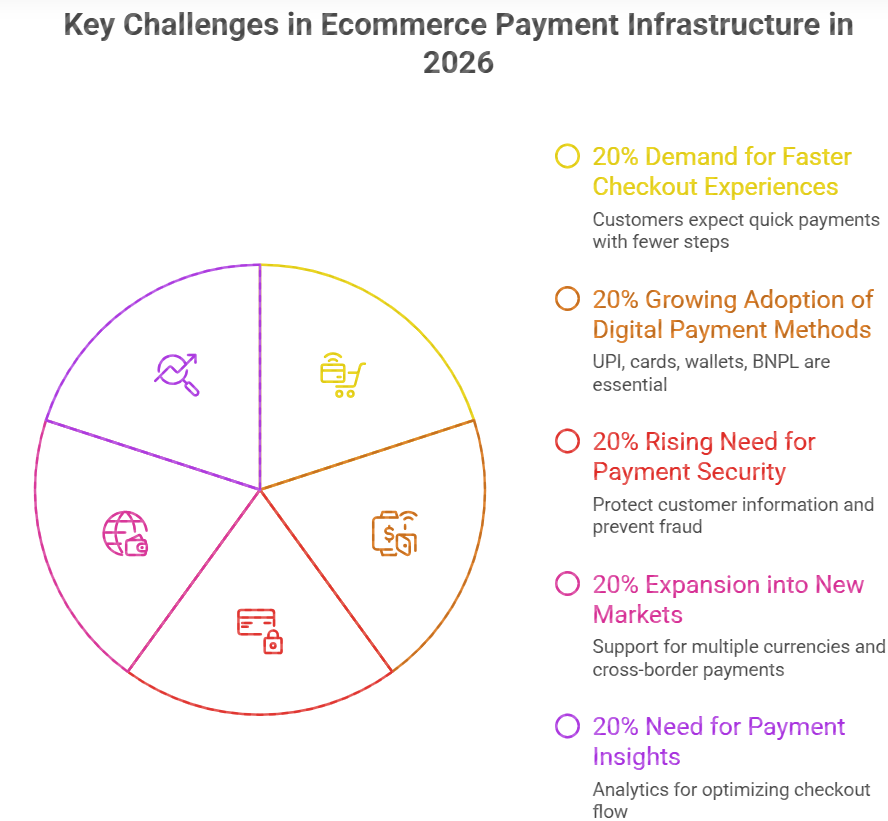
- Demand for faster checkout experiences: Customers expect quick payments with fewer steps, especially on mobile devices.
- Growing adoption of digital payment methods: UPI, cards, wallets, and Buy Now Pay Later options have become essential for online stores.
- Rising need for payment security: Businesses must protect customer information while preventing fraudulent transactions.
- Expansion into new markets: Brands selling across regions require support for multiple currencies and cross-border payments.
- Need for payment insights: Analytics around failed transactions, customer preferences, and payment trends help businesses optimize their checkout flow.
Industry trends show that digital commerce is becoming increasingly dependent on seamless payment experiences. The growth of mobile shopping, instant payments, and embedded checkout solutions is pushing brands to invest in smarter payment ecosystems. Businesses are now looking beyond basic transaction processing and focusing on solutions that offer reliability, automation, security, and scalability.
A strong ecommerce payment infrastructure has become as important as delivery speed, order tracking, and customer support. Just like customers expect real-time shipping visibility, they also expect payments to be quick, secure, and effortless. In 2026, choosing the right payment technology is not only an operational decision, it is a key part of building a better online shopping experience.
Key Features to Evaluate Before Choosing a Payment Gateway
Selecting the right payment gateway solution for ecommerce requires more than simply comparing transaction fees or pricing models. For growing online businesses, a payment gateway has become a critical part of the customer journey, influencing checkout experience, payment success rates, customer trust, and overall revenue performance.
A reliable ecommerce payment gateway should help businesses process transactions securely, support multiple payment methods, reduce failed payments, and integrate smoothly with existing ecommerce platforms. As online shopping continues to grow, brands need payment infrastructure that can handle increasing order volumes while delivering a fast and seamless buying experience.
Before choosing an online payment solution, ecommerce businesses should evaluate key capabilities that impact both operational efficiency and customer satisfaction.
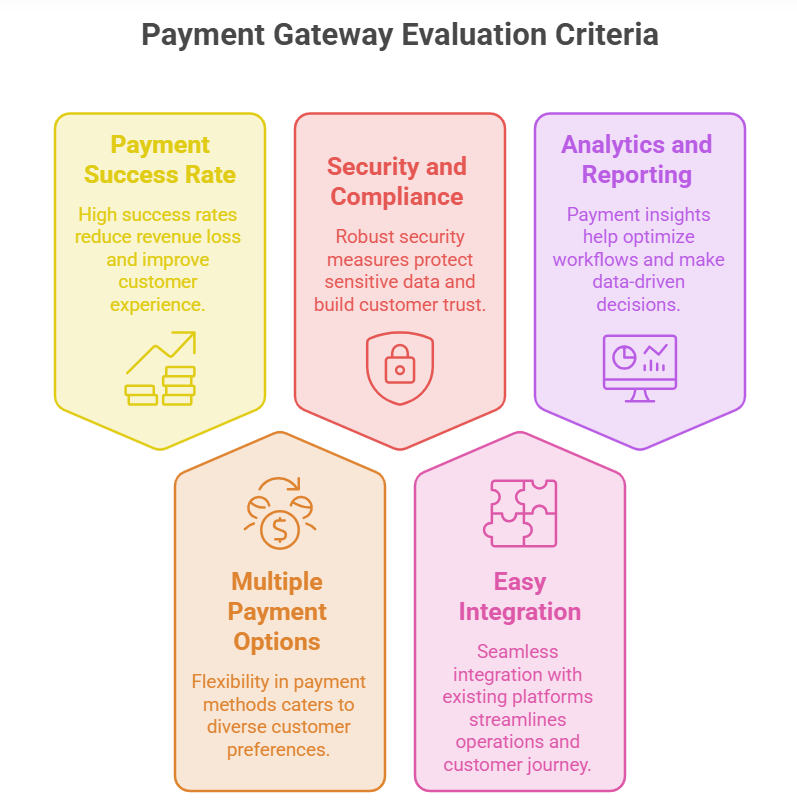
- Payment Success Rate and Transaction Reliability
A high payment success rate is one of the most important factors when selecting a payment processing platform. Even a minor increase in failed transactions can affect revenue, especially for businesses handling large order volumes.
A reliable payment gateway should reduce transaction failures through:
- Intelligent payment routing across different banking networks
- Automated retry mechanisms for failed transactions
- Multiple payment processing channels
- Better authorization rates
- Real-time transaction monitoring
By improving payment reliability, businesses can reduce checkout abandonment and create a smoother purchase experience for customers.
- Multiple Payment Options for Better Customer Convenience
Modern customers expect flexibility when completing online purchases. Limiting payment choices can create unnecessary friction and increase drop-offs during checkout.
The best payment gateway solutions support a wide range of payment methods, including:
- UPI payments
- Credit and debit cards
- Net banking
- Digital wallets
- EMI options
- Buy Now Pay Later (BNPL) services
Supporting different payment preferences helps ecommerce brands serve a wider customer base while improving conversion opportunities.
- Security, Compliance, and Fraud Protection
As digital transactions increase, payment security has become a major priority for ecommerce businesses. Customers expect their financial information to be protected throughout the payment process.
A secure ecommerce payment gateway should include:
- Data encryption for sensitive information
- Tokenization for safer transactions
- Fraud detection systems
- Risk monitoring tools
- Compliance with industry security standards
Advanced security features not only protect businesses from fraudulent activities but also help build long-term customer confidence.
- Easy IntegrationWithEcommerce Platforms
A payment solution should fit seamlessly into existing business operations. Complex integrations can slow down implementation and create unnecessary technical challenges.
Modern payment gateway platforms should offer:
- Simple API integrations
- Compatibility with ecommerce platforms
- Developer-friendly tools
- Easy configuration options
- Support for mobile and web checkout experiences
Smooth integration allows businesses to launch faster and maintain a consistent customer journey across different sales channels.
- Analytics, Reporting, and Payment Insights
A strong payment infrastructure should provide more than transaction processing. Businesses need visibility into payment performance to identify issues and improve checkout efficiency.
Payment analytics help brands track:
- Failed payment patterns
- Customer payment preferences
- Transaction success rates
- Revenue trends
- Settlement performance
- Refund and dispute activity
With better insights, ecommerce businesses can optimize their payment workflows, improve customer experience, and make data-driven decisions.
Ultimately, the right payment gateway for ecommerce should balance speed, security, flexibility, and scalability. As digital commerce continues evolving, businesses that invest in reliable payment technology can create smoother checkout journeys and stronger customer relationships.
Top 10 Best Payment Gateway Solutions for Ecommerce Stores in 2026
With ecommerce competition increasing, businesses are focusing on every part of the customer journey, especially the final step: checkout. A smooth and reliable payment experience can be the difference between a completed order and an abandoned cart. As customers expect faster transactions, flexible payment methods, and instant confirmations, choosing the right payment infrastructure has become a strategic decision for online brands.
The best payment gateway solutions for ecommerce help businesses securely process transactions, improve payment success rates, support multiple payment options, and create frictionless checkout experiences. From UPI and cards to wallets and Buy Now Pay Later services, modern payment platforms are evolving to meet changing customer expectations.
However, not every payment provider offers the same level of scalability, security, integrations, or analytics. Ecommerce businesses need to evaluate solutions based on transaction reliability, fraud protection, settlement speed, ease of integration, and their ability to support future growth.
In this guide, we compare the top payment gateway platforms for ecommerce stores in 2026, highlighting their key features, strengths, and the factors businesses should consider before making the right choice.
|
Payment Gateway |
Best For |
Key Highlights |
| Razorpay | Startups, D2C brands, growing ecommerce businesses | Multiple payment methods, easy integrations, payment links, automated settlements |
| Cashfree Payments | High-volume online businesses | Fast processing, payment automation, payouts, multiple payment options |
| PayU | Mid-size and enterprise businesses | Secure payment processing, checkout solutions, analytics capabilities |
| CCAvenue | Established ecommerce brands | Wide payment coverage, international payments, customizable checkout |
| Paytm | Businesses targeting digital-first customers | UPI, wallets, cards, merchant payment solutions |
| GoKwik | D2C brands focused on conversions | Faster checkout, payment optimization, customer experience tools |
| Stripe | Global ecommerce businesses | Developer-friendly APIs, international payments, subscription support |
| Worldline | Large enterprises | Enterprise payment infrastructure, digital transaction services |
| Instamojo | Small businesses and creators | Simple payment collection tools, payment links, online selling features |
| PhonePe | UPI-focused ecommerce brands | UPI payments, online checkout, merchant solutions |
- Razorpay
Razorpay is one of the widely adopted payment platforms among Indian ecommerce businesses.
Key features include:
- Multiple payment modes
- Payment links
- Subscription payments
- Automated settlements
- Developer-friendly APIs
It is commonly preferred by startups, D2C brands, and growing online businesses looking for flexible payment infrastructure.
- CashfreePayments
Cashfree Payments provides payment processing and banking solutions designed for online businesses.
Notable capabilities include:
- Fast payment processing
- Payout solutions
- Payment automation
- Multiple payment methods
It is suitable for businesses managing high transaction volumes and automated workflows.
- PayU
PayU offers online payment solutions for ecommerce brands and enterprises.
Its platform supports:
- Cards and UPI payments
- Checkout solutions
- Risk management tools
- Business analytics
It is often considered by businesses looking for enterprise-level payment capabilities.
- CCAvenue
CCAvenue is among India’s established payment gateway providers.
It supports:
- Multiple payment options
- International payments
- Custom checkout experiences
- Merchant dashboards
Its long presence in the market makes it a popular choice among traditional and large-scale businesses.
- Paytm Payment Gateway
Paytm provides payment acceptance solutions for online merchants.
Businesses can access:
- UPI payments
- Wallet payments
- Card processing
- Merchant tools
Its ecosystem supports brands looking for integrated digital payment options.
- GoKwikPayments
GoKwik focuses on improving ecommerce checkout experiences.
Its solutions are designed around:
- Faster checkout journeys
- Conversion improvement
- Payment optimization
- Customer experience
It is commonly used by D2C brands aiming to reduce checkout friction.
- Stripe
Stripe is a global payment platform supporting online businesses across multiple regions.
Key strengths include:
- Developer-focused APIs
- Global payments
- Subscription billing
- Payment automation
It is often selected by companies with international expansion plans.
- Worldline
Worldline provides payment technology solutions for businesses across industries.
Its offerings include:
- Online payments
- Digital transactions
- Enterprise payment services
It supports businesses requiring large-scale payment infrastructure.
- Instamojo
Instamojo provides simple payment tools for small and medium businesses.
Features include:
- Payment links
- Online storefront tools
- Digital payments
It works well for smaller businesses starting their ecommerce journey.
- PhonePe Payment Gateway
PhonePe offers payment acceptance solutions built around its digital payment ecosystem.
It supports:
- UPI payments
- Online checkout
- Merchant payment tools
It is relevant for businesses targeting customers who prefer UPI-based transactions.
Trends Shaping Ecommerce Payments in 2026
The way customers pay online is changing rapidly. As ecommerce continues to grow, payment experiences are becoming more connected, intelligent, and customer-focused. Businesses are no longer looking at payments as just a transaction process; instead, payment infrastructure has become an important part of the overall shopping journey.
In 2026, ecommerce brands are focusing on payment solutions that can improve checkout experiences, increase transaction reliability, reduce security risks, and support changing customer preferences. Emerging technologies, evolving consumer behaviour, and the rise of digital commerce are shaping how businesses manage online payments.
AI-Based Payment Risk Management:
Artificial intelligence is transforming how businesses approach payment security. Traditional fraud detection methods often rely on fixed rules, but AI-powered systems can analyze transaction patterns, customer behaviour, device information, and payment history in real time.
Modern payment platforms are increasingly using AI to:
- Identify unusual transaction behaviour
- Detect potential fraud attempts faster
- Improve risk-based authentication
- Reduce false payment declines
- Protect customers without adding unnecessary checkout friction
As online transactions increase, AI-driven fraud prevention is becoming an essential capability for ecommerce businesses handling large payment volumes.
Faster and Frictionless Checkout Experiences:
Customers today expect online purchases to be completed quickly and effortlessly. A complicated checkout process with multiple steps can increase cart abandonment and negatively impact conversions.
Ecommerce businesses are adopting features such as:
- One-click payments
- Saved payment preferences
- Faster mobile checkout
- Smart payment recommendations
- Simplified authentication flows
A smooth checkout experience helps customers complete purchases faster while giving businesses a better chance of converting every buying opportunity.
Growth of Alternative Payment Methods:
Payment preferences are becoming more diverse. While cards remain important, customers are increasingly choosing digital-first options based on convenience and speed.
The growth of methods like:
- UPI payments
- Digital wallets
- Buy Now Pay Later options
- Account-based payments
- Instant payment solutions
is changing how customers complete online purchases. Ecommerce brands that support multiple payment choices can serve different customer segments and create a more flexible buying experience.
Unified Commerce and Connected Payment Experiences:
Payments are becoming more connected with the larger ecommerce ecosystem. Businesses are integrating payment data with inventory management, customer insights, order processing, and post-purchase experiences.
This connected approach helps brands:
- Understand customer payment behaviour
- Improve order management
- Create personalized experiences
- Identify operational gaps
- Deliver smoother customer journeys
In 2026, payment is no longer just the final step of a transaction. It has become a key part of ecommerce operations, helping businesses improve customer satisfaction, build trust, and support long-term growth.
Choosing the Right Payment Infrastructure for Future Growth
The ecommerce payment landscape in 2026 is moving beyond simple transaction processing. With customers expecting faster checkouts, flexible payment options, and secure buying experiences, businesses need payment infrastructure that can keep up with changing expectations.
A strong payment gateway solution for ecommerce can help brands reduce checkout friction, improve transaction success rates, and create a smoother customer journey. However, the right choice depends on factors such as business size, transaction volume, customer preferences, security requirements, and integration needs.
As digital payments continue evolving, businesses that invest in reliable and scalable payment technology will be better positioned to improve conversions, strengthen customer trust, and support long-term ecommerce growth.
The future of online payments is not just about completing transactions, it is about creating seamless experiences that keep customers coming back.