


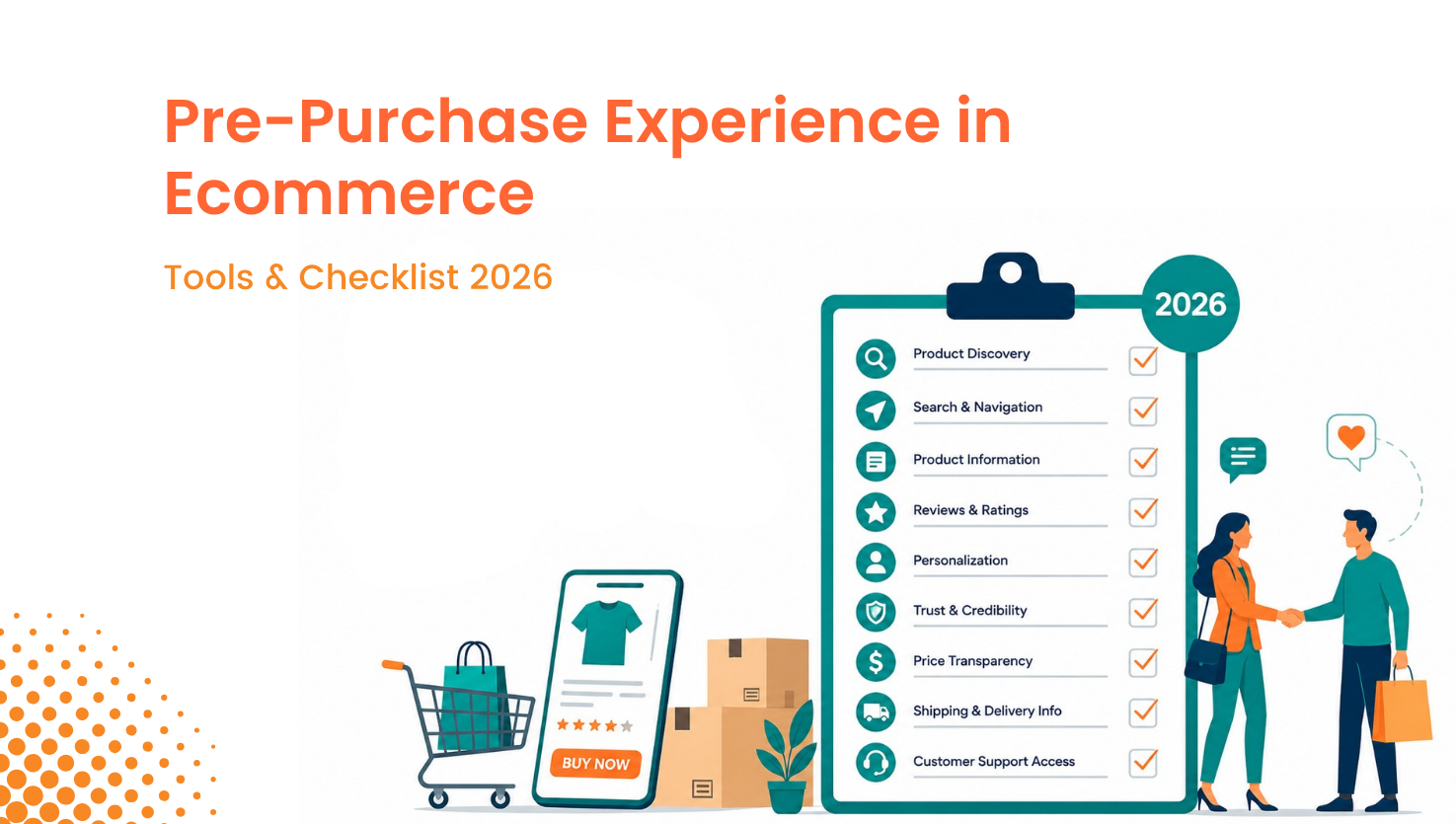
A pre-purchase experience in ecommerce refers to everything a customer sees, feels, and evaluates before clicking the “Buy Now” button. It includes the entire decision-making phase, from discovering a product and comparing options to reading reviews, checking delivery expectations, and building trust in a brand. In simple terms, it is the stage where interest slowly turns into intent, and intent turns into a purchase decision.
Recent ecommerce behavior trends highlight how critical this stage has become. Studies show that nearly 70–80% of online shoppers spend time researching products before making a purchase decision, while around 63% of customers compare multiple brands before final checkout. Additionally, nearly 49% of users abandon carts due to unclear delivery timelines or hidden costs, and more than 88% of buyers consider reviews and ratings as a key factor in their decision-making process. These numbers clearly indicate that the pre-purchase stage now carries more influence on conversions than ever before.
A great post-purchase experience often decides whether customers return, recommend a brand, or become repeat buyers. However, that relationship starts much earlier, before the order is even placed.
Before customers complete a purchase, they spend time exploring products, comparing options, reading reviews, checking delivery expectations, and understanding whether a brand is reliable. These small interactions shape their confidence and influence their final decision.
This is where the pre-purchase experience in ecommerce becomes a major factor in modern online shopping. It includes every touchpoint before checkout, from product discovery and personalization to delivery visibility, customer support, and trust-building.
In 2026, ecommerce brands are no longer competing only on price or product availability. They are competing on how effectively they guide customers from interest to confidence.
This blog covers the important tools, strategies, and checklist brands need to improve the pre-purchase experience in ecommerce and create smoother customer journeys.
Why Pre-Purchase Experience Matters More Than Ever
Online shopping decisions are rarely made in a single moment. Before customers add a product to their cart, they spend time exploring options, comparing brands, checking reviews, and looking for signs that they can trust the purchase. This early stage has become one of the most important parts of the ecommerce journey because small uncertainties can easily push customers toward another brand.
A strong pre-purchase experience in ecommerce helps businesses guide customers through these questions before they become barriers. It creates a smoother path from curiosity to confidence by giving shoppers the right information at the right time.
Customers today want to know:
- Is this product right for me?
- Can I trust this brand?
- When will my order arrive?
- Are returns simple?
- Will I receive support if something goes wrong?
Changing Customer Expectations:
Modern shoppers expect:
- Faster access to information
- Personalized recommendations
- Transparent pricing
- Clear delivery timelines
- Easy return policies
Brands that address these expectations early often create stronger relationships after purchase as well.
A connected pre-purchase experience in ecommerce helps businesses improve conversions while reducing customer uncertainty.
As customer expectations continue to rise, ecommerce success depends on more than attracting visitors. Brands must focus on every interaction before checkout and create experiences that make customers comfortable moving forward.
Key Elements of a Strong Ecommerce Buying Journey
A customer’s buying decision is shaped by multiple experiences working together. A helpful product page, easy navigation, clear shipping details, and customer reviews may appear separate, but together they influence how customers see a brand.
The pre-purchase experience in ecommerce is built through these connected moments. When customers receive the right information at the right time, they move through the buying journey with greater confidence.
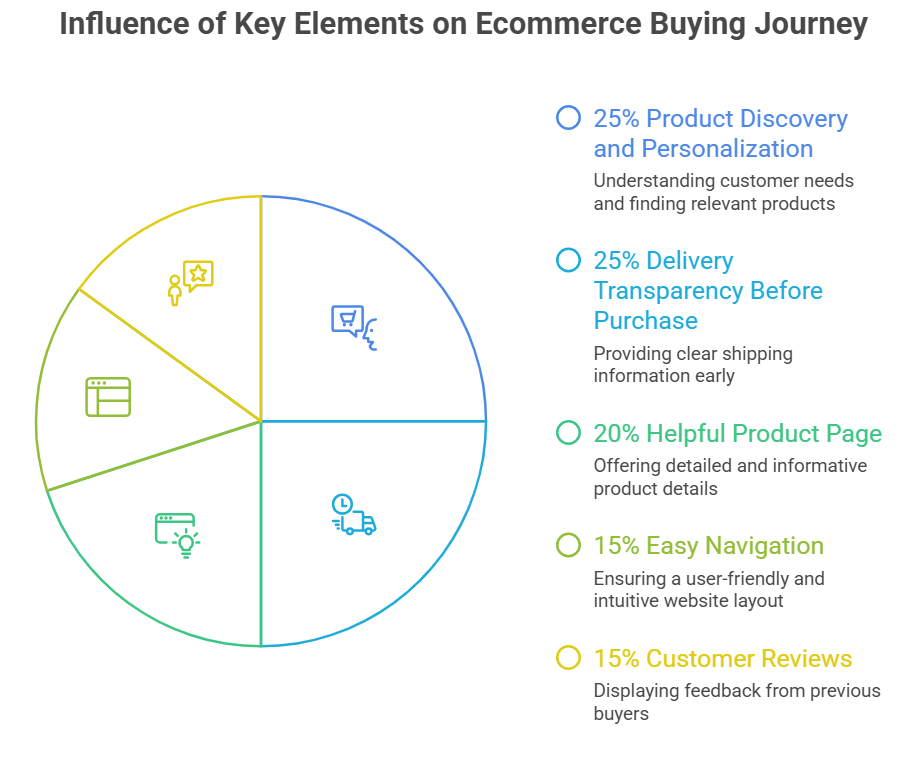
Product Discovery and Personalization:
Customers expect ecommerce websites to understand their needs instead of offering the same experience to everyone.
Personalization helps shoppers discover relevant products faster through:
- AI-powered recommendations
- Smart search
- Personalized collections
- Recently viewed products
- Customer behavior insights
When customers find products that match their intent, they spend less time searching and more time making decisions.
A better discovery process strengthens the pre-purchase experience in ecommerce by creating a shopping journey that feels more relevant and convenient.
Delivery Transparency Before Purchase:
Delivery expectations now influence decisions before checkout.
Customers want to understand what happens after they click purchase. Unclear shipping information can create hesitation, even when the product itself is attractive.
Brands should provide:
- Shipping options
- Delivery availability
- Shipping costs
- Order visibility information
Showing accurate delivery expectations early helps customers feel more confident.
Delivery transparency has become an important part of the pre-purchase experience in ecommerce because it connects customer expectations with actual fulfillment capabilities.
Creating a better buying journey is not about adding unnecessary steps. It is about removing friction and helping customers make decisions with clarity.
Tools Brands Need to Improve Pre-Purchase Experience in 2026
Technology has changed how customers interact with ecommerce brands. Shoppers now expect online stores to be smarter, faster, and more helpful throughout the buying journey.
The right technology stack allows businesses to deliver connected experiences instead of disconnected interactions.
These tools support the pre-purchase experience in ecommerce by helping brands personalize communication, improve trust, and provide better information before checkout.
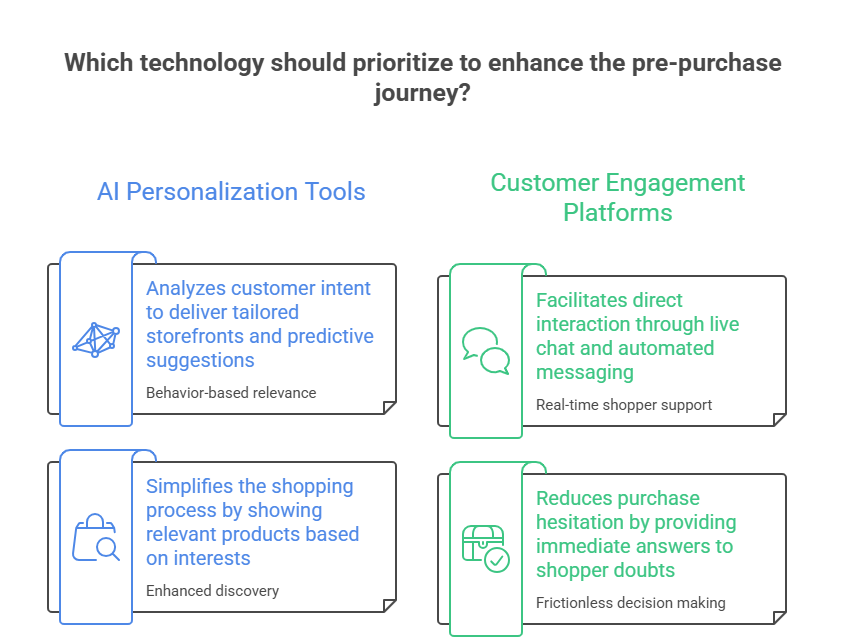
AI-Based Personalization Tools:
Artificial intelligence is transforming ecommerce by helping brands understand customer intent.
AI tools support:
- Product recommendations
- Smarter search results
- Customer preference analysis
- Predictive suggestions
Instead of showing every visitor the same storefront, brands can create more relevant experiences based on behavior and interests.
This makes shopping easier and improves the overall customer journey.
Customer Engagement Platforms:
Customers often need quick answers before purchasing.
Engagement platforms help brands support shoppers through:
- Live chat
- Automated messages
- Product suggestions
- Cart reminders
- Personalized communication
These interactions help customers move from interest to purchase with fewer doubts.
A strong communication system improves the pre-purchase experience in ecommerce by ensuring customers feel supported before making decisions.
Reviews and Social Proof Tools:
Trust plays a major role in online purchases.
Before buying, customers often look for proof that other buyers had positive experiences.
Reviews and social proof tools help brands display:
- Customer feedback
- Product ratings
- Customer photos
- Real experiences
These trust signals reduce uncertainty and encourage customers to complete purchases.
Delivery Experience Technology:
Shipping has become part of the customer-facing experience, not just an operational process.
Delivery technology helps brands provide:
- Accurate delivery estimates
- Shipment visibility
- Real-time updates
- Better communication
When logistics information is available earlier, customers can make more informed choices.
The future of ecommerce will not depend on one single tool. It will depend on how effectively technology works together to create a smooth customer experience.
Pre-Purchase Experience Checklist for Ecommerce Brands
Improving customer experience starts by identifying where customers face confusion or hesitation.
Many brands invest heavily in marketing but miss small friction points that influence buying decisions.
A practical checklist helps businesses evaluate every stage before checkout and strengthen their pre-purchase experience in ecommerce.
Product Experience Checklist:
✓ Are product descriptions complete?
✓ Are images and videos available?
✓ Are customer questions answered?
✓ Can shoppers compare products easily?
Website Experience Checklist:
✓ Is navigation simple?
✓ Does search work effectively?
✓ Is the mobile experience smooth?
✓ Are recommendations personalized?
Delivery Confidence Checklist:
✓ Are delivery timelines visible?
✓ Are shipping charges clear?
✓ Are tracking options explained?
✓ Are delivery promises realistic?
Trust Checklist:
✓ Are reviews visible?
✓ Are return policies easy to understand?
✓ Is customer support accessible?
✓ Are payments secure?
A checklist is not a one-time activity. Customer expectations change constantly, and brands need to regularly improve every interaction that affects buying confidence.
A checklist is not just a one-time exercise. Customer behaviour changes constantly, and ecommerce brands need to keep reviewing their digital experience. Small improvements across multiple touchpoints often create a bigger impact on customer confidence and business growth.
How Logistics Technology Supports the Buying Journey
The customer journey does not end with product discovery. Even before placing an order, customers think about what happens next.
They want confidence around delivery speed, reliability, and visibility.
This makes logistics a major part of the shopping experience. When shipping information is accurate and available early, brands can improve trust and create a stronger pre-purchase experience in ecommerce.
Modern logistics technology supports:
- Carrier selection
- Delivery predictions
- Shipment tracking
- Customer notifications
- Exception handling
By connecting customer expectations with operational capabilities, businesses can create more reliable experiences.
Modern ecommerce success requires alignment between customer promises and operational capabilities. Logistics technology helps bridge this gap by ensuring that the experience customers expect online matches the experience they receive after ordering.
How Shipping Technology Shapes the Pre-Purchase Experience
A customer’s buying decision doesn’t end at product interest, it extends into expectations about delivery reliability, speed, and visibility. Even before checkout, shoppers often evaluate how dependable a brand is based on how clearly it communicates shipping information.
This is where shipping technology quietly becomes part of the pre-purchase journey. When brands can accurately estimate delivery timelines, manage multiple carriers, and provide real-time visibility, customers feel more confident about completing the purchase.
Modern logistics platforms like eShipz help brands bring structure to this complexity by connecting shipping operations with customer expectations across channels.
At a broader level, shipping technology influences not just fulfillment but also how customers perceive trust and reliability before they buy.
|
Aspect |
Without Shipping Technology |
With Shipping Technology |
| Delivery Visibility | Unclear or generic timelines | Accurate, real-time delivery estimates |
| Customer Confidence | Low due to uncertainty | Higher due to predictable delivery experience |
| Carrier Management | Manual and fragmented | Centralized multi-carrier control |
| Communication | Delayed or inconsistent updates | Automated and proactive updates |
| Decision Impact | Higher drop-offs before purchase | Improved conversion rates |
A structured shipping system doesn’t just improve operations, it directly improves how customers feel during the decision-making stage.
When delivery expectations become clear before purchase, customers move forward with more confidence and fewer doubts, which ultimately strengthens the entire ecommerce buying journey.
Trends Shaping Ecommerce Experiences in 2026
The ecommerce industry is entering a phase where customer experience is becoming the main differentiator. Products and prices may attract customers, but the quality of the journey determines whether they stay, return, and recommend a brand.
New technologies, changing expectations, and smarter digital experiences are reshaping how customers shop. The brands leading this shift are focusing on creating more personalized, transparent, and connected journeys.
AI-Driven Shopping Journeys:
AI is helping brands create more personalized and predictive shopping experiences.
Customers will increasingly interact with:
- Smart recommendations
- Conversational assistants
- Automated support
- Personalized storefronts
Greater Transparency:
Customers want visibility before committing to a purchase.
Brands are improving transparency around:
- Product details
- Availability
- Delivery timelines
Connected Commerce Systems:
Successful ecommerce brands are connecting marketing, customer experience, and logistics systems.
This creates consistent experiences across the complete customer journey. The next generation of ecommerce will belong to businesses that understand customers beyond transactions. By improving every stage of interaction, brands can build stronger relationships and create experiences that continue long after the first purchase.
From Click to Confidence: Building Journeys That Convert
The ecommerce journey rarely starts at checkout. It begins much earlier, the moment a customer lands on a page, searches for a product, reads a review, or tries to understand whether a brand can truly deliver on its promise. Each of these small interactions quietly shapes how confident a customer feels about moving forward.
In today’s competitive digital space, customers don’t just look for products, they look for clarity. They want simple experiences, honest information, and brands that reduce uncertainty instead of adding to it. When this clarity is missing, even strong products struggle to convert interest into action.
A strong pre-purchase experience in ecommerce brings structure to this uncertainty. It helps brands guide customers with the right information at the right time, reducing friction and making decisions feel effortless rather than risky. Over time, this doesn’t just improve conversions, it builds trust that lasts beyond a single purchase.
The brands that will lead in 2026 are the ones that understand one simple shift: ecommerce success is no longer defined at checkout. It is defined much earlier, in how clearly, consistently, and confidently a brand can guide a customer from discovery to decision, and finally to delivery.
For brands looking to bridge this gap between customer expectations and delivery execution, platforms like eShipz help bring greater visibility, control, and consistency across the shipping journey, ensuring that what customers see before purchase aligns with what they experience after it.
FAQs
What is the pre-purchase experience in ecommerce?
The pre-purchase experience in ecommerce includes all customer interactions before buying, such as product discovery, reviews, personalization, delivery information, and trust-building.
Why is the pre-purchase stage important?
It helps customers make confident decisions, reduces hesitation, and improves the chances of completing a purchase.
What tools improve ecommerce customer experience?
Brands use personalization tools, engagement platforms, review systems, delivery visibility solutions, and customer support technology.
How does delivery affect purchase decisions?
Clear delivery information helps customers understand expectations and reduces uncertainty before checkout.
Can logistics improve ecommerce conversions?
Yes. Reliable shipping information and visibility improve customer confidence and support better purchase decisions.