





Shipment tracking software is now a core part of ecommerce and logistics operations. Businesses are handling higher order volumes, more sales channels, multiple warehouses, and a wider mix of courier partners. Sending an order and sharing a tracking number is no longer enough. Customers expect accurate delivery updates, while teams need to manage shipping costs, carrier performance, delays, returns, and failed deliveries. A reliable shipping and logistics automation platform brings these tasks into one system, helping businesses manage orders, choose carriers, generate labels, monitor shipments, and keep customers informed.
The delivery experience doesn’t end once an order leaves the warehouse. Customers want to know where their package is, when it will arrive, and whether anything has changed in transit. That makes real time shipment tracking essential for brands that want to offer clear post-purchase updates. Operations teams also need a centralized shipment tracking system that shows shipments across courier partners without forcing them to check each carrier portal manually.
Shipment visibility becomes more important as order volume grows. A business may be able to manage a small number of shipments manually, but tracking thousands of orders across carriers, cities, warehouses, and delivery networks quickly gets difficult. Logistics automation platforms help by bringing order processing, carrier allocation, tracking, customer communication, NDR management, returns, and other shipping workflows into one place.
This article reviews leading shipping and logistics automation platforms for businesses, including eShipz, Shipway, SendCloud, ClickPost, ShippyPro, ShipTime, ShipStation, ShipperHQ, ShipRocket, and LogiNext Mile. It covers their main capabilities, tracking features, integrations, shipping automation, and the factors businesses should weigh before choosing a platform. It also examines how ecommerce shipment tracking and automated delivery communication can give teams better operational control and provide customers with a clearer delivery experience.
Best Shipping and Logistics Automation Platforms for Businesses
As businesses grow, managing shipping and logistics becomes increasingly complex. Orders come in from multiple sales channels, shipments move through different courier partners, and customers expect faster deliveries with clear updates at every stage. Handling these processes manually can make it difficult for teams to maintain visibility, control shipping costs, and respond quickly when delivery issues occur. This is where shipping and logistics automation platforms can make a difference. By bringing order management, carrier allocation, shipment tracking, delivery updates, and exception management into a more connected workflow, these platforms help businesses streamline day-to-day shipping operations and create a more consistent delivery experience.
1. eShipz
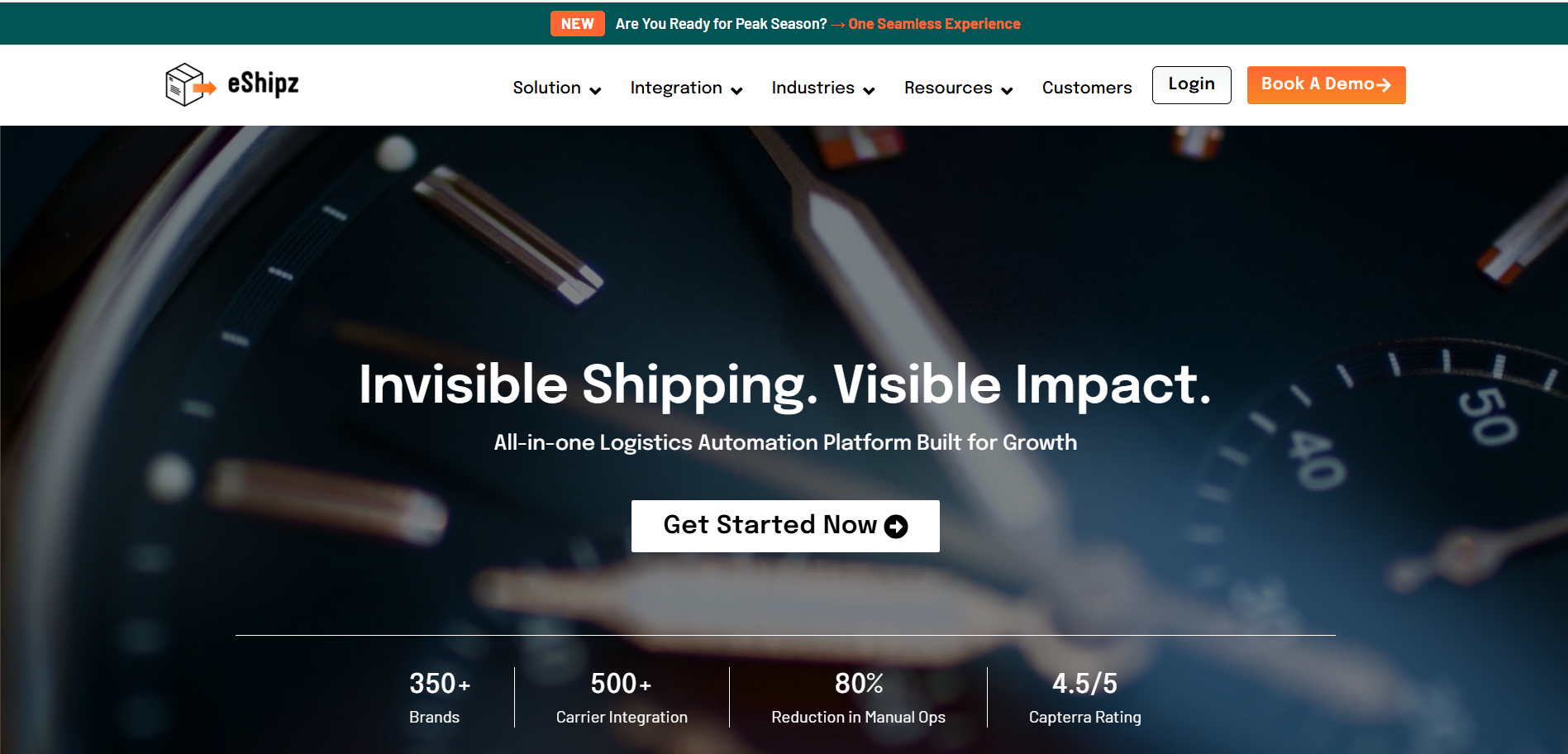
eShipz is an enterprise shipping platform founded in 2019 and headquartered in Bangalore. It provides a unified shipping solution designed to help businesses streamline logistics operations, improve efficiency, and manage shipping costs. Its platform covers several stages of the shipping lifecycle, including order processing, carrier allocation, shipment tracking, delivery exception management, NDR management, customer communication, and returns.
According to the supplied source, eShipz is used by businesses and ecommerce retailers across India, the Far East, and the Middle East and has crossed the milestone of 100 million.
Key Features of eShipz
-
Integrate multiple sales channels in under 30 minutes.
-
Generate shipping labels in bulk for more than 350 carriers.
-
Recommend suitable carriers using AI-based algorithms.
-
Convert eligible COD orders to prepaid orders through incentives.
-
Track orders and notify customers about delivery delays.
-
Manage NDR cases through a centralized dashboard.
-
Process return requests through a centralized returns portal.
-
Monitor cash flows and courier performance to reduce remittance discrepancies.
-
Create carrier allocation rules based on business requirements.
-
Predict potential delivery delays using factors such as traffic, weather, and courier performance.
-
Use AI-based fraud detection for COD orders.
-
Personalize customer communication and NDR messages using AI.
-
Optimize packaging and shipment routing to improve delivery speed and control costs.
Because these capabilities extend beyond basic tracking, eShipz can be used as part of a broader logistics automation workflow. Businesses can connect real time order tracking with carrier allocation, customer communication, NDR management, returns, and delivery monitoring instead of treating tracking as a separate activity.
2. Shipway
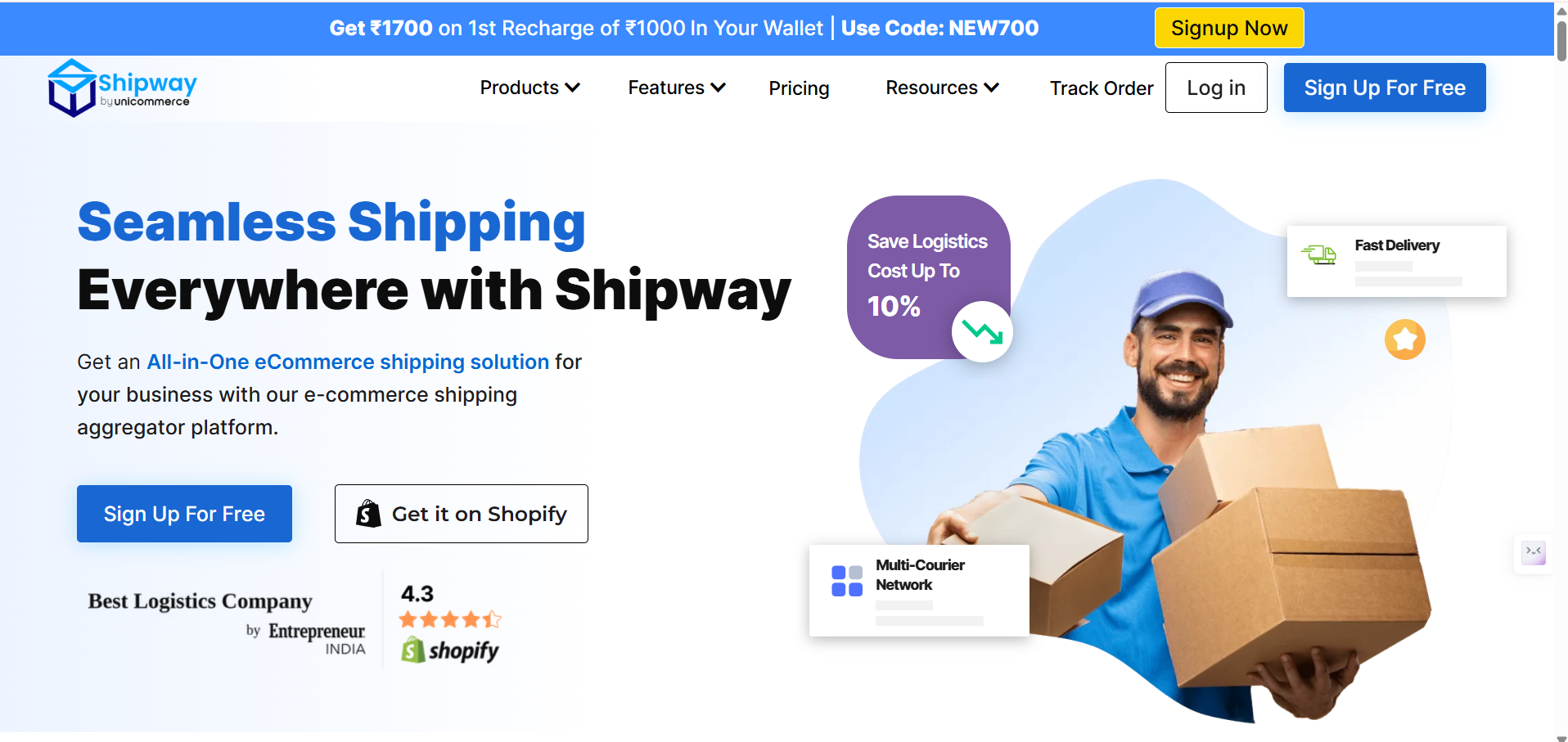
Shipway is a shipping and logistics software platform designed to help D2C brands manage shipping operations and last-mile delivery. The supplied source states that Shipway assists 12,000 D2C brands and provides cloud-based solutions to ecommerce retailers, particularly for fast deliveries across India. It also has integrations with carriers such as Delhivery, Blue Dart, and Ecom Express.
For growing D2C brands, managing orders from multiple sales channels can become difficult when every stage of fulfillment requires manual intervention. A centralized platform can help businesses synchronize orders, generate labels, assign carriers, manage shipments, and monitor delivery activity from a single workflow.
Shipway’s capabilities are relevant for businesses looking for shipment tracking software for ecommerce businesses because its features extend across order synchronization, shipping, carrier allocation, returns, and tracking.
Key Features of Shipway
-
Automatically synchronize orders from ecommerce sales channels.
-
Generate shipping labels in batches of up to 1,000.
-
Assign shipments to carriers based on factors such as cost and delivery speed.
-
Communicate packaging instructions to 3PL partners.
-
Automatically allocate package weights and dimensions to SKUs.
-
Help resolve weight discrepancies with carriers.
-
Coordinate warehouse pickups.
When tracking information is connected with order and carrier information, businesses can improve shipment visibility and understand what is happening with an order after it leaves the warehouse. This can also make it easier for customer support teams to respond to delivery-related queries.
3. SendCloud
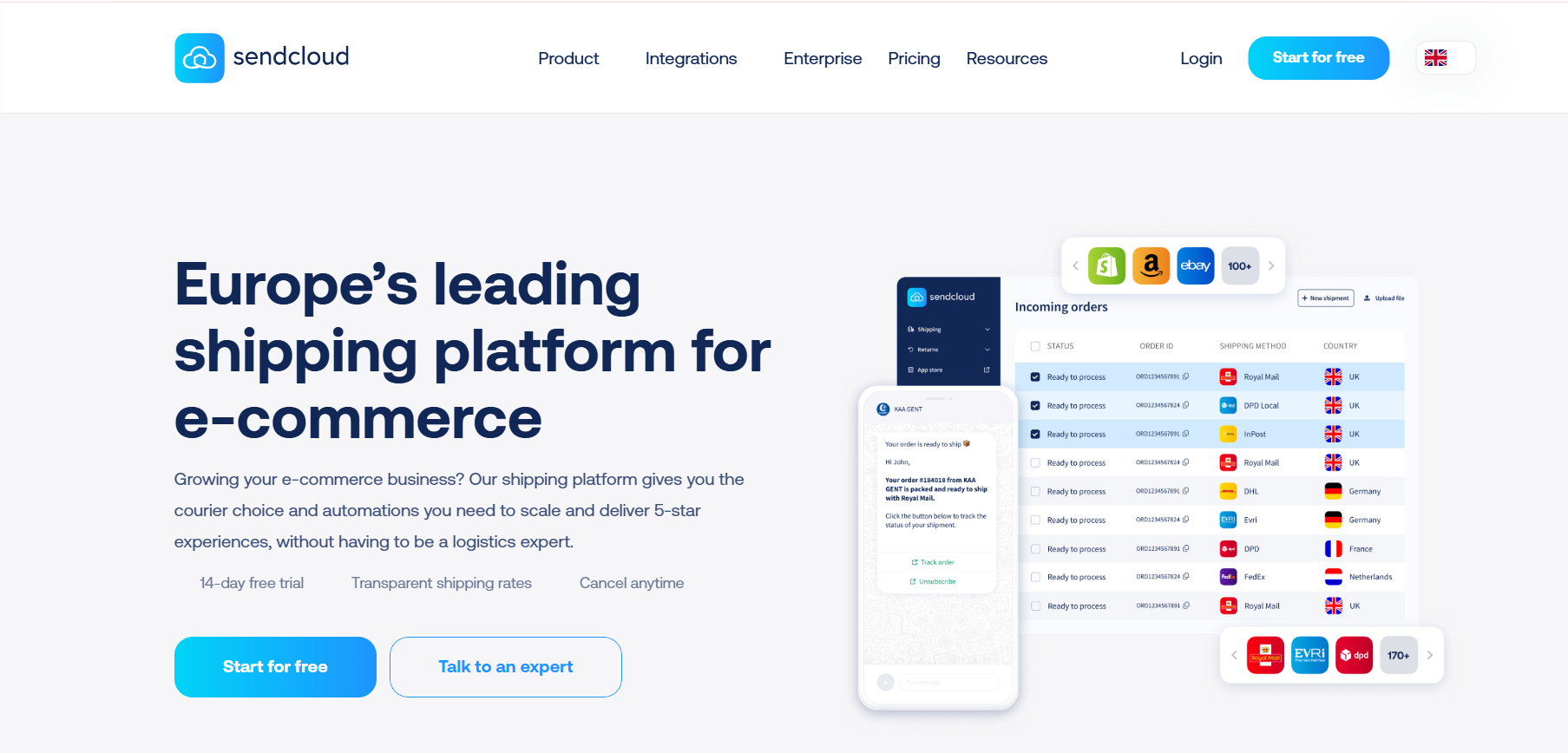
SendCloud is an automated shipping solution provider based in Eindhoven, Netherlands, and was founded in 2012. Its solutions focus strongly on last-mile delivery and have a broad presence in the European market. The supplied source also identifies SendCloud as a potential shipping solution for U.S. retailers looking to expand their European operations. International shipping can introduce additional complexity because businesses need to manage customs documentation, carrier rules, different delivery options, and returns alongside the actual transportation of the shipment. A shipping automation platform can help bring these processes together while maintaining customer communication throughout the order lifecycle.
SendCloud combines shipping label generation and customs documentation with delivery options, tracking, branded communication, and returns management.
Key Features of SendCloud
-
Generate ready-to-print shipping labels.
-
Automatically create CN22 customs documents.
-
Set customs shipping rules for carrier selection.
-
Schedule shipment pickups from warehouses.
-
Offer customers flexible delivery methods, times, and courier options.
-
Provide real-time tracking updates.
-
Send customized branded emails throughout the order lifecycle.
-
Create a branded returns portal.
-
Automatically generate return labels and approve eligible return requests.
For customers waiting for international shipments, timely real time shipment tracking can provide greater clarity about the status of their orders. Branded emails and tracking updates can also help businesses maintain communication without requiring support teams to manually update every customer.
4. ClickPost
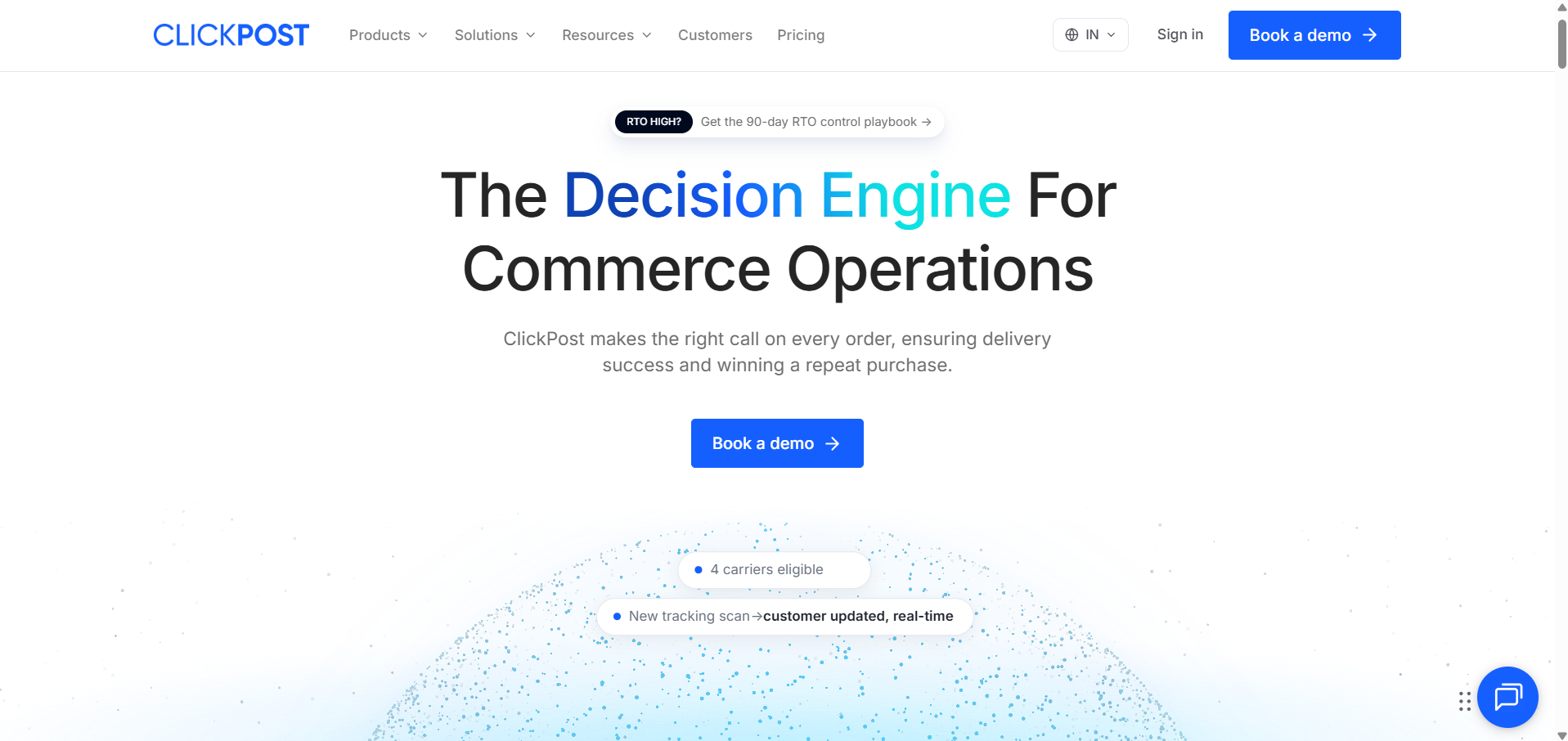
ClickPost is a unified shipping solution for ecommerce and retail companies that focuses on pre-shipment and post-shipment logistics operations. According to the supplied source, ClickPost started in 2015 and supports order processing, fulfillment partner connections, carrier integrations, shipment tracking, customer notifications, and returns management.
The source states that ClickPost provides access to more than 200 national and international carrier integrations and supports multi-channel connections with platforms such as Shopify, Magento, and Amazon. It also notes a minimum billing amount of INR 20,000 per month.
Tracking is an important part of the platform’s post-shipment capabilities, allowing businesses to monitor shipment progress and communicate updates to customers.
Key Features of ClickPost
-
Automate carrier allocation using ML-based logic.
-
Generate shipping labels quickly.
-
Provide real-time shipment visibility through integrated tracking.
-
Filter and categorize shipment information.
-
Receive tracking updates through webhooks and push and pull APIs.
-
Send notifications through email, SMS, and WhatsApp.
-
Manage returns through a centralized portal.
-
Notify customers during different stages of the return process.
For businesses handling high shipment volumes, real time order tracking can give operations teams a clearer view of shipment movement and help them identify delays before they turn into larger customer service issues.
5. ShippyPro
ShippyPro is a delivery management platform designed to help B2C brands manage shipping and ecommerce returns. Founded in 2017 and based in Tuscany, Italy, it focuses on simplifying shipping and fulfillment workflows for businesses operating across multiple sales channels.
Managing orders across marketplaces and ecommerce platforms can create operational challenges when each channel follows a separate workflow. ShippyPro brings these orders into a centralized dashboard and provides tools for shipping rules, carrier selection, tracking communication, and returns.
Key Features of ShippyPro
-
Create customized shipping labels with logos, barcodes, and custom text.
-
Set shipping rules for automated carrier selection.
-
Select carriers based on marketplaces, SKU weight, carrier rates, tariffs, and other criteria.
-
Send branded tracking emails and SMS.
-
Use tracking notifications for customer re-engagement.
-
Recommend products through customer communication.
-
Synchronize orders from multiple sales channels.
-
Manage returns through a branded returns portal.
These features allow tracking to become part of the overall customer experience. Instead of simply displaying a shipment status, businesses can use ecommerce shipment tracking to communicate with customers and maintain engagement after purchase.
6. ShipTime
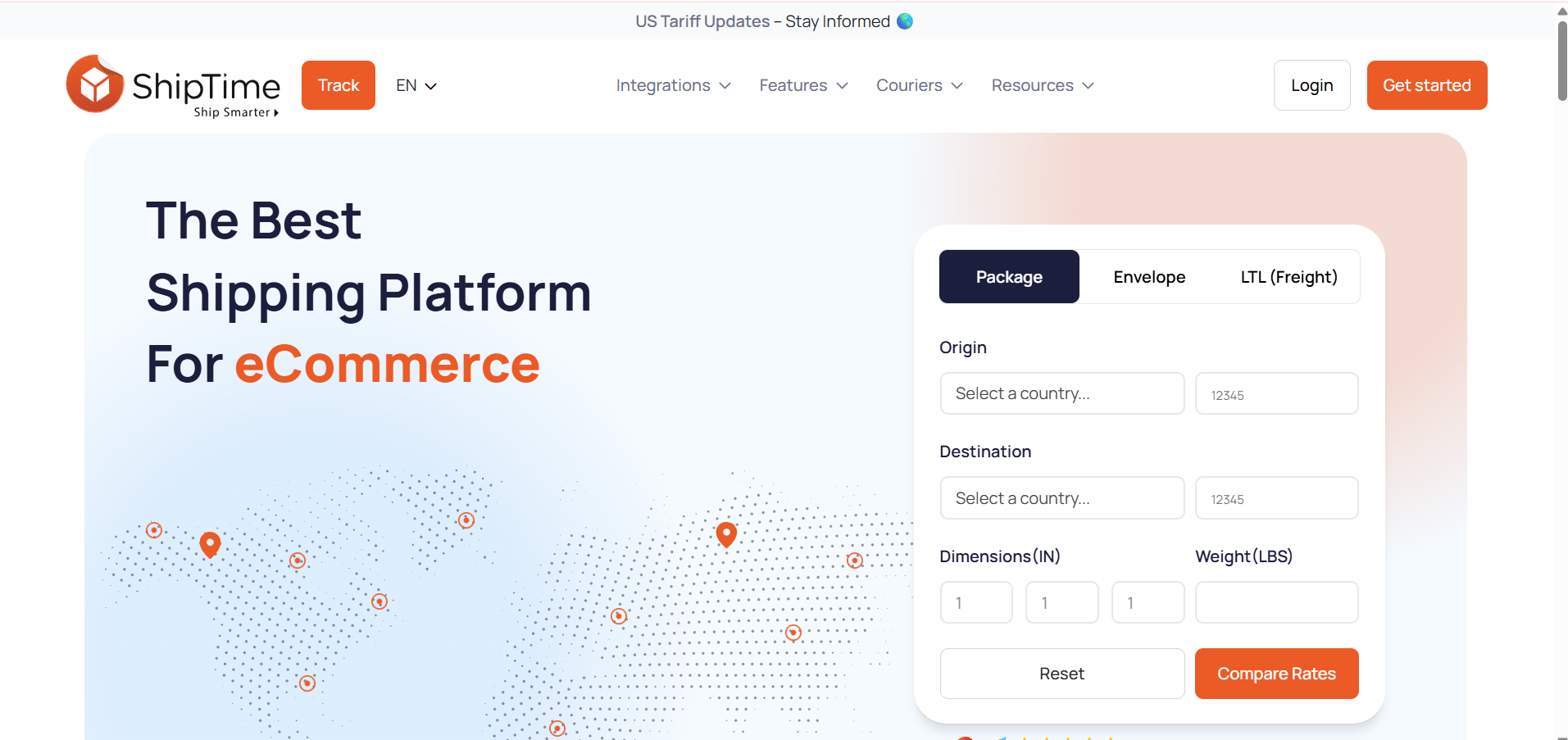
ShipTime is a multi-carrier logistics platform that primarily handles small parcel shipping and LTL, or less-than-truckload, freight. Founded in 2008 in Ontario, Canada, the company provides shipping services involving carriers such as FedEx and DHL and also supports international shipping through carriers including Canpar, GLS, and Purolator.
ShipTime is relevant for businesses that need to manage different shipment types, particularly parcel and freight shipments. Its capabilities cover ecommerce integrations, shipping labels, carrier services, pickups, and international shipping.
Key Features of ShipTime
-
Connect with ecommerce platforms such as WooCommerce and OpenCart without coding.
-
Ship packages, envelopes, and lightweight parcels through North American carriers.
-
Offer discounted shipping options.
-
Schedule pickups and drop-offs.
-
Generate shipping labels and order information.
-
Support international shipping to 220 countries.
-
Handle LTL freight forwarding in North America.
For businesses managing different shipping methods, centralized shipment tracking can make it easier to monitor orders across carriers and delivery types without creating separate manual processes.
7. ShipStation
ShipStation is a shipping management and order fulfillment platform focused particularly on small and medium-sized businesses. It helps organize shipping workflows involving multiple labels, sales channels, orders, and inventory.
As businesses grow, order management and shipping can quickly become connected operational challenges. Combining order information with fulfillment and tracking can help teams reduce manual work and manage shipments more consistently.
Key Features of ShipStation
-
Identify multiple orders going to the same customer and combine them where appropriate.
-
Filter orders by destination and identify priority shipments.
-
Customize tracking pages with brand themes and information.
-
Add brand logos to shipping labels.
-
Personalize packing slip messages.
-
Notify customers about order status through email, SMS, and tracking portals.
-
Monitor inventory levels in real time.
-
Identify low-inventory situations.
-
Reserve SKUs to support timely fulfillment.
For businesses managing multiple orders and sales channels, shipment tracking software becomes more useful when tracking information is connected with fulfillment and inventory workflows.
8. ShipperHQ
ShipperHQ is a delivery experience management platform that focuses on the checkout and delivery experience. Founded in 2008 and based in Austin, Texas, it primarily services U.S. retailers. Its capabilities cover delivery dates, lead times, packing configurations, freight shipping, and carrier rates.
While many logistics platforms focus heavily on post-purchase tracking, delivery experience management can influence the customer journey before an order is dispatched. Showing delivery dates, available options, and transit information at checkout can help businesses set clearer expectations.
Key Features of ShipperHQ
-
Allow customers to view delivery dates and lead times.
-
Display maximum transit times for products such as perishables.
-
Configure packing requirements and costs.
-
Assign packing instructions to specific SKUs.
-
Support Buy Online and Pickup In Store (BOPIS).
-
Display store availability and locations using Google Maps API.
-
Connect with 30+ freight carriers.
-
Support LTL shipping and accessorial charges.
-
Provide backup carrier rates during downtime.
-
Use alternative live rates to maintain the checkout experience.
This demonstrates that logistics automation can begin before shipment creation and continue through real time shipment tracking, delivery communication, and post-purchase support.
9. ShipRocket
ShipRocket is an Indian shipping aggregator offering shipping software solutions for ecommerce businesses. The supplied source highlights capabilities such as COD management, bulk shipping, shipping notifications, and support for a broad network of Indian pin codes. ShipRocket was launched in 2017.
Indian ecommerce businesses often work with different courier partners depending on location, shipment characteristics, delivery speed, and serviceability. A centralized platform can help businesses manage these requirements while keeping order and delivery information accessible in one place.
Key Features of ShipRocket
-
Calculate domestic and international shipping costs based on shipment origin, destination, dimensions, and other factors.
-
Support hyperlocal deliveries through courier partners.
-
Offer same-day delivery options.
-
Customize shipping labels and printing formats.
-
Display brand names and logos on labels.
-
Support Amazon self-shipping.
-
Provide cashback and prepaid payment options.
-
Send email and SMS updates throughout the order lifecycle.
-
Notify customers about shipment delays.
For brands managing large ecommerce volumes, shipment tracking software for ecommerce businesses can help bring delivery information into a more structured workflow while keeping customers updated throughout the shipment journey.
10. LogiNext Mile
LogiNext Mile is a route transport management system designed to help businesses optimize inbound and outbound logistics. Its capabilities cover route planning, loading and unloading, documentation, vehicle movement, driver allocation, SLA monitoring, and reverse logistics.
Transportation operations can become complex when businesses need to coordinate multiple vehicles, routes, drivers, territories, and delivery windows. In such situations, logistics automation can provide greater visibility into the movement of goods and help teams make decisions based on current transportation information.
Key Features of LogiNext Mile
-
Automate route optimization for faster and more cost-effective deliveries.
-
Track shipping activity within territories.
-
Allocate orders to suitable drivers.
-
Improve package scanning.
-
Track vehicle and line-haul truck movements.
-
Provide end-to-end supply chain visibility.
-
Monitor SLA compliance.
-
Support reverse logistics and pickup scheduling.
-
Plan truck capacity.
-
Send timely customer updates.
When transportation visibility is combined with shipment tracking, businesses can gain a broader understanding of where shipments are moving and whether delivery operations are progressing according to plan.
How to Select the Right Shipping and Logistics Automation Platform
Choosing a shipping and logistics automation platform requires businesses to look beyond the number of features listed on a product page. The right solution needs to fit the company’s existing shipping processes, technology stack, carrier network, order volume, and customer expectations. A platform may offer advanced shipment tracking software, but if it does not integrate with the ecommerce platforms, ERP systems, WMS solutions, TMS platforms, or courier partners already being used by the business, teams may still have to rely on manual work. There are several factors businesses should consider before making a decision.
API Connectivity
APIs allow different software systems to communicate with one another, making it possible to transfer information such as orders, shipment details, tracking statuses, inventory information, and delivery updates between platforms. For logistics operations, API connectivity can be particularly important because businesses rarely operate through a single system. An ecommerce store may need to communicate with an ERP, while the warehouse may use a WMS and the transportation team may use a TMS. Courier partners also need to exchange shipment and tracking information. A well-connected shipment tracking system can bring these different data points together and provide a more complete view of the order lifecycle.
Tracking Strength
Tracking is one of the most important capabilities to evaluate when choosing logistics automation software. Basic tracking can tell businesses whether a shipment has been dispatched or delivered, but more advanced systems can provide information about movement, delivery attempts, delays, and estimated arrival timelines. Businesses should look for real time order tracking capabilities that provide timely information about shipment progress. This can help operations teams identify shipments that are not moving as expected and take action before a small delay becomes a larger customer experience issue. For customers, strong shipment visibility means they do not have to depend entirely on customer support to understand what is happening with their order. They can receive updates throughout the delivery journey and have greater clarity about expected delivery.
Shipping Optimization
Tracking alone does not solve every logistics challenge. Businesses also need to consider how shipments are allocated, routed, packaged, and dispatched. Shipping optimization can involve selecting a carrier based on cost, serviceability, delivery speed, shipment weight, destination, historical performance, or predefined business rules. It can also include route and packaging optimization to reduce unnecessary costs and improve delivery timelines. The most useful shipment tracking software for ecommerce businesses can therefore be part of a broader logistics workflow, helping businesses understand not only where an order is but also how efficiently it is moving through the delivery network.
Pricing
Pricing is another important factor when evaluating logistics automation software. Businesses should consider subscription charges, transaction-based pricing, minimum commitments, integration costs, and any additional fees associated with the platform. A free trial can help businesses understand whether a platform fits their requirements before making a longer-term commitment. The supplied source notes that eShipz offers a free trial. Rather than comparing only the software subscription price, businesses should consider the overall operational impact. Reduced manual work, improved carrier management, better tracking, and faster exception resolution can all contribute to the value a logistics platform provides.
Delivery Exception Management
Not every shipment follows the expected delivery journey. Orders can experience delays because of incorrect addresses, customer unavailability, weather conditions, carrier issues, operational disruptions, or other circumstances.This is where real time shipment tracking becomes particularly useful. When businesses can identify delivery exceptions early, they have more time to communicate with customers, coordinate with carriers, and determine the next appropriate action. A good logistics platform should therefore do more than display a delayed status. It should help teams identify exceptions, prioritize them, communicate with customers, and coordinate resolution. Effective exception management can also help businesses reduce avoidable RTOs. The supplied source notes that platforms such as eShipz use automation and ML-based technology to support delivery exception management.
Number of Integrations
Integrations can have a significant impact on how useful a logistics automation platform becomes. Businesses may need connections with courier partners, ecommerce marketplaces, storefronts, warehouses, ERP platforms, WMS solutions, TMS systems, and customer communication tools. eShipz, for example, provides pre-integrations with courier partners and sales channels while also offering API compatibility with ERP, WMS, and TMS systems. The supplied source states that eShipz supports more than 200 carrier integrations. A connected integration ecosystem makes it easier to create consistent shipment visibility across the order lifecycle without requiring teams to maintain multiple disconnected workflows.
Why Shipment Tracking Is Important for Ecommerce Businesses
The delivery experience continues long after a customer completes the checkout process. Once an order is dispatched, customers want to know where the shipment is, whether it is moving according to schedule, and when they can expect it to arrive. This is why ecommerce shipment tracking has become an important part of the post-purchase experience. When tracking information is unavailable or difficult to access, customers often have to contact support teams for basic delivery information. For businesses, this creates additional work for customer service teams. A centralized tracking platform can instead provide customers with automated updates while giving internal teams access to the same information. A good shipment tracking system can bring together carrier updates from different logistics partners and present them in a consistent format. This can make it easier for operations teams to monitor shipments, identify delays, and understand carrier performance. At the customer level, real time order tracking can provide greater transparency by showing shipment progress and communicating important changes. When customers receive timely updates, businesses can reduce uncertainty around the delivery process and create a more connected post-purchase experience.

What Makes the Best Shipment Tracking Software for Ecommerce?
The best shipment tracking software is not necessarily the platform with the longest list of features. Different businesses have different shipping models, carrier networks, geographies, order volumes, and technology requirements. For an ecommerce brand, effective tracking software should provide clear shipment information while also connecting with the systems used to manage orders and fulfillment. It should make it easy to monitor shipments across carriers, identify delays, communicate with customers, and manage exceptions. The best shipment tracking software for ecommerce should also support customer-facing communication. Branded tracking pages, email updates, SMS notifications, WhatsApp messages, delay alerts, and delivery notifications can all contribute to a more consistent post-purchase experience. For growing businesses, shipment tracking software for ecommerce businesses should also be scalable. As the company adds new carriers, warehouses, marketplaces, and sales channels, its tracking and logistics infrastructure should be able to accommodate those changes without introducing unnecessary manual work.
How eShipz Helps Businesses Improve Shipment Visibility
eShipz brings multiple shipping and logistics workflows together on a single platform, helping businesses manage their operations from order processing to final delivery. Instead of relying on separate tools for carrier management, labels, tracking, delivery exceptions, and returns, businesses can manage these activities through one connected system. The platform supports more than 200 carrier integrations and can connect with ERP, WMS, and TMS systems through APIs. It also integrates with major ecommerce channels such as Shopify, Magento, and Amazon, making it suitable for businesses managing orders across multiple sales channels and courier partners.
Some of the key capabilities businesses can use through eShipz include:
-
Order and carrier management: Businesses can synchronize orders from different ecommerce channels and manage multiple courier partners from one platform. Carrier allocation can also be automated based on predefined business rules and shipping requirements.
-
Shipment tracking and visibility: The platform provides centralized shipment tracking, allowing teams to monitor orders across different carriers without constantly switching between individual courier portals. This helps improve shipment visibility and makes it easier to identify shipments that are delayed or require attention.
-
Real-time delivery updates: With real time shipment tracking and delivery updates, businesses can monitor the movement of orders throughout the delivery journey. This can also support real time order tracking for customers, helping them stay informed about their shipments.
-
Delivery exception and NDR management: When shipments face delivery problems, businesses can identify exceptions and manage NDR workflows from the same platform. This gives operations teams an opportunity to intervene before a failed delivery eventually turns into an RTO.
-
Customer communication: Businesses can automate customer updates related to shipment status, delays, and delivery progress. Keeping customers informed can reduce uncertainty and improve the overall post-purchase experience.
-
Returns management: eShipz also supports return workflows, helping businesses manage reverse shipments alongside their regular outbound shipping operations.
The platform applies AI and ML across logistics management, including carrier recommendations, delivery-delay prediction, customer communication, and shipment routing. Combined with shipment tracking software, these capabilities help businesses do more than check an order’s location. They can use shipment data to make informed operational decisions. Spotting potential delays early gives teams more time to update customers or take corrective action.
This approach works especially well for ecommerce businesses managing a growing volume of orders. As shipments increase, checking multiple carrier systems manually takes time and makes consistent ecommerce shipment tracking harder. A centralized shipment tracking system gives operations teams one view of every shipment. It also lets them handle tracking, exceptions, NDRs, returns, and customer communication in the same workflow.
For businesses evaluating the best shipment tracking software, integration with the broader shipping process matters. Shipment tracking software shouldn’t operate as a separate tool. It should support a wider logistics automation strategy, connecting shipment tracking, carrier management, delivery updates, and exception handling as the business grows.
Choosing the Right Shipping Platform
Shipping is a central part of the ecommerce experience, so businesses need technology that supports daily operations and meets customer expectations. The platforms in this article handle logistics automation differently, covering carrier management, fulfillment, route optimization, delivery experience, tracking, and returns. Before choosing a platform, businesses should look at order volumes, carrier networks, ecommerce channels, geographic coverage, integrations, pricing models, and operational needs. Tracking also deserves close attention because a basic tracking page doesn’t provide the same level of shipment visibility across the full delivery journey.
For ecommerce businesses, real time shipment tracking, automated customer updates, delivery exception management, and centralized tracking can make shipping easier to manage. Integrations with ecommerce platforms, ERP, WMS, TMS, and courier partners also reduce disconnected manual work. Businesses looking for the best shipment tracking software should assess the full logistics workflow instead of choosing a platform based on one feature. The right shipment tracking software for ecommerce businesses should fit current operations and adapt to new carriers, sales channels, warehouses, and shipment volumes. It should connect order processing, carrier selection, delivery monitoring, customer communication, exception management, and returns.
FAQs
1. Why do businesses choose eShipz?
According to the supplied source, eShipz supports more than 200 carrier integrations and has the capacity to onboard carriers quickly. It also has major sales channels pre-integrated and provides API compatibility with ERP, WMS, and TMS solutions. Its ML-powered recommendation engine allows retailers to create rules for courier selection based on their business requirements.
These capabilities allow businesses to manage carrier selection, order processing, shipment tracking, and other logistics workflows through a centralized platform.
2. Why do businesses shift to eShipz from other alternatives?
The supplied source describes eShipz as a user-friendly shipping and logistics automation platform with quick integrations and responsive support. It also states that eShipz offers a free trial and no minimum order quantity.
For businesses evaluating shipment tracking software, a trial can help teams understand how the platform works with their existing integrations, carrier workflows, tracking requirements, and shipping operations.
3. What should businesses look for in shipment tracking software?
Businesses should consider real-time tracking, carrier integrations, API connectivity, delivery exception management, customer notifications, shipment visibility, and scalability. Ecommerce businesses should also evaluate whether the platform supports multiple sales channels and provides customer-facing tracking and communication options.
4. Is shipment tracking software useful for growing ecommerce businesses?
Yes. Even when shipment volumes are relatively manageable, centralized tracking can reduce the need for manual courier checks and make customer communication easier. As order volumes increase, automation becomes more valuable because businesses have to manage more shipments, carriers, delivery exceptions, and customer queries.
5. What is the difference between shipment tracking and real time shipment tracking?
Shipment tracking generally refers to monitoring the status and movement of an order after dispatch. Real time shipment tracking provides more timely shipment information, helping businesses and customers understand the current stage of delivery and identify changes or delays sooner.
6. How does ecommerce shipment tracking improve the customer experience?
Ecommerce shipment tracking gives customers better visibility into their orders. Instead of waiting without information, customers can receive updates about shipment movement, delivery progress, delays, and expected arrival timelines.
For businesses, this can also reduce repetitive delivery-related queries and give customer support teams better information when they need to assist with an order.
7. Can shipment tracking software help businesses manage delivery problems?
Tracking alone cannot prevent every delivery issue. However, better shipment visibility can help businesses identify delayed or failed shipments earlier. When tracking is combined with automated notifications, exception management, carrier communication, and NDR workflows, a shipment tracking system can help teams take action before a shipment progresses further into the return process.
8. What is the best shipment tracking software for ecommerce?
There is no single platform that will suit every ecommerce business. The appropriate solution depends on factors such as carrier coverage, ecommerce integrations, order volume, geography, pricing, API capabilities, customer communication, and the level of automation required.
Businesses comparing the best shipment tracking software for ecommerce should evaluate these factors against their own operational requirements and consider how easily the platform can fit into their existing logistics ecosystem.
9. Why is real time order tracking important for ecommerce?
Real time order tracking helps businesses and customers stay informed about shipment progress after an order has been dispatched. It can make delivery information easier to access and can help operations teams identify delays or exceptions that require attention.
10. How can businesses improve shipment visibility?
Businesses can improve shipment visibility by connecting their sales channels, courier partners, warehouse systems, and logistics platforms through integrations or APIs. Using centralized shipment tracking software can also help teams monitor shipments across different carriers and provide customers with consistent delivery updates.