



Reverse logistics is no longer limited to moving a product back to the warehouse after a customer asks for a return. It’s now a core part of ecommerce operations, affecting transportation, warehouse work, inventory, refunds, customer experience, and profitability. A returned item may already have passed through picking, packing, forward transportation, and last-mile delivery before starting its trip back. After it enters the return cycle, the business may pay for reverse pickup, transport, inspection, repackaging, restocking, and sometimes refurbishment or liquidation. What feels like one simple return to a customer can create several operational costs for the business.
Those costs are becoming too large to overlook. According to the National Retail Federation, 15.8% of total retail sales were expected to be returned in 2025, representing nearly $849.9 billion in merchandise. Online purchases had an even higher expected return rate of 19.3%. In India, industry estimates show that ecommerce returns can account for around 17.6% of orders, while fashion and footwear see return rates of approximately 30–35%. ecommerce reverse logistics needs to be managed as a strategic operational function, not treated as a customer service task.
The financial impact goes far beyond a courier charge. A return may involve reverse transportation, repeated pickup attempts, warehouse receiving, quality checks, labour, packaging, refund processing, inventory holding, and lost product value. An item that could have sold at full price might come back with damaged packaging or arrive after the selling season. The business may then need to discount it or move it through another recovery channel. The reverse logistics process is more than a trip from the customer’s doorstep to the warehouse. Each step either adds cost or helps recover value.
Businesses can measure and manage these costs. Understanding the real cost of each return, identifying major cost drivers, tracking return reasons, improving carrier selection, and automating repetitive work can strengthen reverse logistics management. Modern reverse logistics solutions also give teams clearer visibility into return shipments and support better decisions on transportation, processing, and inventory recovery. Returns aren’t an unavoidable expense. They’re a measurable part of the supply chain that businesses can improve.
Understanding Reverse Logistics Costs
Businesses often underestimate return costs by focusing only on the reverse shipping fee. Imagine an ecommerce brand sells a product for ₹2,000, with a forward delivery cost of ₹100. The customer returns it, and the business pays another ₹100 for reverse pickup. On paper, the return may seem to cost only ₹100. That’s rarely the full cost. Someone must handle the return request, and a courier partner must collect the item. The warehouse then receives and scans it, while a team member may inspect the product. It may also need repackaging. Inventory must be updated, the refund processed, and the business must decide whether the item can be sold again.
 https://live.zoho.in/wbjs-xoq-hyx
If the item is damaged, discounted, refurbished, liquidated, or discarded, the business loses even more value. The actual cost of the return can be far higher than the courier charge.
The Direct Costs of a Return:
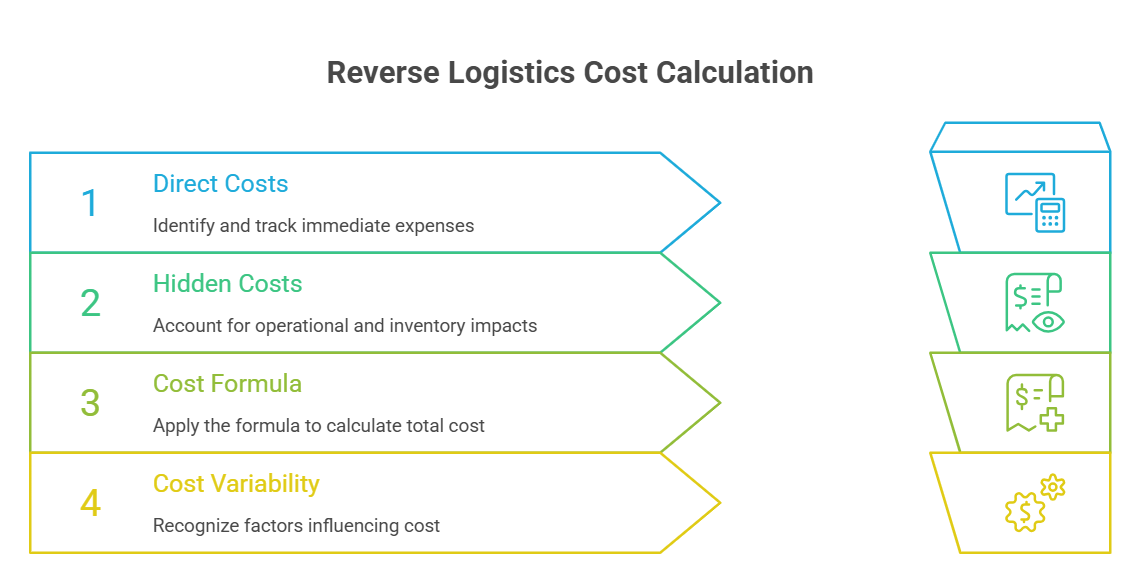
Direct costs are the expenses most businesses can identify relatively easily. These can include reverse pickup charges, reverse transportation costs, packaging materials, warehouse receiving, product inspection, repacking, refund processing, replacement shipping, and additional handling charges.
These expenses are relatively straightforward to track because they usually appear as individual transactions or operational costs. However, they represent only one part of the overall return economics.
The Hidden Costs of Reverse Logistics:
The more complicated costs are often hidden inside existing operations. Consider a product that takes 15 minutes to inspect, another 10 minutes to repackage, and a few additional minutes to update in the warehouse system. One return may not seem expensive, but when the same process is repeated thousands of times, the operational impact becomes substantial.
There can also be inventory-related costs. A returned product may spend several days waiting for inspection before it becomes available for resale. If the item is seasonal, even a short delay can reduce its commercial value. A fashion product returned after the season may have to be sold at a discount, while an electronic product returned with damaged packaging may lose resale value.
These are all costs associated with the reverse logistics process, even though they may not appear on the courier invoice.
A Simple Reverse Logistics Cost Formula:
A practical way to calculate the total cost is:
Total Reverse Logistics Cost = Transportation Cost + Handling Cost + Inspection Cost + Packaging Cost + Refund/Replacement Cost + Inventory Loss + Processing Overheads
For example:
| Cost Component | Example Cost Per Return |
| Reverse pickup | ₹100 |
| Warehouse receiving | ₹20 |
| Product inspection | ₹25 |
| Repacking | ₹15 |
| Refund processing | ₹10 |
| Inventory holding/loss | ₹30 |
| Additional operational overhead | ₹20 |
| Estimated total | ₹220 |
The important point is that ₹220 is not necessarily a fixed cost. It can change depending on the product category, geography, courier partner, return reason, warehouse process, customer location, product value, and recovery method. That is why effective reverse logistics management requires visibility into the entire journey rather than focusing on a single courier charge.
How to Calculate Reverse Logistics Costs Accurately
Once a business understands the different cost components, the next step is to build a consistent method for measuring them. A useful calculation starts with the number of returns.
Suppose an ecommerce business processes 50,000 orders per month and has a return rate of 8%. That means the business processes approximately 4,000 returns every month. If the average cost of handling each return is ₹220, the monthly return-related cost would be around ₹8.8 lakh. Over a year, that becomes more than ₹1 crore. Suddenly, returns are no longer a small operational expense. They are a significant cost centre that deserves the same attention as forward shipping, fulfilment, and inventory management.
Measure Cost Per Return, Not Just Return Rate:
Return rate is an important metric, but it does not tell the entire story. Two products can have the same return rate while producing completely different financial outcomes.
| Metric | Product A | Product B |
| Monthly orders | 10,000 | 10,000 |
| Return rate | 10% | 10% |
| Returns | 1,000 | 1,000 |
| Average product value | ₹800 | ₹4,000 |
| Average return cost | ₹150 | ₹350 |
| Monthly return cost | ₹1.5 lakh | ₹3.5 lakh |
Both products have the same return rate, but Product B creates more than twice the direct return cost.
This is why businesses should measure cost per return, cost by product category, cost by geography, and cost by return reason. These metrics create a much clearer picture of where money is being spent and where the biggest opportunities for optimization exist.
Track the Complete Reverse Logistics Process:
The reverse logistics process should be measured from the moment a customer raises a return request until the product is either returned to sellable inventory or reaches its final disposition.
A typical process looks like:
Return Request → Approval → Pickup → Reverse Transit → Warehouse Receipt → Inspection → Classification → Restocking/Refurbishment/Liquidation → Refund or Exchange
Each stage can create a cost. If pickup failures are high, transportation costs increase. If warehouse processing is slow, inventory remains blocked. If inspection takes too long, refunds may be delayed. If returned products are not restocked quickly, the business may lose sales opportunities. Effective reverse logistics management therefore requires businesses to measure both financial and operational performance.
Use Return Reasons as a Cost-Control Tool:
Return reasons can reveal where the problem actually begins. Suppose a business discovers that a significant share of its returns is related to incorrect sizing. The solution may not be another courier negotiation. It may be better product sizing information.
Similarly, if customers frequently return products because the delivered item does not match the website description, the problem may sit with product content. If a large percentage of products are returned damaged, packaging or forward transportation may need attention. If customers frequently refuse deliveries and products eventually enter the reverse supply chain, improving delivery communication, address validation, and customer notifications may reduce the cost before the return even starts. This is where reverse logistics solutions become more valuable. Instead of treating returns as isolated events, businesses can use return data to identify the operational problems causing those returns.
The Biggest Drivers of Reverse Logistics Costs
Not every return costs the same. The cost of a return can vary significantly depending on product type, customer location, return reason, transportation distance, warehouse location, and recovery method. Understanding these cost drivers allows businesses to focus on the areas that have the greatest financial impact.
Transportation and Courier Costs
Transportation is often one of the clearest costs in reverse logistics. A reverse pickup requires a courier to travel from the customer’s location to a warehouse or fulfilment centre. The farther the customer is from the warehouse, the higher the transportation cost can be. Failed pickups add to the bill. This matters in ecommerce reverse logistics, where customers can be spread across hundreds or thousands of pin codes.
Businesses should track reverse shipping costs by courier and pin code, along with pickup success rates, pickup attempts, average reverse transit time, weight-based charges, zone-based charges, and return-related transportation costs. The goal isn’t always to choose the cheapest courier. It’s to find the courier and routing approach with the best overall economics.
A carrier with a slightly higher pickup price and stronger first-attempt success may cost less overall than a cheaper carrier that needs repeated pickup attempts.
Warehouse Handling and Processing
Once a returned item reaches the warehouse, the cost does not stop. The item needs to be received, scanned, inspected, classified, and processed.
The warehouse may need to determine whether the product should be restocked, repackaged, refurbished, liquidated, recycled, or disposed of.
Every decision affects recovery value. A faster and more structured reverse logistics process can reduce the amount of time inventory remains blocked. For example, if a returned product takes five days to reach sellable inventory, the business loses five days of availability. For fast-moving products, that can translate into missed sales. For seasonal products, the impact can be even greater because the product may lose market value while waiting for processing.
Product Value and Recovery Loss
Product recovery is one of the most overlooked parts of reverse logistics management. Moving a returned item back to the warehouse isn’t enough. The business needs to recover as much of the product’s original value as possible.
Take a product worth ₹3,000. If it comes back in perfect condition and is restocked quickly, the business may recover nearly all its value. If it sits in processing for weeks, the packaging gets damaged, and the item is later sold at a 30% discount, the financial hit is much greater. The reverse journey has added a logistics cost and reduced the value the business can recover.
Refunds, Replacements and Customer Experience
Returns also affect customer experience. Customers increasingly expect simple return policies and quick refunds. A complicated reverse logistics process can lead to delayed refunds, repeated customer service interactions, and dissatisfaction. That creates another business cost: customer support workload. A customer asking, “Where is my refund?” or “Has my return been picked up?” creates additional operational activity.
Better visibility can reduce these interactions. This is one reason modern reverse logistics solutions often connect returns, shipment tracking, warehouse operations, notifications, and customer communication into a more unified workflow.
How eShipz Helps Businesses Control Reverse Logistics Costs
Once the major cost drivers are visible, businesses can start looking at ways to control them. This is where technology can make the reverse logistics process more structured, connected, and easier to manage at scale. eShipz helps businesses simplify and automate key parts of their shipping and returns operations by bringing carrier management, shipment visibility, tracking, and operational workflows into a connected platform. Instead of managing return shipments across multiple courier portals, spreadsheets, and manual processes, businesses can create a more centralized approach to reverse logistics management.
With the right reverse logistics solutions, businesses can automate return workflows, improve carrier allocation, track reverse shipments, monitor exceptions, and gain better visibility into returned inventory. This can help reduce manual effort while giving operations teams greater control over the costs associated with every return.
Automate Return Routing and Carrier Selection
Manual courier allocation can create unnecessary costs. If every return is assigned to the same courier regardless of location, serviceability, cost, or historical performance, the business may be missing opportunities to optimize its reverse logistics process.
With a connected shipping platform such as eShipz, businesses can manage multiple carrier relationships and make more informed allocation decisions based on factors such as destination pin code, serviceability, shipping rates, pickup performance, transit time, and other operational requirements.
Instead of simply asking, “Which courier can pick this up?”, businesses can take a more data-driven approach and ask, “Which available carrier can complete this return efficiently while keeping the overall cost under control?”
Improve Reverse Shipment Visibility
A customer should not have to contact support repeatedly to find out whether a return has been picked up or where the returned product is.
For operations teams, the same visibility is equally important. Without centralized tracking, teams may have to check multiple courier portals or manually reconcile shipment updates. eShipz can help businesses bring shipment tracking and operational visibility into a more connected workflow. This allows teams to monitor return shipments, identify delays, track exceptions, and take action when a reverse shipment does not move as expected.
For ecommerce reverse logistics, this visibility can also improve the customer experience because businesses can provide more timely updates throughout the return journey.
Reduce Manual Processing
A return can trigger several operational activities, including return approval, pickup creation, courier allocation, tracking, exception management, warehouse coordination, and customer communication.
Managing each step manually becomes increasingly difficult as return volumes grow.
Automating repetitive workflows can reduce the amount of manual intervention required by operations teams while improving consistency across the reverse logistics process. This is particularly valuable for growing ecommerce brands that need to handle increasing return volumes without increasing operational complexity at the same rate.
Turn Return Data Into Better Decisions
Cost control is not only about reducing the price of a reverse shipment. Businesses also need to understand what is causing returns and how different return patterns affect their operations. By bringing shipment and return data into a more connected workflow, businesses can identify patterns across carriers, locations, products, and operational stages.
For example, if certain pin codes consistently experience failed pickups, the business can investigate carrier performance in those locations. If particular products generate unusually high return volumes, the brand can investigate product information, quality, sizing, or packaging issues. This makes reverse logistics management more proactive. Instead of simply processing returns after they happen, businesses can use operational data to identify opportunities to reduce future costs.
Build a More Efficient Reverse Logistics Strategy
The objective of reverse logistics solutions should not simply be to move products from the customer back to the warehouse. The larger goal is to create a return journey that is efficient, visible, measurable, and capable of recovering as much product value as possible. By combining automation, multi-carrier management, shipment visibility, and data-driven decision-making, platforms such as eShipz can help businesses create a more structured approach to managing returns. For businesses dealing with growing ecommerce reverse logistics volumes, this can make the difference between treating returns as a constant operational burden and managing them as a measurable part of the overall supply chain.
Building a More Cost-Efficient Reverse Logistics Strategy
Cost control should not begin only after a return has been created. The strongest reverse logistics management strategies start much earlier. Businesses need to understand why products are being returned, where returns originate, how quickly they are processed, and how much value is recovered. This creates a continuous feedback loop:
Return Data → Root Cause → Operational Improvement → Lower Returns → Lower Cost
For example, if a fashion brand identifies high returns from one product category due to sizing issues, it can improve the size chart. If an electronics company sees repeated damage-related returns, it can redesign packaging. If a D2C brand identifies high return costs from certain geographies, it can evaluate carrier coverage and fulfilment locations. This makes ecommerce reverse logistics more than a post-purchase function. It becomes a source of operational intelligence.
Measure the Right Reverse Logistics KPIs
Businesses should establish a clear set of metrics to understand performance. Important KPIs include return rate, cost per return, reverse shipping cost, pickup success rate, average return transit time, return processing time, refund processing time, percentage of products recovered, percentage of returned inventory restocked, refurbishment rate, liquidation rate, return-related customer contacts, and recovery value per returned product.
A dashboard that brings these metrics together can help teams identify where costs are increasing. For example, a rising return rate combined with a rising cost per return is a stronger warning signal than either metric individually. Similarly, a stable return rate with falling recovery value may indicate an inventory processing problem.
Think Beyond the Cheapest Return
One of the biggest mistakes businesses make is attempting to minimize the cost of each individual return without considering the total cost. Suppose Courier A charges ₹90 for reverse pickup while Courier B charges ₹105. At first glance, Courier A appears better. But suppose Courier A has a 75% first-attempt pickup success rate while Courier B has a 95% success rate.
The additional failed attempts may make Courier A more expensive overall. This is why reverse logistics solutions should evaluate total operational cost rather than simply comparing shipping rates. The right question is not, “Which option is cheapest?” It is, “Which option produces the lowest total cost while maintaining service quality and recovery value?” That distinction can have a significant impact as return volumes increase.
The Future of Reverse Logistics Is About Recovery, Not Just Returns
As ecommerce continues to grow, businesses will have to think differently about returns. The traditional view of reverse logistics is relatively simple: a customer returns a product, the product comes back, and the refund is issued. The modern view is much more complete:
Customer Return → Pickup → Reverse Transportation → Visibility → Inspection → Classification → Restocking/Refurbishment/Liquidation → Value Recovery → Inventory Optimization
This shift is important because every returned product represents both a cost and an opportunity. The cost comes from moving and processing the product. The opportunity comes from recovering its value. A well-designed reverse logistics process can therefore help a business achieve both objectives. It can reduce unnecessary transportation and manual processing while improving the speed at which returned inventory becomes productive again.
For ecommerce brands, this becomes particularly important because return volumes can scale alongside order volumes. A business that processes 1,000 returns a month can often manage exceptions manually. A business processing 50,000 returns cannot rely on spreadsheets, emails, and multiple disconnected courier dashboards. It needs structured workflows and connected reverse logistics solutions.
How Businesses Can Start Controlling Reverse Logistics Costs
Businesses do not need to transform their entire return operation overnight. A practical approach is to begin by measuring the current economics and then identify the areas with the highest cost or the greatest opportunity for improvement. Start by calculating the average cost per return. Then break that number down into transportation, warehouse handling, inspection, packaging, labour, refunds, and inventory loss. Once the cost structure is visible, compare it across products, regions, courier partners, and return reasons. The next step is to identify the biggest cost drivers.
If transportation is the biggest problem, carrier allocation and routing may need attention. If warehouse processing is slow, the business may need better return classification and processing workflows. If recovery value is low, inspection and disposition processes may need improvement. Businesses should also look at the reasons behind returns instead of simply treating the return as the problem. Reducing avoidable returns is often more valuable than making the return process marginally cheaper. Better product information, accurate sizing, improved packaging, clearer product descriptions, stronger quality control, and better customer communication can all reduce unnecessary returns. At the same time, businesses should invest in visibility so that every return can be tracked from initiation to final disposition. The combination of prevention, automation, visibility, and recovery creates a stronger reverse logistics management strategy.
From Return Costs to Better Reverse Logistics: Final Thoughts
Reverse logistics is more than the path a product follows after a customer sends it back. It’s an operational system that affects transportation costs, warehouse productivity, inventory availability, customer satisfaction, and profitability. Cost control starts with visibility. Businesses need to know what each return really costs, including reverse shipping, transportation, handling, inspection, packaging, refunds, labour, inventory loss, and recovery value. From there, reverse logistics management should assess the full return journey to find where automation, smarter carrier allocation, clearer tracking, faster processing, and better inventory recovery can lower costs.
For ecommerce businesses, the upside is even greater. Effective ecommerce reverse logistics turns returns from a reactive cost centre into a measurable part of supply chain performance. Businesses that can track where returns originate, how they move, how long they take to reach the warehouse, and what happens once they arrive can make informed decisions and cut avoidable operational costs.
Platforms such as eShipz help businesses bring structure and visibility to shipping and returns operations. By connecting carrier management, shipment tracking, automation, and operational workflows, eShipz helps reduce manual work and gives teams more control over returned shipments. Rather than managing carriers and return activities through disconnected systems, businesses can use a simpler approach to reverse logistics solutions.
Returns won’t disappear. They’re a normal part of modern commerce. The aim is to make every return faster, easier to track, more predictable, and less expensive while recovering as much product value as possible. Once businesses understand the true economics of each returned product, they can treat reverse logistics as a managed part of the supply chain rather than an unavoidable expense. The right processes, data, and technology can improve efficiency, protect margins, and create a better customer experience.