




AI logistics software is becoming increasingly important as eCommerce shipping volumes, carrier networks, and customer expectations continue to grow. India’s eCommerce shipments reached around 6.8–7.4 billion in FY2025, up from approximately 1.6 billion in FY2020, and are projected to reach 22–25 billion by FY2030. With B2C contributing over 60% of the eCommerce logistics market and smaller cities driving a significant share of deliveries, businesses need smarter ways to manage increasingly complex logistics operations.
This is where eShipz comes in. eShipz is an AI-powered logistics automation platform that helps businesses simplify shipping operations across multiple carriers and workflows. From intelligent carrier allocation and multi-carrier shipping to real-time tracking, delivery intelligence, NDR management, returns, ePOD, reconciliation, and analytics, eShipz brings multiple logistics processes together in one connected platform.
For businesses looking for the best AI logistics software for eCommerce, the right solution should do more than create shipments or generate labels. Modern logistics software should help businesses automate repetitive tasks, make smarter carrier decisions, improve delivery visibility, identify potential delivery issues, and manage post-shipment operations efficiently. This is why logistics automation and intelligent logistics management software are becoming essential for growing eCommerce, D2C, retail, enterprise, and 3PL businesses.
In this guide, we’ll explore the best logistics automation platforms and top logistics automation software available today, along with their key features, benefits, and use cases. We’ll also look at how logistics automation software works, what businesses should consider when choosing a platform, the leading AI logistics software alternatives, and how eShipz compares as an AI-powered solution for modern shipping and logistics operations.
Top 10 AI-Based Logistics Automation Platforms
Businesses looking for the best logistics automation platforms have many options to consider. Different platforms focus on different areas, including shipping automation, transportation management, carrier management, last-mile delivery, tracking, supply chain visibility, and post-purchase experience.
The following platforms are worth considering when evaluating AI logistics software, logistics software, and logistics automation software for modern eCommerce and enterprise operations.
-
eShipz
eShipz is an AI-powered logistics automation platform designed for eCommerce businesses, D2C brands, retailers, enterprises, and 3PLs.
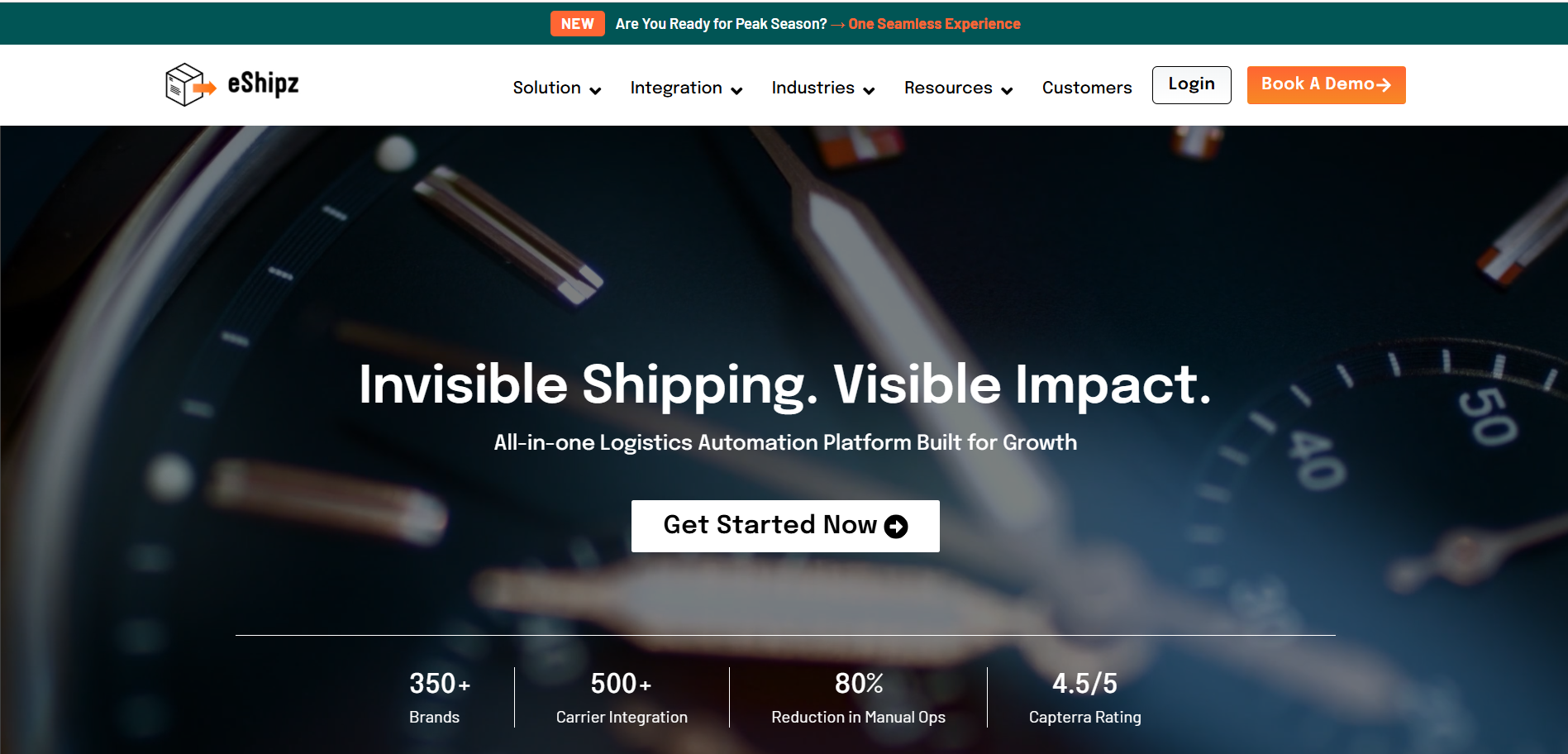
The platform brings multiple logistics functions together, helping businesses manage shipping through a centralized environment. eShipz supports multi-carrier operations, intelligent carrier allocation (AI Carrier allocation), shipment tracking, delivery intelligence, NDR management, returns, ePOD, reconciliation, and analytics.
For businesses searching for the best AI logistics software for eCommerce, eShipz provides a broader approach to logistics automation by supporting both pre-shipment and post-shipment operations.
The value of eShipz as a logistics automation platform comes from bringing these capabilities together instead of requiring businesses to manage multiple disconnected logistics tools. For businesses evaluating the best logistics automation platforms, eShipz can be considered when the objective is to create a connected shipping ecosystem that combines automation, visibility, and intelligent logistics decision-making.
- Shipsy
Shipsy is a logistics technology platform focused on transportation management, last-mile operations, delivery visibility, and logistics automation. Its capabilities are relevant to enterprises and logistics organizations that need to manage complex transportation operations. Businesses comparing logistics management software can consider Shipsy for transportation and delivery management requirements.
- Shiprocket
Shiprocket provides eCommerce shipping capabilities and helps online businesses connect with multiple courier partners. Its platform supports shipping, tracking, returns, and related eCommerce logistics processes. For businesses evaluating logistics automation software, Shiprocket can be considered for multi-carrier eCommerce shipping requirements.
- ClickPost
ClickPost focuses on post-purchase logistics, shipment tracking, delivery experience, returns, and customer communication. Businesses looking for AI logistics software alternatives may consider ClickPost when post-shipment visibility and customer experience are major priorities.
- ShippyPro
ShippyPro provides shipping and order management capabilities for eCommerce businesses. It helps businesses connect sales channels and carriers while managing shipping and tracking workflows. It is another option businesses can evaluate when comparing top logistics automation software solutions.
- ShipStation
ShipStation is a shipping and order management platform used by eCommerce businesses to manage orders, carriers, and fulfillment workflows. For businesses comparing the best shipping automation software, ShipStation is an established option for centralized shipping management.
- LogiNext
LogiNext focuses on transportation management, route optimization, last-mile delivery, and logistics operations. The platform is designed to help businesses plan and manage transportation activities more efficiently while improving visibility across delivery operations. Its route optimization capabilities can help businesses identify more efficient delivery routes, manage multiple stops, and improve last-mile planning.
For organizations handling large delivery networks, these capabilities can be particularly useful for reducing operational complexity and improving transportation efficiency. Businesses that require transportation and route optimization capabilities can evaluate LogiNext when comparing logistics software platforms. It can be especially relevant for enterprises, retailers, eCommerce businesses, and logistics providers where delivery planning and last-mile performance are important parts of the overall logistics strategy.
- FarEye
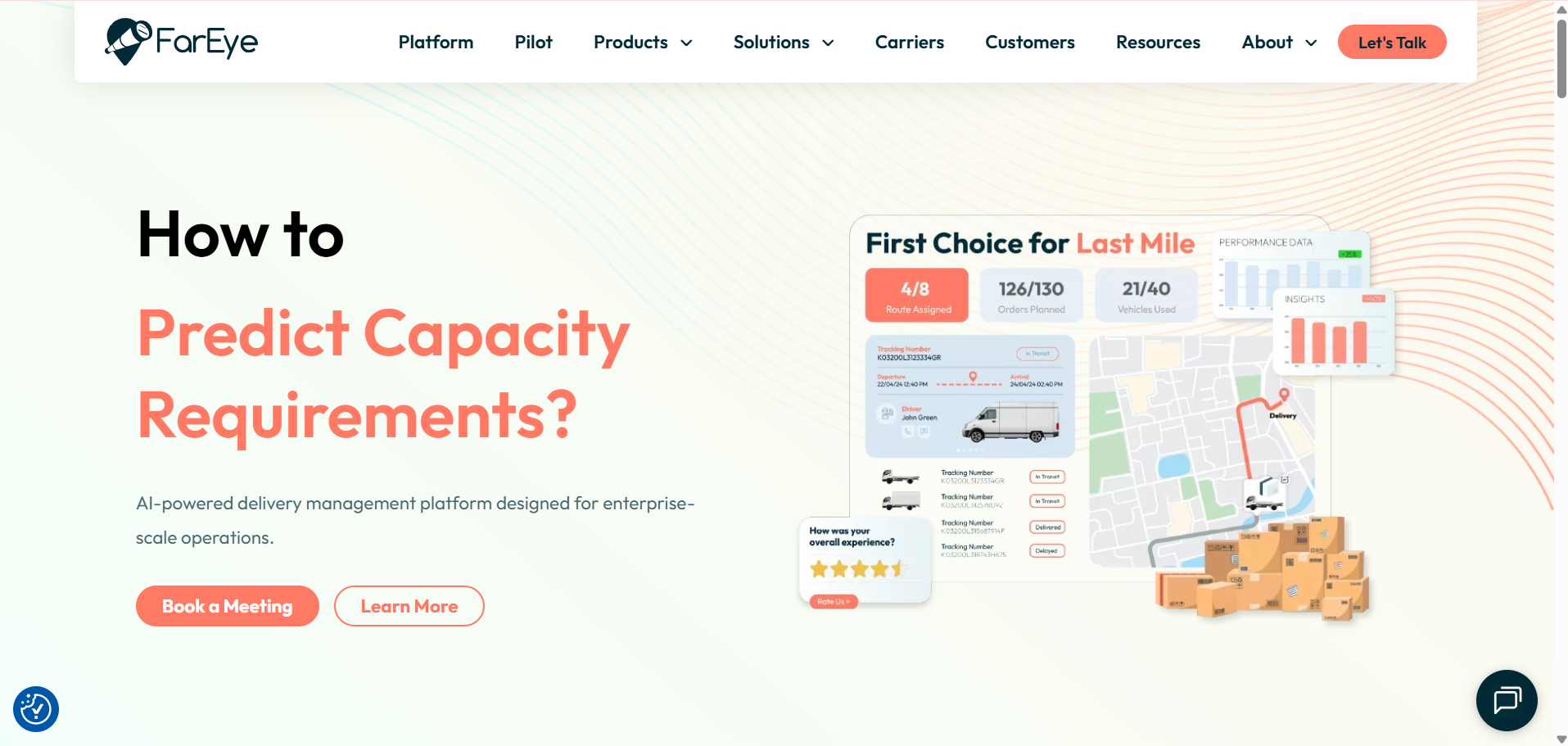
FarEye provides transportation management, delivery orchestration, shipment visibility, and logistics optimization capabilities. The platform helps businesses coordinate transportation and delivery operations while providing visibility into shipment movement and delivery performance. Its focus on delivery orchestration can be useful for organizations managing multiple transportation processes, carriers, delivery partners, and customer touchpoints.
FarEye can also support businesses looking to improve operational visibility and make logistics processes more structured across different stages of transportation. It can be relevant for enterprises managing complex logistics networks and transportation operations, particularly organizations that require stronger control over transportation workflows, delivery execution, and shipment visibility. Businesses comparing logistics management software can consider FarEye when transportation intelligence and delivery orchestration are major requirements.
- Shipway
Shipway provides shipping, tracking, returns, and customer experience capabilities for eCommerce businesses. The platform focuses heavily on post-purchase experiences, helping brands provide customers with shipment updates and improve visibility after an order has been dispatched. Its capabilities around tracking and returns can help eCommerce businesses manage important post-shipment interactions while keeping customers informed throughout the delivery journey. For D2C brands, customer communication and post-purchase experience can have a direct impact on customer satisfaction and repeat purchases.
Shipway can therefore be considered by D2C brands evaluating AI logistics software alternatives and post-purchase logistics solutions. It may be particularly relevant for businesses looking for a combination of shipping visibility, tracking, returns management, and customer engagement capabilities.
- Project44
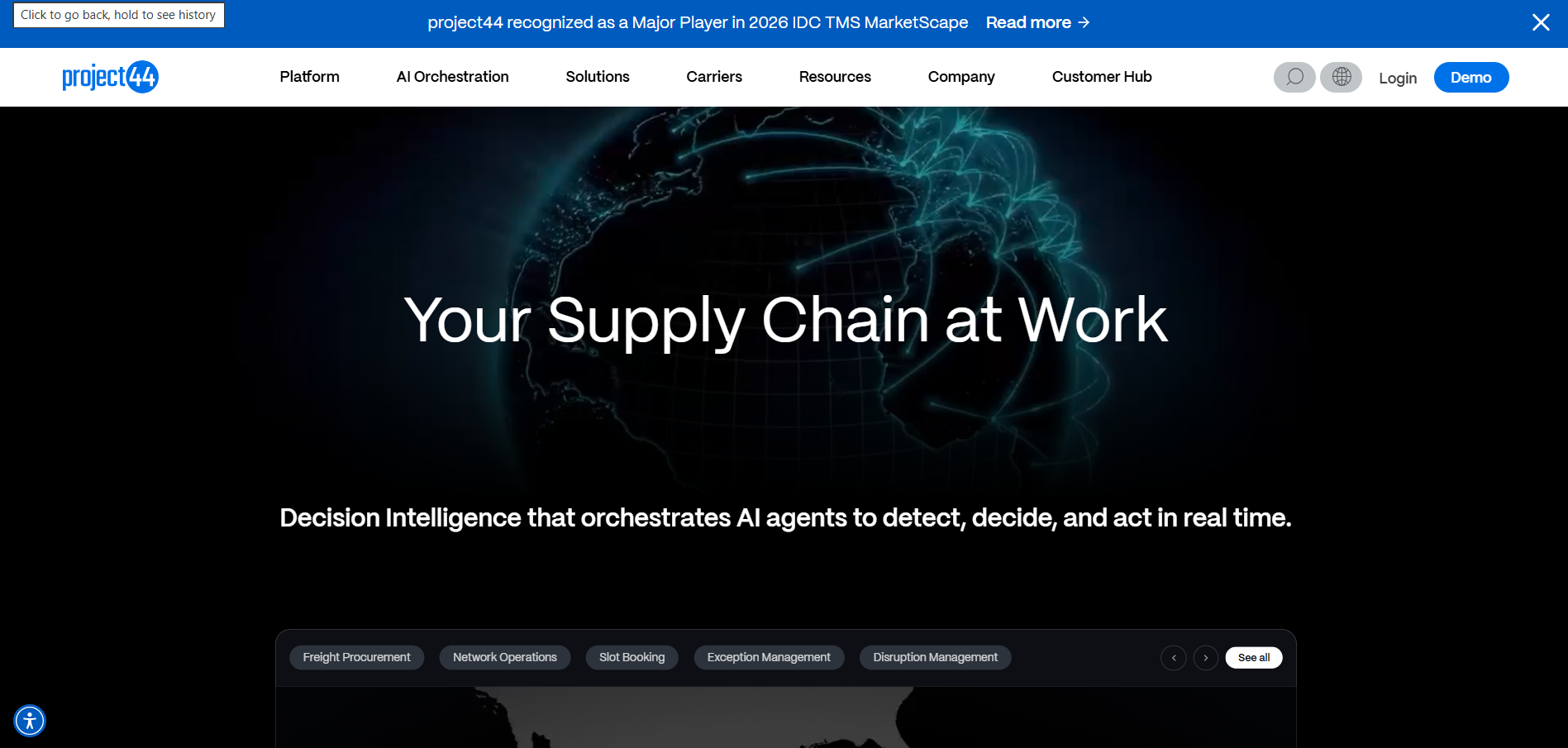
project44 focuses on supply chain visibility and transportation intelligence. Its platform provides organizations with visibility across transportation networks and shipment movements, helping businesses gain a clearer understanding of where shipments are moving and how transportation operations are performing. This type of visibility can become increasingly important for organizations managing large and geographically distributed supply chains.
By bringing transportation information together, businesses can identify potential disruptions, monitor shipment progress, and make more informed operational decisions. project44 is particularly relevant for larger organizations that require extensive supply chain visibility rather than only basic shipment creation or shipping automation. Enterprises with complex transportation networks, multiple logistics partners, and international supply chain requirements can evaluate project44 when comparing logistics software platforms and transportation intelligence solutions.
What Makes the Best Logistics Automation Platforms?
The best logistics automation platforms should offer much more than basic shipment booking, label generation, or carrier integration. As eCommerce businesses handle increasing order volumes, multiple carriers, different delivery locations, and more complex post-shipment requirements, they need logistics software that can automate decisions as well as processes.
A modern logistics automation platform should connect different stages of the shipping journey and give businesses better control over order processing, carrier selection, shipment tracking, delivery operations, NDRs, returns, and logistics analytics. This is where AI logistics software can add another layer of intelligence by using shipment data, carrier performance, serviceability, delivery patterns, and operational information to support faster and smarter decisions.
When businesses compare the best logistics automation platforms, they should therefore look beyond the number of carrier integrations or shipping features. The right logistics management software should be capable of reducing manual work, improving operational visibility, controlling shipping costs, and helping teams manage exceptions before they become larger delivery problems.
Here are some of the key capabilities businesses should evaluate when comparing top logistics automation software and logistics automation software solutions:
Multi-Carrier Integration
A strong logistics automation platform should allow businesses to connect and manage multiple carriers through a single system. Instead of switching between different carrier dashboards, teams can manage shipments, shipping rules, tracking information, and delivery operations from one centralized platform.
For eCommerce and D2C businesses working with multiple courier partners, multi-carrier integration is one of the most important capabilities to look for in logistics software. It can simplify operations while giving businesses greater flexibility to choose the right carrier for different orders, locations, and service requirements.
Intelligent Carrier Allocation
Carrier selection can have a major impact on delivery speed, shipping cost, and customer experience. The best AI logistics software for eCommerce should therefore help businesses make carrier allocation decisions using factors such as cost, destination, serviceability, historical performance, delivery timelines, and shipment characteristics.
AI-powered logistics automation can make this process more intelligent by evaluating multiple data points and recommending or automatically selecting the most suitable carrier. This reduces manual decision-making and helps businesses build a more efficient shipping workflow.
Automated Shipping
Manual shipment creation can become difficult when order volumes increase. Modern logistics automation software should automate repetitive activities such as shipment creation, label generation, manifesting, order allocation, and shipping documentation.
Automation allows operations teams to spend less time on repetitive tasks and more time managing exceptions and improving overall logistics performance. For growing eCommerce businesses, this can make logistics management software an important part of their day-to-day operations.
Real-Time Shipment Tracking
Shipment visibility is another important capability of modern logistics software. Businesses need a centralized view of shipments across different carriers instead of checking individual carrier portals for updates.
The best logistics automation platforms should provide real-time or near-real-time tracking information, shipment status updates, delivery milestones, and exception visibility. Better tracking also enables customer support teams to respond faster when customers have questions about their orders.
AI-Powered Delivery Intelligence
Modern AI logistics software should go beyond showing shipment statuses. It should help businesses understand what those statuses mean and identify shipments that may require attention.
Delivery intelligence can use historical shipment information, carrier performance, location data, delivery patterns, and other operational signals to identify potential delays or delivery risks. This allows businesses to move from reactive logistics management to a more proactive approach.
For businesses evaluating AI logistics software alternatives, delivery intelligence can be an important differentiator between traditional shipping tools and more advanced logistics automation platforms.
NDR Management
Non-delivery reports, or NDRs, are a major operational challenge for eCommerce businesses. Failed delivery attempts can lead to customer dissatisfaction, additional shipping costs, and ultimately higher RTO rates.
A good logistics automation platform should provide structured NDR management workflows that help businesses identify failed deliveries, understand the reason for failure, communicate with customers, and initiate appropriate recovery actions.
By automating these workflows, logistics automation software can help operations teams manage large numbers of delivery exceptions without relying entirely on manual follow-ups.
Returns and Reverse Logistics
Returns are an important part of the modern eCommerce journey. A complete logistics management software solution should therefore consider reverse logistics as part of the overall shipping lifecycle rather than treating returns as a separate process.
The best logistics automation platforms can help businesses streamline return requests, pickup coordination, shipment visibility, and return-related workflows. This can make reverse logistics more organized while giving businesses better visibility into the cost and operational impact of returns.
Logistics Analytics and Reporting
Data is becoming increasingly important in logistics decision-making. Businesses should look for logistics software that provides meaningful analytics across shipments, carriers, delivery performance, costs, exceptions, NDRs, returns, and other operational metrics.
Analytics can help businesses identify which carriers are performing well, where delivery issues are occurring, which locations have higher exception rates, and where shipping costs can potentially be optimized.
For enterprises and high-volume eCommerce businesses, these insights can make logistics automation much more valuable than simple shipment processing.
The best AI logistics software for eCommerce should therefore help businesses improve the customer experience alongside operational efficiency. Automated notifications, accurate tracking, proactive delivery updates, and structured exception management can help create a smoother post-purchase journey.
Integration With Existing Systems
Another important consideration is how easily the logistics management software integrates with the rest of the technology stack. Businesses may already use eCommerce platforms, marketplaces, ERPs, WMS solutions, order management systems, and customer experience tools.
A strong logistics automation platform should fit into this existing ecosystem instead of creating another isolated system. Seamless integrations can help businesses create a connected logistics workflow where order, shipment, carrier, warehouse, and post-delivery information can move between systems efficiently.
Automation With AI-Driven Decision Making
Traditional logistics automation software primarily focuses on automating repetitive processes. Modern AI logistics software takes this a step further by helping businesses automate decisions as well.
For example, AI can support carrier allocation, delivery-risk identification, shipment prioritization, exception management, and logistics analysis. This can help operations teams handle larger shipping volumes without increasing manual effort at the same rate.
This combination of process automation and intelligent decision-making is what makes modern logistics automation platforms increasingly valuable for eCommerce, D2C, retail, enterprise, and 3PL businesses.
Ultimately, when evaluating the best logistics automation platforms, businesses should look for a solution that combines automation, intelligence, visibility, analytics, integrations, and scalability. The goal should not simply be to automate shipping, it should be to build a more connected, data-driven, and efficient logistics operation.
These capabilities are also useful benchmarks when comparing top logistics automation software, evaluating AI logistics software alternatives, and identifying the best shipping automation software for a specific business model.
Key Benefits of Logistics Automation Software
The main benefit of logistics automation software is that it helps businesses reduce repetitive operational work and manage shipping processes more efficiently. Instead of relying on teams to manually create shipments, select carriers, track orders, monitor exceptions, and follow up with customers, businesses can automate many of these activities through a centralized system.
However, the benefits of modern logistics automation software go beyond simply saving time. When combined with AI, analytics, and real-time shipment data, logistics software can help businesses make better decisions, improve delivery performance, control operational costs, and create a more consistent customer experience.
Reduced Manual Work
One of the biggest advantages of logistics automation is the reduction of repetitive manual tasks. Activities such as shipment creation, carrier allocation, label generation, tracking checks, customer notifications, and delivery follow-ups can be automated through predefined workflows.
This allows logistics teams to spend less time managing routine processes and more time focusing on exceptions, customer issues, and operational improvements. For businesses handling thousands of shipments, even small improvements in automation can significantly reduce the daily workload.
Better Carrier Decisions
Choosing the right carrier for every shipment can become complicated when businesses work with multiple courier partners. AI-powered logistics software can evaluate factors such as destination, serviceability, shipping cost, delivery performance, carrier availability, and historical performance.
With intelligent carrier allocation, businesses can move away from manual carrier selection and create more data-driven shipping decisions. This is one of the areas where AI logistics software can provide additional value compared with traditional shipping tools.
Greater Shipment Visibility
A centralized logistics management software platform can give businesses a single view of shipments across multiple carriers. Teams can monitor shipment statuses, delivery milestones, delays, exceptions, and other important events without constantly switching between different carrier portals.
Greater visibility also helps customer support teams respond more quickly to delivery-related questions and allows operations teams to identify potential issues before they become larger problems.
Improved Customer Experience
The logistics experience has a direct impact on how customers perceive an eCommerce brand. Accurate tracking information, timely notifications, proactive delivery communication, and faster resolution of delivery issues can create a smoother post-purchase experience.
Modern logistics automation software can automate customer communication at different stages of the shipment journey. This keeps customers informed while reducing the need for support teams to manually send shipment updates.
Better Delivery Management
Logistics automation can help businesses identify delayed shipments, failed delivery attempts, and other delivery exceptions more efficiently. Instead of waiting for customers to report an issue, teams can monitor shipment events and take action when a delivery requires attention.
AI-powered delivery intelligence can further help identify patterns and potential delivery risks using historical data, carrier performance, and shipment information. This allows businesses to take a more proactive approach to delivery management.
Improved NDR and RTO Management
Failed deliveries can increase operational costs and contribute to higher RTO rates. A strong logistics management software solution can help businesses structure their NDR workflows by identifying failed delivery attempts and triggering appropriate follow-up actions.
Automated NDR communication and recovery workflows can give businesses another opportunity to successfully complete a delivery instead of immediately moving the shipment toward return.
Streamlined Returns
Returns are another important part of eCommerce logistics. Logistics automation software can help businesses organize return requests, pickup coordination, reverse shipment tracking, and return-related communication within a structured workflow.
By connecting forward and reverse logistics processes, businesses can gain better visibility into the complete shipment lifecycle and manage returns more efficiently.
Data-Driven Logistics Decisions
Modern logistics software can bring together data related to carriers, shipping costs, delivery performance, NDRs, RTOs, returns, and shipment volumes. These insights can help businesses understand where their logistics operations are performing well and where improvements may be required.
With analytics and AI, businesses can use this information to identify trends, compare carrier performance, monitor delivery KPIs, and make more informed logistics decisions.
Overall, the value of logistics automation software lies in combining automation, intelligence, visibility, and data. The right platform can help businesses reduce manual effort while improving carrier management, delivery performance, customer experience, and operational scalability.
Comparing the Best Logistics Automation Platforms
Businesses usually start looking for the best logistics automation platforms when growing shipment volumes make manual shipping processes harder to manage. However, there is no single platform that works best for every business. The right logistics automation platform depends on shipment volume, carrier network, business size, integrations, locations, and operational needs.
When comparing logistics software, businesses should look beyond basic shipment creation. A good logistics automation platform should combine shipping automation, carrier management, tracking, delivery intelligence, NDR management, returns, analytics, and integrations in one connected workflow.
| Capability | Why It Matters |
| Multi-carrier support | Provides greater shipping flexibility |
| AI allocation | Enables smarter carrier decisions |
| Shipping automation | Reduces repetitive manual work |
| Tracking | Improves shipment visibility |
| Delivery intelligence | Helps identify delivery risks |
| NDR management | Supports failed-delivery recovery |
| Returns | Simplifies reverse logistics |
| Analytics | Enables data-driven decisions |
| Integrations | Connects existing business systems |
Modern AI logistics software can take logistics automation further by helping businesses make smarter decisions using shipment, carrier, delivery, and performance data. For eCommerce and D2C businesses, features such as intelligent carrier allocation, tracking, NDR management, returns, and customer communication can be especially valuable.
Ultimately, businesses should compare the best logistics automation platforms based on how well each solution fits their current workflow, supports future growth, integrates with existing systems, and improves overall logistics efficiency.
eShipz as an AI-Powered Logistics Automation Platform
eShipz brings multiple logistics capabilities together through one connected logistics automation platform. It helps businesses manage carrier allocation, shipping, tracking, delivery exceptions, NDRs, proof of delivery, returns, and analytics without relying on separate systems for every stage of the logistics journey.
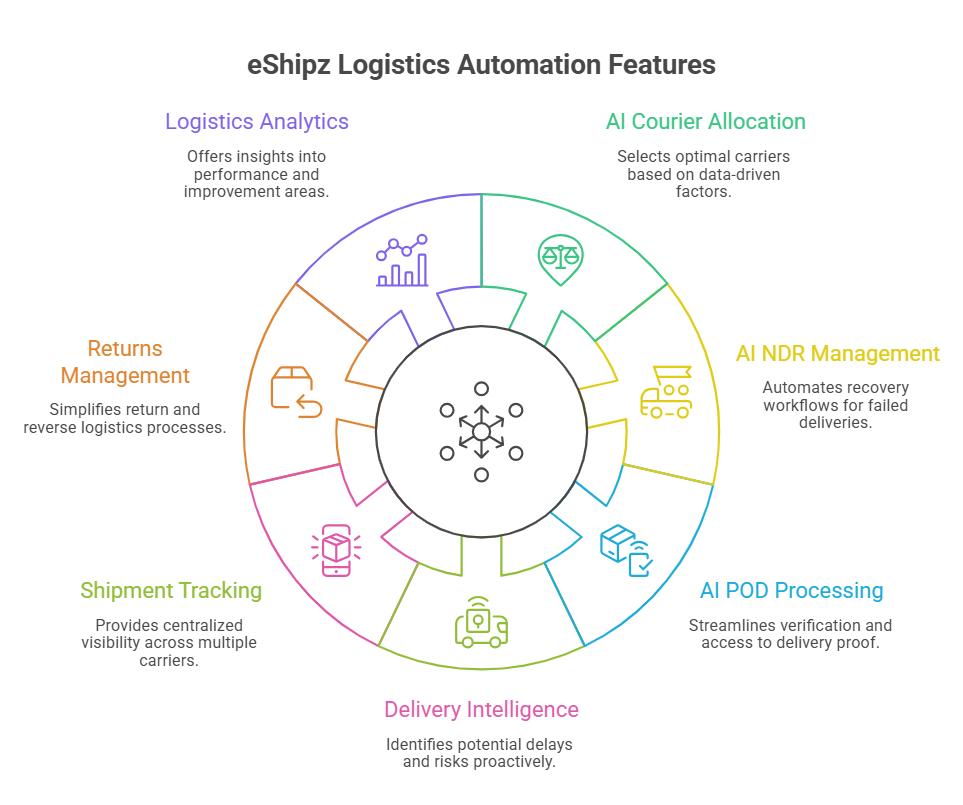
For businesses evaluating AI logistics software, this connected approach can reduce manual work while improving visibility and decision-making. eShipz combines AI-powered capabilities with logistics automation to help businesses manage shipments more efficiently from order creation to final delivery and beyond.
AI Courier Allocation
Choosing the right courier can become difficult when businesses work with multiple carriers. eShipz uses AI-powered courier allocation to help select suitable carriers based on factors such as cost, destination, serviceability, delivery SLA, availability, and historical performance.
This helps businesses move beyond fixed carrier preferences and create a more flexible, data-driven shipping strategy.
AI-Powered NDR Management
Failed deliveries can increase operational effort and contribute to higher RTO rates. eShipz’s AI-powered NDR capabilities help businesses identify delivery failures and support structured recovery workflows.
By automating NDR-related processes and customer follow-ups, businesses can focus on shipments that need attention and improve their chances of successful delivery.
AI-Powered POD
Proof of delivery is an important part of completing the logistics lifecycle. eShipz’s AI-powered POD capabilities help businesses process and manage delivery proof more efficiently.
This can reduce manual verification work and make POD information easier to access for operations, customer support, reconciliation, and post-delivery processes.
Shipment Tracking and Delivery Visibility
eShipz provides centralized shipment visibility across multiple carriers, helping teams monitor shipment movement, delivery milestones, delays, and exceptions from one platform.
With logistics automation, teams can spend less time checking individual courier portals and more time addressing shipments that require attention.
Delivery Intelligence
Tracking shows what has happened, while delivery intelligence helps businesses identify what may happen next. eShipz can help teams identify potential delays, delivery risks, and exceptions using shipment and carrier data.
This allows businesses to move from reactive logistics management toward a more proactive approach.
Returns and Reverse Logistics
eShipz also supports return and reverse logistics workflows, helping businesses manage return requests, pickups, tracking, and related activities within the broader shipping ecosystem.
This makes returns easier to manage while giving businesses greater visibility across the complete shipment lifecycle.
Logistics Analytics
eShipz brings logistics data together across carriers, deliveries, costs, NDRs, RTOs, returns, and other operational metrics. These insights can help businesses understand performance and identify areas for improvement.
Together, AI courier allocation, AI NDR, AI POD, tracking, delivery intelligence, returns, and analytics make eShipz a connected logistics automation platform for modern eCommerce and growing businesses.
Who Needs Logistics Automation Software?
Logistics automation software is useful for businesses managing growing shipment volumes, multiple carriers, complex delivery networks, and increasing post-shipment workloads. As logistics operations become more difficult to manage manually, businesses can use AI logistics software to automate repetitive processes, improve visibility, and make better shipping decisions.
The best logistics automation platforms are not limited to one type of business. D2C brands, eCommerce companies, retailers, enterprises, and 3PL providers can all use logistics management software to simplify different parts of their shipping operations.
| Business Type | How Logistics Software Helps |
| D2C Brands | Automates shipping, carrier allocation, tracking, NDRs, and returns as order volumes grow. |
| eCommerce Businesses | Manages multiple carriers, shipping workflows, tracking, delivery exceptions, and post-purchase operations. |
| Retailers | Connects fulfilment, shipping, tracking, and delivery operations across online and offline channels. |
| Enterprises | Standardizes complex logistics workflows across locations, carriers, warehouses, and business units. |
| 3PL Providers | Improves visibility across clients, carriers, shipments, and delivery operations. |
D2C Brands
D2C brands often experience rapid shipment growth as their customer base expands. Logistics automation software can help these businesses manage increasing order volumes without creating the same increase in manual operational work.
With AI logistics software, D2C brands can automate carrier allocation, shipment creation, tracking, NDR management, returns, and customer communication. This makes logistics automation particularly useful for brands looking to scale their shipping operations while maintaining control over costs and delivery performance.
eCommerce Businesses
eCommerce businesses often work with multiple courier partners and need to manage different shipping workflows across locations. AI logistics software can help automate shipment processing, carrier selection, tracking, delivery monitoring, NDR management, and returns.
For businesses looking for the best AI logistics software for eCommerce, a connected logistics automation platform can bring these activities together and provide better visibility across the complete shipment lifecycle.
Retailers
Retailers managing both online and offline fulfilment can use logistics management software to connect their shipping and delivery operations. A centralized logistics software platform can help teams manage orders, carriers, tracking information, and delivery exceptions across different fulfilment channels.
Logistics automation can also help retailers standardize repetitive shipping processes and improve visibility as their delivery network expands.
Enterprises
Large organizations often operate complex logistics networks involving multiple locations, warehouses, carriers, and business units. Logistics automation software can help enterprises standardize shipping workflows while maintaining visibility across different operations.
AI logistics software can also support enterprises with intelligent carrier allocation, delivery intelligence, logistics analytics, and exception management. This makes modern logistics automation platforms useful for organizations that need greater control over large-scale logistics operations.
3PL Providers
Third-party logistics providers manage shipping operations for multiple clients, making visibility and workflow management especially important. Logistics software can help 3PL providers manage shipments, carriers, delivery performance, NDRs, returns, and operational data from a centralized system.
For 3PLs evaluating the best logistics automation platforms, multi-client visibility, integrations, analytics, and scalability are important factors. A strong logistics automation platform can help 3PL providers standardize processes while still supporting different requirements for individual clients.
Growing Businesses
Logistics automation is also valuable for businesses that are moving from small-scale shipping to higher shipment volumes. As operations grow, manual processes can become harder to maintain and more expensive to manage.
The right logistics automation software can provide the automation and scalability needed to support this growth. Businesses can start with core shipping automation and gradually use capabilities such as AI courier allocation, tracking, delivery intelligence, NDR management, returns, and analytics.
Overall, the best logistics automation platforms can support businesses across different stages of growth. Whether it is a D2C brand, eCommerce business, retailer, enterprise, or 3PL provider, AI logistics software can help create a more connected, automated, and scalable logistics operation.
The Future of Logistics Is Becoming Smarter With AI
AI is no longer just changing individual logistics processes, it is reshaping how businesses plan, ship, track, and manage deliveries. As eCommerce and D2C businesses continue to handle larger shipment volumes, logistics operations are moving from manual decision-making towards intelligent, automated systems.
The next generation of logistics will be driven by AI that can understand shipment patterns, identify delivery risks, recommend better carriers, automate repetitive tasks, and help teams respond to exceptions faster. From AI-powered courier allocation and predictive delivery insights to automated NDR management and AI-powered POD, logistics automation is becoming more connected and intelligent.
This shift also means that logistics software will need to do more than simply create shipments or provide tracking updates. Businesses will increasingly look for logistics automation platforms that can bring shipping, carrier management, tracking, delivery intelligence, NDRs, returns, and analytics together in one place.
This is where platforms like eShipz are helping businesses move towards smarter logistics operations. With capabilities such as AI courier allocation, AI NDR, AI POD, shipment tracking, returns, and logistics analytics, eShipz brings AI-powered automation into different stages of the shipping journey.
As AI continues to evolve, the future of logistics will not simply be about moving packages faster. It will be about making every logistics decision smarter, more predictive, and more efficient.
Explore how eShipz can help your business automate shipping, improve delivery operations, and build a more intelligent logistics workflow.
Frequently Asked Questions
What is AI logistics software?
AI logistics software uses artificial intelligence, automation, and logistics data to help businesses automate shipping processes and make better logistics decisions.
What is a logistics automation platform?
A logistics automation platform connects and automates different logistics processes, including carrier allocation, shipment processing, tracking, delivery monitoring, NDR, returns, and analytics.
What is logistics automation software?
Logistics automation software helps businesses automate repetitive shipping and logistics processes while improving operational visibility.
What is logistics management software?
Logistics management software helps businesses manage transportation, carriers, shipments, tracking, delivery operations, analytics, and other logistics activities from a centralized system.
What is the best AI logistics software for eCommerce?
The best AI logistics software for eCommerce depends on shipment volume, carrier network, business requirements, integrations, and logistics complexity. eShipz is one option businesses can evaluate for connected AI-powered logistics automation.
What are the best logistics automation platforms?
The best logistics automation platforms depend on the specific requirements of each business. Businesses should compare carrier connectivity, automation, AI capabilities, tracking, NDR, returns, analytics, integrations, and scalability.
What is the best shipping automation software?
The best shipping automation software should automate more than label creation. It should ideally support carrier selection, shipment processing, tracking, delivery management, NDR, returns, and analytics.
What are AI logistics software alternatives?
AI logistics software alternatives include platforms that provide intelligent carrier allocation, shipping automation, transportation management, tracking, delivery intelligence, and logistics analytics.
Can AI reduce logistics costs?
AI can help businesses make better shipping decisions by considering cost, delivery performance, serviceability, and other operational factors. This can contribute to more efficient logistics operations.
Can logistics automation reduce manual work?
Yes. Logistics automation can reduce repetitive work associated with carrier selection, shipment creation, tracking, customer communication, NDR, and returns.
Why is logistics automation important for eCommerce?
eCommerce businesses manage large numbers of shipments and increasingly complex carrier networks. Logistics automation helps businesses scale these operations while improving visibility and reducing manual work.