



The best courier service for heavy and bulky products in India matters more than ever as ecommerce keeps growing. India’s ecommerce shipments are estimated at around 4.9–5.3 billion shipments in FY2025, with projections reaching approximately 15–16 billion by FY2030. B2C ecommerce has also become a major driver of the express logistics industry, which makes reliable heavy parcel delivery. and scalable ecommerce shipping services more important for growing businesses.
Shipping a heavy or oversized product is very different from sending a standard ecommerce parcel. Furniture, appliances, gym equipment, mattresses, industrial components, machinery, and other large products need more than a regular pickup-and-delivery network. Businesses have to look at serviceability, package dimensions, volumetric weight, handling requirements, damage protection, delivery timelines, and whether the right heavy parcel delivery service is available in India. The right technology makes this easier.
Shipping software for heavy products, multi courier shipping software for ecommerce, automated carrier selection, tracking, delivery intelligence, and courier management software for ecommerce help businesses find the right carrier for different shipments instead of depending on a single courier for every order.
This guide explains how to choose the best courier service for heavy and bulky products in India, how heavy shipment courier charges are calculated, when to use a courier versus a transport service, how to reduce delivery issues, and how technology can simplify large parcel shipping, bulk shipping, and ecommerce shipping for heavy products.
10 Courier & Logistics Options for Heavy and Bulky Products in India
The best courier service for heavy and bulky products in India isn’t always a traditional courier. Depending on the shipment, businesses may need a heavy parcel delivery service in India, a specialized bulky item courier service, an LTL or FTL provider, a freight partner, or a transport service for oversized products.
This matters most for ecommerce businesses shipping furniture, appliances, mattresses, fitness equipment, machinery, and other large products. The right provider makes heavy parcel delivery, large parcel delivery India, and ecommerce shipping for bulky products much easier to handle.
Here are 10 courier and logistics options businesses can consider for large parcel shipping, bulk shipping, ecommerce shipping for heavy products, and B2B heavy delivery service in India.
-
Delhivery— For Heavy Ecommerce, Bulk and Freight Shipments
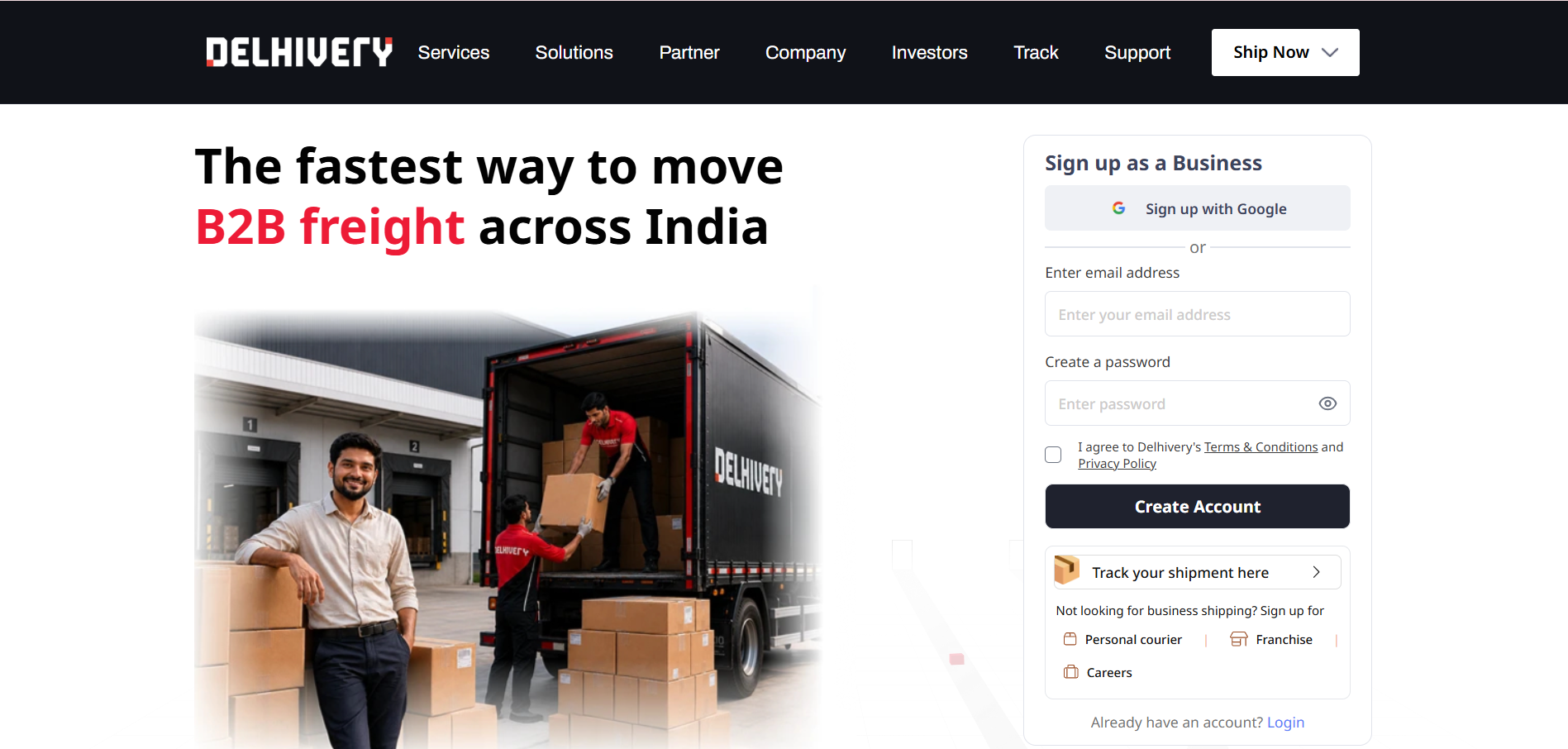
Delhivery is a practical option for businesses that need more than standard parcel delivery. Its logistics network covers heavy goods, Express PTL, and Full Truckload freight, so it fits both ecommerce shipments and larger B2B movement.
For businesses managing heavy parcel delivery, Delhivery offers bulk-shipping support for scheduled and appointment-based deliveries, e-POD, OTP-verified delivery, and consignment protection. Its freight services also work well for larger loads, especially when a business needs more carrying capacity than a conventional ecommerce courier can offer.
That makes Delhivery relevant for businesses looking for a best logistics company for heavy shipments. It can handle requirements that range from individual ecommerce parcels to larger freight consignments.
An ecommerce seller, for instance, might use parcel delivery for smaller orders and PTL or FTL for heavier products or bigger consignments. That’s useful for businesses with different shipping needs across their product catalogue.
Best suited for: Heavy ecommerce shipments, bulk shipping, B2B logistics, PTL, FTL and larger consignments.
-
Blue Dart — For Palletized Heavy Shipments
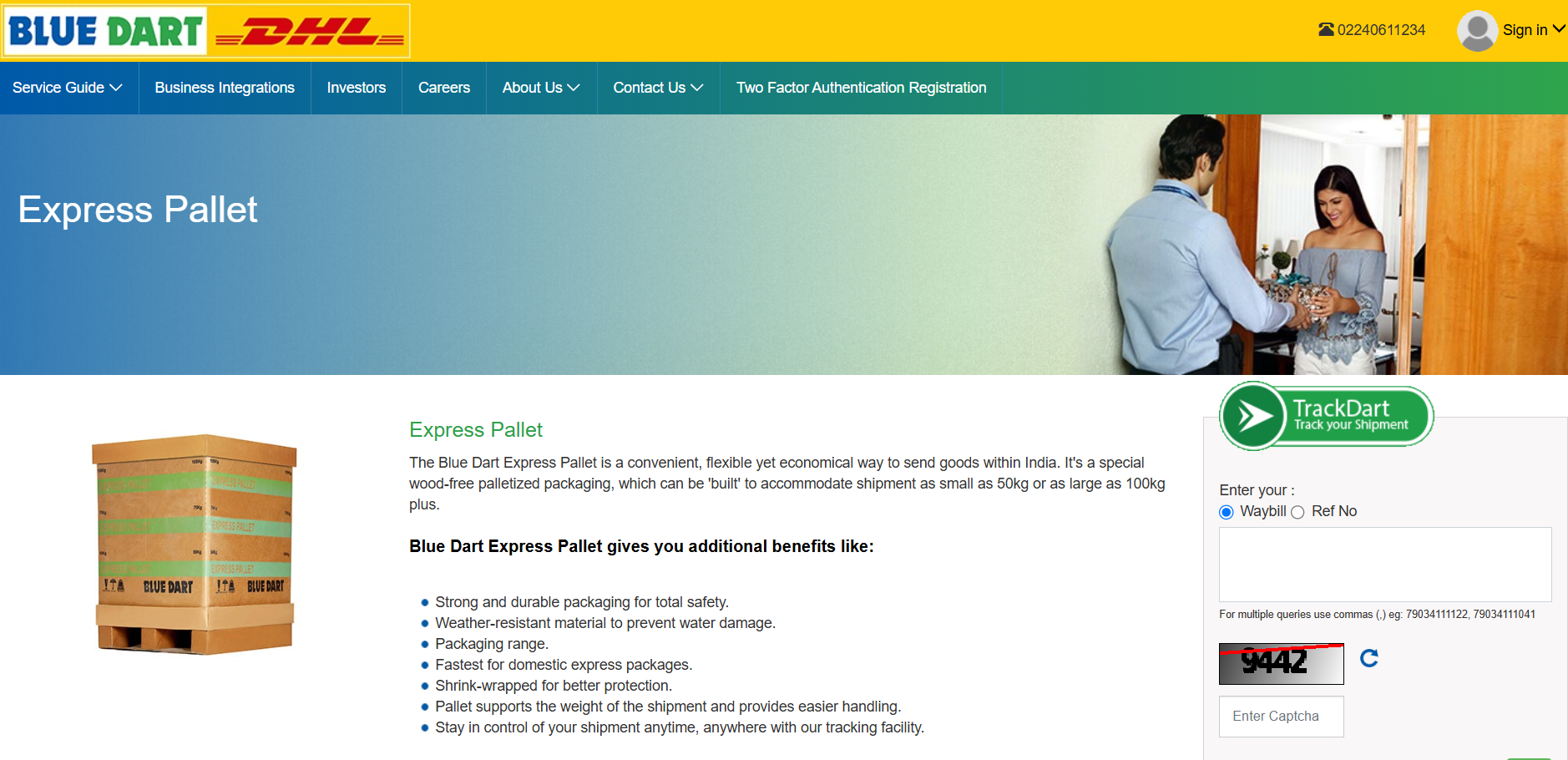
Blue Dart offers a dedicated Express Pallet service for heavier domestic shipments. It’s built for shipments in the 50 kg, 75 kg and 100 kg range and uses palletized packaging to make heavier goods easier to handle in transit.
Rather than treating a heavy shipment like a standard parcel, this service uses a pallet to give the product a more structured packaging and transport setup. Blue Dart describes the pallet as weather-resistant and built for safer handling, with shrink wrapping and a pallet base that supports equipment-based handling.
That makes it useful for businesses shipping equipment, commercial products, machinery components, or other goods that are hard to manage as loose parcels. For
businesses comparing heavy shipment courier charges, palletized shipping is also worth considering because it uses a different handling model from standard parcel delivery.
Best suited for: Heavy parcels, palletized shipments, commercial products and shipments in the 50–100 kg range.
-
Shadowfax — For Heavy and Bulky Ecommerce Products
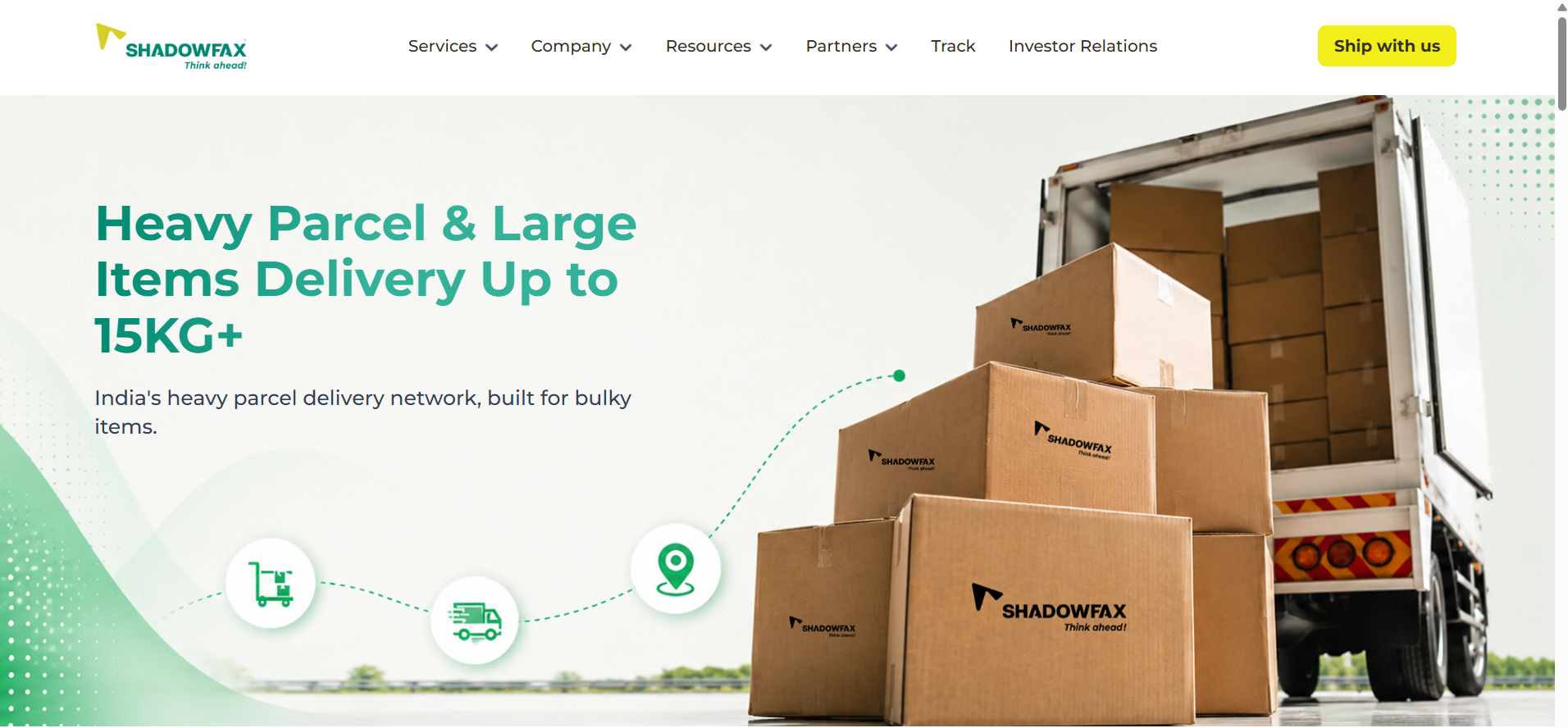
Shadowfax is a strong fit for ecommerce businesses that need a bulky item courier service. Its Prime Large service is built for heavy and bulky products, including appliances, electronics, mattresses and furniture.
Prime Large doesn’t use a standard small-parcel delivery model. It’s designed around the needs of large-item delivery. Shadowfax says the service supports heavy shipments above 15 kg and points to products like refrigerators, mattresses, water purifiers and furniture.
That makes Shadowfax worth considering for ecommerce shipping for heavy products, especially for D2C brands selling items that are both heavy and physically large.
The company also highlights specialized handling and dedicated delivery capabilities for its large-item service. That matters because bulky products often need more care during loading, transportation and final delivery than a regular ecommerce parcel.
For brands selling large products directly to consumers, this kind of service can support large package delivery India requirements without pushing every shipment into a traditional freight model.
Best suited for: Furniture, appliances, mattresses, electronics, D2C brands and ecommerce shipping for bulky products.
-
DTDC — For LTL, B2B and Ecommerce Shipments
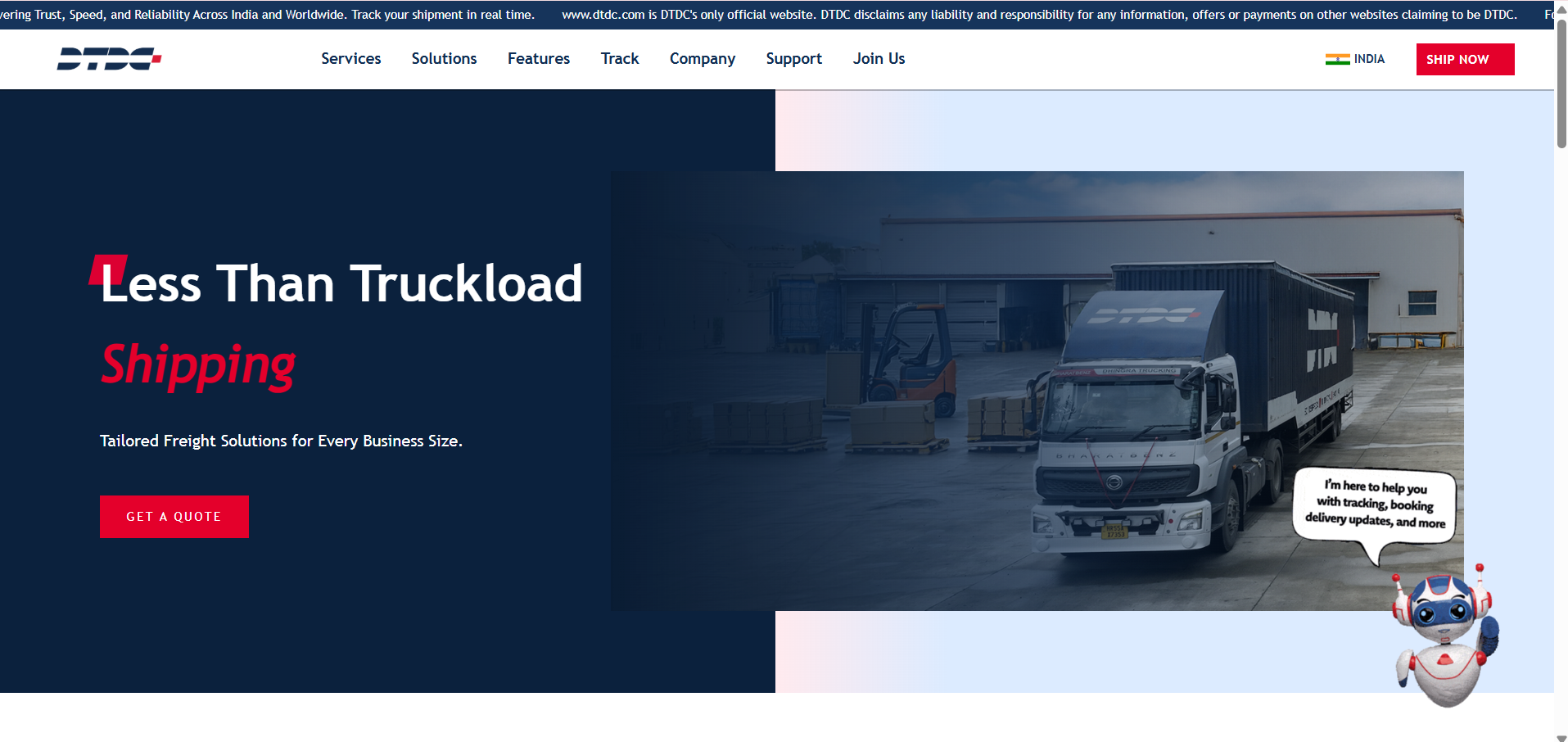
DTDC is a solid option for businesses whose needs go beyond standard ecommerce parcel delivery. Its logistics portfolio includes Less Than Truckload (LTL) shipping, B2B logistics, ecommerce and 3PL services.
LTL works well when a shipment is too large or heavy to move like a regular parcel but doesn’t need an entire truck. Instead of paying for a dedicated vehicle, businesses can use available truck space shared with other consignments.
That makes it a practical fit for businesses handling bulk shipping, regional distribution and B2B movement. For example, a manufacturer shipping several cartons of products to a distributor may not need a full truck, but may still need a freight-oriented service.
DTDC is worth considering when businesses are weighing an ecommerce courier service against broader logistics options for heavier shipments.
Best suited for: LTL shipments, B2B distribution, ecommerce, regional heavy shipments and bulk shipping.
-
GATI — For Surface and Freight Transportation
GATI fits better when a shipment needs surface transportation or freight movement, not a conventional courier journey. For heavier products, surface transportation is a practical choice if delivery speed matters less than transportation capacity and cost. Businesses moving commercial products, industrial equipment, inventory, or larger consignments between warehouses and business locations can assess this kind of logistics network. It also makes sense when a business needs a transport service for oversized products.
Instead of forcing an oversized shipment into a standard courier network, the business can choose a transportation model built for larger vehicle capacity.
For businesses with recurring heavy shipments, comparing freight and surface transportation options can also help manage heavy shipment courier charges more effectively.
Best suited for: Heavy shipments, surface transportation, freight movement, B2B shipments and oversized products.
-
Safexpress— For B2B and Supply Chain Shipments
Safexpress makes sense if heavy shipments are part of a larger B2B or supply-chain operation. A manufacturer, distributor, or retailer may need to move inventory, equipment, commercial products, or other large consignments across multiple locations. Those shipments usually need a different logistics setup than a single ecommerce order.
Safexpress’s logistics infrastructure is built for large-scale supply-chain operations, with facilities and handling systems for cargo movement. That’s why it’s relevant for businesses that need more structured transportation and supply-chain support. For companies looking for a B2B heavy delivery service in India, this kind of logistics provider can be a better fit than relying only on a conventional ecommerce courier.
Best suited for: B2B logistics, industrial products, supply-chain movement, cargo and larger consignments.
-
Porter — For Local Heavy and Bulky Delivery
Porter is useful for businesses that need to move heavy or bulky products locally instead of sending them through a conventional intercity courier network.
Its truck transportation service covers different commercial vehicle types and capacities. Depending on the city and vehicle, businesses can choose larger vehicles to move furniture, appliances, equipment, commercial goods, and other bulky products. That makes Porter a practical option when a business needs transport for oversized products within a city or another supported region.
For example, a furniture business may need to move a large sofa from a warehouse to a customer’s home. In that case, a local commercial vehicle is often more practical than treating the sofa as a conventional courier parcel. For ecommerce brands with city-level delivery needs, local transportation can also complement their regular ecommerce shipping services.
Best suited for: Intra-city delivery, furniture, appliances, equipment, local heavy shipments and large parcel delivery India.
-
XpressBees— For Ecommerce, Heavy Parcels and B2B Shipments
XpressBees is best known for ecommerce logistics, and its current offering also covers heavier shipments and B2B transport needs.
The company refers to heavy parcels in the 5 kg to 100 kg range within its ecommerce logistics offering, while its B2B services support bulk shipments and larger consignments. XpressBees also shares information on PTL and FTL transportation for businesses with different freight needs. That makes it a practical option for businesses that ship both regular ecommerce parcels and heavier products.
An electronics or home-products brand, for example, may ship small accessories through standard parcel delivery, while larger products need a heavier shipment or freight model. Businesses don’t have to rely on one provider for every order. They can compare XpressBees with other options based on product weight, dimensions, destination, and serviceability.
Best suited for: Ecommerce, D2C, heavy parcels, B2B shipments, PTL, FTL and ecommerce shipping for heavy products.
-
Ekart — For High-Volume Ecommerce Logistics
Ekart is a well-known ecommerce logistics provider in India, with services covering both B2C ecommerce shipments and larger B2B transportation requirements. For businesses shipping heavier products, Ekart offers a dedicated large-parcel delivery network for shipments weighing more than 20 kg, with precision handling designed for larger shipments.
For heavier and bulkier consignments, Ekart also provides B2B Express transportation through Part Truck Load (PTL) and Full Truck Load (FTL) services. Its B2B network is designed to support heavy and bulk shipments, while its surface and air express capabilities provide different options depending on shipment size and delivery urgency.
This makes Ekart relevant for businesses that handle a mix of regular ecommerce orders and large or heavy products. For example, smaller consumer products can move through its regular ecommerce network, while furniture, appliances, commercial products, or larger consignments may be routed through its large-parcel, PTL, or FTL capabilities depending on the shipment requirement.
For businesses comparing the best courier service for heavy and bulky products in India, Ekart can therefore be considered when they need a combination of ecommerce delivery, large parcel delivery, and B2B freight capabilities. The right service would still depend on the product’s weight, dimensions, destination, and required delivery model.
Best suited for: High-volume ecommerce, marketplace-led logistics and businesses with varied shipment profiles.
-
India Post — For Heavy Parcels Within Applicable Limits
India Post Parcel (Retail) is an option for businesses and individual customers shipping heavier parcels across India. The service accepts parcels with a gross weight of up to 35 kg, with a maximum length of 1.5 metres and a combined length and girth of up to 3 metres. This makes it suitable for certain heavy parcels and moderately large products, although very large or oversized shipments may require a specialized logistics or transport provider.
India Post Parcel is ordinarily transported by surface, making it relevant for businesses that prioritize economical shipping over express delivery. The service also offers value-added options such as cash on delivery, insurance, proof of delivery, and addressee-specific delivery, depending on the requirement.
For ecommerce businesses, this can make India Post Parcel useful for products such as packaged home goods, accessories, spare parts, equipment, and other merchandise that falls within its weight and size limits. Businesses handling ecommerce shipping for heavy products can consider it alongside private courier and freight providers based on the shipment’s weight, dimensions, destination, and delivery timeline.
The current India Post Parcel (Retail) tariff is weight-based, with rates varying by destination category. For example, the published rates effective August 1, 2026 start at ₹28 for parcels up to 500 grams for local delivery, with additional charges applying as weight increases. GST is applicable as per the published tariff.
For businesses comparing the best courier service for heavy and bulky products in India, India Post Parcel can therefore be considered for shipments that fall within its 35 kg and dimensional limits. For furniture, very large appliances, oversized products, or shipments beyond these limits, businesses may need to consider specialized bulky-item courier services, PTL/FTL freight, or a dedicated transport service.
Best suited for: Heavy parcels within applicable limits, broad geographic reach and selected ecommerce shipping requirements.
How to Choose the Best Courier Service for Heavy and Bulky Products in India
Choosing the best courier service for heavy and bulky products in India is not simply about finding the lowest shipping rate. A courier may offer an attractive price but still be unsuitable if it cannot handle your package dimensions, destination, delivery requirements, or product type. For ecommerce businesses, the right courier should balance cost, coverage, handling capability, reliability, tracking, and customer experience.
Here are the most important factors to evaluate.
Check Weight and Dimension Limits
The first thing to check is whether the courier can actually handle your shipment.
A product may weigh 20 kg, 40 kg, or even more, but its dimensions can be equally important. A lightweight but oversized product can take up significant space in a vehicle and may be treated differently from a compact heavy parcel.
Before selecting a bulky item courier service, check:
- Maximum permissible weight
- Maximum package dimensions
- Whether oversized shipments are accepted
- Restrictions based on product category
- Pickup and delivery handling requirements
- Service availability for your destination
Do not assume that a courier that handles standard ecommerce parcels will automatically support large parcel delivery.
Compare Actual Weight and Volumetric Weight
Heavy shipment courier charges are often influenced by more than the physical weight of a package. Carriers may use actual weight or volumetric weight depending on the shipment and their pricing rules. For example, imagine a large box containing a lightweight product. Although the product itself may weigh only 12 kg, the package could occupy enough space to be charged at a higher billable weight. A basic volumetric-weight calculation commonly considers:
Length × Width × Height ÷ Carrier Volumetric Divisor
The applicable divisor and calculation method can vary by carrier and service. This is why ecommerce businesses should compare the billable weight, rather than simply looking at the product’s physical weight.
Check Delivery Coverage
Coverage becomes particularly important for large parcel delivery. A courier may offer excellent service in major cities but have limited capabilities in smaller towns, remote pin codes, or specific regions. For businesses selling furniture, appliances, fitness equipment, or other bulky products across India, check:
- Pin-code serviceability
- Pickup availability
- Last-mile delivery capability
- Remote-area coverage
- Delivery restrictions
- Return pickup availability
The best courier for bulky items in India is therefore not necessarily the courier with the largest network. It is the one that can reliably handle the specific combination of product, origin, destination, weight, and dimensions.
Look for Doorstep Pickup and Delivery
Heavy products create additional work for both sellers and customers. If a business has to arrange separate transportation for every large shipment, operational complexity increases quickly. A suitable heavy parcel delivery service in India should ideally support a smooth pickup and delivery process, including:
- Scheduled pickup
- Shipment handling
- Doorstep delivery where supported
- Delivery status updates
- Proof of delivery
- Return pickup where applicable
For large products, the delivery experience matters almost as much as the transportation itself.
Check Handling and Damage Protection
Bulky products often require more careful handling than standard parcels. A carton containing a small accessory can be moved easily through a sorting facility. A refrigerator, treadmill, furniture unit, or machinery component requires a different approach.
Before selecting a courier, understand:
- How oversized parcels are handled
- Packaging requirements
- Damage liability
- Insurance or declared-value policies
- Claim procedures
- Restrictions on fragile products
The cheapest ecommerce courier service may not always be the most economical option if repeated damage leads to replacements, refunds, and customer complaints.
Evaluate Tracking and Visibility
Tracking becomes even more important when customers are waiting for expensive or large products. Customers want to know when their furniture, appliance, gym equipment, or other bulky order will arrive because these deliveries often require someone to be available at the destination.
A good logistics setup should provide:
- Shipment tracking
- Delivery status
- Estimated delivery information
- Exception alerts
- Delivery attempts
- Proof of delivery
- Return status
This is where multi courier shipping software for ecommerce can provide an advantage by bringing shipment information from different carriers into one operational view.
Check Reverse Logistics
Returns can be significantly more complicated for bulky products. A standard ecommerce return may involve a small parcel being picked up and sent back to a warehouse. A large product may require a larger vehicle, additional handling, and more coordination.
Before choosing a courier, check whether it supports:
- Reverse pickup
- Bulky-item returns
- Exchange shipments
- Failed-delivery returns
- Return tracking
For businesses with high-value or large products, reverse logistics should be evaluated at the same time as forward delivery.
What Is Considered a Heavy or Bulky Shipment in India?
No single definition of a heavy or bulky shipment applies to every courier or logistics provider in India. Different carriers set different weight limits, dimensional restrictions, vehicle capacities, and handling capabilities. A shipment may count as heavy because of its actual weight, bulky because of the space it takes up, or both.
For ecommerce businesses, understanding what qualifies as a heavy or bulky shipment matters because it directly affects shipping costs, carrier availability, delivery timelines, handling requirements, and serviceability. A product that moves easily through a standard ecommerce courier network at one weight or size may need a specialized heavy parcel delivery service in India once its dimensions or weight cross the carrier’s limits.
This matters even more for businesses selling furniture, appliances, mattresses, fitness equipment, machinery, automotive components, and other large products.
These products often can’t be handled the same way as regular ecommerce parcels.
A useful way to think about it is:
- Heavy shipment: The product or package has a high physical weight.
- Bulky shipment: The package occupies significant space because of its dimensions.
- Oversized shipment: The package exceeds the standard dimensional limits of a courier network.
- Heavy and bulky shipment: The package is both difficult to lift and requires significant transportation space.
The distinction matters because a shipment does not necessarily have to be extremely heavy to become expensive or difficult to deliver. A lightweight mattress, for example, can occupy much more space than a compact 20 kg machine component.
Products That Commonly Require Heavy Parcel Delivery
Not every ecommerce product can be shipped like a regular parcel. Furniture, appliances, fitness equipment, mattresses, industrial goods, and other large products often need heavy parcel delivery, large parcel delivery, or bulk shipping because of their size, weight, or handling requirements.
Furniture
Sofas, beds, dining tables, wardrobes, office furniture, cabinets, and other large pieces can be difficult to move through a standard courier network. They may not always be extremely heavy, but their size and shape can require larger vehicles and more careful handling.
For furniture brands, ecommerce shipping for bulky products may involve scheduled delivery, specialized vehicles, and additional handling at the customer’s location.
Home Appliances
Refrigerators, washing machines, televisions, air conditioners, dishwashers, and other appliances are commonly shipped as large or heavy products. Their packaging and dimensions also make loading, unloading, and last-mile delivery more demanding.
For appliance brands, choosing the best courier for bulky items in India means looking beyond price and checking whether the courier can safely handle the product and deliver it to the customer’s location.
Fitness Equipment
Treadmills, exercise bikes, weight machines, benches, and home gym equipment can be both heavy and bulky. A treadmill, for example, may need more vehicle space and careful handling than a regular ecommerce parcel.
For fitness brands, the right ecommerce shipping service can make heavy parcel delivery easier while reducing the need to manage every shipment manually.
Mattresses and Bedding
Mattresses are a good example of why weight alone does not define a bulky shipment. Even when compressed and relatively lightweight, they can take up considerable space during transportation.
For mattress brands, large package delivery India requires attention to both dimensions and handling, especially during last-mile delivery.
Industrial Products
Machinery parts, tools, pumps, motors, electrical equipment, and manufacturing supplies are often heavier than regular ecommerce parcels. These products may also move between factories, warehouses, distributors, and business locations.
For such shipments, a best logistics company for heavy shipments may be more suitable than a standard ecommerce courier, particularly when PTL, FTL, or freight transportation is required.
Automotive Products
Automotive products can include larger spare parts, accessories, tools, batteries, and other components that may not fit easily into standard parcel networks.
Since these products vary widely in weight and dimensions, businesses need flexible delivery options. Multi courier shipping software for ecommerce can help route different shipments through the most suitable courier or logistics provider.
B2B Products
B2B shipments are often larger because they involve multiple cartons, pallets, bulk inventory, or consolidated orders. These can include commercial equipment, replacement parts, manufacturing supplies, electrical components, and retail stock.
Depending on the shipment size and destination, businesses may need a B2B heavy delivery service in India, LTL, FTL, freight, or another transportation option.
For brands handling a mix of regular and oversized orders, the goal is not to find one courier for everything. It is to have the right delivery option available for each type of shipment.
How Much Do Heavy Shipment Courier Charges Cost in India?
There’s no single fixed rate for heavy parcel delivery in India. Heavy shipment courier charges vary based on the shipment’s weight, dimensions, distance, destination, service type, product category, and the courier or logistics provider handling it.
A compact heavy parcel moving within the same city can cost very differently from a large appliance shipped from one state to another. And a lightweight but oversized product can sometimes attract higher charges because of the space it takes up during transportation.
For ecommerce businesses, it’s important to look beyond the basic per-kilogram rate and understand what actually adds up to the final shipping cost.
Factors That Affect Heavy Shipment Courier Charges:
The main factors that can influence the cost of heavy parcel delivery include:
| Cost Factor | How It Affects Shipping Cost |
| Actual weight | Heavier shipments generally cost more to transport. |
| Volumetric weight | Large packages may have a higher chargeable weight because they occupy more space. |
| Distance | Longer-distance shipments usually have higher transportation costs. |
| Destination | Remote or difficult-to-service PIN codes may attract additional charges or have limited serviceability. |
| Package dimensions | Oversized shipments may require larger vehicles or specialized handling. |
| Delivery type | Doorstep, scheduled, appointment-based, or assisted delivery can affect the overall cost. |
| Product category | Fragile, high-value, or specialized products may require additional handling or protection. |
| Reverse logistics | Returns and exchanges can add significantly to the total cost of ecommerce shipping for bulky products. |
In the long run, managing heavy shipment courier charges is less about finding the cheapest courier for every order and more about choosing the right delivery method for each shipment. A flexible carrier network, accurate shipment data, and courier management software for ecommerce can help businesses control costs while maintaining reliable heavy parcel delivery.

Courier Service vs Transport Service: Which Is Better for Bulky Products?
One of the biggest decisions businesses face is whether to use a courier service or a transport service. Both have their place. The right choice depends on the shipment.
| Factor | Courier Service | Transport Service |
| Small parcels | Excellent | Usually unnecessary |
| Medium-weight ecommerce orders | Suitable | Suitable in some cases |
| Heavy parcels | Depends on carrier | Often suitable |
| Oversized products | Limited by dimensions | Generally more flexible |
| Furniture | Depends on service | Often suitable |
| Industrial machinery | Usually limited | More suitable |
| B2B bulk movement | Limited | Stronger fit |
| Doorstep ecommerce delivery | Strong | Depends on provider |
| Tracking | Usually strong | Varies |
| Multi-carrier automation | Strong | Depends on technology |
| Standard ecommerce workflow | Excellent | More operational effort |
Common Problems With Heavy and Bulky Product Delivery and How to Recover
Shipping a large product is very different from shipping a regular ecommerce parcel. Heavy or oversized shipments can require more space, additional handling, specialized delivery options, and better coordination between the seller, courier, and customer. For businesses looking for the best courier service for heavy and bulky products in India, choosing a provider based only on price may not be enough.
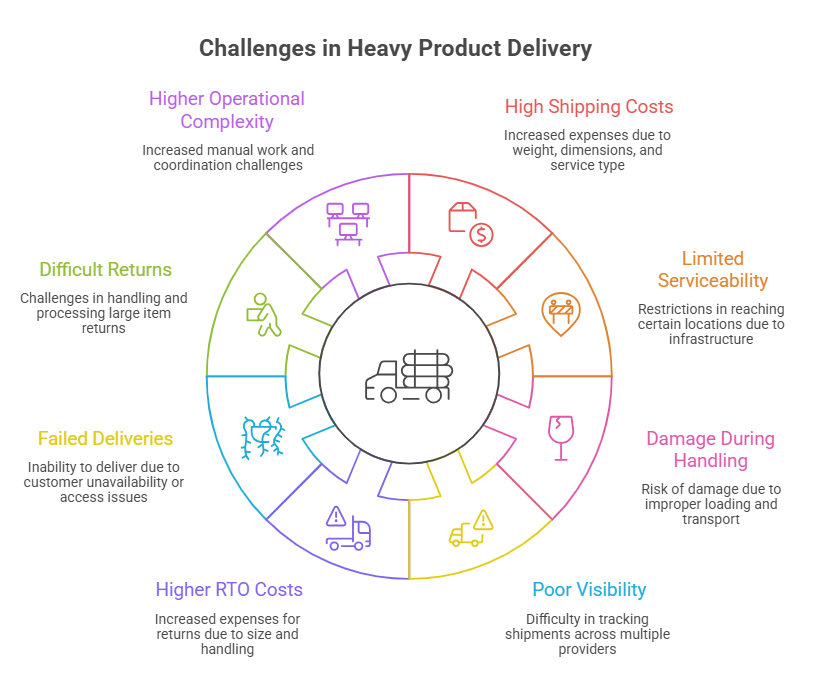
The right heavy parcel delivery service in India needs to support the product’s weight, dimensions, destination, handling requirements, and delivery model. If these factors are not managed properly, they can increase shipping costs, delivery failures, RTO, operational workload, and customer complaints.
High Shipping Costs
One of the biggest challenges with heavy parcel delivery is cost. Heavy shipment courier charges can depend on actual weight, volumetric weight, package dimensions, delivery distance, fuel charges, destination, and the type of service selected.
A product may be relatively light but still expensive to ship if it occupies a lot of space. This is common with furniture, mattresses, fitness equipment, home décor, and other bulky products. In such cases, the courier may calculate the chargeable weight using volumetric weight instead of the product’s actual weight.
Poor packaging can further increase the package dimensions and make ecommerce shipping for bulky products more expensive. Businesses handling large parcel shipping should therefore consider packaging optimization along with carrier selection.
To recover from high costs, businesses can compare different courier and freight options, reduce unnecessary packaging volume, and use a best courier service based on the shipment rather than relying on one carrier for every order.
Limited Serviceability
Not every courier can handle large or heavy shipments across every PIN code. Some locations may have restrictions based on vehicle access, road conditions, delivery infrastructure, or the courier’s weight and dimension limits.
This can make large package delivery India more challenging, particularly when ecommerce businesses sell across Tier 2, Tier 3, and remote locations. A courier may deliver standard ecommerce parcels to a particular PIN code but may not accept a large appliance, piece of furniture, or other oversized product.
For businesses offering ecommerce shipping for heavy products, checking serviceability before dispatch is important. The best courier for bulky items in India may differ depending on the destination, shipment size, and delivery requirements.
To recover from serviceability issues, businesses can maintain multiple courier and logistics options. A standard ecommerce courier service can handle regular parcels, while a specialized bulky item courier service, freight provider, or transport service for oversized products can handle shipments that fall outside standard courier limits.
Damage During Handling
Heavy and bulky products can be harder to load, unload, sort, and transport safely. Furniture, appliances, glass products, fitness equipment, machinery components, and other large products may require additional care during transit.
This makes handling an important factor when choosing the best courier service for heavy and bulky products in India. A provider that is suitable for lightweight ecommerce parcels may not necessarily have the equipment, trained personnel, vehicle capacity, or handling process required for large shipments.
Strong outer packaging, suitable cushioning, protective materials, and proper handling procedures can help reduce the risk of damage. For a bulky item courier service, the right combination of packaging and handling can make a significant difference to delivery quality.
Businesses shipping industrial products, furniture, appliances, or other large items should also consider whether the provider offers specialized handling, scheduled delivery, or freight options when required.
To recover from damage-related issues, businesses need a clear process for shipment claims, replacements, reverse pickups, and customer communication. This becomes especially important for ecommerce shipping for bulky products, where a damaged return can be considerably more expensive than a regular parcel.
Failed Deliveries
Large products often require more coordination with the customer. A furniture item, appliance, mattress, or fitness machine may require the customer to be available at a specific time. Narrow roads, apartment restrictions, stairs, limited parking, or building access can also make delivery difficult.
These challenges can make heavy parcel delivery more complex than standard last-mile delivery. In some cases, the courier may need a larger vehicle or additional delivery support to complete the handover successfully.
For a heavy parcel delivery service in India, successful delivery is therefore not only about reaching the destination PIN code. The final handover also needs to be coordinated properly.
Businesses can reduce failed deliveries through proactive customer notifications, address verification, delivery-slot confirmation, and timely reattempts. For large parcel delivery, giving customers better visibility into the expected delivery time can also improve the chances of a successful first attempt.
Higher RTO Costs
RTO can become significantly more expensive when a shipment is large or heavy. Returning a standard ecommerce parcel is relatively simple, but a bulky product may require additional vehicle space, handling, transportation, and coordination.
For brands selling furniture, appliances, mattresses, fitness equipment, and other large products, ecommerce shipping for bulky products should include reverse logistics planning from the beginning.
The cost of a failed heavy shipment does not end with the first delivery attempt. Businesses may also have to pay for the return movement, handling, warehouse processing, inspection, repackaging, and another delivery if the product is resold.
This makes RTO prevention particularly important for large parcel shipping. Businesses can reduce unnecessary RTO by confirming customer availability, validating addresses, providing accurate delivery updates, and using carriers that have strong delivery performance in the destination area.
Poor Visibility
Heavy shipments may involve different logistics providers depending on the product and destination. A business might use a regular ecommerce courier service for smaller orders, a bulky item courier service for large products, and a freight or transport service for B2B shipments.
When these providers operate through separate systems, tracking information can become fragmented. Operations teams may need to check multiple dashboards just to understand where a shipment is, whether it has reached the destination hub, or whether a delivery attempt has failed.
This becomes more difficult as businesses scale their bulk shipping operations. Managing multiple courier partners without centralized visibility can make it harder to identify delays, delivery exceptions, RTO risks, and customer issues.
A centralized tracking system can bring shipments from different courier and logistics providers into one view. This gives businesses better visibility across heavy parcel delivery, large package delivery India, B2B shipments, and standard ecommerce orders.
Manual Carrier Selection
Choosing a courier manually becomes difficult when businesses are handling hundreds or thousands of heavy shipments across different locations.
Teams may need to compare weight limits, package dimensions, serviceability, pricing, delivery timelines, handling capabilities, and vehicle requirements before selecting a carrier. A compact 5 kg parcel may suit one ecommerce courier, while a 40 kg appliance may require a specialized provider, freight service, or transport partner.
This is where multi courier shipping software for ecommerce can become useful. Instead of manually checking multiple providers for every shipment, businesses can use shipment data to determine which carrier is better suited for the order.
For example, furniture may require a large parcel delivery provider, while industrial equipment may need an LTL, PTL, or FTL option. A smaller ecommerce parcel can continue through a standard courier network.
Using shipping software for heavy products can help businesses automate these decisions based on factors such as weight, dimensions, destination, serviceability, shipping cost, and carrier performance.
Difficult Returns and Reverse Logistics
Returns can be particularly challenging for heavy and bulky products. Returning a small ecommerce parcel may require only a regular pickup, while a sofa, treadmill, refrigerator, washing machine, or large appliance may need a larger vehicle and additional handling.
The business may also need to schedule the pickup, verify the product condition, move it back to a warehouse or processing centre, and determine whether it should be repaired, restocked, replaced, or disposed of.
This makes reverse logistics an important part of ecommerce shipping for heavy products. Businesses should not plan only for forward delivery when selecting a courier. They should also understand how the provider handles large-item returns, failed deliveries, exchanges, and reverse pickups.
For B2B heavy delivery service in India, reverse logistics can become even more complex because shipments may include machinery, commercial equipment, replacement parts, inventory cartons, or other high-value products.
A well-planned reverse logistics process can reduce delays and help businesses control the additional costs associated with heavy shipment returns.
Higher Operational Complexity
Managing heavy shipments often means working with multiple carriers, pricing models, serviceability rules, vehicle types, handling requirements, and delivery processes. As volumes increase, this can create more manual work and make consistent delivery performance harder to maintain.
A business may need one provider for standard ecommerce shipping, another for heavy parcel delivery, a third for large parcel shipping, and a transport or freight partner for oversized or B2B shipments.
Without the right technology, operations teams may have to manage different shipping labels, tracking systems, carrier dashboards, rate cards, exception processes, and return workflows separately.
Courier management software for ecommerce can bring these processes into one place, giving teams a centralized view of shipments, carrier performance, tracking, exceptions, delivery status, and returns.
This is particularly useful for businesses operating a multi-carrier model, where different shipments need to move through different delivery networks based on their requirements.
How to Recover From These Heavy Shipping Challenges
Fixing heavy shipping challenges doesn’t come down to finding one courier that can handle every product type. It comes from building a flexible shipping setup where each order is matched with the right delivery option.
eShipz helps businesses do that by bringing multiple courier partners onto one platform and automating important parts of the shipping process. It covers serviceability checks, courier selection, shipment tracking, failed delivery management, RTO reduction, and returns, so businesses can manage the full shipping journey from one place. For heavy parcel delivery., businesses can use carrier allocation to choose suitable providers based on shipment requirements. For large parcel delivery, they can keep multiple logistics options in place instead of relying on a single courier. For B2B heavy delivery service in India, the same centralized setup can manage different carriers, warehouses, and delivery workflows.
The result is a more connected way to handle ecommerce shipping for bulky products. Businesses get better cost control, stronger visibility, less manual work, better exception management, and more efficient reverse logistics. Instead of asking only, “What is the best courier service for heavy and bulky products in India?”, businesses can build a smarter multi-carrier strategy that keeps choosing the right courier for the right shipment.
That’s where eShipz fits in.
It can be the technology layer behind the operation, connecting carriers, automating courier selection, improving shipment visibility, and helping businesses recover faster when heavy shipments don’t go as planned.
Build a Smarter Heavy Shipping Strategy
Finding the best courier service for heavy and bulky products in India is not about choosing one logistics provider and using it for every shipment.
Heavy and bulky ecommerce products require a more flexible approach. Businesses need to consider weight, dimensions, volumetric weight, destination, handling requirements, delivery timelines, return logistics, serviceability, and total shipping costs before selecting a carrier. For smaller heavy parcels, an ecommerce courier network may be the right choice. For oversized products, furniture, appliances, machinery, or B2B shipments, specialized transport and freight providers may be more appropriate. The key is to match each shipment with the delivery network that can handle it efficiently.
As ecommerce volumes continue to grow, businesses also need technology that can manage this complexity. With shipping software for heavy products, multi courier shipping software for ecommerce, and courier management software for ecommerce, businesses can connect multiple carriers, automate carrier selection, improve shipment visibility, manage delivery exceptions, and streamline reverse logistics. This is where eShipz can help. eShipz brings multiple courier partners and shipping operations together through a unified logistics automation platform, helping businesses manage carrier allocation, shipment tracking, NDRs, returns, delivery visibility, and post-shipping operations from one place.
Instead of manually deciding which courier should handle every shipment, businesses can use eShipz to create a more flexible multi-carrier shipping operation where carrier selection can be aligned with factors such as cost, speed, serviceability, and carrier performance.
When every shipment is different, your shipping strategy should be flexible enough to handle it. If your business is looking to simplify heavy parcel delivery, improve multi-carrier operations, and build a more efficient ecommerce shipping process, explore how eShipz can help you manage your shipping operations smarter.
Frequently Asked Questions
What is the best courier service for heavy and bulky products in India?
The best courier service for heavy and bulky products in India depends on the shipment’s weight, dimensions, destination, product category, and delivery requirements. Instead of selecting one courier for every shipment, businesses should compare carriers based on serviceability, handling capability, pricing, tracking, and reverse logistics.
Which is the best courier for bulky items in India?
The best courier for bulky items in India depends on the type of product and shipment size. Furniture, appliances, industrial equipment, and large ecommerce products may require different logistics providers or transport services.
How is heavy shipment courier pricing calculated?
Heavy shipment courier charges can depend on actual weight, volumetric weight, dimensions, distance, destination, service type, and carrier-specific pricing rules. Businesses should compare the final billable weight and total delivery cost rather than looking only at the base rate.
Can ecommerce businesses use multiple courier companies for heavy products?
Yes. Using multiple carriers can help ecommerce businesses select the right logistics provider based on shipment requirements. Multi courier shipping software for ecommerce can help automate this process.
Is a courier service better than a transport service for heavy products?
It depends on the shipment. A courier may be better for regular ecommerce orders that fall within its weight and dimension limits. A transport service may be more suitable for oversized, industrial, or bulk shipments.
How can businesses reduce heavy parcel delivery costs?
Businesses can reduce costs by optimizing packaging, reducing unnecessary dimensions, comparing carriers, improving delivery success rates, consolidating shipments where possible, and using technology to select suitable carriers.
What products usually require heavy parcel delivery?
Furniture, appliances, mattresses, fitness equipment, machinery, industrial products, and certain automotive products commonly require specialized heavy parcel delivery.